Have you ever thought about making flavored or spiced vinegar at home?
It’s a very easy recipe, it keeps without problems and it’s fragrant. A simple way to add aroma and an extra note to your dishes, a great gift idea.
SEASONALITY of flowers and aromatic herbs:
choose only fresh, untreated and seasonal aromas
#edibleflowers :
– elderflower blossoms – between April and June
– lavender flowers (they have a strong aroma) – summer
– rosehip flowers – May and June
– chive flowers – from May to August
– rosemary flowers
fresh herbs: in spring, summer and autumn
basil, cilantro, tarragon, chives, marjoram, lemon balm, mint, oregano, parsley, rosemary, sage, savory, santolina, thyme
dried aromas:
– star anise
– cinnamon stick
– cloves
– whole black or white peppercorns
– fennel seeds
fresh aromas:
– garlic
– onion
– wild fennel
– pimpinella (sweet cicely)
– celery
RECIPES with edible flowers
- Difficulty: Very easy
- Cost: Very inexpensive
- Rest time: 5 Days
- Preparation time: 5 Minutes
- Portions: Amounts for 2 cups (about 500 ml) of vinegar
- Cooking methods: No-cook
- Cuisine: Healthy
- Seasonality: Spring, Summer and Autumn
- Energy 21.00 (Kcal)
- Carbohydrates 2.77 (g) of which sugars 0.40 (g)
- Proteins 0.07 (g)
- Fat 0.05 (g) of which saturated 0.00 (g)of which unsaturated 0.00 (g)
- Fibers 0.70 (g)
- Sodium 5.60 (mg)
Indicative values for a portion of 100 g processed in an automated way starting from the nutritional information available on the CREA* and FoodData Central** databases. It is not food and / or nutritional advice.
* CREATES Food and Nutrition Research Center: https://www.crea.gov.it/alimenti-e-nutrizione https://www.alimentinutrizione.it ** U.S. Department of Agriculture, Agricultural Research Service. FoodData Central, 2019. https://fdc.nal.usda.gov
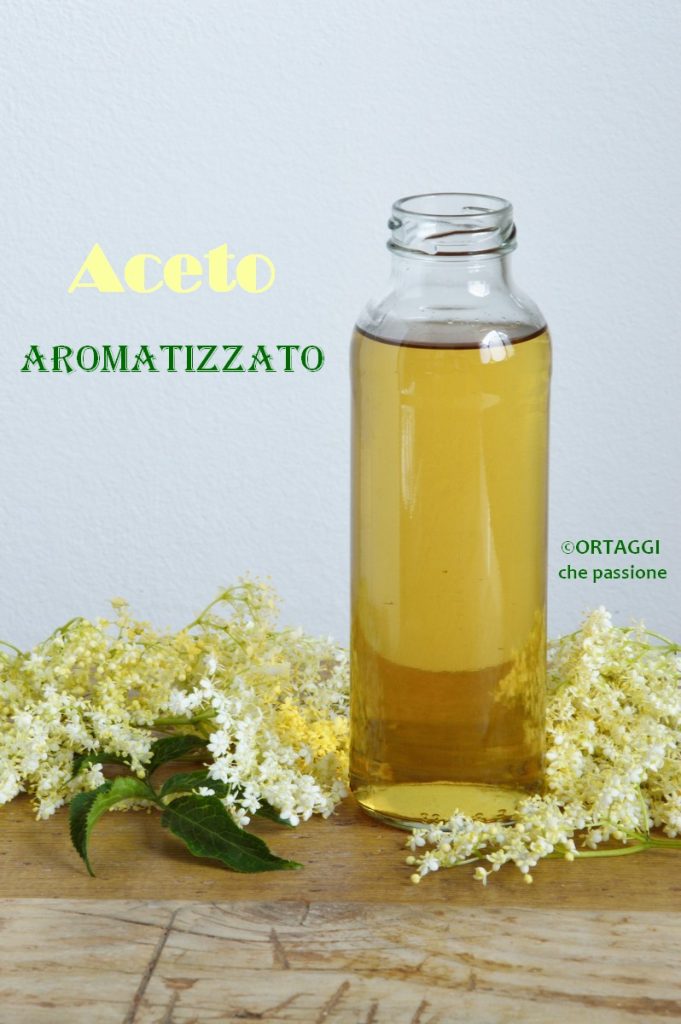
Flavored vinegar
The amounts of flowers or herbs are indicative; adjust according to the intensity of the specific aroma and the time you leave them infusing in the vinegar.
- 2 cups vinegar (apple, rice or wine vinegar)
- 1.8 oz elderflower blossoms (or another aroma of your choice as listed below)
Other ingredients to flavor, choose among:
– about 1.4 oz (40 g) aromatic herbs (basil, mint, parsley, rosemary, sage, thyme…)
– about 1 oz (25 g) fresh chilies
– to taste spices (fresh garlic, star anise, cinnamon stick, cloves, fresh onion, fresh celery, whole peppercorns…)
Tools
- Container airtight
- Funnel
- Strainer or a clean cloth
- Glass bottle or oil cruet
Preparation
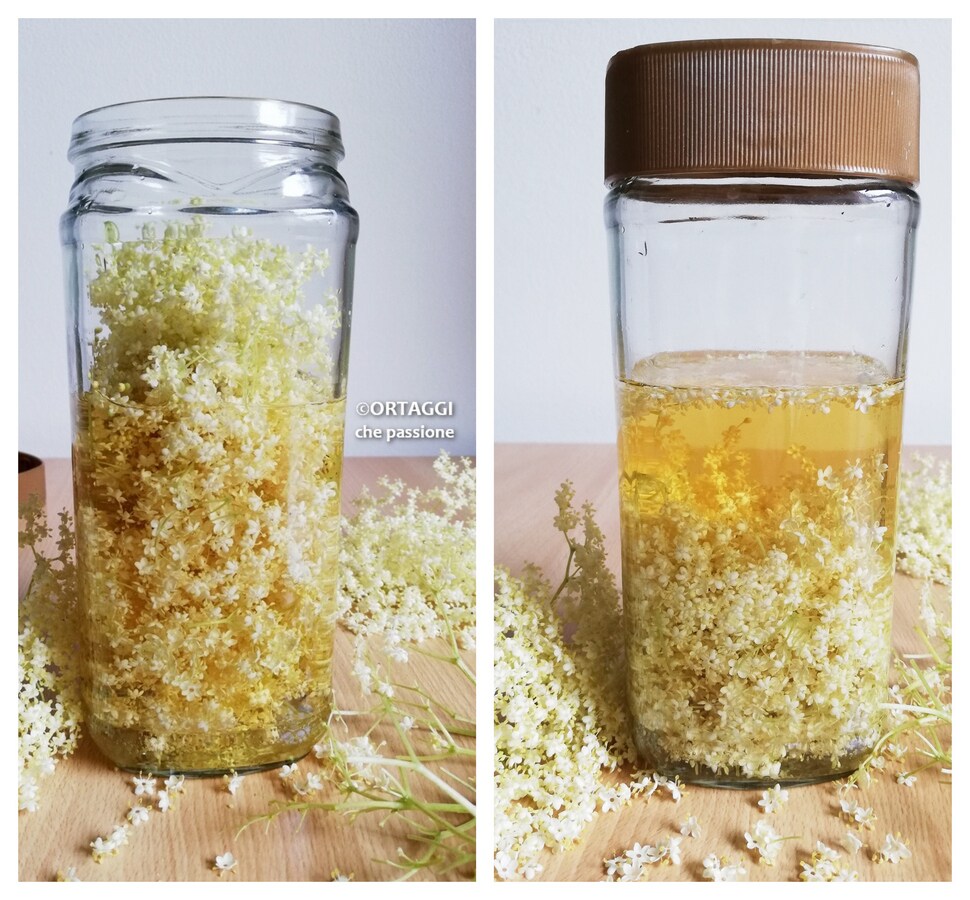
In an airtight jar, pour the vinegar and fully immerse the flowers or aromatics in the liquid (if necessary, tear into small pieces).
Let the vinegar infuse in the shade (sunlight overheats and damages the properties of the flowers) for about 5 days or more, adjusting according to your taste. You can already taste and smell it after 3 days; the longer the aromatics stay in the vinegar, the stronger the final flavor will be.
Once ready, strain with a simple strainer or a cloth (clean and free of detergent residues). Then decant into a small bottle.
To make the final bottle more decorative, place a small sprig or a fresh flower used for flavoring into the bottle.
Flavored VINEGAR with FRUIT
For 2 cups of vinegar (white or red) add about 7–11 oz (200–300 g) of very fresh fruit (raspberries, blueberries, blackberries or pomegranate arils) and optionally a sprig of mint. Leave to infuse in an airtight jar for about 2 weeks in a cool, dark place, shaking it every 3 days or more often. After the time has passed, use a food mill to make the vinegar fuller-bodied or strain with a sieve and gently mash the raspberries with a fork to extract their juice.
Flavored VINEGAR with organic or untreated CITRUS
In 2 cups (about 500 ml) of white vinegar add, as desired: 2 lemons, 1 orange, 1 citron, 3 mandarins, 1 grapefruit and optionally some lemon balm. Peel only the colored part (avoid the white pith as it is bitter), then immerse the peels and the citrus juice in the vinegar. Leave to infuse for about 15 days, shaking every two days, in a dry, shaded place. Once ready, strain and decant into an oil cruet. To make the flavored vinegar more pleasant, add the peel of a fresh citrus to the final bottle.
For a more fragrant vinegar, use mixed citrus instead of a single variety.
An extra idea
In warm weather, add a splash of flavored vinegar to a glass of iced water for a refreshing drink.
STORAGE
Store flavored vinegar at room temperature, not in the refrigerator.