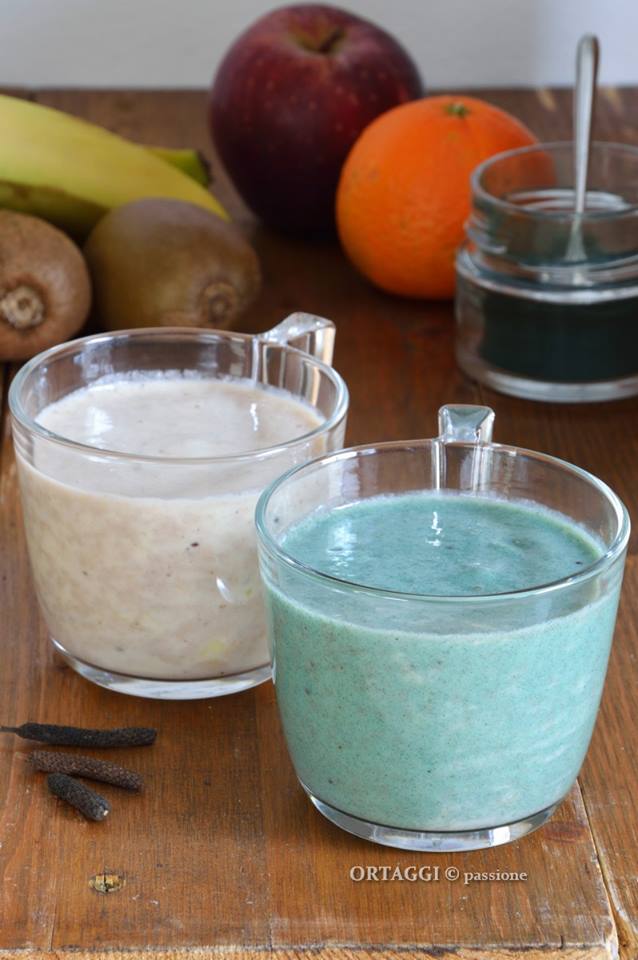
The homemade smoothies are fresh, tasty, and healthy, perfect for breakfast and snacks. Making them at home with an immersion blender is easy and very quick, the important thing is to use only soft fruit or fruit that can be squeezed. DIY smoothies are rich in antioxidants and vitamins, a great way to make fruit enjoyable even for the little ones in the house. Preparing them at home without a juicer is really easy.
Are smoothies diet-friendly and slimming? Are they weight loss drinks? It depends on the fruit and liquid you add, the amount you drink, and if you eat only that.
Are smoothies energizing and protein-rich? It depends on the fruit and flavors you use.
For a lactose-free version, use plant-based milk (amaranth, oat, coconut, almond, hazelnut, rice, soy, or other types) or plain water or orange juice.
SEASONALITY: perfect for any season. At the bottom of the page, you will find the Italian seasonality of each fruit.
RECIPES with fruit
- Difficulty: Easy
- Cost: Inexpensive
- Preparation time: 10 Minutes
- Portions: 1 glass
- Cooking methods: No cooking
- Cuisine: Healthy
- Seasonality: All seasons
- Energy 133.57 (Kcal)
- Carbohydrates 24.59 (g) of which sugars 14.58 (g)
- Proteins 3.02 (g)
- Fat 3.55 (g) of which saturated 0.54 (g)of which unsaturated 2.75 (g)
- Fibers 5.19 (g)
- Sodium 29.95 (mg)
Indicative values for a portion of 210 g processed in an automated way starting from the nutritional information available on the CREA* and FoodData Central** databases. It is not food and / or nutritional advice.
* CREATES Food and Nutrition Research Center: https://www.crea.gov.it/alimenti-e-nutrizione https://www.alimentinutrizione.it ** U.S. Department of Agriculture, Agricultural Research Service. FoodData Central, 2019. https://fdc.nal.usda.gov
Homemade Smoothies
Quantities for a 210-gram glass of fruit smoothie
- banana (ripe – 160 g)
- 1/4 cup g plant-based milk (or dairy, or water)
- banana (ripe – 60 g)
- kiwi (soft – 100 g)
- 1/4 cup g plant-based milk (or dairy, or water)
- Half banana (ripe – 60 g)
- kiwi (soft – 50 g)
- apple (50 g)
- 1/4 cup g plant-based milk (or dairy, or water)
- banana (110 g)
- 1/4 cup g strawberries (untreated or organic)
- 1/4 cup g plant-based milk (or dairy, or water)
- Half banana (ripe – 60 g)
- Half peach (50 g)
- 1/4 cup g strawberries (untreated or organic)
- 1/4 cup g plant-based milk (or dairy, or water)
- peach (100 g)
- Half banana (ripe – 60 g)
- 1/4 cup g plant-based milk (or dairy, or water)
- 3/8 cup g raspberries (organic)
- 3/8 cup g blackberries (untreated)
- 1/4 cup g plant-based milk (or dairy, or water)
- lemon (optional)
- 2 peaches (small – 160 g)
- 1/4 cup g plant-based milk (or dairy, or water)
- 5.3 oz g avocado (very ripe)
- 5 leaves basil (or mint)
- as needed lemon juice
- 1/4 cup g plant-based milk (or dairy, or water)
- Half teaspoon spirulina algae
- as needed pepper (long – freshly ground)
- 1/3 teaspoon chili powder
- Half teaspoon cinnamon powder
- 1/3 teaspoon vanilla (powder or seeds)
- Half teaspoon turmeric powder (with a pinch of black pepper)
Tools
- Immersion Blender Minipimer
Homemade Smoothies with an Immersion Blender
Fruit Smoothies
Wash the chosen fruit well, peel if necessary.
Then place in a tall and narrow container (perfect for the immersion blender beaker) the pieces of soft fruit, the harder the fruit, the smaller the pieces should be (example: the apple).
Use the immersion blender to puree everything, adding the necessary amount of liquid to facilitate the operation if needed.
Add the chosen flavor and stir to mix the flavors.
Add sugar, honey, malt, stevia, maple syrup, agave, date, corn, rice syrup… only if needed.
TIPS
Homemade smoothies with the immersion blender can only be made with fresh, ripe, and SOFT fruit. Don’t risk using hard fruit or vegetables, as you might break the immersion blender.
TRY mixing soft fruit with some soft, non-fibrous vegetables of your choice, perhaps cooked beforehand (perfect is the baked sweet potato).
If you have a JUICER try the Beetroot Juice.
How to remove air from the smoothie?
Smoothies are not recommended for young children because they can cause colic or other discomforts.
For adults, simply remove the air by stirring the smoothie several times and wait at least fifteen minutes before drinking it, so the air bubbles disappear.
STORE homemade smoothies
Consume fruit juices quickly, within the day of production to maintain properties and freshness.
SEASONALITY of Italian fruit
#apricots – May to August
#Italian bananas – April to November
#barattiere – May to August
#carosello – May to August
#cherries – May to early August
#feijoa – September to December
#figs – July to October
#strawberries – April to September
#berries – all summer
#raspberries – June to August
#mapo – October to January
#melon – June to September
#blueberries – June to September
#miyagawa satsuma – September to December
#blackberries – July to October
#nashi – August to December
#pears – June to December
#peaches – May to September
#oranges – October to July
#avocado – October to June
#clementines – September to March
#kiwi – September to April
#mango – late July to November
#apples – August to November
Exotic fruits, available all year round: pineapple, bananas, dragon fruit (pitaya or pitahaya), passion fruit, papaya, plantain.
Frequently Asked Questions
What is the difference between a milkshake and a smoothie?
The difference between a milkshake and a smoothie is primarily in the texture and ingredients. A milkshake is often creamier due to the presence of ice cream in its base or crushed ice which makes it colder. A smoothie has a lighter consistency, based on ingredients like fresh fruit.
What is the difference between a smoothie and a shake?
A smoothie usually has a liquid base like milk or water, giving it a light consistency. Conversely, a shake often uses a denser and creamier base, such as yogurt, providing the drink with a smooth and richer texture.
What’s the difference between a juicer and a smoothie?
A juicer (or extractor) is a device that extracts juice from fruits and vegetables by separating the liquid from the pulp and fibers. The result is a light juice free of solids.
A smoothie is made using a blender that mixes all the ingredients together, including pulp and fiber, creating a thicker and denser drink. In a smoothie, all the fruit or vegetable is used, thus retaining fiber and other nutrients present in the pulp.