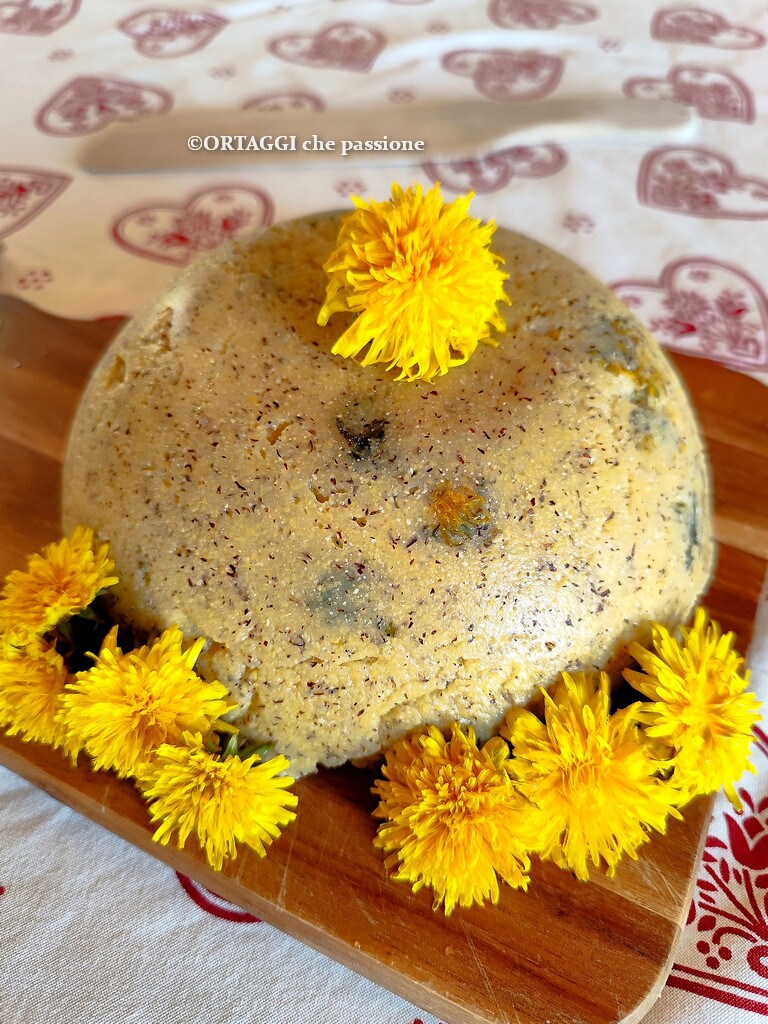
Polenta with dandelion flowers is a genuine way to bring the spontaneous flavors of the earth to your table. With a few ingredients, you get a simple, seasonal dish that tastes of nature and spring.
Are dandelion flowers edible? Dandelion flowers are absolutely edible. The only important precaution is to collect them in clean areas, away from busy roads, treated fields, or places frequented by animals. And, of course, wash them well before use.
What taste do dandelion flowers give to the polenta? A touch of delicate bitterness. It’s a fresh flavor that somewhat resembles artichoke or arugula, but more floral.
SEASON of yellow dandelion flowers – from spring to autumn, depending on the collection area.
RECIPES with dandelion
- Difficulty: Easy
- Cost: Cheap
- Preparation time: 5 Minutes
- Portions: 4People
- Cooking methods: Stovetop
- Cuisine: Italian
- Seasonality: Spring, Summer, and Autumn
- Energy 171.73 (Kcal)
- Carbohydrates 37.11 (g) of which sugars 1.05 (g)
- Proteins 4.66 (g)
- Fat 0.87 (g) of which saturated 0.07 (g)of which unsaturated 0.02 (g)
- Fibers 3.18 (g)
- Sodium 321.79 (mg)
Indicative values for a portion of 318 g processed in an automated way starting from the nutritional information available on the CREA* and FoodData Central** databases. It is not food and / or nutritional advice.
* CREATES Food and Nutrition Research Center: https://www.crea.gov.it/alimenti-e-nutrizione https://www.alimentinutrizione.it ** U.S. Department of Agriculture, Agricultural Research Service. FoodData Central, 2019. https://fdc.nal.usda.gov
Polenta with Dandelion Flowers
- 3 oz dandelion flowers (about 80 flowers)
- 4.2 cups water
- 1 cup taragna polenta flour (instant)
- to taste coarse salt
- to taste extra virgin olive oil (or a knob of butter)
- 2 tbsps cheese (nutritional yeast for vegans)
Tools
- Pan
- Hand Whisk
Polenta with Dandelion Flowers
Wash the dandelion flowers well, remove the stem and the harder green parts. You can keep them whole or break them slightly.
Bring the salted water to a boil.
When the water boils, sprinkle in the corn flour, stirring with a whisk to prevent lumps.
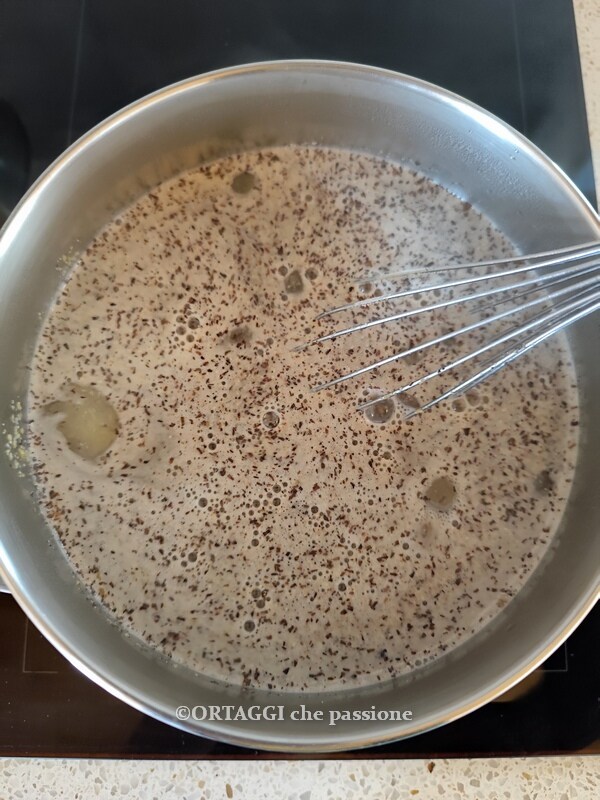
Continue stirring for a few minutes. Instant polenta cooks very quickly, generally in 5 minutes. The classic polenta, however, cooks in 40 minutes.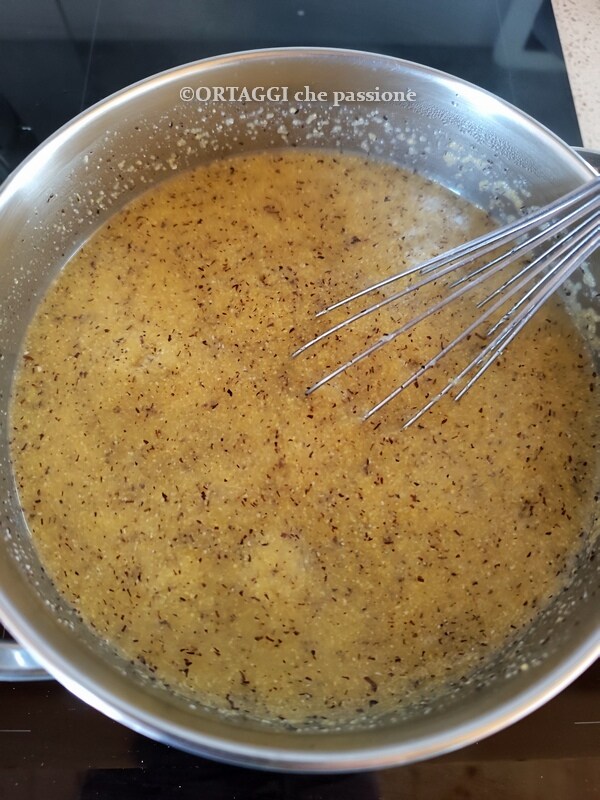
Near the end of cooking, add the flowers. Cook them for 2-3 minutes, or until they reach the desired consistency. You can enrich the polenta with a drizzle of extra virgin olive oil (or a knob of butter) and, to make it more delicious, add some plant-based cheese (soft or grated).
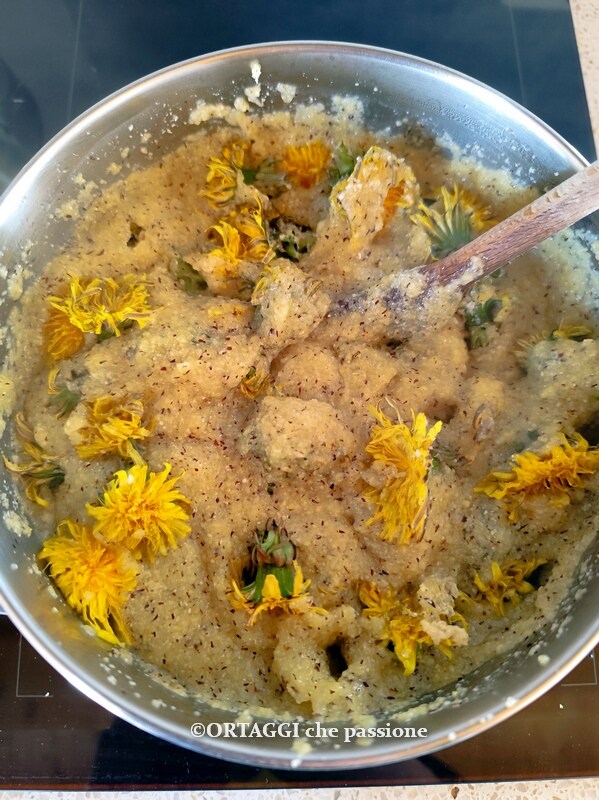
Once ready, pour the polenta into a bowl and let it cool slightly before turning it out onto a cutting board.
STORE polenta with flowers
After cooling it down, store the polenta in the fridge for a maximum of 3 days, well covered.
To store it longer, cut it into slices, freeze them separately, and then put them in a bag. When ready to enjoy, heat it in a pan or oven: it will also become nicely crispy.
FAQ (Questions and Answers)
Can you also use dandelion leaves?
Of course, young leaves are perfect. You can chop them and add directly to the polenta, or sauté them in a pan and serve as a side dish.
What type of flour to use for this recipe?
I used instant taragna flour, but you can also use classic yellow corn flour, both slow-cooking and quick-cooking. Whole grain or bramata is also perfect for a more rustic version.
Can dandelion flowers be eaten raw?
If they are very fresh and well washed, they can also be used raw as decoration on already prepared polenta. They give a slightly bitter touch.
What are dandelion flowers good for?
Dandelion flowers are rich in vitamin C and A, antioxidants that protect the body and support the immune system. They also have purifying and diuretic properties, helping to eliminate toxins.