The Russian Cake from Verona, similar to the original Greek Mantovan or Brescian cake, represents one of those desserts capable of evoking authentic tradition, besides being relatively easy to prepare. It can also be explored further on Wikipedia, where curiosities and ties to the territory emerge. Grandma Benedetta considers it the best cake to share with the family because the cost of ingredients remains affordable and it enhances the pleasure of homemade creations. Telling the original recipe of the Russian Cake or Greek also in English (Verona’s Russian Cake) allows a unique Veronese dessert to be known beyond borders, capable of combining taste, history, and tradition like the tiramisu for Treviso.
SEASONALITY of the #driedfruit used #almonds – available all year round.
GRANDMA’S dessert RECIPES:
- Difficulty: Medium
- Cost: Inexpensive
- Preparation time: 30 Minutes
- Portions: Yields for a 9.5-inch pan
- Cooking methods: Electric oven
- Cuisine: Italian
- Seasonality: All seasons
- Energy 496.87 (Kcal)
- Carbohydrates 50.13 (g) of which sugars 17.98 (g)
- Proteins 8.35 (g)
- Fat 29.35 (g) of which saturated 9.91 (g)of which unsaturated 13.52 (g)
- Fibers 1.85 (g)
- Sodium 206.81 (mg)
Indicative values for a portion of 100 g processed in an automated way starting from the nutritional information available on the CREA* and FoodData Central** databases. It is not food and / or nutritional advice.
* CREATES Food and Nutrition Research Center: https://www.crea.gov.it/alimenti-e-nutrizione https://www.alimentinutrizione.it ** U.S. Department of Agriculture, Agricultural Research Service. FoodData Central, 2019. https://fdc.nal.usda.gov
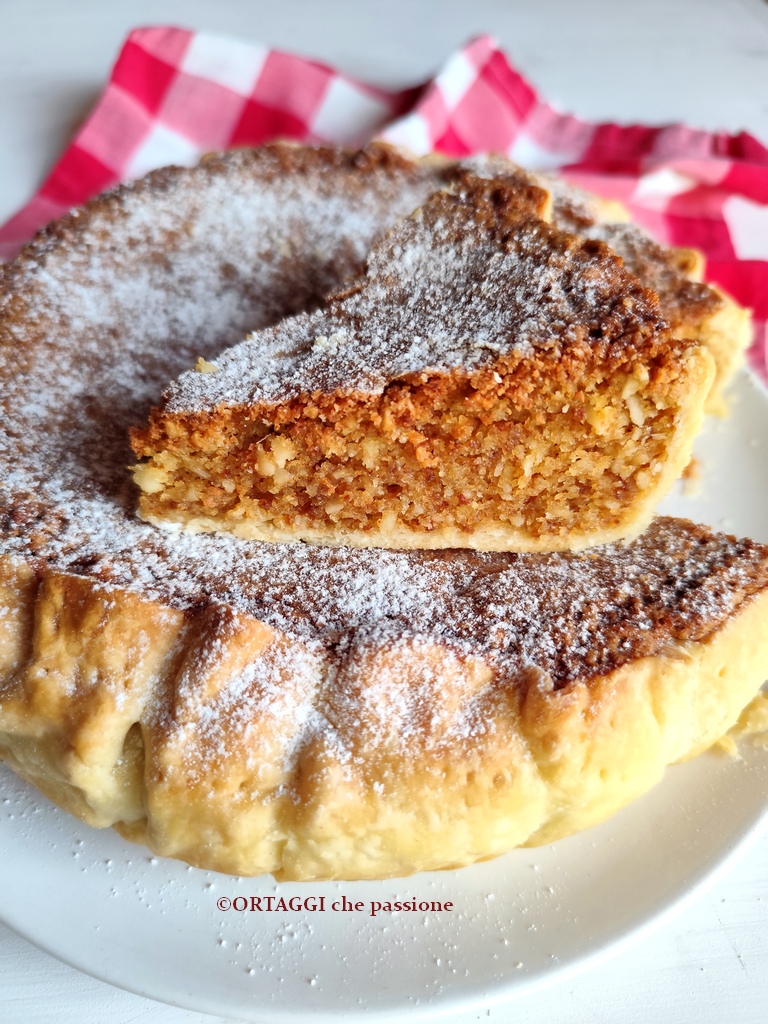
Russian Cake from Verona
9.5-inch PAN (approximately 10 slices/people).
BAKE in a preheated static oven at 356°F for about 60 minutes.
- 1 sheet puff pastry (round – at least 230 g)
- 140 g butter (melted and cooled)
- 3.5 oz blanched almonds (or other nuts of choice)
- 7 oz amaretti cookies (generally corresponds to a pack)
- 3 eggs (organic)
- 4.5 oz sugar (or less)
- 5.5 oz all-purpose flour (or mixed/wholemeal)
- Half teaspoon baking powder (about 6 g)
- 1 pinch fine salt (enhances all other cake flavors)
- 2 tablespoons rum (or other liquor – about 14 g – optional)
- to taste shelled almonds (to decorate the surface before baking)
- to taste powdered sugar (to dust the baked cake)
Tools
- Chopper
- Electric whisks
- Spatula
- Cake pan aluminum 9.5-in
Russian Cake from Verona
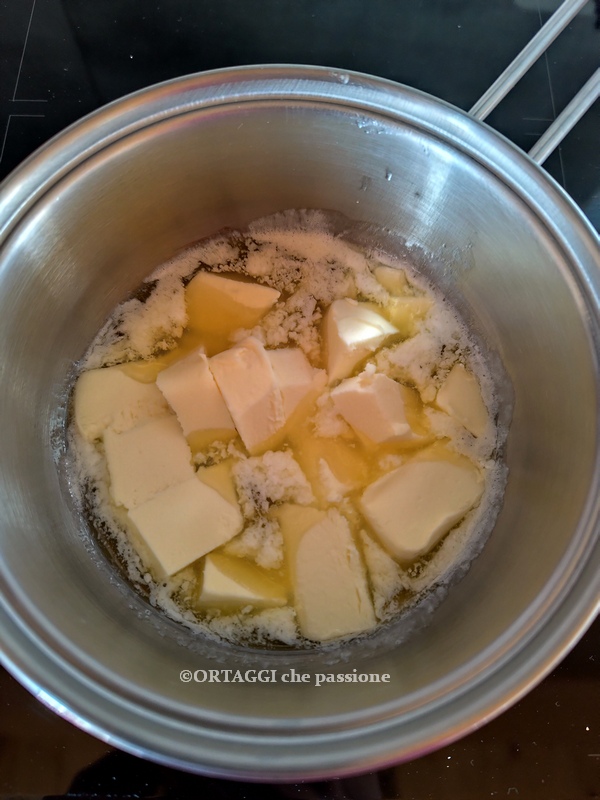
1. In a small pot, gently melt the butter over low heat, then allow it to cool slightly.
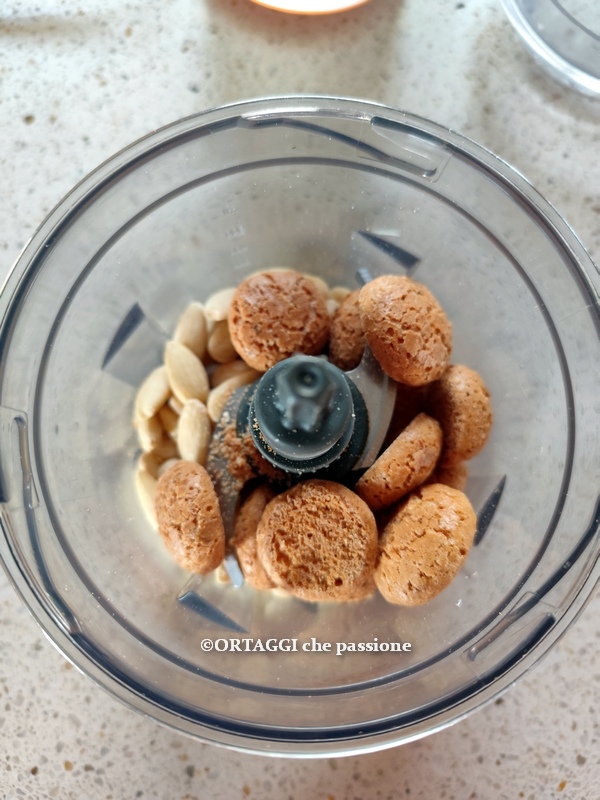
2. Roughly chop almonds and amaretti, avoiding turning them into flour.
3. In a bowl, pour 3 eggs and the sugar (sugar should be added at the last moment because, if it remains in contact with the eggs for too long, it compromises the whipping and reduces the final volume).
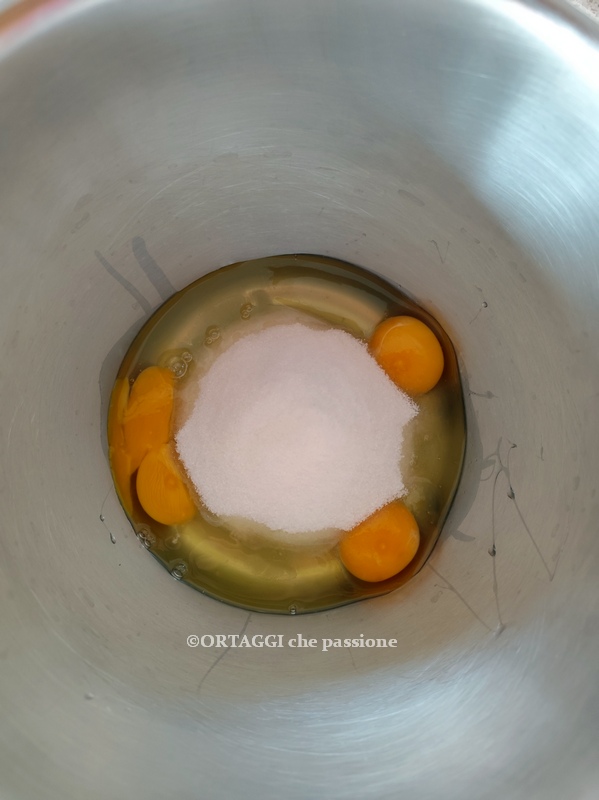
4. Whip eggs and sugar until they are pale, without needing to be fully whipped.
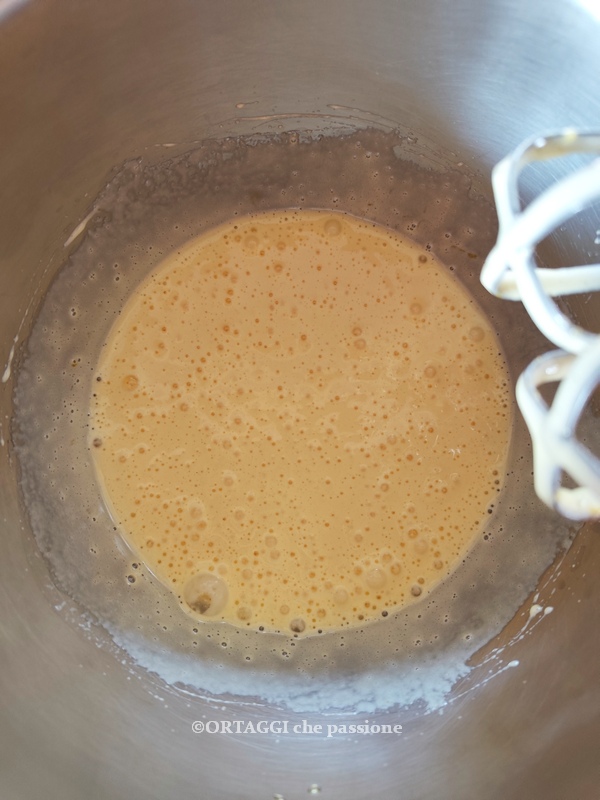
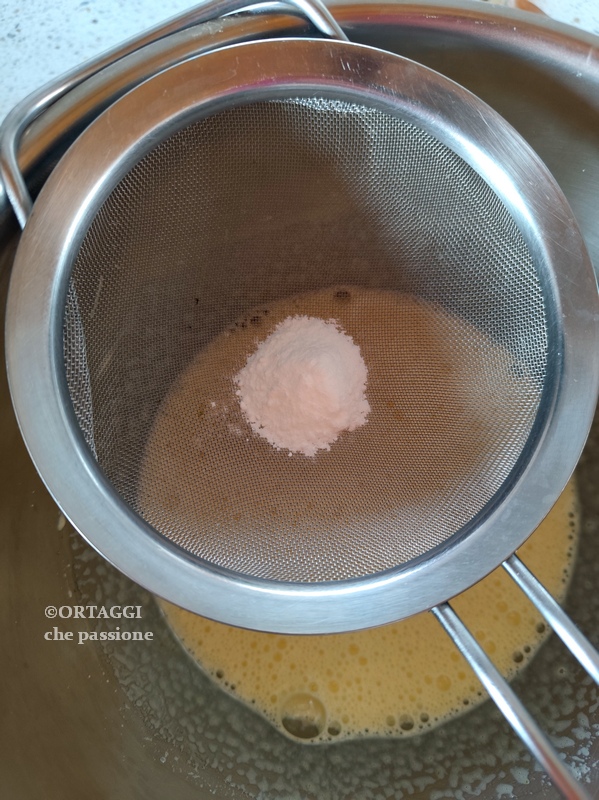
5. Add sifted baking powder.
6. Also sift the flour over the mixture.
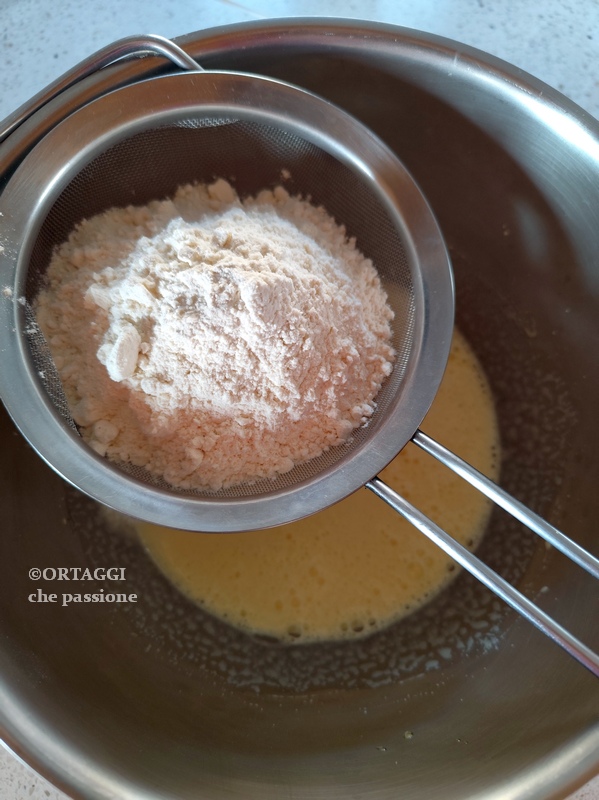
7. Gently incorporate the flour using electric whisks.
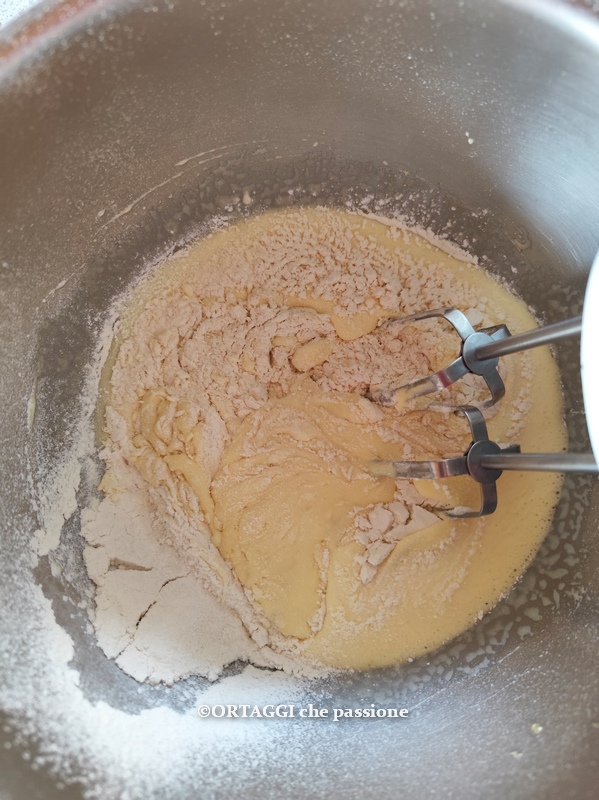
8. Add the roughly chopped almonds and amaretti, a pinch of salt, the melted and cooled butter and, if desired, two tablespoons of rum.
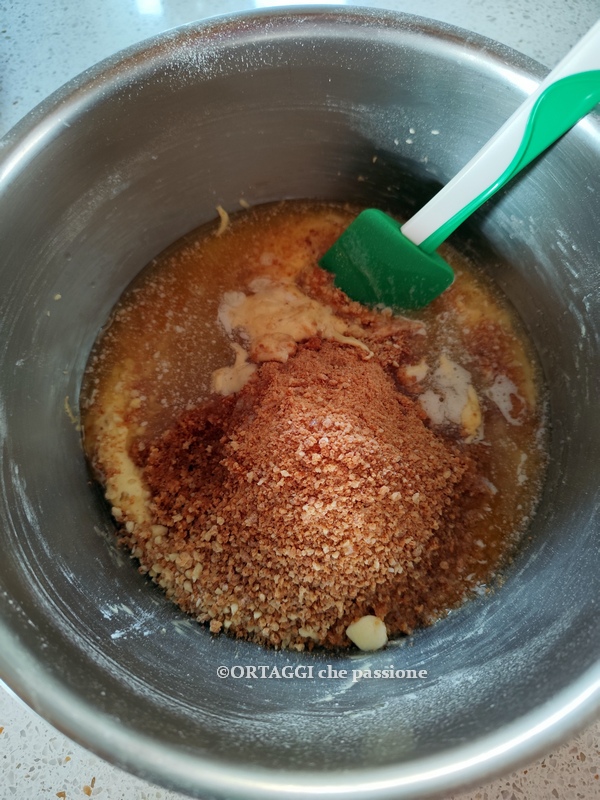
9. Use a spatula to mix the ingredients of the Russian Cake from Verona.
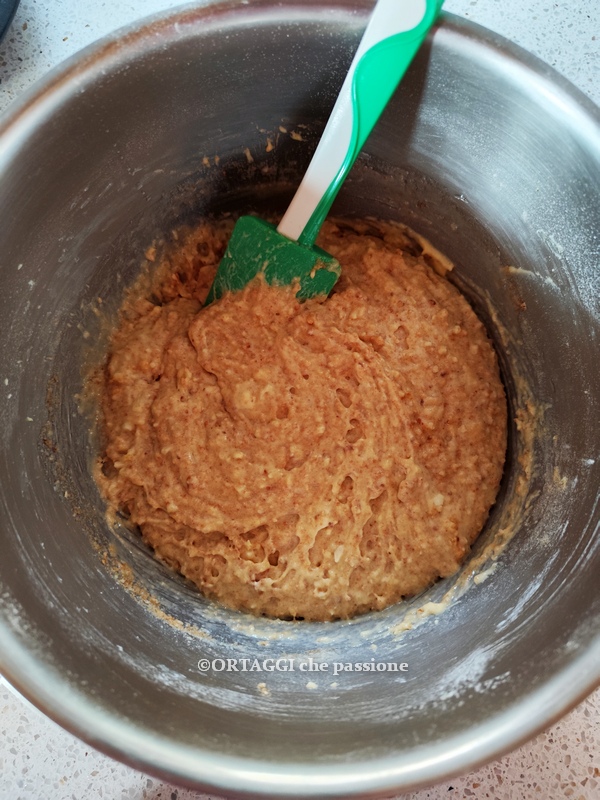
10. Unroll the puff pastry in a 9.5-inch cake pan with its parchment paper.
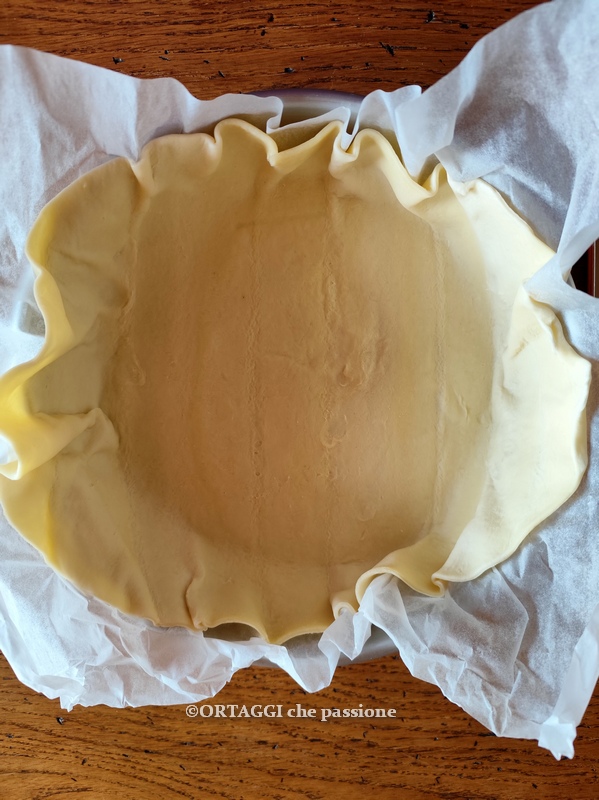
11. Fill the puff pastry with the prepared mixture, smooth it out, fold the edges inward onto the surface, and with the prongs of a fork, prick the entire outer edge.
If desired, decorate the surface with almonds before baking.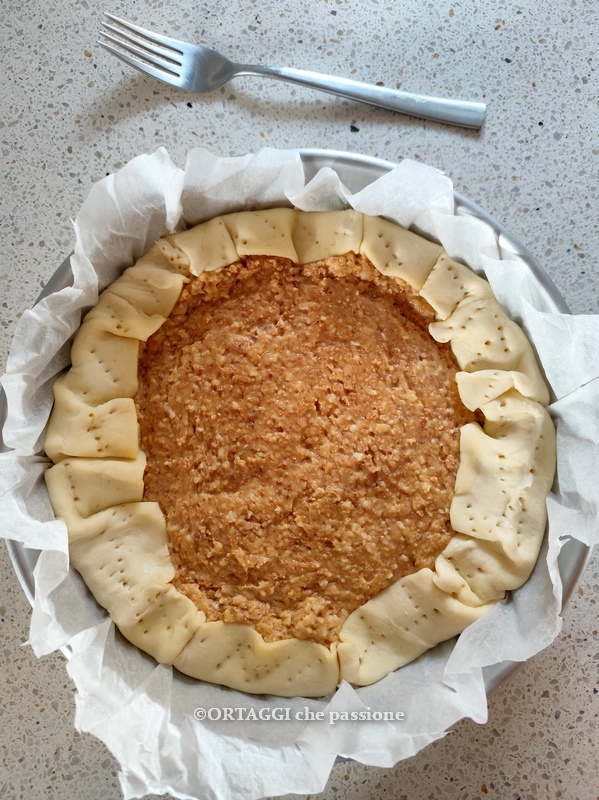
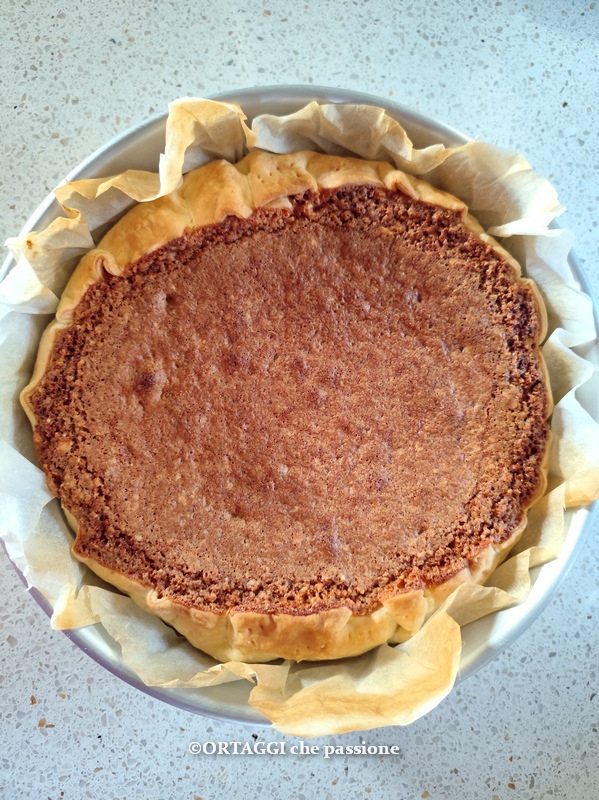
12. Bake in a preheated static oven at 356°F for about 60 minutes.
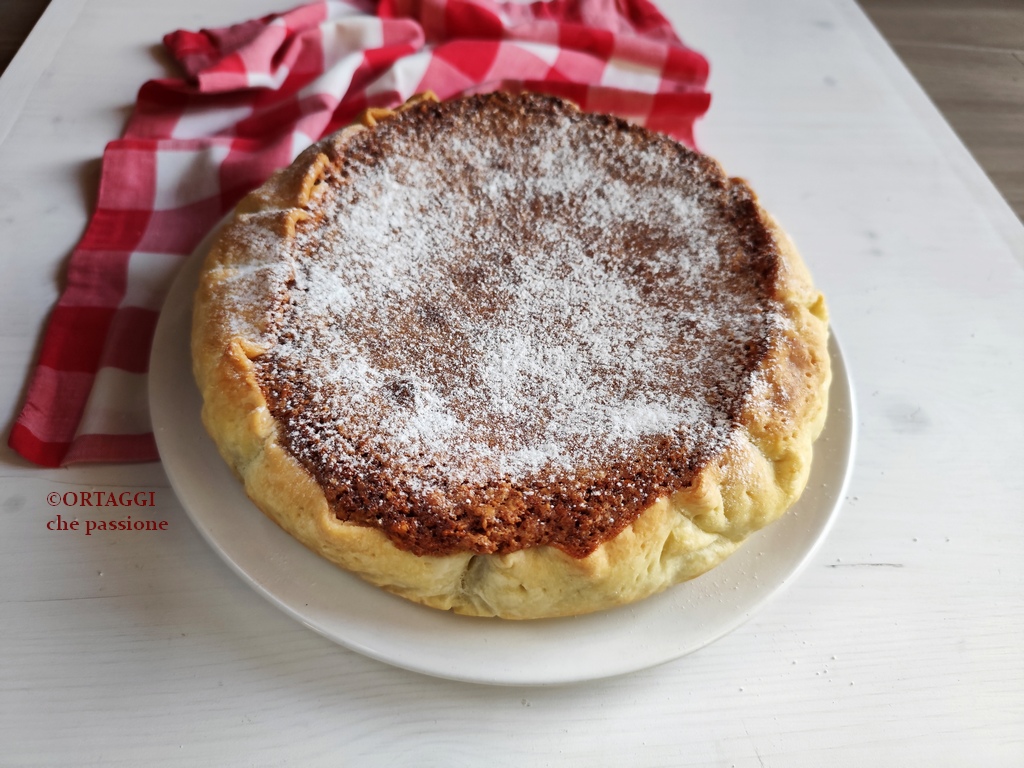
13. Allow to cool completely before serving and dust with powdered sugar.
STORING the Russian Cake from Verona
It keeps well for 10 days in an airtight container, maintaining its crunchiness and taste. Avoid the freezer, as freezing compromises the cake’s crumbliness and texture.
FAQ (Questions and Answers)
Difference between the Greek Mantovan cake and the Russian Cake from Verona
The Greek Mantovan cake is a humble and rustic dessert, with a compact texture and delicate flavor, designed to last and accompany daily moments. The Russian Cake from Verona, on the other hand, is richer and more crumbly, with more butter and nuts, a more inviting appearance and intense flavor, reflecting a more elaborate bakery tradition.
What is the price per kilo of the Russian Cake in patisseries?
The price of the Russian Cake in patisseries is generally between 15 and 20 euros per kilogram, varying based on ingredient quality, artisanal processing, and the patisserie’s renown.
Why is it called Russian Cake?
The history is quite recent: it originated around the 1950s. According to legend, a pastry chef working on cruise ships fell in love with a Russian girl in 1966 and was inspired by her for the dessert. More likely, however, the name comes from its shape, which resembles a Russian ushanka. Curiously, the ingredients are typically Italian and French, nothing to do with Russia, but the romantic allure of the story has helped make it a Veronese icon.
Why is it called Greek Cake?
The name “Greek Cake” is shrouded in mystery: it has no origins in Greece, but likely stems from ancient local traditions that evoked “exotic” shapes or ingredients for the time, such as nuts and spices. Curiously, it is a rustic and humble dessert of the Mantovan tradition, born more for simplicity and longevity than for any real ties to Greece.