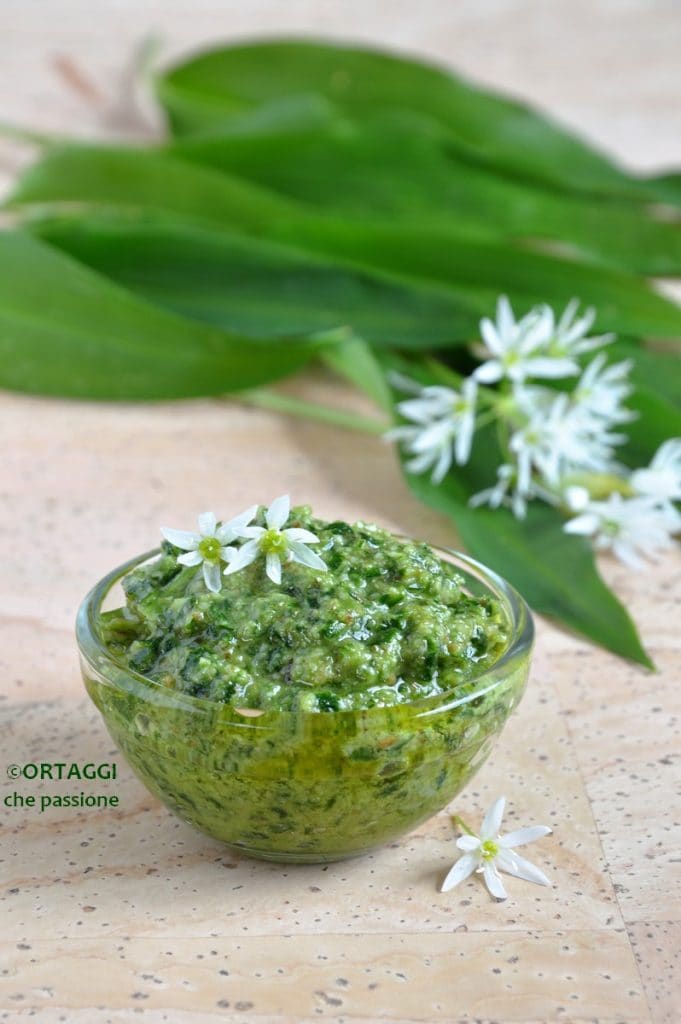
Wild-garlic pesto is a gourmet sauce with a particularly pleasant flavor, a quick and easy plant-based recipe. You can use your preferred nuts: almonds, walnuts or pine nuts.
Pesto, sauces and patés are all excellent spreads to use for pasta, as a base for crostini or a veggie bruschetta, as a dressing for cooked vegetables (asparagus, carrots, potatoes, celery, zucchini) or as a little cream on top of cheeses. It is an excellent substitute for salsa verde.
SEASONALITY of wild garlic (ramsons): the leaves grow in the damp undergrowth or along shaded streams from March to May; the season varies depending on climate and altitude (it can range from 0 to 1,500 m / 0–4,900 ft) of the collecting area.
Prefer the smaller, tender leaves that appear before the flower emerges. Larger leaves are more fibrous, but still edible.
RECIPES with wild garlic
- Difficulty: Easy
- Cost: Affordable
- Preparation time: 15 Minutes
- Portions: 6
- Cooking methods: No-cook
- Cuisine: Healthy
- Seasonality: Spring
- Energy 138.92 (Kcal)
- Carbohydrates 2.50 (g) of which sugars 0.35 (g)
- Proteins 1.30 (g)
- Fat 14.23 (g) of which saturated 1.37 (g)of which unsaturated 0.02 (g)
- Fibers 0.42 (g)
- Sodium 74.90 (mg)
Indicative values for a portion of 25 g processed in an automated way starting from the nutritional information available on the CREA* and FoodData Central** databases. It is not food and / or nutritional advice.
* CREATES Food and Nutrition Research Center: https://www.crea.gov.it/alimenti-e-nutrizione https://www.alimentinutrizione.it ** U.S. Department of Agriculture, Agricultural Research Service. FoodData Central, 2019. https://fdc.nal.usda.gov
Wild-garlic pesto
- 8 walnuts (or 50 g (about 1.8 oz / roughly 1/3 cup) of mixed nuts and/or oilseeds)
- 1 bunch Wild garlic (ramsons) (40–50 g (about 1.5–1.8 oz))
- 2 pinches Salt
- 4 tbsp extra virgin olive oil
- 2 tsp Lemon juice (or orange)
- 3 tbsp Pecorino Romano (or Parmesan or Trentingrana – for vegans use nutritional yeast flakes)
Tools
- Chopper
Wild-garlic pesto
Wash the wild garlic leaves thoroughly and dry them in a salad spinner.
In a mini blender, first grind the nuts and/or oilseeds with a little salt, then add the wild garlic leaves in pieces, continue blending and finally add the lemon juice (optional) and the extra virgin olive oil. Blend until you reach the desired consistency.
Can you make pesto without a blender?
Yes, traditionally it is prepared with a mortar and pestle. In this way the leaves are gently crushed and the pesto retains a more rustic texture.How to dress pasta with the pesto?
Thin the pesto with some of the pasta cooking water and optionally add grated cheese or nutritional yeast flakes, mixing everything together.
Pour the creamy pesto over the freshly drained pasta, toss and serve immediately.
Ingredients:
– 20 g wild garlic (about 0.7 oz)
– 50 g ricotta (about 1.8 oz / ~1/4 cup)
– 50 g mascarpone (about 1.8 oz / ~1/4 cup) (or another spreadable cheese)
– olive oil as needed
– salt to taste
Method: Place the wild garlic leaves and salt in the chopper and blend. Then add the ricotta and mascarpone and continue mixing; finally pour in some extra virgin olive oil.Ingredients:
– 30 g wild garlic leaves (about 1.1 oz)
– 60 g sun-dried tomatoes (packed in oil) (about 2.1 oz / roughly 1/3 cup)
– 20 g extra virgin olive oil (about 1 tbsp)
– a little salt
Method: Blend the wild garlic, the sun-dried tomatoes and a pinch of salt in the food processor. Add the extra virgin olive oil at the end and finish combining everything.Ingredients:
– 20 g wild-garlic pesto (about 0.7 oz / ~1 tbsp)
– 100 g Greek yogurt (about 3.5 oz / 1/2 cup)
Method: Put the ingredients in a bowl and mix until the mixture is homogeneous.
STORE the wild-garlic pesto (or cream, paté, sauce)
They keep for up to 4 days in the refrigerator in an airtight container; drizzle a little extra virgin olive oil on top to prevent mold and oxidation.
You can freeze it in small containers or in ice cube trays, so you have ready-to-use portions.
What is wild garlic?
Wild garlic (Allium ursinum) is a wild herbaceous plant in the same family as garlic, onion and leek. It grows in damp, shady woodlands and is mainly harvested in spring. In season it also produces small white star-shaped flowers. In cooking the fresh leaves are mainly used; they are much appreciated for making pesto, sauces, risottos, omelettes and other dishes with an aromatic but milder flavor than common garlic.
How do you recognize wild garlic?
It has green, oval, soft leaves that give off an intense garlic aroma when rubbed between the fingers. It is important not to confuse it with similar-looking inedible plants (such as lily of the valley leaves), so only harvest it if you are sure of the identification.
What does wild-garlic pesto taste like?
The flavor is reminiscent of fresh garlic but more herbaceous and less pungent. The pesto is aromatic and slightly spicy, with a fresh note typical of wild herbs.
How is wild-garlic pesto used in cooking?
It is perfect for dressing pasta and gnocchi, but also for enhancing bruschetta, roast potatoes, risottos or grilled vegetables. It can also be used to flavor soups and veloutés.