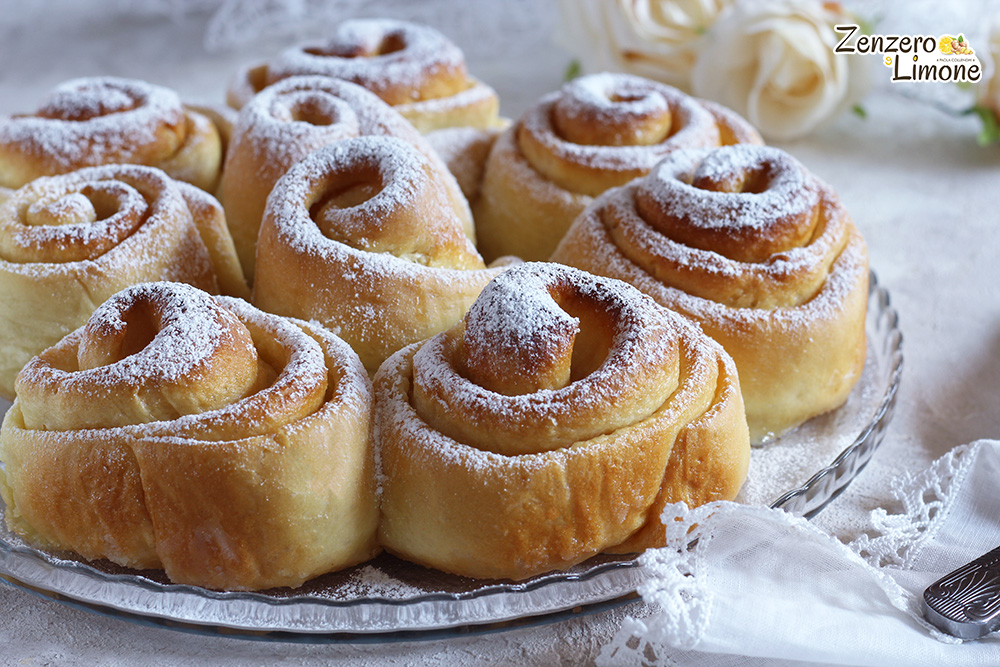
Tell me if this isn’t a dessert that wins you over at first glance. When it’s warm, mmmmm, it’s absolutely irresistible. A pantry cake that’s not difficult to make, even if it might seem otherwise. It just takes a little patience because it’s a leavened dessert and, as such, it has its own timing. I’ve been eating rose cake, a classic from my area, since I was a child and it’s a real pleasure to share my foolproof recipe with you. On the blog, you can also find the Bimby version. Let me know! I bet you won’t be able to stop at just one rose, and I bet it won’t last until the next day.
Other variations (including savory):
- Difficulty: Easy
- Cost: Economical
- Rest time: 8 Hours
- Preparation time: 45 Minutes
- Portions: 10 people
- Cooking methods: Oven
- Cuisine: Italian
- Seasonality: All seasons
Ingredients for the Rose Cake
- 2 3/4 cups all-purpose flour
- 1 1/2 tbsp sugar
- 2/3 cup milk (a little more if necessary)
- 2 tbsp corn oil
- 3 egg yolks
- 2 tsp dry yeast (15 g of fresh yeast)
- 1 pinch salt
- 3/4 cup sugar
- 2/3 cup butter
- 1/4 cup milk
- 1 tbsp sugar
- 1 packet vanillin
Tools
I prepared the rose cake dough with a stand mixer, but you can also do it by hand, working the ingredients first in a bowl and then on the work surface.
- Stand Mixer or a bowl
- Sieve fine mesh
- 1 Bowl large
- Rolling Pin
- Spatula
- 1 Bowl medium
- 1 Baking Pan 26/28 cm (10/11 inches) diameter with high edges
Preparation of the Rose Cake
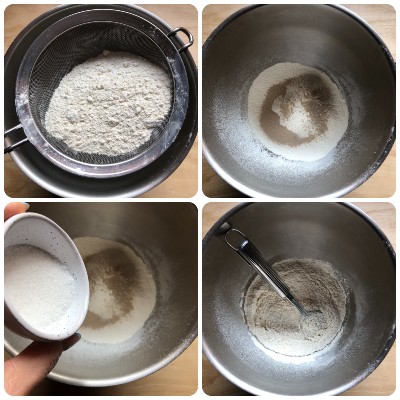
Sift the flour into the bowl of the stand mixer, then add the dry yeast and sugar, and mix with a small hand whisk. If you are using fresh yeast, dissolve it in warm milk before adding it to the flour.
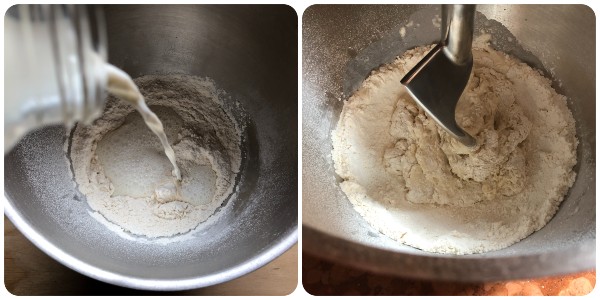
Add the warm milk and start mixing with the dough hook.
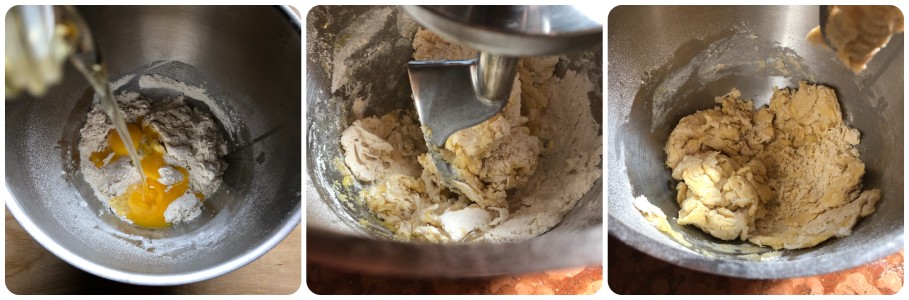
Then add the egg yolks and oil and continue mixing with the hook until the mixture comes together. If you are interested in some recipes to use the egg whites, you can find them by clicking HERE. Remember you can also freeze them.
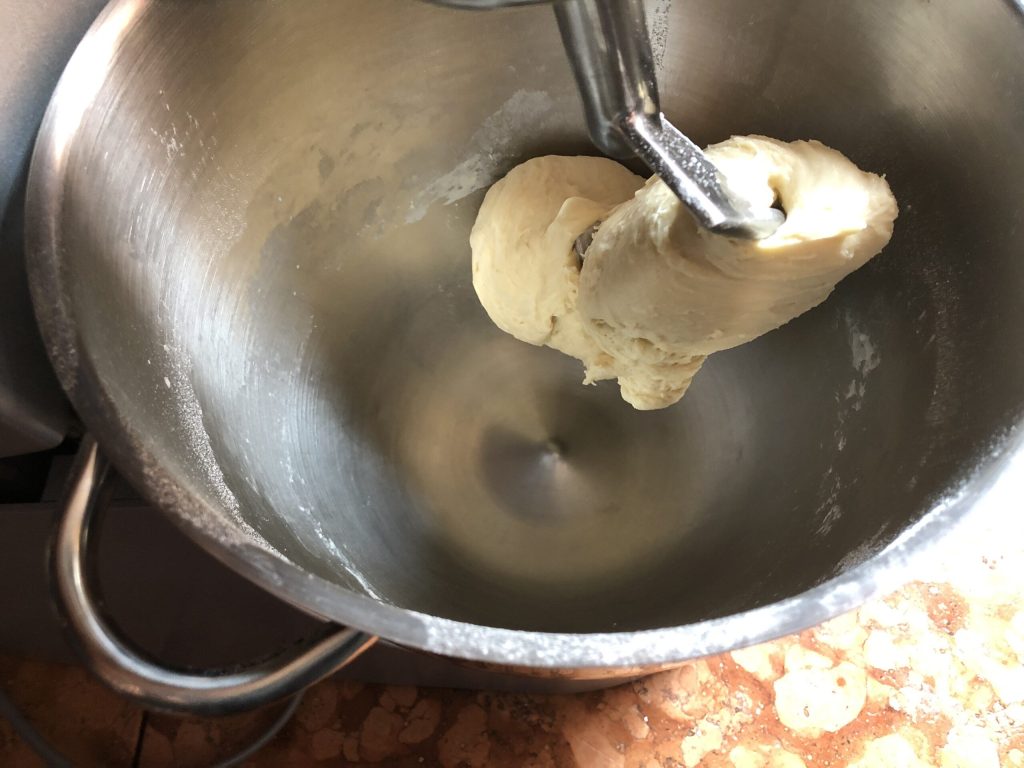
Now add the pinch of salt and keep mixing until you obtain a smooth and homogeneous dough that clings to the hook. If the dough is too hard, add a little milk. This can depend on the quality of the flour which affects liquid absorption.
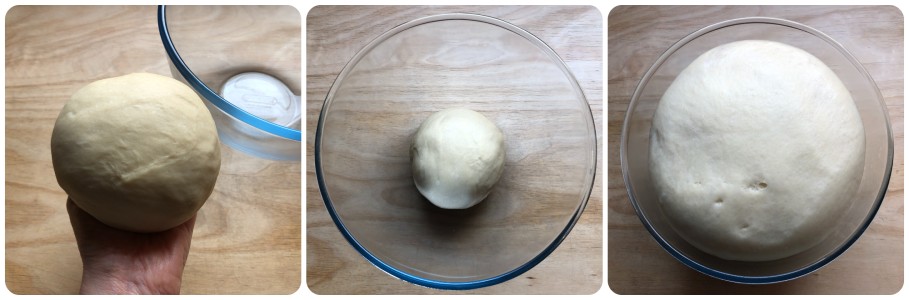
Transfer the dough onto the work surface, shape it into a ball, place it in a large bowl, cover with plastic wrap, and let it rise until doubled in volume in a warm place, away from drafts. As always, the rising time depends on the room temperature and can vary from 2 to 4 hours. Mine tripled in 3 hours.
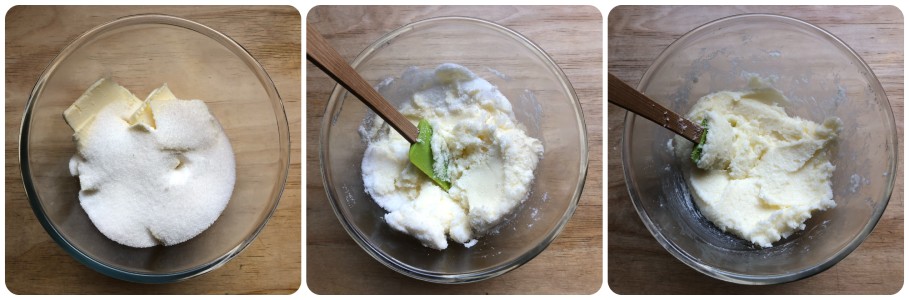
Place the butter in a bowl and let it soften at room temperature.
Once soft, add the sugar and mix vigorously with a spatula until a soft and smooth cream is obtained. If you prefer, you can mix them with an electric whisk.
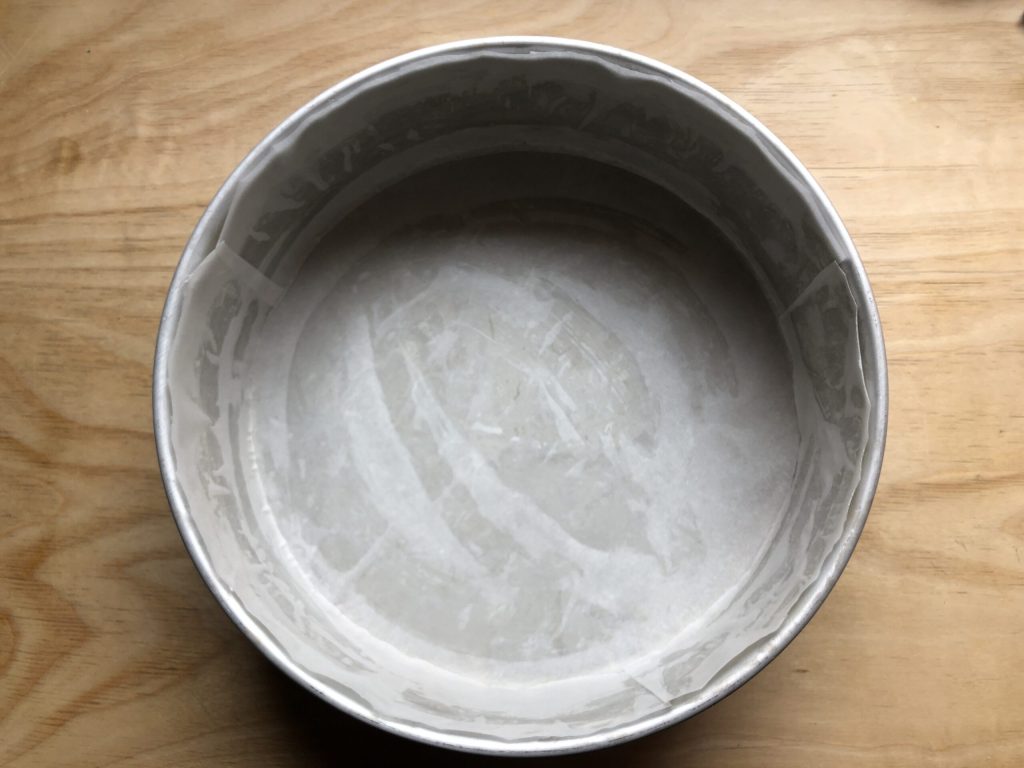
Line a baking pan with high edges, 26/28 cm (10/11 inches) in diameter, with parchment paper (for the correct procedure, read HERE).
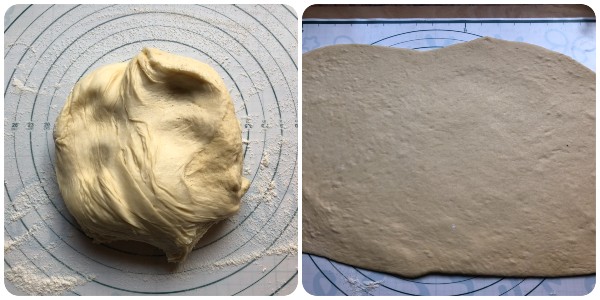
Transfer the dough onto a lightly floured work surface and roll it out with a rolling pin, forming a rectangle about 20 x 12 inches.
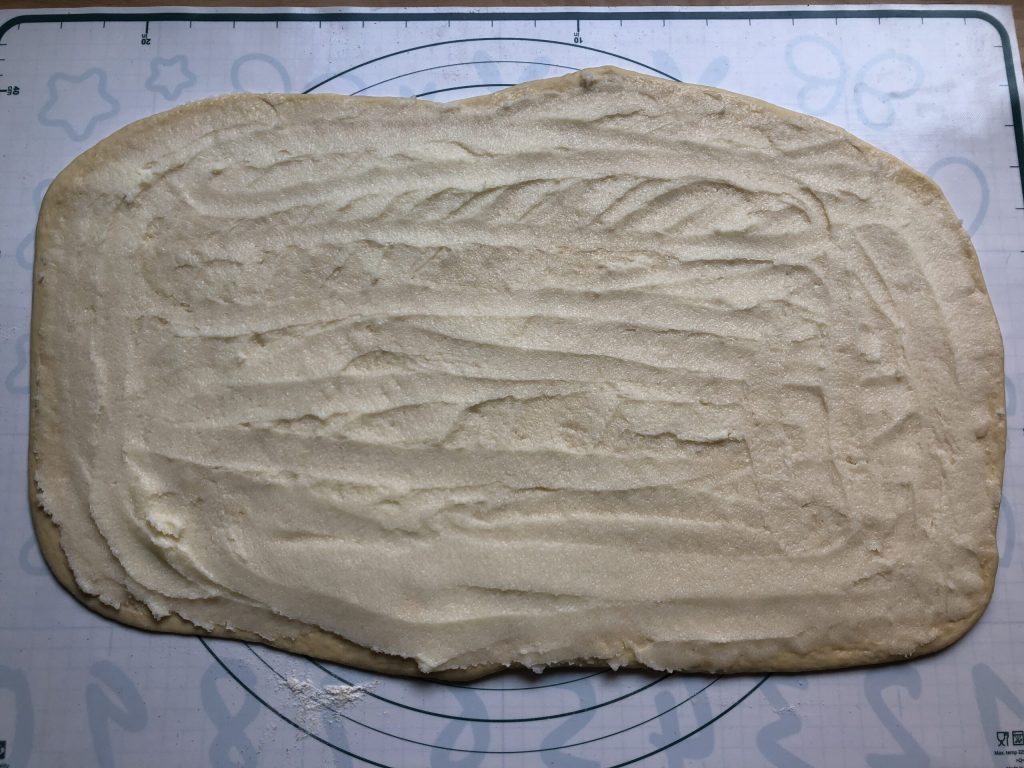
Spread the butter and sugar cream all over the surface of the rectangle.
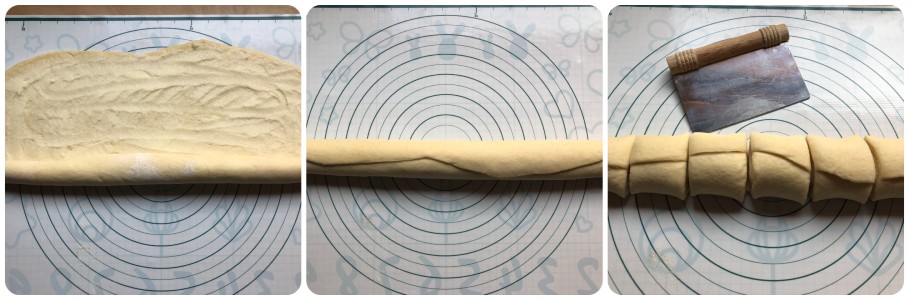
Then roll up the filled rectangle starting from the long side and cut it into pieces about 2.5 inches high.
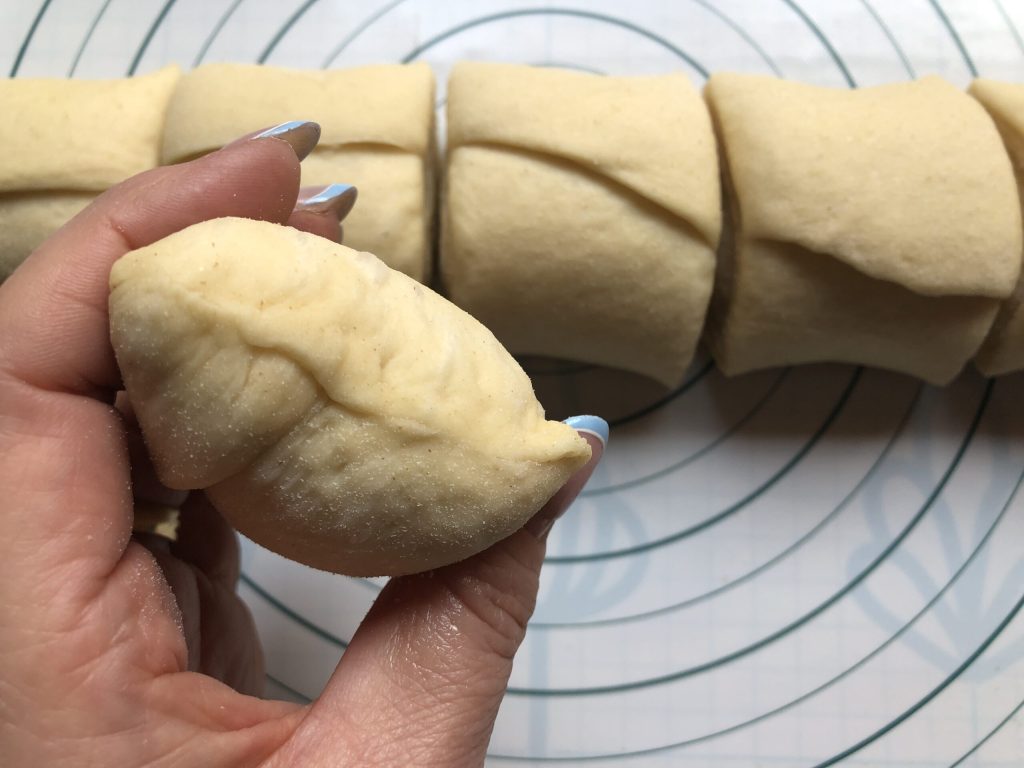
Close each piece tightly at the bottom to prevent the butter and sugar filling from leaking out and settling on the bottom of the pan.
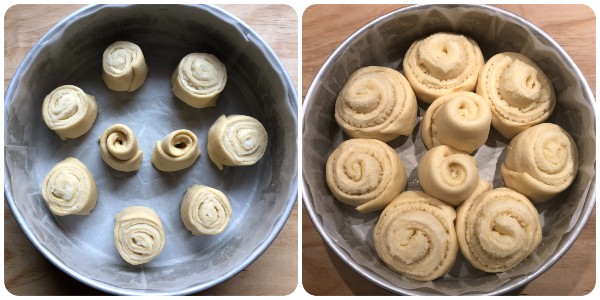
Arrange the roses in the pan, keeping them spaced apart, then cover and let them rise for at least three hours or until they have more than doubled in volume. I let them rise for 5 hours.
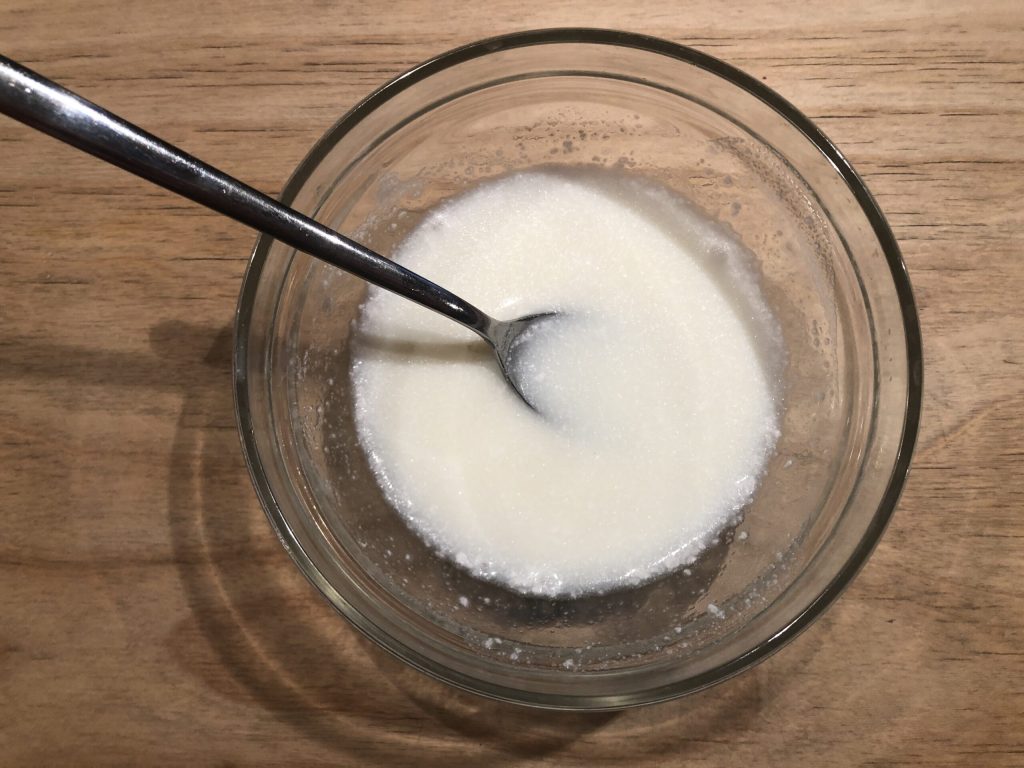
For the TOPPING, mix the milk with the sugar and vanillin in a small bowl.
Bake the rose cake in a preheated static oven at 350°F for 30/35 minutes: keep the cake covered with a foil for the first 20 minutes. Quickly remove the foil and, just before the end of cooking (5/6 minutes before), pour the milk and sugar mixture over the rose buds by spoonfuls. Once baked, remove the rose cake from the oven and let it cool completely before removing it from the mold. Transfer it to the serving plate and dust with powdered sugar. Enjoy! Paola