
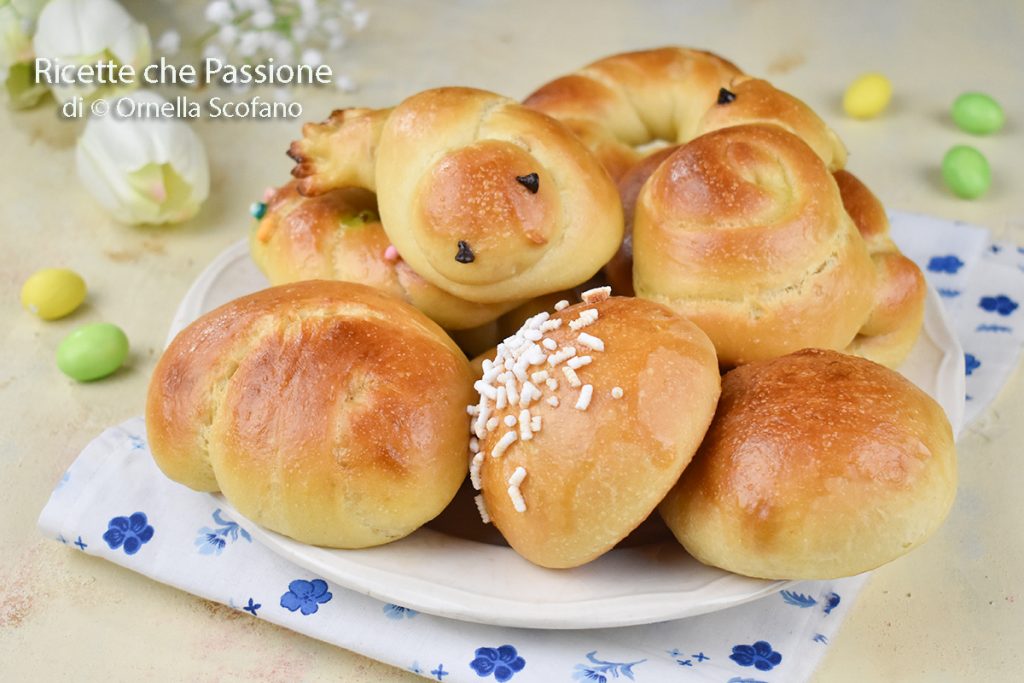
Calabrian cuzzupe brioche, traditional Easter sweets from Calabria, are prepared in the days before Easter so they’re ready for Easter breakfast and Easter Monday. There is another version called cuzzupa biscotto (a biscuit-style cuzzupa) which should not be confused with these brioche: the biscuit ones are large cookies often ring-shaped, or braided, or made into fun shapes like doves or rabbits, with local names that vary by area (in the Cosenza area they are called “cuculi”, usually braided, or “cudduri”, “cuddureddhi”, “cannaleri cu l’ova”, “cudduri cu l’ova”, or “vuta”, “sgota” and so on). Today’s recipe are leavened brioches, so it’s important to prepare a good dough to get soft buns that keep well, because typically many preparations made for Easter are prepared in advance, even a few days before. With this recipe I assure you you’ll get an excellent result — although to tell the truth we polished them off in 4 or 5 days! It’s lovely, even after lunch, to sip a good coffee and enjoy a delicious anise-flavored brioche. The distinctive feature of these cuzzupe brioche is their anise aroma: anise liqueur is used in the dough, and often the seeds are added too for a more intense flavor, but you can choose to make them with or without the seeds, or even omit the anise entirely and replace it with another liqueur or simply milk. In this recipe I used lard, but you can substitute olive oil or butter in the same amount, or slightly more. For the preparation I used the old grandmother’s method with a preferment (lievitino) — a loose dough of flour, water and just 1 g of fresh yeast that I let rise overnight, then in the morning I used the lievitino instead of fresh yeast. Usually we make them together with family or friends: people gather at the neighborhood wood-fired oven and organize the baking — each family bakes their own, perhaps after preparing the Easter bread and the legendary ‘mbipulata pasquale, a kind of bread stuffed with cured meats, cheeses and hard-boiled eggs, perfumed with parsley.
- Difficulty: Medium
- Cost: Economical
- Rest time: 2 Days
- Preparation time: 50 Minutes
- Cooking time: 15 Minutes
- Portions: about 15 pieces (about 3 oz / 80 g each)
- Cooking methods: Oven
- Cuisine: Italian
- Seasonality: All seasons
Ingredients for Cuzzupe Calabrian Easter brioche
- 0.80 cup all-purpose flour (farina 00)
- 0.42 cup water
- 0.67 tsp fresh yeast
- 7.05 oz lievitino (preferment)
- 2.00 cups all-purpose flour (farina 00)
- 2.00 cups Manitoba (strong) flour
- 0.42 cup milk
- 0.75 cup granulated sugar
- 5 tbsp lard or butter (or about 4 tbsp / 1/4 cup olive oil)
- lemon zest
- 3 medium eggs
- a little flour for working
- 1.33 tbsp anise liqueur
- to taste anise seeds
- 1 egg (for egg wash)
- to taste milk (for egg wash)
- sugar sprinkles
- chocolate chips
Tools
- 1 Bowl
- 1 Small bowl
- 1 Baking sheet
- 3 Silicone mats
- 1 Work surface
Steps for Cuzzupe Calabrian brioche
Prepare the preferment (lievitino) in advance: in a bowl dissolve 1–2 g of fresh yeast (about 1/3–2/3 tsp) in 100 g of water (about 3.5 oz / 0.42 cup), add the flour and mix with a fork or spoon until you get a very soft batter. Let it rise. Rising times vary depending on temperature; I left it to rise overnight — I prepared it in the evening using 1 g of yeast (about 1/3 tsp). You can also prepare it with a bit more yeast, about 4 g in total (≈1 1/3 tsp), and let it rise in a warm place at about 26°C (≈79°F) for about an hour or a little more.
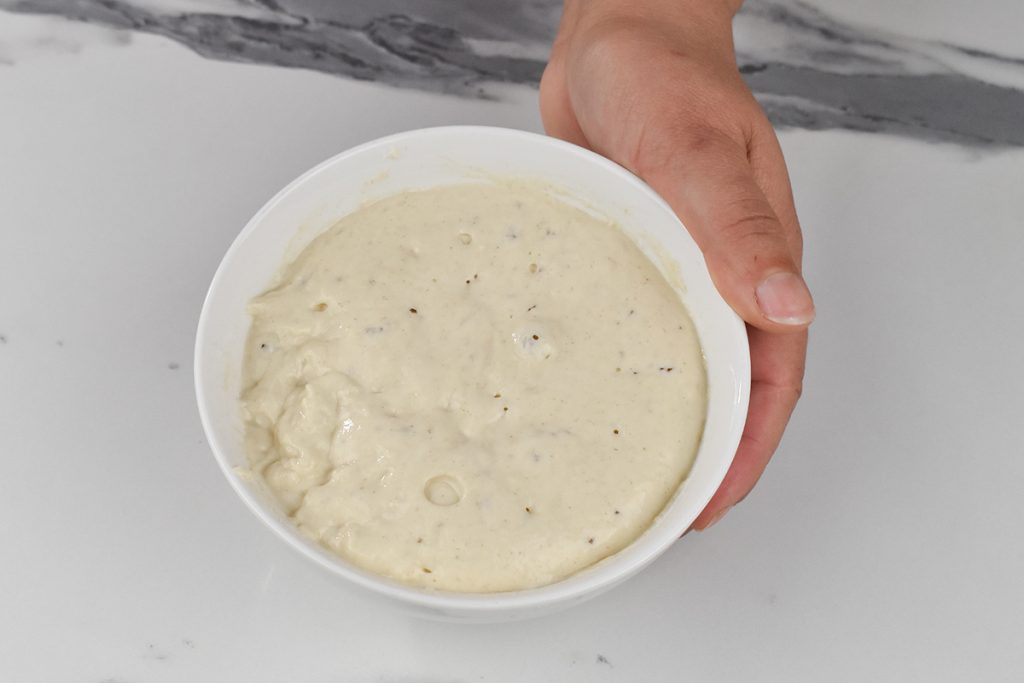
When the preferment is well risen — you will see it puffed and with bubbles on the surface — you can prepare the dough for the brioches.
In a large bowl put the preferment, add the milk and mix with a spoon, add one egg and mix again, add the zest of 1 lemon and mix, then add about 1 1/3 tbsp (20 g) of anise liqueur and mix again.
Then add the lard (or butter) and the sugar — add a little more sugar if you like them quite sweet; mine came out sweet but not overly so with 150 g (about 3/4 cup) sugar. Mix again. At this point start adding the two flours, a little at a time, continuing to work with a spoon.
After adding about half of the flour, add another egg and mix; then add the last egg and continue working. Gradually add all the flour; when the dough becomes firmer, work it by hand on a floured surface. I added some anise seeds halfway through, as is traditional in Calabria — for these Easter brioches it is customary to add anise seeds to the dough. Work the dough well and then place it to rise in a bowl. Let it rise at least 8 hours at a temperature of about 18–20°C (about 64–68°F), or let it rise a bit in a warm place and then at room temperature — adjust the rising temperature to fit your schedule. I let mine rise for 2 days in a cool place.
When the dough has risen, perform two sets of letter-folds (four-fold turns); here are details for strengthening folds. Between each fold allow at least 10 minutes of rest.
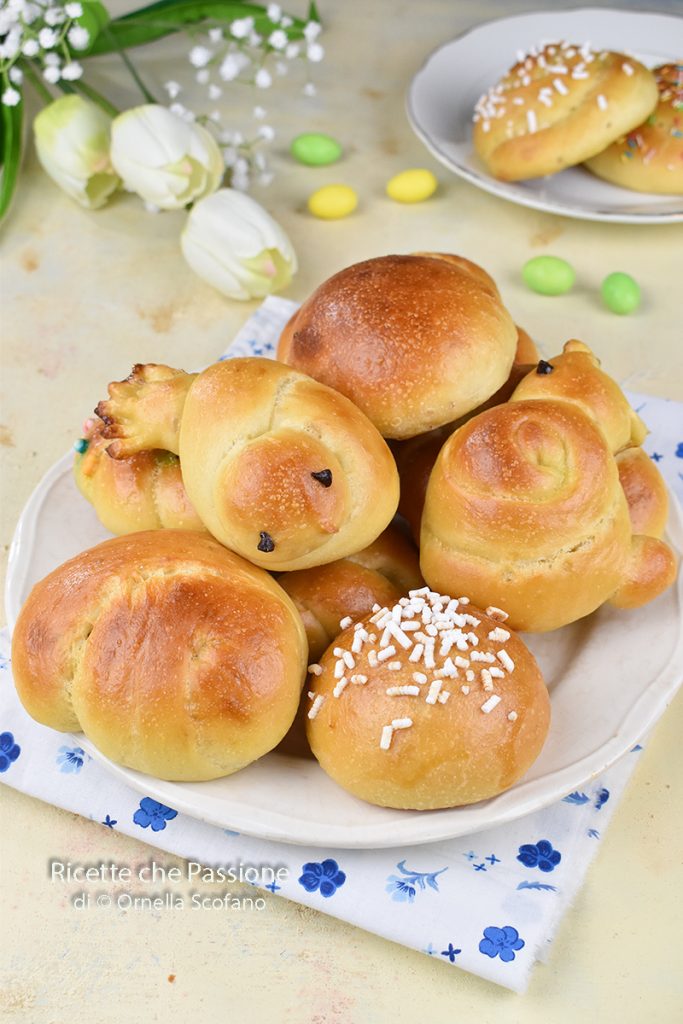
After folding, divide the dough into portions of about 80–100 g (about 3–3.5 oz) and shape each portion into a cuzzupa: make a round brioche shape, or roll the dough into a rope and coil it into a snail, or shape little doves or bunnies. Alternatively, fold the rope in half, join the two ends and braid — you can make a braid or turn it into a ring.
Place the formed cuzzupe brioche on a baking tray lined with a silicone mat or parchment paper, spaced well apart — about 6 per tray. You will have about 3 trays, roughly 15–18 pieces.
Let them rise again; rising times vary with temperature: in a warm place it will take about 2–3 hours; at a cooler room temperature of around 13–15°C (about 55–59°F) allow at least 8 hours or more.
When the brioches are well risen, brush them with an egg-and-milk mixture (about 20–30 g of milk — roughly 1–2 tbsp). You can decorate the bunnies and doves with chocolate chips for eyes, or top other brioches with colored sugar sprinkles. Usually only egg is used for glazing, but they can become too dark; brushing with milk and egg keeps them a bit lighter and softer.
Bake one tray at a time in a preheated conventional oven at 180°C (about 356°F) for approximately 15–20 minutes, depending on your oven. When nicely golden, remove from the oven. Let cool on a rack, and once cooled place them under a glass dome — they will keep for several days, remaining very soft and delicious at any time of day.
They are also delicious filled; if you wish you can warm them slightly before eating and they will seem freshly baked. They can also be frozen.
You can substitute lard with butter or oil, including olive oil.
