
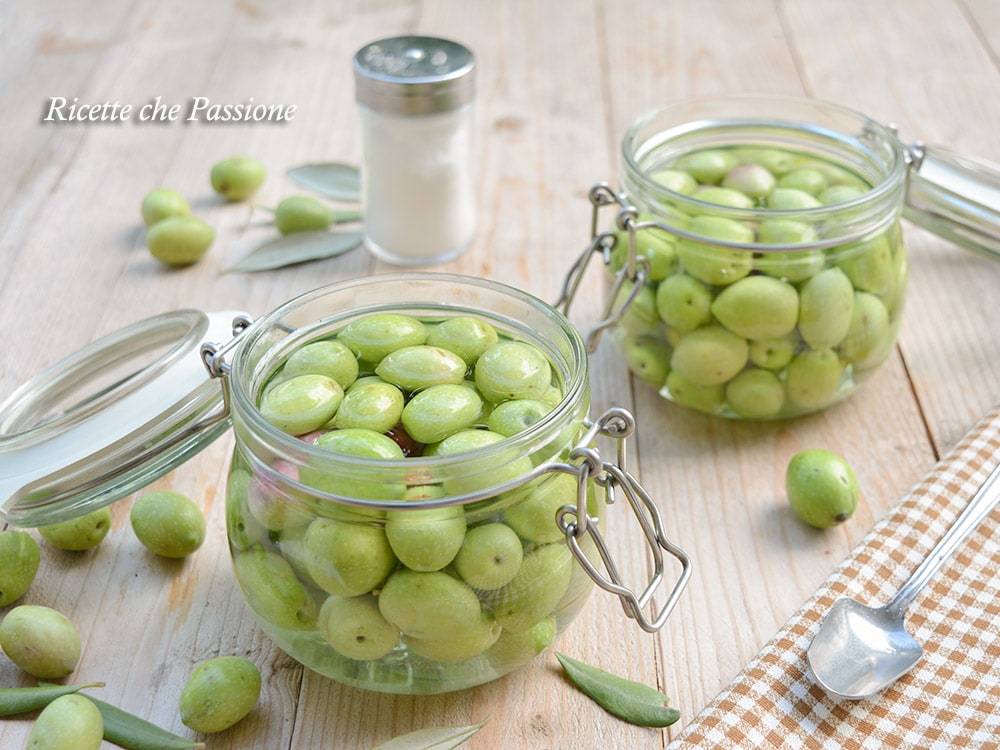
Brined olives, an easy method from Calabrian tradition, using only water, salt, and herbs, without lye. Brined olives are a delightful homemade preserve to prepare in autumn, the olive harvest season. Brining is an easy way to preserve both green and black olives. For this special preserve, only water, salt, and herbs are used. Many preparations involve the use of caustic soda, which is dangerous to handle, so we avoid using it and rely on the traditional Calabrian grandmother’s method to sweeten the olives. Grandma teaches us that for quick brined olives, which means a couple of months compared to other methods that sometimes require a whole year or more, you prepare the olives before brining. Brine is nothing more than water and salt with added aromas. To sweeten the olives quickly, instead of using soda, soak them in cold water for about twenty days, changing the water at least twice a day. This process will initiate the debittering of the olives. This step must be done before brining, otherwise, the times will lengthen considerably. Once this time has passed, they can be brined with the aromas, and the olives will keep for over 2 years and will be ready in just a few weeks, with no need to wait months. Brined olives are perfect for making tantalizing appetizers or a rich buffet of starters. They are never missing in the rustic Calabrian appetizer but are also great to use in the preparation of our favorite dishes, as many famous Mediterranean dishes include brined olives, be they green or black, like my delicious mixed vegetable caponata.
To prepare brined olives, I select the most beautiful, plump, and shiny yet firm olives, without too many bruises and without marks, to preserve them best. Those who are not lucky enough to have a tree in the garden or countryside can buy them already harvested and selected, trust me, they will be just as good. You asked where to buy olives, you can find them at local markets, here even from trucks, they sell them in bags, or from your trusted greengrocer, if not from the farmer who owns an olive grove. In Calabria, the Carolea variety is very common, which is very meaty and sweetens in a short time, but those who find other olives can safely prepare them in brine, perhaps simply extending the debittering period of the olives by a few days. I have also tried the Nocellara variety, which also has more or less the same debittering period. So here is the recipe to preserve brined olives, so you can prepare them too, and prepare them because they are delicious, and they are also a very important food in the Mediterranean diet, they are rich in antioxidants, which counteract cellular aging, and they are also rich in good fats that lower cholesterol levels in the blood and help prevent cardiovascular diseases.
Here are all the recipes for preserving green and black olives.
How to preserve olives
- Difficulty: Very Easy
- Cost: Economical
- Rest time: 20 Days
- Preparation time: 20 Minutes
- Portions: 2 jars
- Cooking methods: Boiling
- Cuisine: Italian
- Seasonality: Autumn
Ingredients for preserving green (or black) olives in brine
- 2.2 lbs green olives
- 2.8 oz salt
- 4.2 cups water
- 2 leaves bay leaf
- black peppercorns to taste
- chili peppers to taste
- as needed wild fennel
- lemon to taste
- optional garlic
Tools for preserving olives in Calabrian brine
- 2 Jars
- 1 Small pot
- 1 Bowl
Steps for preserving olives in Calabrian brine
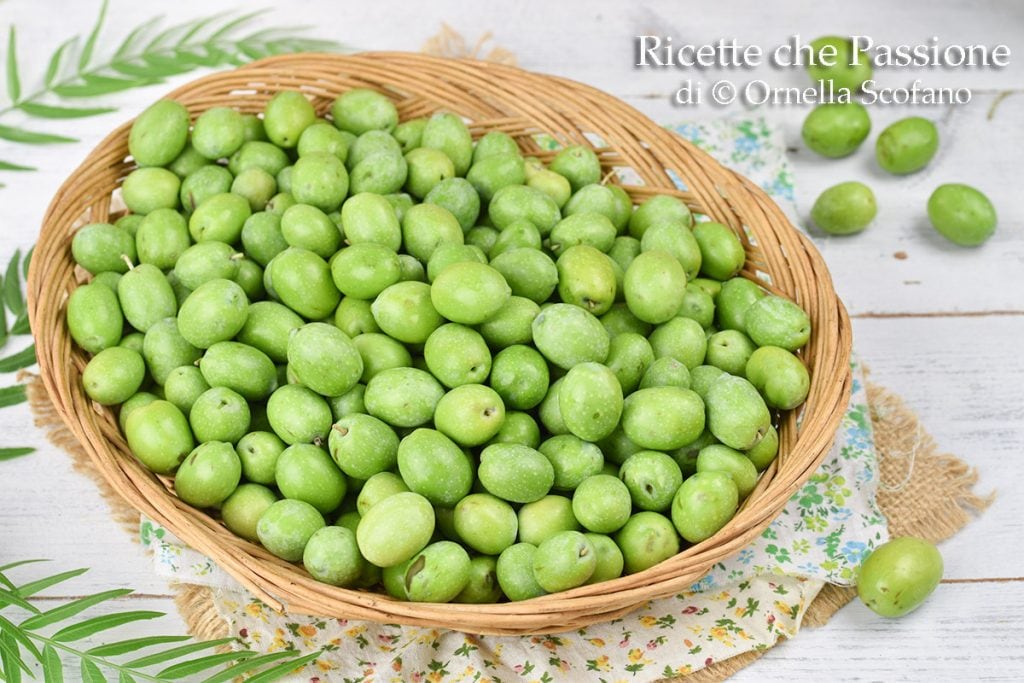
For the preparation of brined olives, we procure excellent olives, without bruises, and without marks.
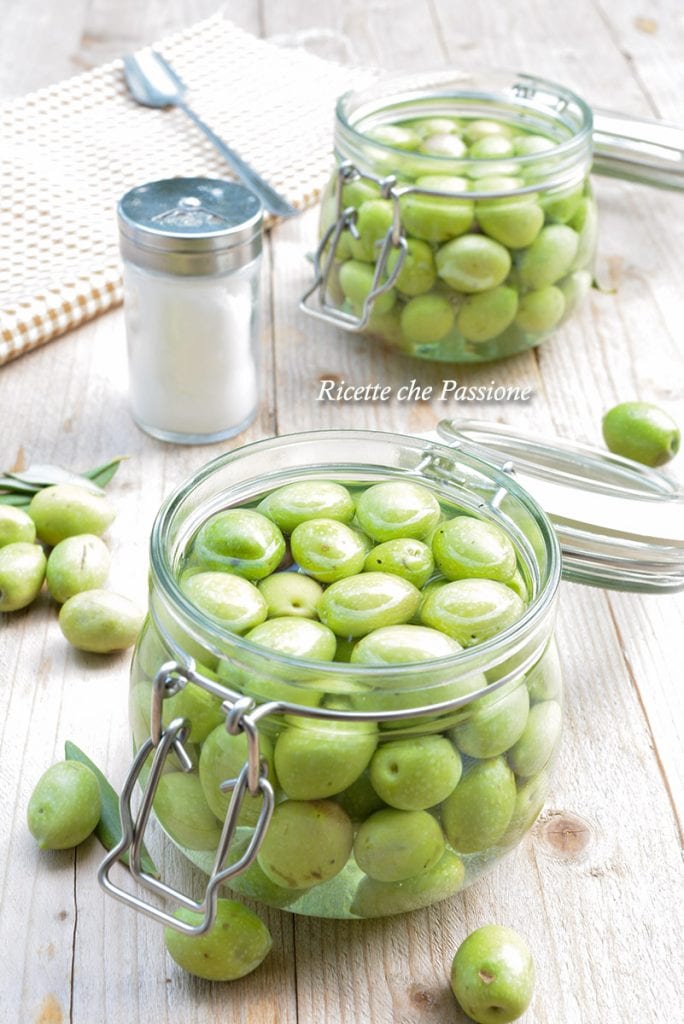
1st step, olive debittering. We wash the olives well and soak them in clean water without salt in a jar or in a bowl. We leave them soaking until they are sweetened, it takes from 10 to 20 days or even more, depending on the variety of olives we are using. We change the water of the olives at least once a day, better twice. So for 10-20 days, we keep the olives soaking in cold water and replace the water with clean water every day, even twice a day to speed up the process. Don’t worry if you see the olives getting stained during the debittering period in water, it’s normal for them to become like this, gradually the color will become more uniform. No need to use salt during this period.
Freshly picked green olives
2nd step. Sweetness test. To see if the olives are sweetened after 10 days, we can try one, if it’s slightly bitter, we can preserve them. If the olives are very bitter, we continue with the debittering process by keeping them soaking. If we preserve them slightly bitter, they will become sweeter in brine, but if they are very bitter, it will take much longer.
3rd step. Preparing brine for the olives. We put water and salt in a small pot, bring it to a boil, turn off the heat, and let it cool completely. I use 2.8 oz of salt for every 4.2 cups of water, the amount of liquid to prepare varies depending on the quantity of olives to preserve, we don’t have to use all the water but just enough to cover the olives. For every 4.2 cups of water, we will use 2.8 oz of salt, but small variations can be made, especially if the olives are very large, up to 3.5 oz of salt per liter can be used, and conversely, if the olives are small, even 2.5 oz of salt per 4.2 cups of water.
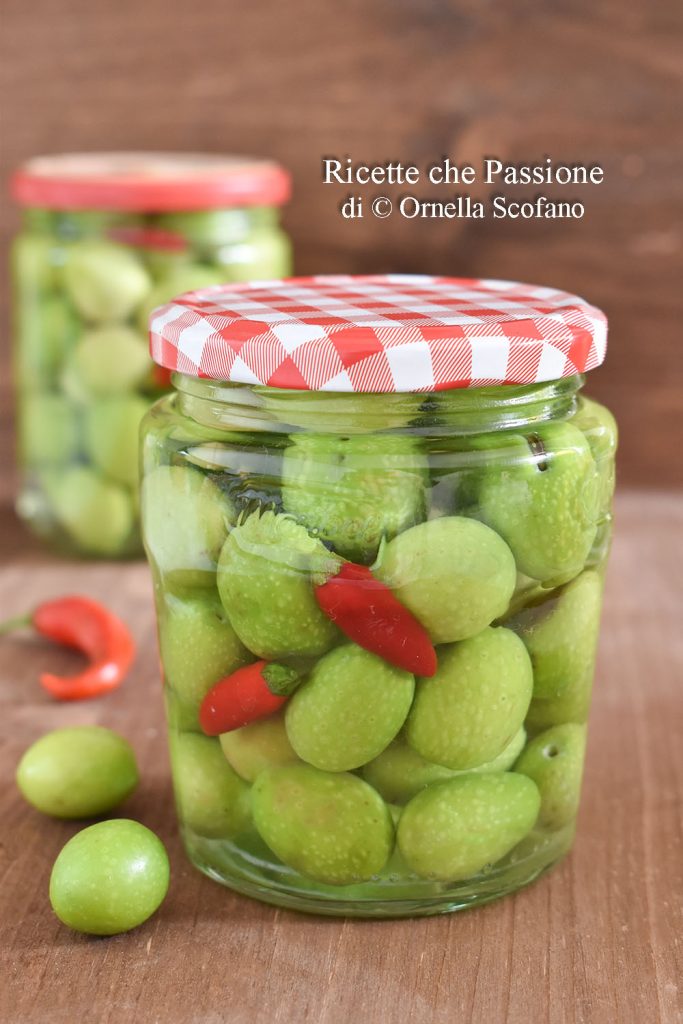
4th step. Preserving the olives in jars. We put the sweetened olives in sterilized jars, optionally adding, but it’s not necessary, herbs such as bay leaf, chili pepper, garlic, fennel seeds, black peppercorns, or even chilies treated earlier with vinegar, for 12 hours, then cover with cooled brine, using enough water to cover the olives well, not all. You can also use a few slices of lemon, which help preserve the green color, or a tablespoon of vinegar. We use special separators to keep the olives below the water level and close the jars without tightening too much. During the first weeks, the jars should not be sealed hermetically but only closed slightly as fermentation may occur.
5th step. Storing the olives in the pantry. We leave our olives in jars in the pantry for a few months, during which they gain flavor, continue to sweeten, and become perfect for tasting. It usually takes a few months to fully enjoy them, but we can try them after the first month, and if they are still bitter, we leave them to rest more, then they will be ready to enjoy. Usually, mine are ready by Christmas, as I serve them for festive appetizers. You will also see that the color will be uniform by the end.
Brined olives
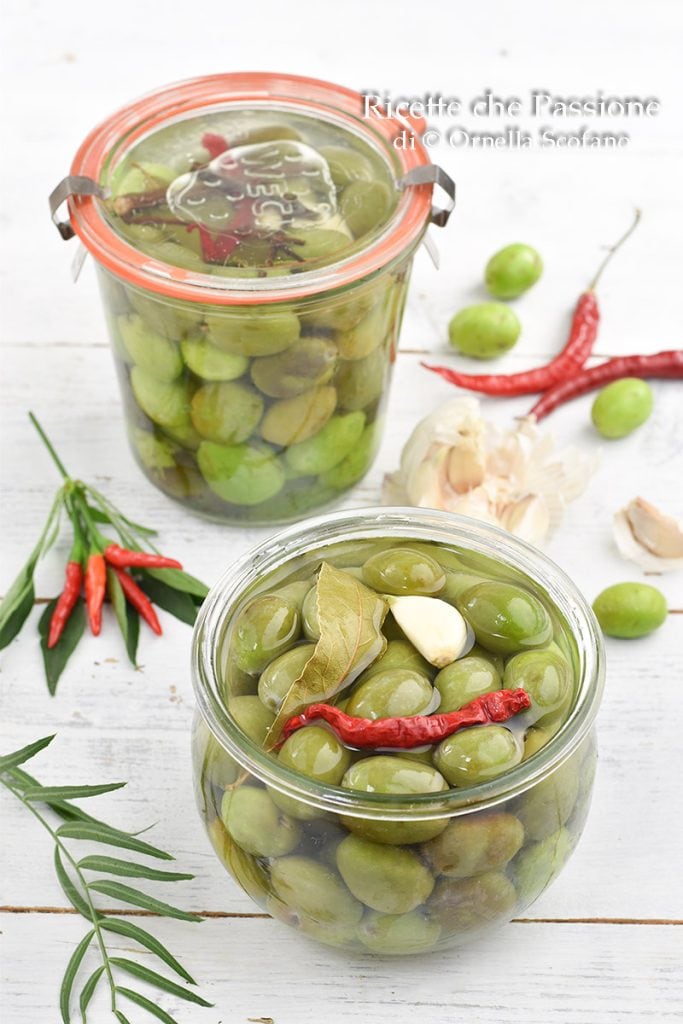
The page contains affiliate links
Good to know.
Never overfill the jars but use pressers to keep the olives submerged in the brine, so they remain well covered for perfect preservation over a long time.
During the first phase of preservation, in the first weeks of olive brining, fermentation can occur, making the water slightly effervescent, which is not dangerous, but normal for this phase when the olives are not fully debittered, causing this process. Over time, this effervescence will disappear, and the olives will not suffer. For this reason, during the first phase, it is advisable to cover the jars but not seal them hermetically.
A white film may also form on the surface of the brine, which is normal; the olives are not spoiled, just wash them and use them as usual in the kitchen.
And here they are ready, the olives after 2 years still firm and delicious, the color becomes uniform at the end of the process, while during the process, it’s normal to see them with spots.
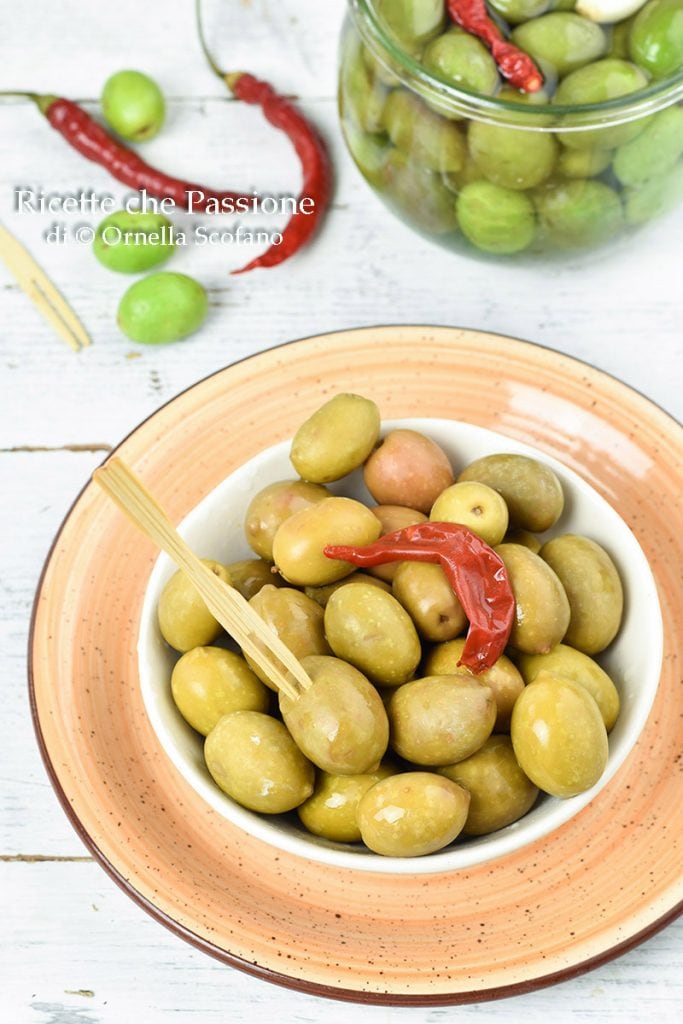
You can prepare brined olives with vinegar, they become even tastier.
FOR A CORRECT PREPARATION OF HOMEMADE PRESERVES
For a correct preparation of homemade preserves, consult the guidelines of the Ministry of Health.
