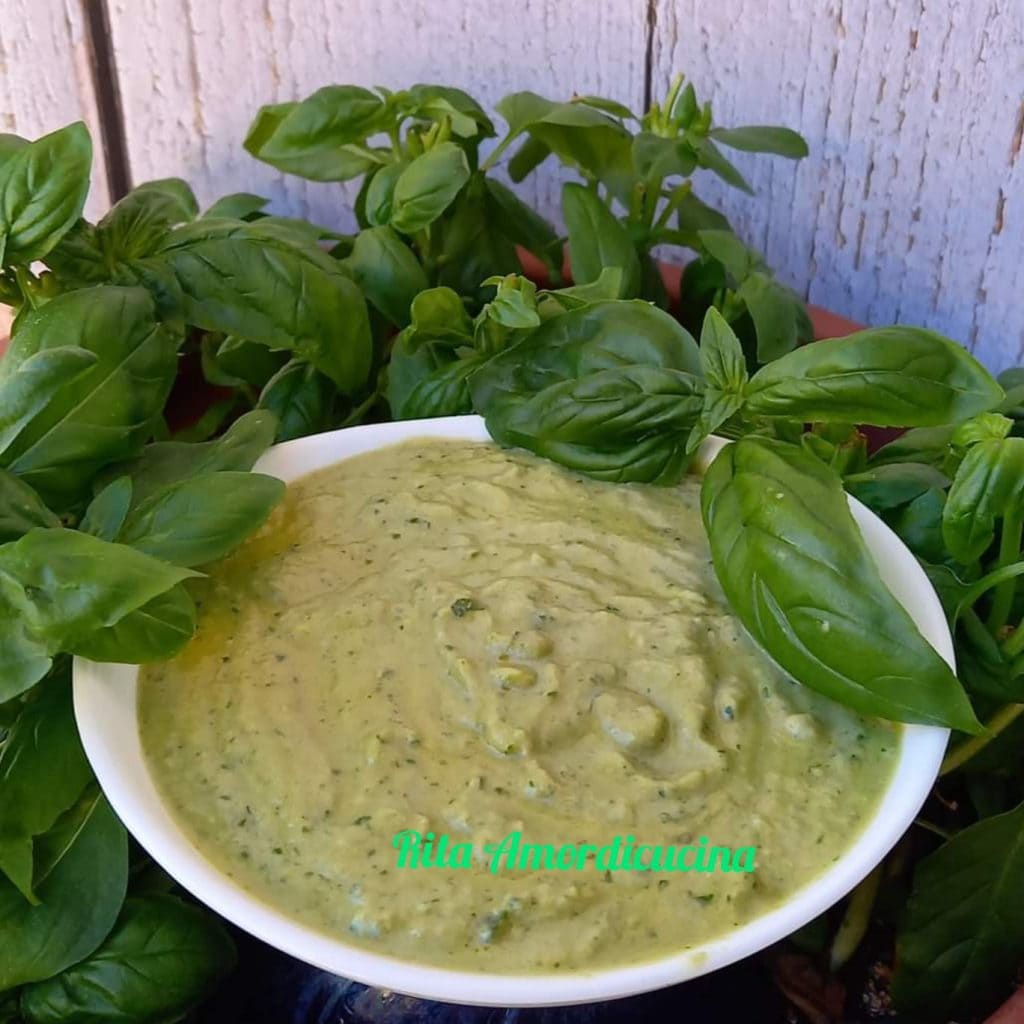
Pesto alla Genovese Recipe RitaAmordicucina.
A ‘poor’ sauce was already in vogue in Roman times, but over the centuries it underwent various modifications. Essentially, it was created to avoid wasting cheese crusts.
Pesto underwent a real evolution, and in 1863 the first official recipe appeared: Giovanni Battista Ratto published the first book dedicated to Genoese gastronomy, in which pesto is discussed in modern terms. In fact, Ratto’s recommended recipe was to use garlic (alternatively marjoram and parsley), grated Dutch cheese and Parmesan, and pine nuts to be pounded in a mortar with a little butter, then dissolve the final result with oil.
Today, almost no one makes pesto in a mortar, lack of time and the advent of more modern blenders/robots have set aside the classic tool.
Today I will give you some tips to prevent the pesto prepared with blenders from oxidizing, because the centrifugal force of the appliance develops heat that is harmful to the success of this splendid dressing. Even with the Thermomix.
You might also be interested in:
- Cost: Very economical
- Preparation time: 20 Minutes
- Portions: for 2 lbs of pasta
- Cooking methods: No cooking
- Cuisine: Regional Italian
- Region: Liguria
- Seasonality: All seasons
- Energy 148.47 (Kcal)
- Carbohydrates 0.55 (g) of which sugars 0.11 (g)
- Proteins 2.42 (g)
- Fat 15.92 (g) of which saturated 3.13 (g)of which unsaturated 1.74 (g)
- Fibers 0.21 (g)
- Sodium 272.50 (mg)
Indicative values for a portion of 30 g processed in an automated way starting from the nutritional information available on the CREA* and FoodData Central** databases. It is not food and / or nutritional advice.
* CREATES Food and Nutrition Research Center: https://www.crea.gov.it/alimenti-e-nutrizione https://www.alimentinutrizione.it ** U.S. Department of Agriculture, Agricultural Research Service. FoodData Central, 2019. https://fdc.nal.usda.gov
Ingredients
Let’s go shopping
- 3 oz basil (leaves)
- 1.4 oz Parmesan Reggiano DOP (grated)
- 1.4 oz Pecorino Romano (grated)
- 0.75 cup extra virgin olive oil
- 1/2 teaspoon salt
- Half clove garlic
- 1 oz pine nuts
Tools
- Immersion Blenders
- Knife
- Colander
- Towel
- Bowl
Preparation
Pesto alla Genovese Recipe RitaAmordicucina
The first thing to do at least 2 hours before is to put the blender jar and the oil in the fridge.
Alternatively, if possible, it would be better for the jar to stay in the freezer for 30 minutes.
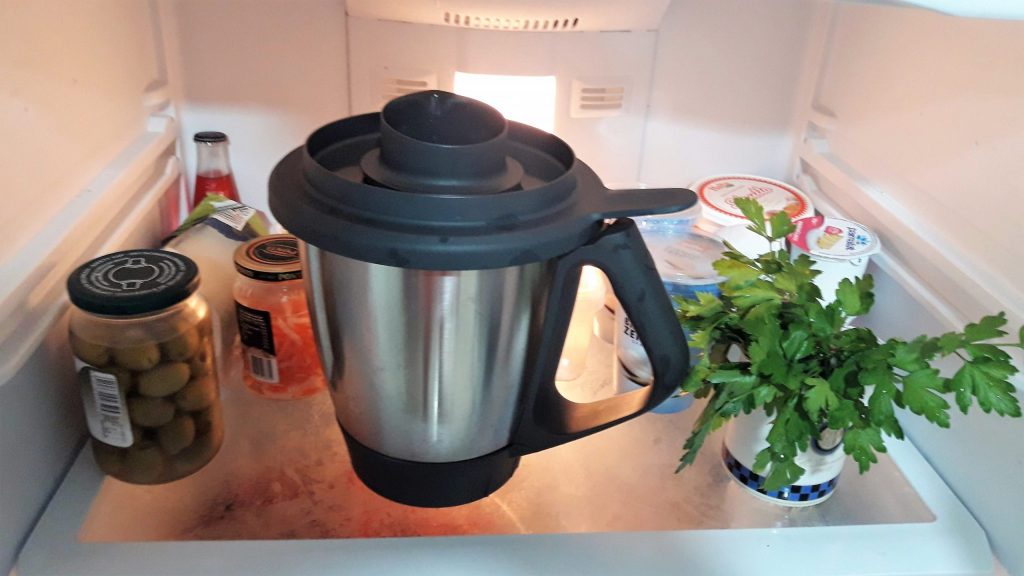
This operation will ensure that the cold prevents the pesto from overheating, thus darkening.
For this reason, it would be more appropriate to prepare one jar of pesto at a time, and then cool it again.
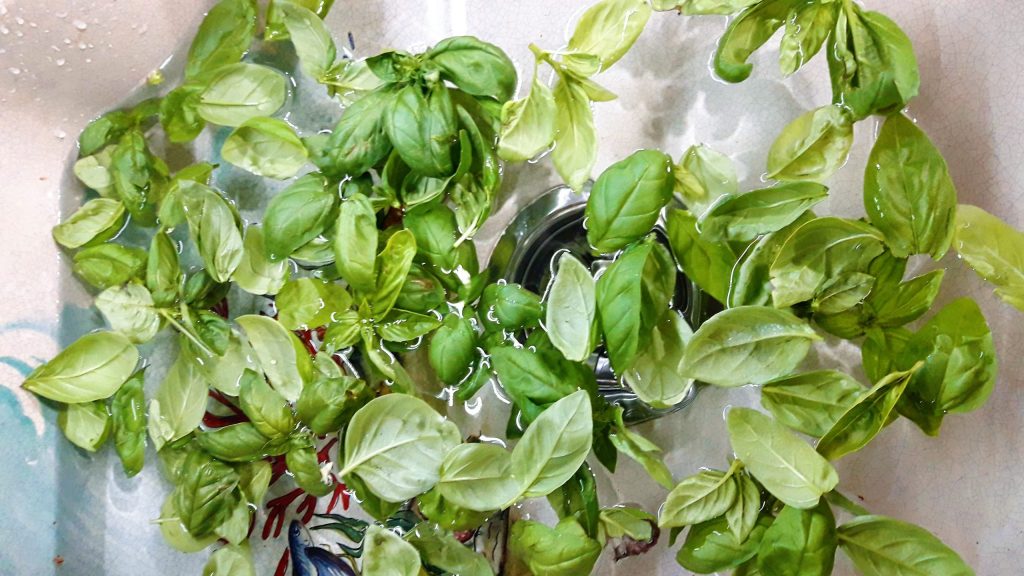
In the meantime, while the jar and oil cool, we proceed to detach the leaves one by one from their stem, then wash them, drain them, and pat them dry with a towel.
Put the basil, garlic, and a small pinch of salt in the blender.
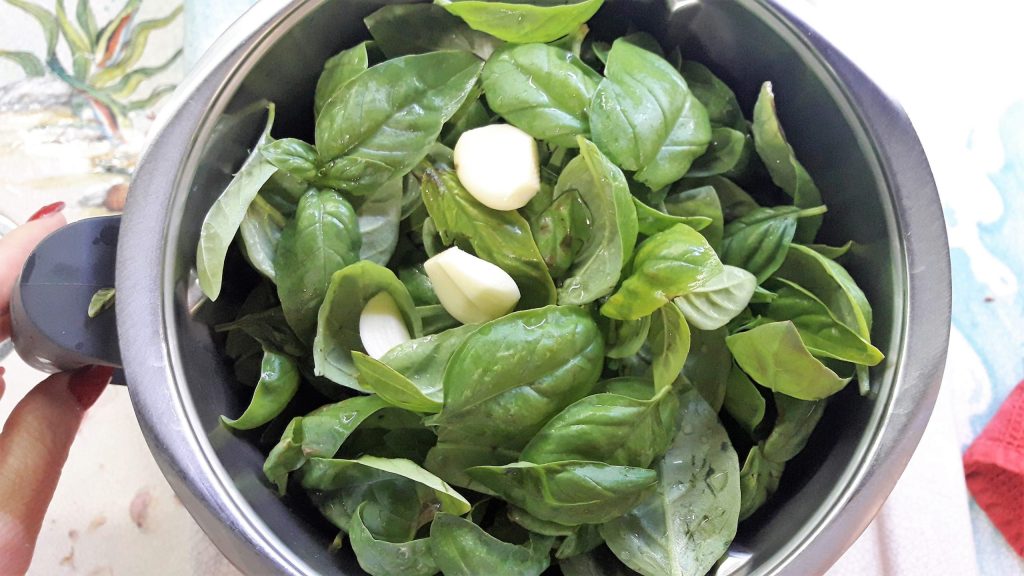
Blend at maximum speed to shorten the time.
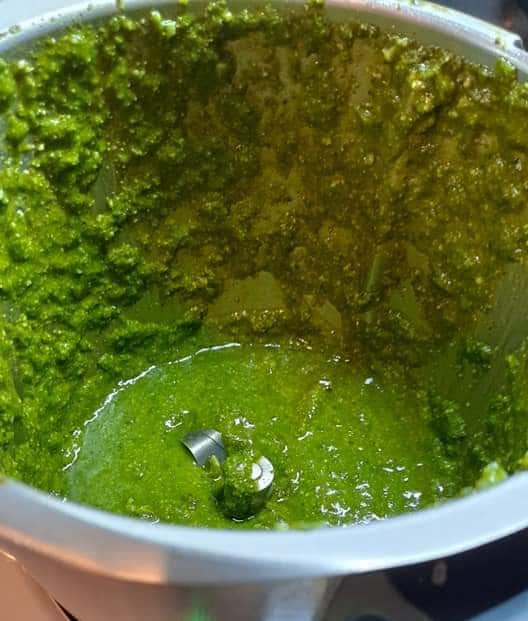
When the mixture appears homogeneous, pour it into a bowl and add the grated cheeses. Mix gently with a teaspoon.
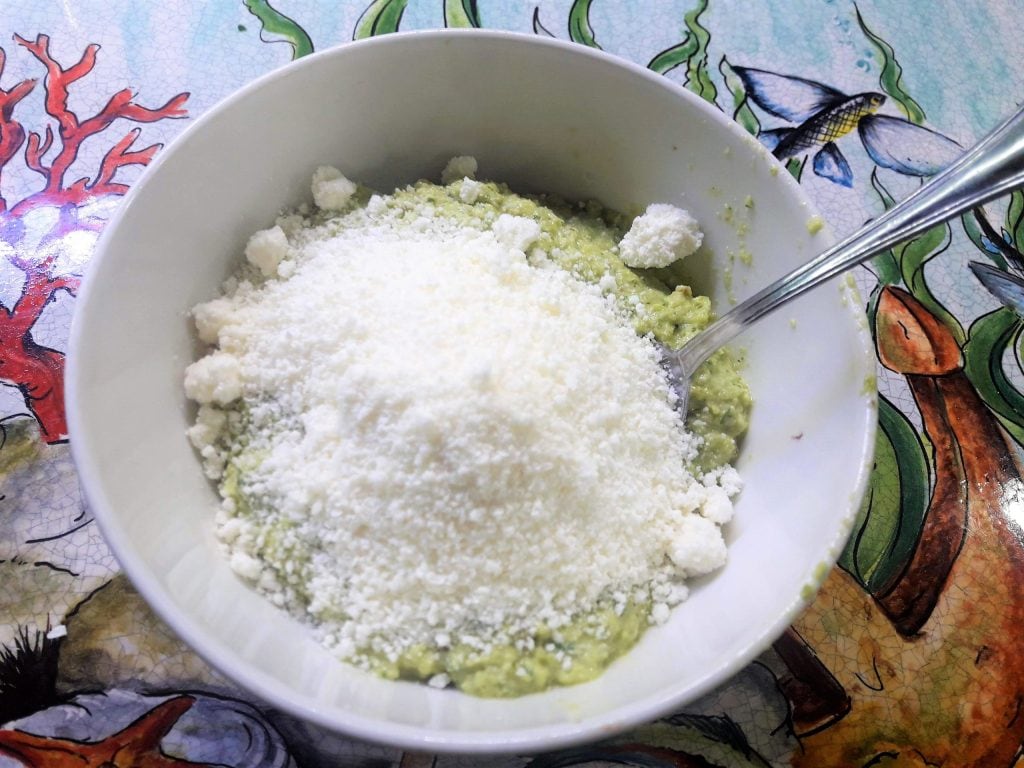
At this point, the pesto is ready. We just need to decide whether to freeze it in small containers or use it immediately.
Here is the Pesto alla Genovese Recipe RitaAmordicucina.
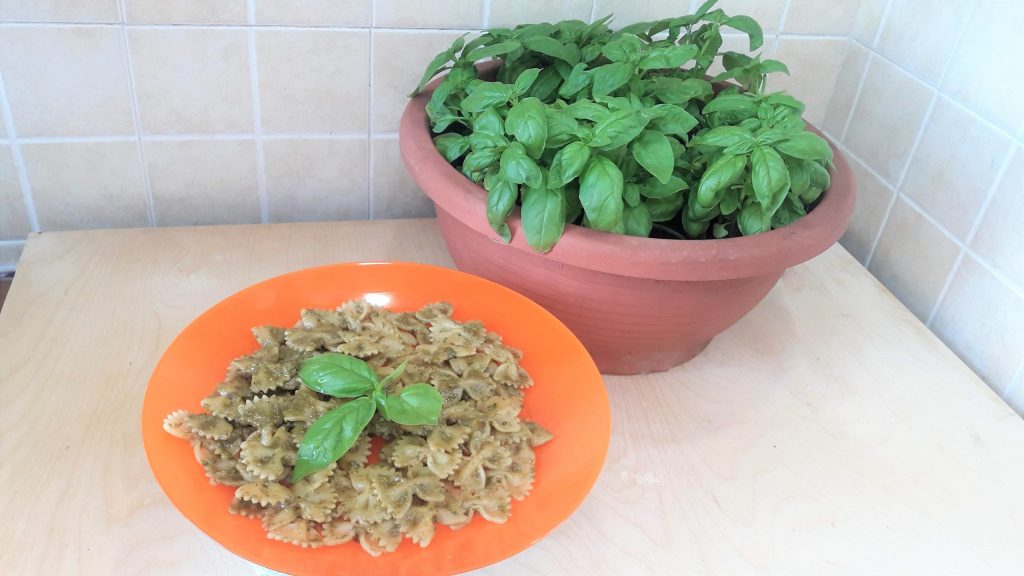
For those using the Thermomix, the mode is turbo for 2 seconds, 3 or 4 times, then gather with the spatula, and if necessary, you can repeat the operation.
Here it is ready and tasty, the Pesto alla Genovese Recipe RitaAmordicucina
storage
Pesto alla Genovese Recipe RitaAmordicucina. You can keep this condiment in the fridge for up to 3 days, making sure the exposed part is always covered with oil.
Or you can freeze it for up to 6 months.