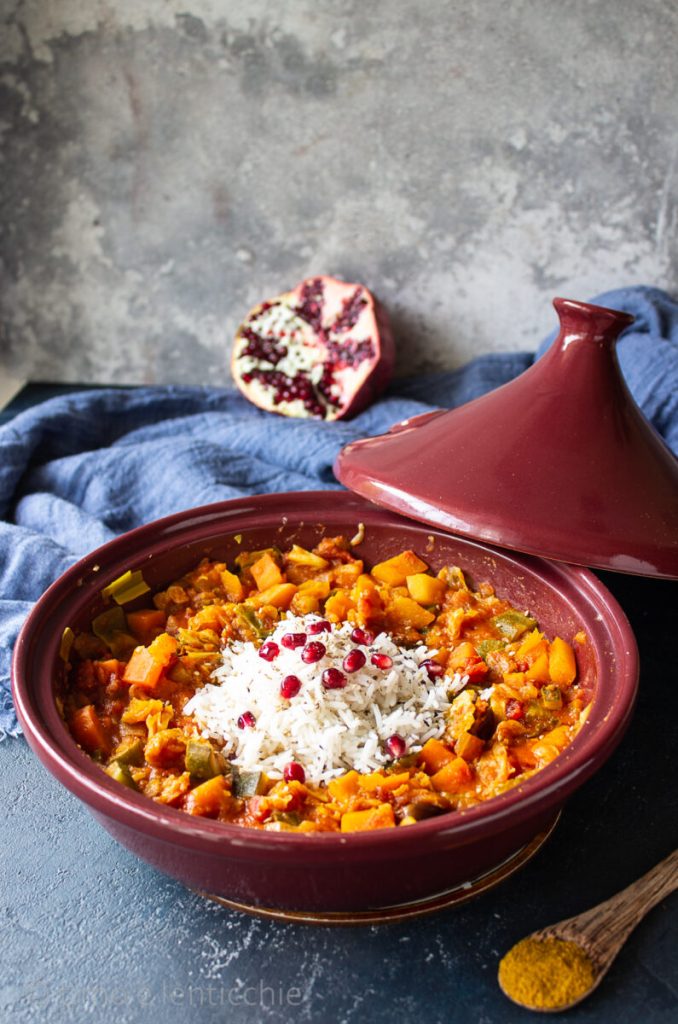
Can you smell the spices in the air? It’s this pumpkin and date tagine spiced with ras el hanout. Today I introduce you to a delicious spice called ras el hanout.
This spice makes any dish special, originally from Morocco, it’s spicy, sweet, and fruity. Wonderfully aromatic, it reminds of caramel and fresh flowers, slightly spicy and peppery.
It’s a spice mix; its name in Arabic means the best shelf in the grocery store, where the most precious spices are kept. A mix of 30 spices, ras el hanout is not easy to prepare at home.
What’s in it? You’ll find coriander, cardamom, green and black cumin, cinnamon, black pepper, anise, chili pepper, turmeric, nutmeg, star anise, ginger, garlic, cloves, sweet paprika, rose petals, lavender, grains of paradise (melegueta pepper).
Every family in North Africa has its own recipe, always different but complex. I say this spice is wonderful because it’s very delicate and goes well with everything. The only precaution is to add it in the last minutes of cooking, otherwise it loses flavor.
Do you know about the tajine? Do you use it? After publishing this article, an interesting discussion started on my Facebook page about using a tajine and which one to buy.
I have the one you see in the photo, glazed clay, but apparently, the original unglazed clay one is even better. The only precaution when buying the unglazed one is to leave it in water for a couple of hours, bottom and lid, dry it, rub it with oil, then put it in the oven for a couple of hours at 300°F. It’s the same process we do with clay pots when we first buy them. Be sure there’s a kind of small cup on the lid, used for adding water.
Do you know the history of the tajine? Its name comes from Berber and means: shallow earthenware pot, skillet.
The history of the Moroccan Tajine pot is inherent in its name, derived from the Berber language.
The term referred to the ‘shallow earthenware pot’ or the ‘casserole/skillet’.
It is said to have originated in the time of Harun al Rashid in 700 A.D., an Abbasid caliph. If you’ve read One Thousand and One Nights, there are writings about cooking in a tajine.
And now let’s move on to the pumpkin and date spiced tagine, but first, I’ll leave you with other tajine recipes:
- Difficulty: Very Easy
- Cost: Very Economical
- Preparation time: 15 Minutes
- Portions: 4 people
- Cooking methods: Stovetop
- Cuisine: Moroccan
- Seasonality: Autumn, Winter
Ingredients for Pumpkin and Date Tagine
- 2 1/2 cups pumpkin (chopped)
- 1 1/2 oz savoy cabbage
- 3 tablespoons extra virgin olive oil
- 1 carrot
- 1 white onion
- 1 clove garlic
- 10 dates
- 1 teaspoon lemon (zest)
- to taste sea salt
- to taste pepper
- 5 oz vegetable broth
- 7 oz tomato pulp
- 1 teaspoon ras el hanout
- 1 teaspoon lemon juice
- 3 1/2 oz Basmati rice, cooked
- 2 tablespoons pomegranate seeds
- 1 tablespoon gomasio
Tools
- 1 Tajine
Steps for Pumpkin and Date Tagine
Wash the pumpkin, peel it, and cut into pieces. Wash and peel the carrot and cut into rounds. Wash the savoy cabbage and chop it into small pieces as well.
Chop the onion. Pour a tablespoon of oil into the tagine, add the chopped onion and let it stew for a few minutes over low heat, you can also use a heat diffuser to keep the flame really low.
Add the vegetables, rinsed and pitted dates, lemon zest, and let them absorb the flavors. Now add the tomato pulp. Stir again, add salt, pepper, and vegetable broth.
Close the tagine, put a teaspoon of water in the lid’s hollow, and cook for 40 minutes.
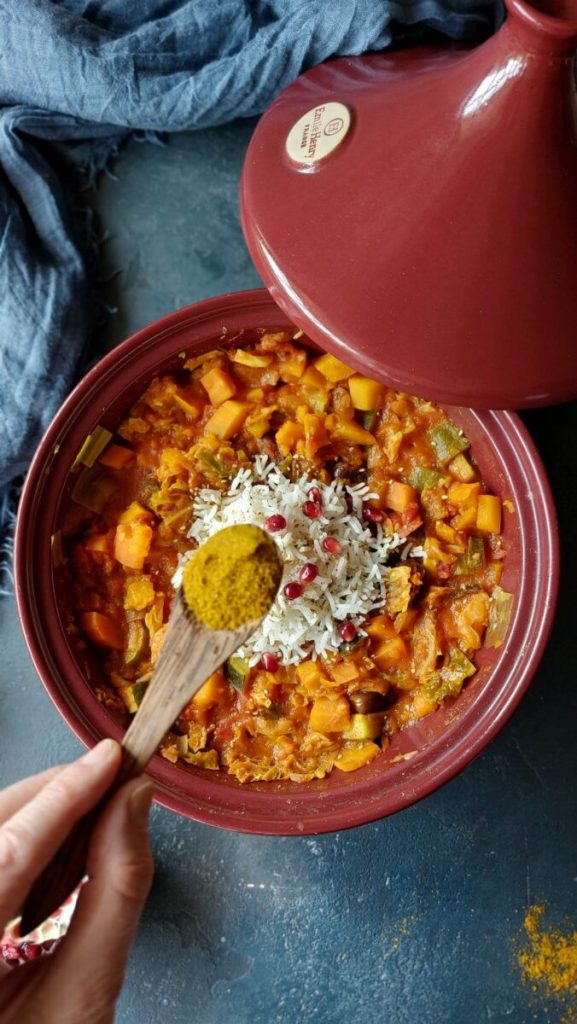
In the last ten minutes, add the ras el hanout and mix well. Turn off the heat, add the lemon juice.
Meanwhile, steam the Basmati rice, season with salt, oil, and pomegranate seeds.
Serve together with the tagine.
Thyme and Lentils Tips
You can store the pumpkin and date stew in the fridge for a couple of days. If you have fermented lemons, add a few pieces, see the recipe.