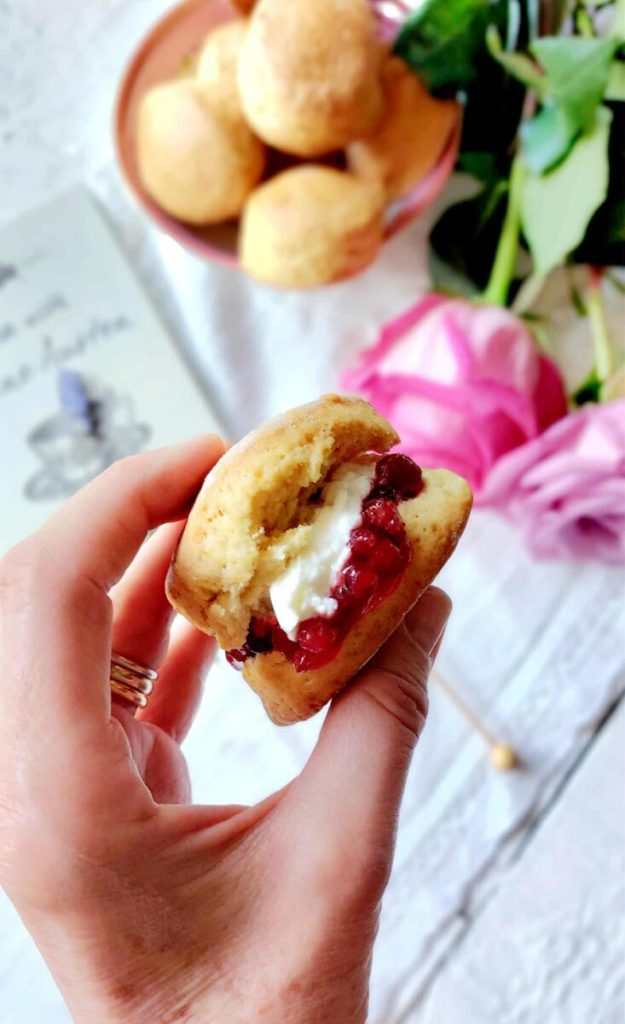
Today, let’s imagine being at a tea party and tasting these scones with Jane Austen, soft, delicious, from a traditional recipe.
It’s my way of celebrating the 250 years since the birth of Jane Austen, a well-known English writer.
I recently returned from a wonderful trip to Devon and Cornwall.
Moors, cliffs, King Arthur, history, enchanting villages, tea and scones, a trip that will surely stay in my heart.
Back home, I couldn’t resist; I started rereading old books by Jane Austen, re-watching movies and series with the landscapes of Cornwall, and bringing out floral plates and teapots to offer English treats to friends…and not just treats.
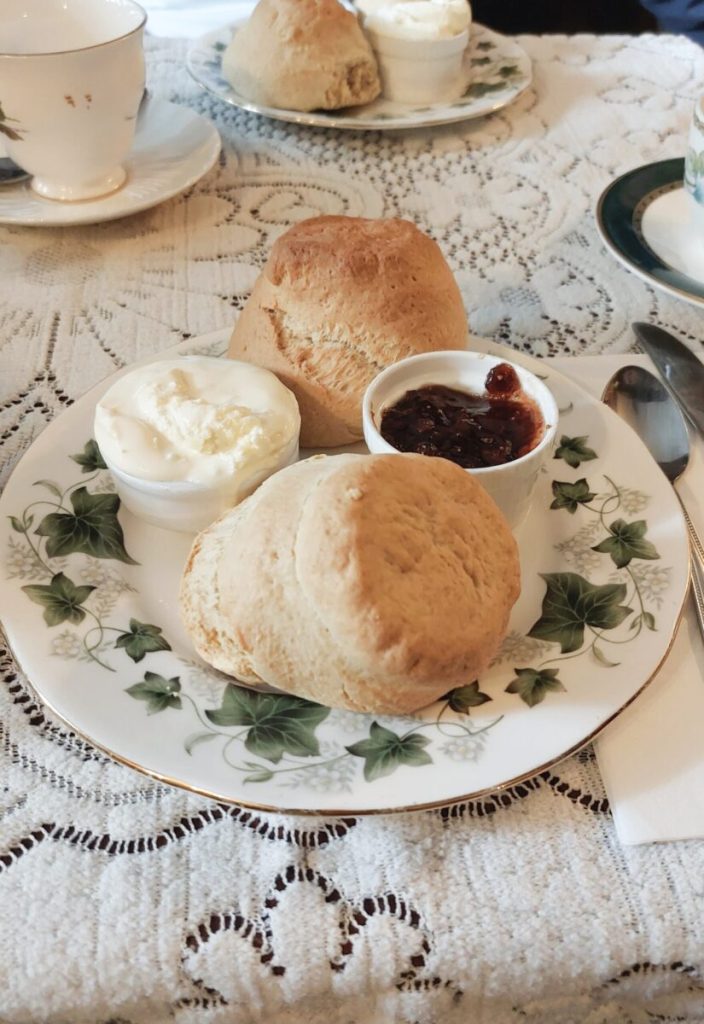
Back to the trip; In Bradford on Avon we attended a tea party and tasted the real scones with strawberry jam and the famous clotted cream. I must say these traditional English buns are not at all dietetic (if you prefer the light version, check out my recipe of scones with goji berries.).
Completely taken by this Regency atmosphere, I wondered if Jane Austen also served scones at afternoon tea since she didn’t mention them in her books.
Indeed, those who are more observant might have said after reading the recipe title…oh no, Jane Austen didn’t know scones!
I came across an article by an English writer, Lillian Marek, who rightly states that there was no baking powder before 1843 when Alfred Bird from Birmingham invented it. Only 15 years later was the baking powder with calcium phosphate, known today, marketed.
Unfortunately, Jane Austen died at only 41 years old in 1817 from an illness whose causes are not well known. The writer did not have the time to taste the well-risen buns made with baking powder, but maybe cakes, treats, and other biscuits with bread yeast.
For the first time, scones were served at tea time around the year 1840 when Anna Stanhope, Duchess of Bedford, requested sweet breads for afternoon tea. Among the treats were scones which were so popular that they became commonplace. How many scones have we seen in Bridgerton or Downton Abbey? But back to Jane.
Above is the portrait of the English writer; in 2025, the 250th anniversary of her birth was celebrated. Jane Austen was an acute observer of her society, able to write with irony about the most hidden human and female emotions.
I dedicate my traditional scones to her, dreaming of hosting her for an afternoon tea (to introduce her to them), sitting among us, talking about her six novels. Which one do you like the most? Besides Pride and Prejudice, if you haven’t read them, I recommend Persuasion, Emma which is very nice, and also Sense and Sensibility and Northangen Abbey. However, I haven’t read Mansfield Park. Jane’s books are still loved today because her novels, amidst doubts, romantic adventures, and uncertainties, always have a happy ending.
Finally, jokingly, I would ask Jane what she thinks of this amusing article I found these days.
Shall we move on to the recipe or continue talking about books? Here are the butter scones. Initially, traditional scones were made only with flour, yeast, butter, milk, and a bit of sugar. A slightly sweet roll, so to speak. Over time, eggs were added to make them softer. Naturally, it’s logical that tasting them on-site will always make them the best, but these are not bad at all.
Looking for some other English recipes for tea?
- Difficulty: Very easy
- Cost: Very cheap
- Rest time: 30 Minutes
- Preparation time: 30 Minutes
- Portions: 15 Pieces
- Cooking methods: Electric oven
- Cuisine: English
- Seasonality: All seasons
Jane Austen Scones Ingredients
These scones are very simple. In Great Britain, they often use self-raising flour, which is less common here, so I recommend mixing a packet of yeast with flour and perhaps a teaspoon of baking soda.
You can brush them with egg yolk, but I preferred to replace it with a brush of milk.
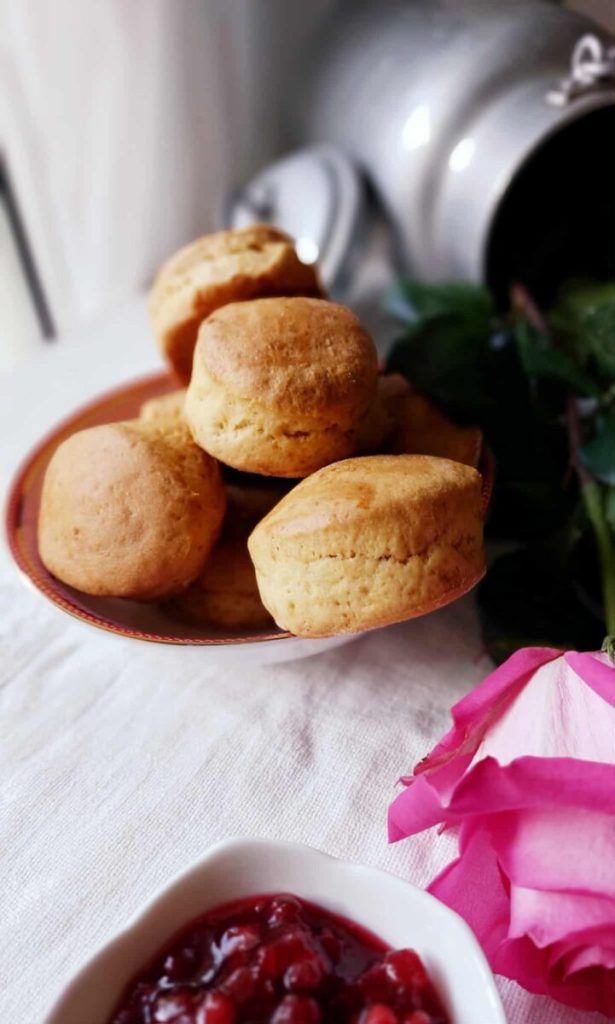
In Cornwall, scones are served with clotted cream, a skimmed cream from boiled and whipped milk. Traditional scones should be filled with strawberry jam, but it’s not my favorite, so I opted for currant jam and Greek yogurt. Of course, if you want to get closer to the traditional filling’s taste and texture, mix cream with mascarpone, it’s the version that most resembles the traditional clotted cream.
- 2 cups type 2 flour
- 1 packet baking powder
- 2 oz g butter (cold)
- 1 egg
- 1 pinch sea salt
- 2 tablespoons sugar
- 5 oz g 0% fat Greek yogurt
- 3.5 oz g currant jam
What You Need
The pastry cutters I used to shape the scones are 2 inches. The ones I tasted in Bradford on Avon were about 2.75 inches.
- 1 Pastry Cutter
- 1 Bowl
- 1 Rolling Pin
- 4 Cups
- 1 Teapot
- 1 Strainer
How to Prepare Jane Austen Scones
In a bowl, pour flour, sugar, baking powder, a pinch of salt, and optionally a teaspoon of baking soda. Mix well.
Add the egg, break the cold butter into small pieces, crumble it into the dough with your hands, mix everything, and knead again until you get a soft and pliable dough ball that you will wrap in cling film and leave in the fridge for half an hour to cool.
Take back the dough, flour your work surface, and with a rolling pin roll the dough until it is 1 inch thick.
Cut with a round cutter 2 inches in diameter and place the buns on a lined baking tray.
Brush with milk and bake at 390 °F for about 15/20 minutes until golden brown.
Unmold and serve warm, whole, leaving the filling to each diner.
Naturally, present them with a good English tea accompanied by milk.
In a cup, first pour the milk and then the tea, why? Tradition says so because the English ladies did not want to stain the very white porcelain with tea. So they poured the tea in the center of the milk slowly, just so it wouldn’t stain the walls.
The milk must not exceed 20% of the tea amount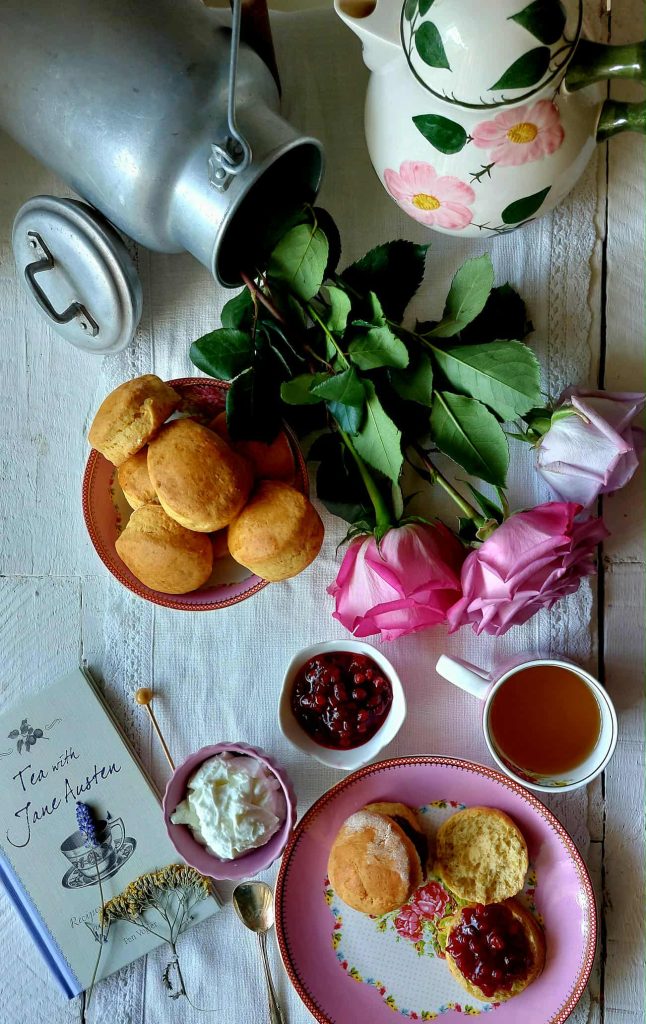
Tips for Scones and Alternatives
The first tip I can give you is to serve the scones hot or warm; you can also store them for a couple of days well closed in tin boxes and in the fridge, but remember to heat them up before serving. Do not keep them already filled.
If you don’t put sugar in the dough but a pinch of salt, you can serve your English buns filled with spreadable cheese and pickles, or salmon, yogurt, and dill, or even with hummus or many other flavors that you would put in a small, soft, fluffy bun.
Light alternative? Replace the butter with high oleic sunflower oil or grapeseed oil and remove the sugar, add raisins or cranberries.
Remember that English scones should be served whole, and it will be the guest who, pulling them apart with their hands, opens them in two and fills them personally as they like best.
Here are the scones from Bradford on Avon
I believe they were made with a mix of whole oat flour, more leavened and larger. 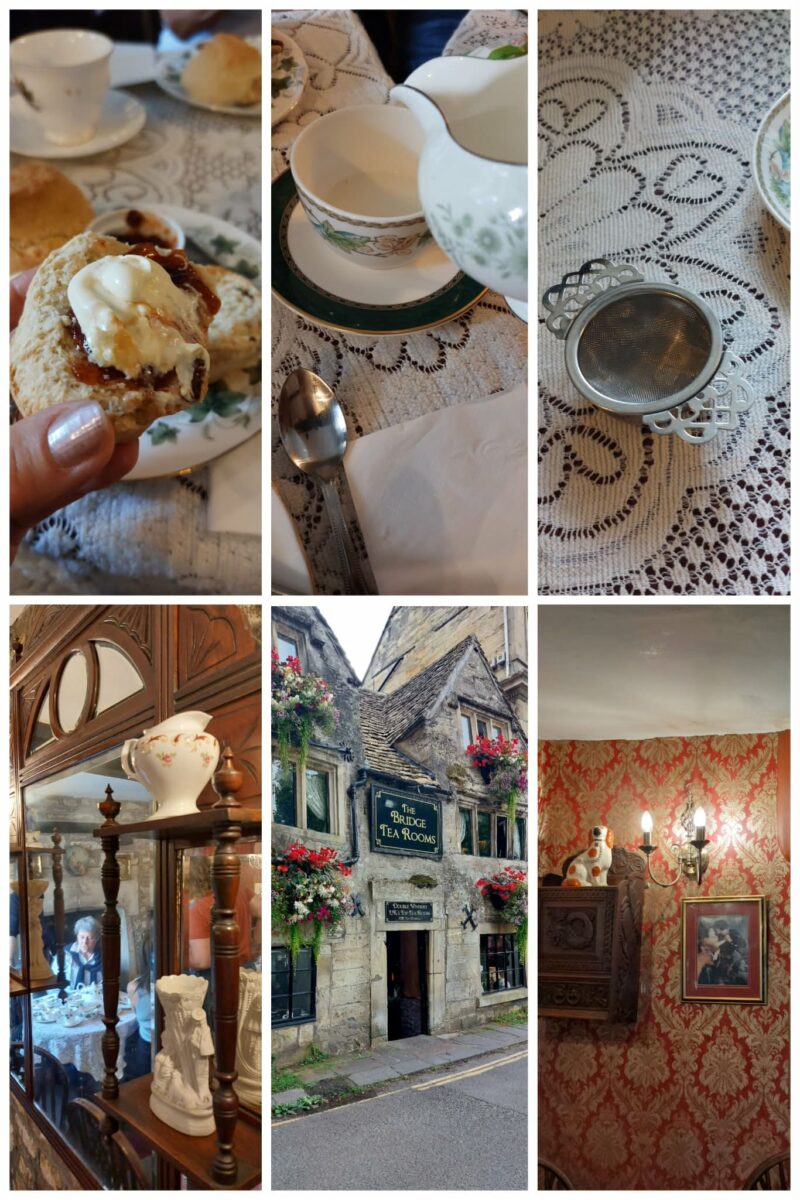
FAQ (Questions and Answers)
What can I substitute for yogurt to fill the scones?
You can fill the scones with fresh whipped cream, or if you prefer a lighter alternative, also with ricotta.
Can I prepare the scones the day before?
Sure, you can prepare the scones beforehand and store them in a well-closed tin box, let your guests fill the scones themselves as they prefer.
Can I prepare the scones with milk instead of eggs?
Yes, you can replace the egg with 130 g of milk, checking the dough’s consistency, which should be slightly sticky.