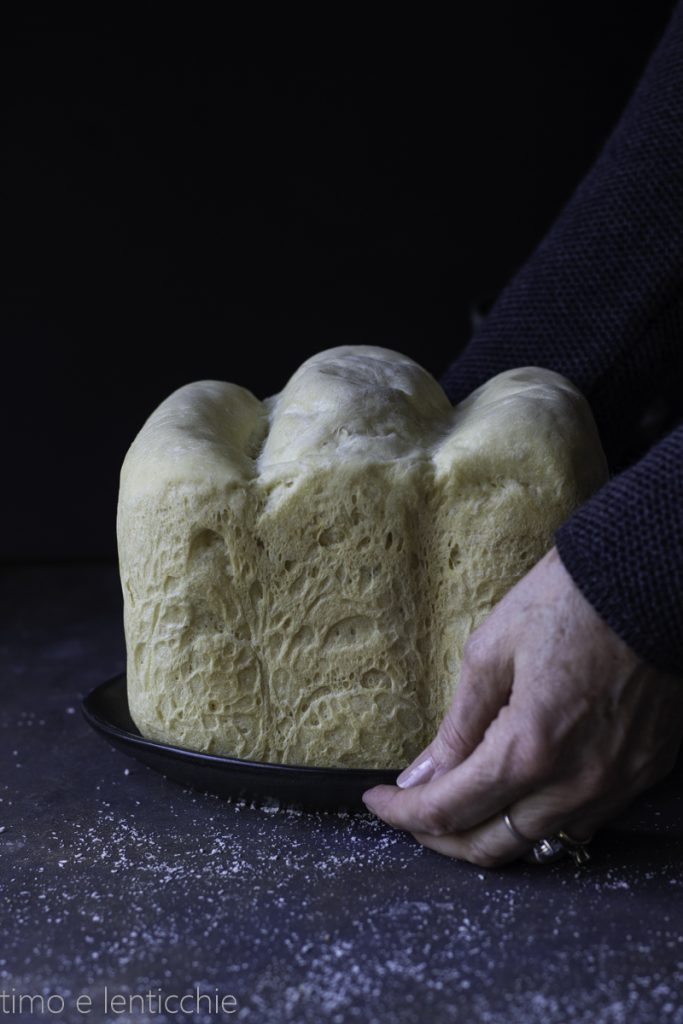
Try with me a cloud of bread the Shokupan Japanese bread, Japanese milk bread, this time with the bread machine.
Some also call it Hokkaido milk bread loaf or Pai bao, (but they are slightly different) shokupan is a very soft white bread typical of Japanese cuisine, it literally means food bread.
Legend has it that the Japanese milk bread was invented by the British baker Robert Clarke, who in 1862 opened the Yokohama bakery in Japan.
The softness is due to the particular pre-dough, called Yudane in Japanese and tang zhong in Chinese, an ancient baking technique. The techniques and doses are slightly different from each other, let’s say a water roux (I talk about it here) to cut a long story short. The result is a very soft bread.
Practically a pre-dough of almost boiling water (203°F) is poured onto the flour which, by gelatinizing, allows the flour to absorb more liquids, thus giving more softness, sweetness to the dough, and increased shelf life.
Prepared the night before, the yudane is placed in the fridge, and the next day I kneaded everything with my Panasonic bread machine SD – Y2550 and did the first rise in the machine.
Once shaped, the bread is placed back in the basket, and the second rise and baking in the machine are started. A cloud.
Alternatively, you can knead in a planetary mixer, rise in a warm place, shape, and rise again in a loaf pan, then bake for 30 minutes.
For the preparation, I used Vigorosa flour from Alta Cucina and Agugiaro e Figna flour.
If you’re looking for other bread machine recipes I recommend:
For any information, don’t hesitate to contact me on my Facebook page Timo e lenticchie where you can interact and ask me any questions. Or join my group.
Follow me also on Instagram, Twitter or Pinterest or YouTube or subscribe to the Telegram channel.
- Difficulty: Medium
- Cost: Very cheap
- Rest time: 14 Hours
- Preparation time: 30 Minutes
- Portions: 1 bread
- Cooking methods: Oven
- Cuisine: Japanese
Ingredients
For the Shokupan Japanese bread without eggs, you need to use strong flour, with a minimum of 13% protein.
- 1/3 cup flour (vigorous)
- 1/4 cup water (boiling)
- 2/3 cup vegetable milk (lukewarm)
- 2 teaspoons sugar
- 4 g dry yeast
- 2 1/3 cups flour (vigorous)
- 1 pinch sea salt
- 2 tablespoons extra virgin olive oil
Tools
- 1 Bread Machine Panasonic SD – YR2550
Steps
Bring the water to a temperature of 203°F and pour it over the 1/3 cup of flour, stirring vigorously. Cover with film and put in the fridge overnight or for a whole day. Take it out of the fridge a little before kneading.
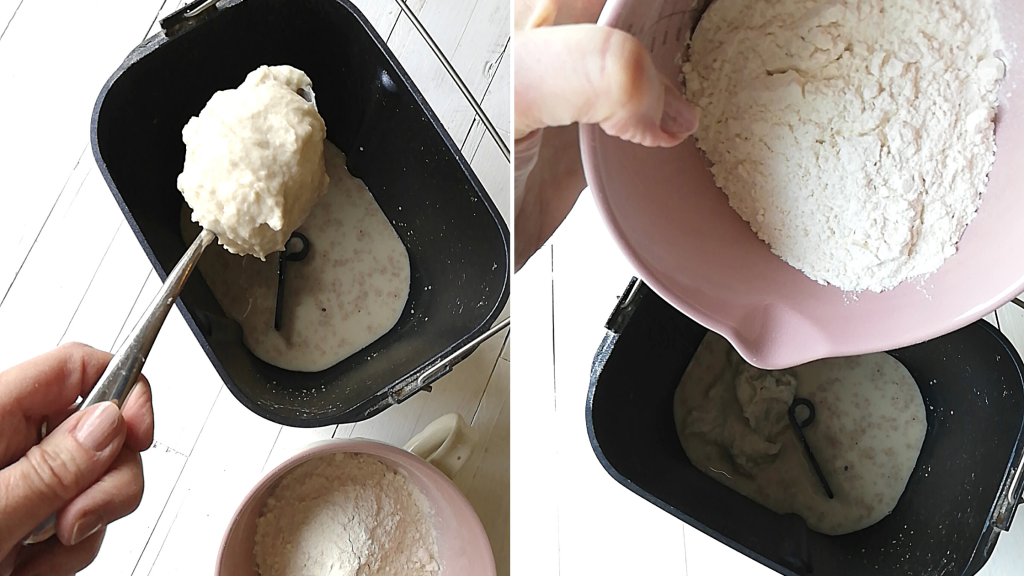
In a bowl, mix 2/3 cup of vegetable milk with a couple of teaspoons of sugar and the yeast, mixing well, and pour into the bread machine basket.
Add the yudane, give it a stir with a spoon, add the flour, the oil, and a pinch of salt.
Start the program 30 dough only for 20 minutes.
Then start program 31 rising for 2 hours.
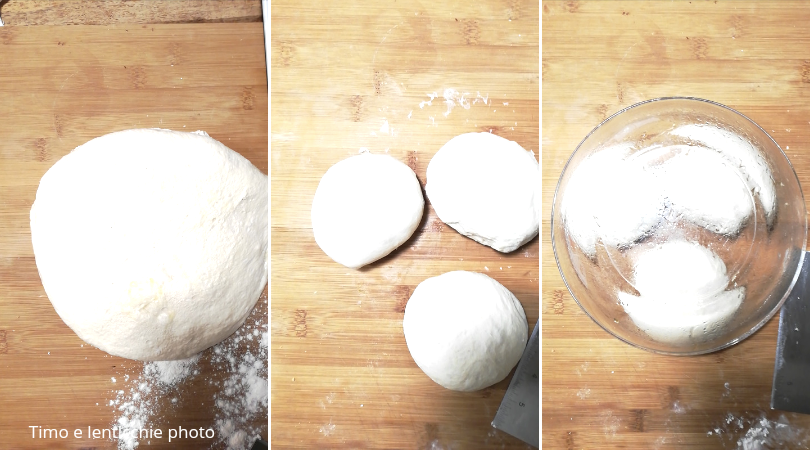
When the dough is well risen, pour it onto the floured work surface and divide it into 3 round dough balls. Leave them to rest covered on the work surface for 30 minutes.
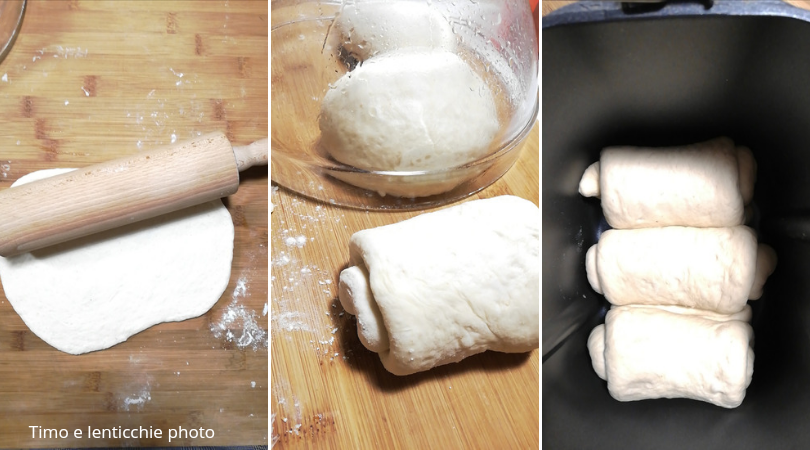
Roll each dough ball with a rolling pin, stretching it to the ends and bring the top and bottom edges to the center to touch without overlapping, pressing well with the rolling pin. You should obtain a rectangle of about 8×4 inches
Turn the dough a quarter turn and roll it up from the top to the base, forming a roll that is sealed at the base by pinching.
Place the 3 rolls in the basket side by side, and start program 31 rising again for 2 hours.
Finally, bake in the bread machine with program 26 bake only for 30 minutes. Before starting the baking, you can gently brush the bread with water and malt. (I didn’t do it). Sorry that the external patterns of the lateral rounds were lost during baking.
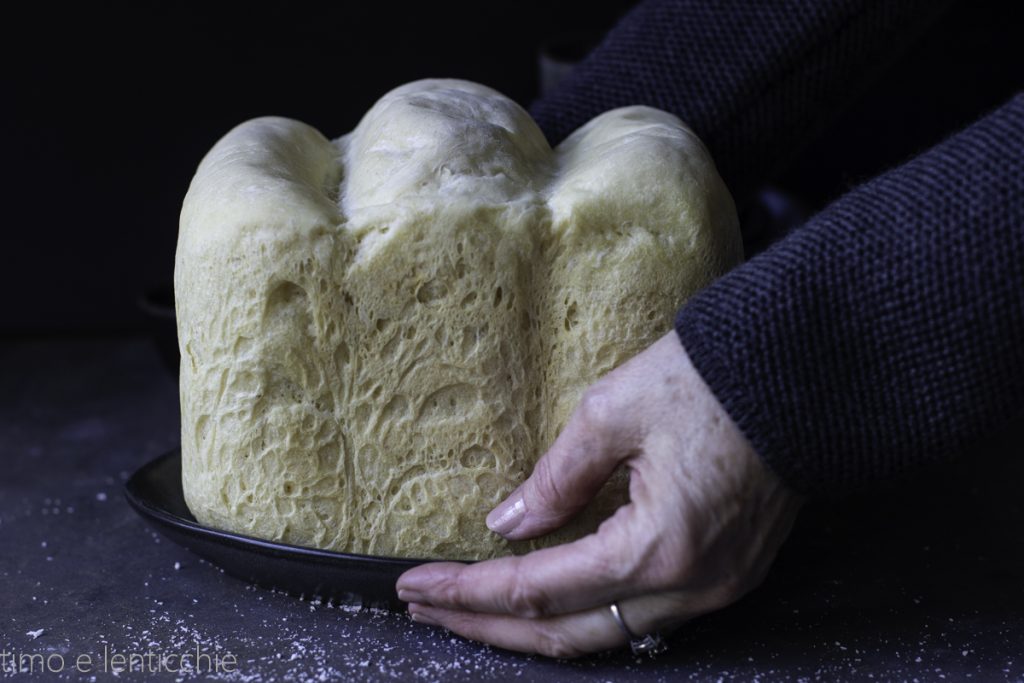
Turn the basket upside down and gently remove the bread, and cool on a wire rack before slicing with a very sharp knife.
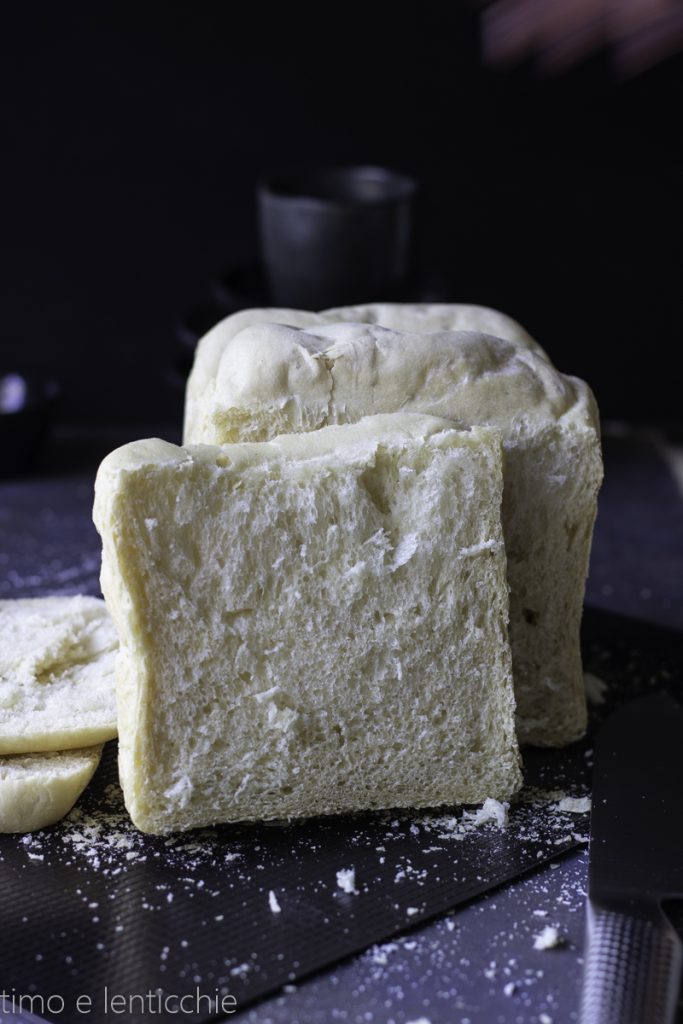
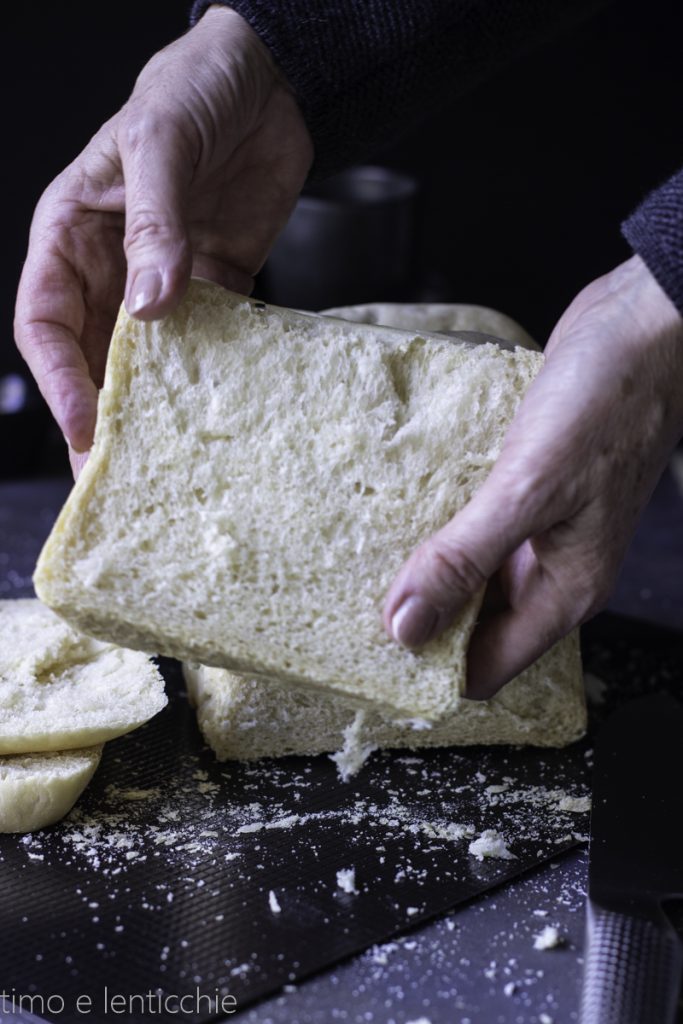
As you can see, Shokupan Japanese bread is a very soft cloud that remains soft for several days thanks also to the yudane technique.
Timo and Lentils Tips
Shokupan Japanese bread without eggs and butter, keeps unchanged for up to a week if stored in a paper bag placed inside a plastic bag (I always do this to preserve bread). Better in the fridge.
You can slice it and freeze it when needed.