The autumn vegetable caponata recipe differs from the classic eggplant caponata recipe due to the vegetables used. Caponata typically uses summer vegetables; however, in this recipe, you will find seasonal vegetables that will make your caponata equally delicious!
If you like vegetable side dishes, don’t forget to read the recipe
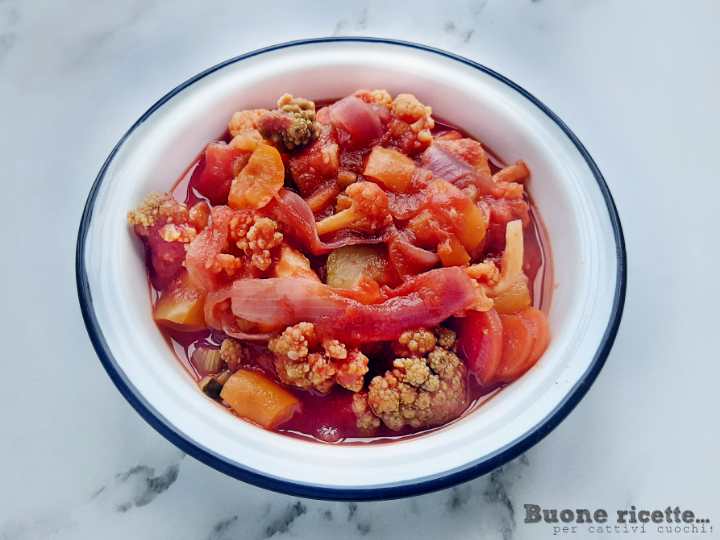
- Difficulty: Very Easy
- Cost: Economical
- Rest time: 5 Minutes
- Preparation time: 10 Minutes
- Portions: 4
- Cooking methods: Stovetop
- Cuisine: Italian
- Seasonality: Autumn, Winter
- Energy 231.83 (Kcal)
- Carbohydrates 40.48 (g) of which sugars 13.65 (g)
- Proteins 9.86 (g)
- Fat 6.50 (g) of which saturated 1.01 (g)of which unsaturated 0.61 (g)
- Fibers 10.73 (g)
- Sodium 436.92 (mg)
Indicative values for a portion of 200 g processed in an automated way starting from the nutritional information available on the CREA* and FoodData Central** databases. It is not food and / or nutritional advice.
* CREATES Food and Nutrition Research Center: https://www.crea.gov.it/alimenti-e-nutrizione https://www.alimentinutrizione.it ** U.S. Department of Agriculture, Agricultural Research Service. FoodData Central, 2019. https://fdc.nal.usda.gov
Ingredients for 4 people
- 1 cauliflower
- 1 broccoli
- 1 Romanesco broccoli
- 1 carrot
- 1 stalk celery
- 1 leek (or a red onion)
- 1 tablespoon extra virgin olive oil
- to taste salt
- 1 bell pepper (optional)
- 700 g tomato sauce
- 2 tablespoons vinegar
- 4 teaspoons sugar
Tools
- 1 Knife
- 1 Cutting board
- 1 Pan 10-inch
- 1 Ladle
Procedure
In autumn, there are many vegetables ideal for making delicious recipes. For this caponata, use seasonal vegetables such as broccoli, cauliflower, turnips, and carrots, which are perfect for this recipe. If you find them, you can also use the last bell peppers of the season (late October to early November).
First, cut the vegetables into uniform florets, so they’ll be easier to sauté in a pan.
I recommend using cauliflowers (white, purple, or orange), broccoli, and Romanesco broccoli, the best of autumn vegetables.
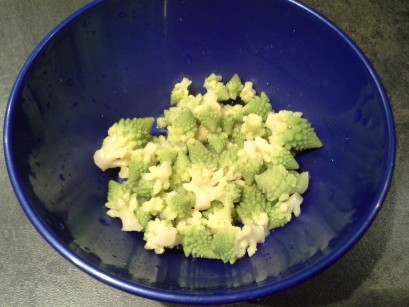
In a pot, make a coarse soffritto with carrot, celery, and onion.
This is very much to personal taste; I love to taste the vegetables and their crunchiness, so I prefer to cut the carrots into slices or large dices, so they can be enjoyed in every bite.
Onion or leek tend to wilt during cooking. If you want them to be present in the dish, cut them into generous strips. For a more delicate result, cut into thin cubes; they will disappear into the vegetable caponata.
When the soffritto starts to cook, it’s time to add the other vegetable florets. Sauté in the pan for a couple of minutes, then add the tomato sauce, lower the heat, and cook covered for 10-15 minutes.
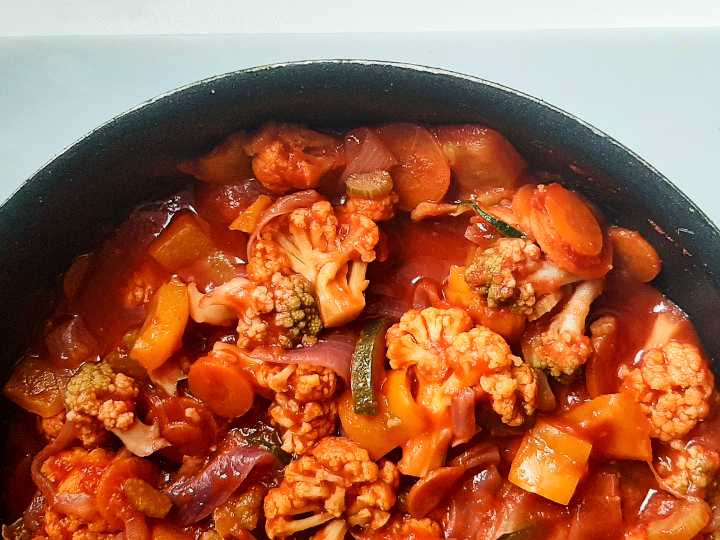
At this point, taste the vegetables; if necessary, cook for a few more minutes to complete the cooking and reduce the tomato.
When the dish is ready, add the vinegar and sugar, mix well, and let it rest for a few minutes to flavor.
Your autumn vegetable caponata is ready!
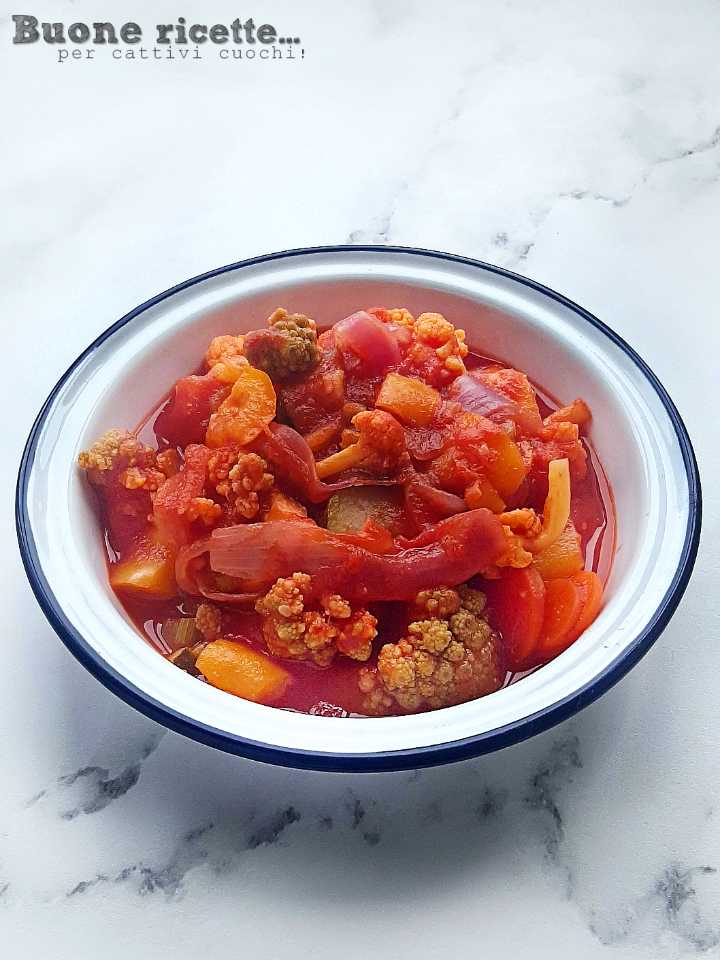
Plating Tips:
You can serve the caponata in a large bowl from which guests can serve themselves or put the vegetable caponata on the serving plate. In the latter case, I recommend “tightening” the caponata well so that it is dry and the sauce does not spread too much on the plate.
Wine Pairing with Vegetable Caponata:
Remember that caponata has a sweet and sour taste, which may conflict with wine. A wine that pairs well with this dish is an Etna Rosso, a full-bodied and bold wine capable of balancing the sweet and sour flavor of the caponata.