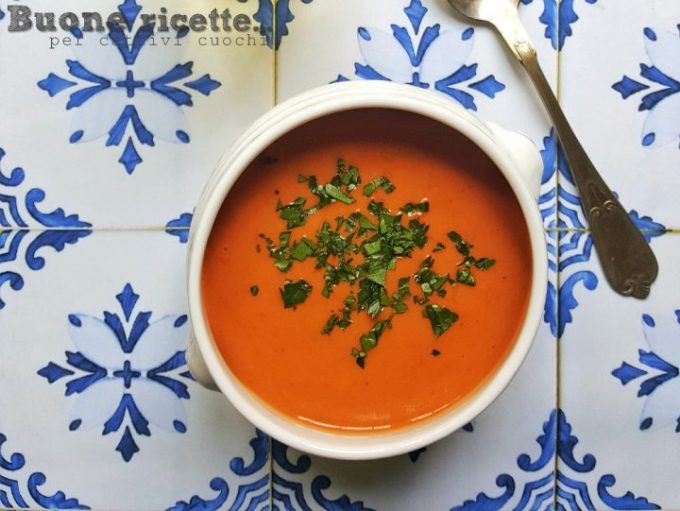
The bisque is a true recipe that starting from the crustacean stock leads to the creation of a creamy and flavorful soup. It is quickly prepared using shrimp or general crustacean scraps (heads and shells).
The bisque is the ideal base to flavor many fish recipes like
- Difficulty: Easy
- Cost: Economical
- Rest time: 5 Minutes
- Preparation time: 10 Minutes
- Portions: 4
- Cooking methods: Stovetop
- Cuisine: French
- Seasonality: All seasons
- Energy 212.56 (Kcal)
- Carbohydrates 7.03 (g) of which sugars 5.17 (g)
- Proteins 17.44 (g)
- Fat 10.17 (g) of which saturated 1.35 (g)of which unsaturated 0.04 (g)
- Fibers 0.99 (g)
- Sodium 400.29 (mg)
Indicative values for a portion of 200 g processed in an automated way starting from the nutritional information available on the CREA* and FoodData Central** databases. It is not food and / or nutritional advice.
* CREATES Food and Nutrition Research Center: https://www.crea.gov.it/alimenti-e-nutrizione https://www.alimentinutrizione.it ** U.S. Department of Agriculture, Agricultural Research Service. FoodData Central, 2019. https://fdc.nal.usda.gov
Ingredients for 4 people
- 1 lb shrimp
- 12 cups water
- 1 onion
- 1 carrot
- 1 stalk celery
- 2 tbsps extra virgin olive oil
- 1 glass brandy
- to taste thyme
- to taste salt
Tools
- 1 Pot
- 1 Pan
- 1 Knife
- 1 Cutting board
- 1 Strainer fine mesh
- 1 Blender
Instructions
Preparing the crustacean bisque is very easy, when you peel shrimp, mantis shrimp, lobsters, and scampi, keep the heads and shells to use them for the bisque.
No special preparations are needed, just rinse them well under running water. Use fresh and high-quality products (red, purple, pink shrimp) and avoid low-quality products as the result will be mediocre.
Tip: if you don’t have time to make the crustacean bisque at the moment, you can freeze the heads and shells and make the bisque later; this step further enhances the flavor of your cream, making it even more flavorful.
Put the pot with high sides on the fire with 2 tablespoons of oil and a sprig of thyme (or bay leaf) to aromatize.
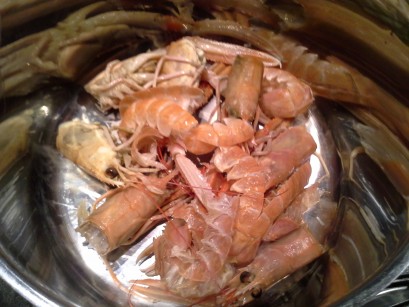
Add the scraps (heads and shells) of the crustaceans you have available to the flavored oil.
Cook for 3-4 minutes over high heat, until they are toasted and a brown crust forms on the bottom of the pan, but not burnt.
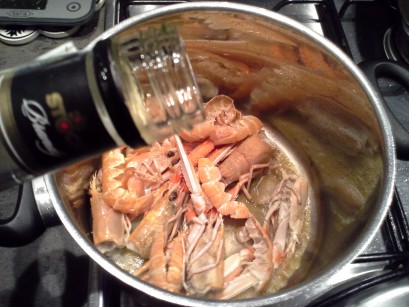
Deglaze the crustaceans with the glass of brandy and let it evaporate (you can also flambé if you wish). It will take about 2-3 minutes over high heat. This step is used to deglaze and collect the flavor of the crustaceans trapped in the brown crust on the bottom of the pan.
Add the cold water (or even better ice), the onion, carrot, and celery, and cook until the inserted water is reduced by half.
The heads and shells contain very flavorful meat that is difficult to extract but, thanks to slow cooking, they release it into the broth, making it exquisite.
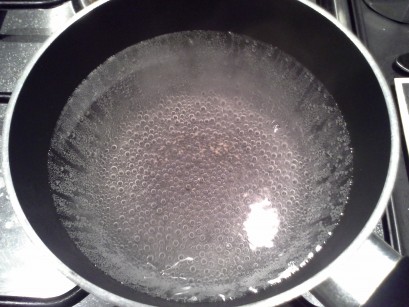
During the cooking of the bisque, a whitish film may form. Remove these impurities with a spoon or a skimmer to have a clear and crystalline broth.
To better release the flavor, smash the shells and heads; some even blend the liquid and strain it with the strainer.
I limit myself to filtering the broth by pressing the shells well so that there are no vegetables or shells inside.
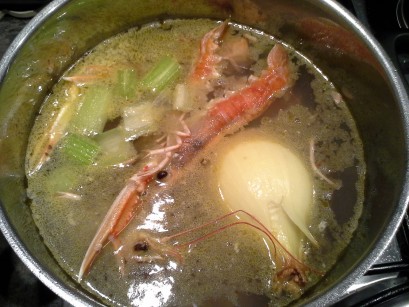
Cook the bisque, letting it reduce until you reach the desired creamy consistency (a couple of hours).
It takes about an hour to obtain a thickened bisque. For a more concentrated flavor, you can also blend the shells once cooked and strain them to add them to the bisque.
Your bisque is ready!
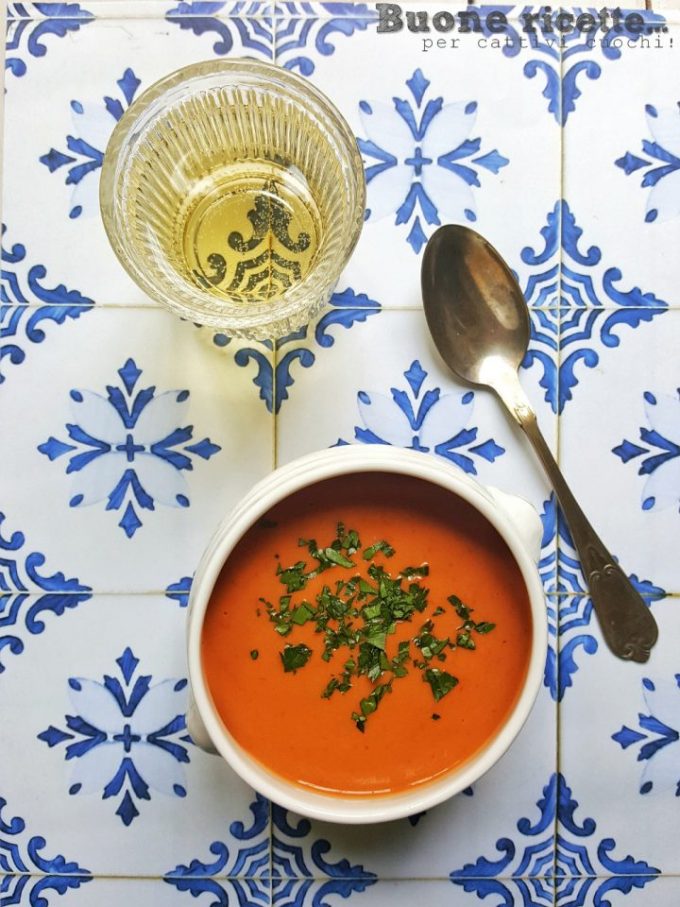
Plating Tips:
Use the bisque on its own or as a base for many soups. It is an indispensable ingredient for all crustacean-based risottos. If you decide to serve it as a main dish, add some garlic-flavored croutons and finely chopped parsley.
Wine Pairing for Crustacean Bisque:
Pair the wine according to the final recipe you will cook using the bisque. I recommend choosing a white wine that pairs well with shrimp or crustaceans in general.