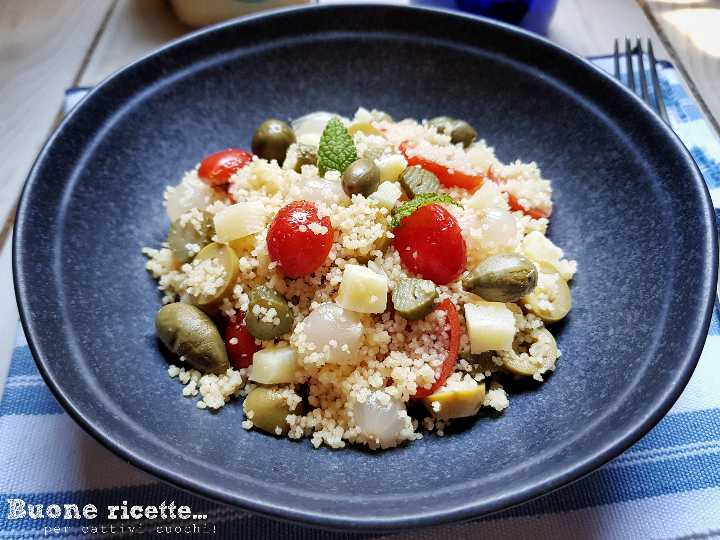
Cold couscous is an easy-to-make dish ideal for summer because it practically requires no cooking or long preparations on the stove. Here is the basic recipe and some tips for making cold couscous and dressing it with lots of tasty and delicious ingredients.
If you like cold dishes, don’t forget to read the recipe
- Difficulty: Very easy
- Cost: Very economical
- Rest time: 2 Minutes
- Preparation time: 5 Minutes
- Portions: 2
- Cooking methods: Stovetop
- Cuisine: Italian
- Seasonality: Spring, Summer and Fall
- Energy 376.45 (Kcal)
- Carbohydrates 40.50 (g) of which sugars 2.53 (g)
- Proteins 12.66 (g)
- Fat 19.25 (g) of which saturated 5.97 (g)of which unsaturated 1.03 (g)
- Fibers 3.14 (g)
- Sodium 3,515.50 (mg)
Indicative values for a portion of 150 g processed in an automated way starting from the nutritional information available on the CREA* and FoodData Central** databases. It is not food and / or nutritional advice.
* CREATES Food and Nutrition Research Center: https://www.crea.gov.it/alimenti-e-nutrizione https://www.alimentinutrizione.it ** U.S. Department of Agriculture, Agricultural Research Service. FoodData Central, 2019. https://fdc.nal.usda.gov
Ingredients for 2 people
- 0.5 cup raw couscous
- 1/2 cup water
- 1 tbsp taggiasca olives (in oil)
- 1 tbsp pickled onions
- 1 tbsp pickled gherkins
- 1 slice Tuscan pecorino (fresh)
- 1/3 cup cherry tomatoes
- 1 tbsp extra virgin olive oil
- to taste salt
Tools
- 1 Knife
- 1 Cutting board
- 1 Spoon
- 1 Bowl
Procedure
Preparing couscous is very quick and you can dress it with seasonal raw vegetables or delicious pickles to make the recipe even simpler and quicker.
To cook the couscous, put a pot with the water, salt, and oil on the stove and bring it to a boil. It’s important to follow the exact amounts because couscous cooks by soaking in water, and if there’s too much water, the result will be poor.
Pour the raw couscous into a bowl and pour the water that is beginning to boil over it, cover the bowl with a lid or a plate so that the heat of the water cooks the couscous and makes it grow.
While the couscous rests covered for 5-10 minutes, I recommend focusing on the vegetables you’ll use for the dressing by cutting them into strips, cubes, or slices according to your personal taste.
Tomatoes add sweetness, pecorino or other cheeses add body and saltiness, and basil or mint add a fresh note. If you like crunchy couscous, use raw carrots or zucchini.
After preparing the vegetables, the couscous will be fully cooked (5 minutes is enough). At this point, just remove the lid and fluff it with a fork to separate the grains.
Now you can combine the cold couscous with the dressing, adjust the salt, add lemon juice if desired, and the aromatic leaves.
You can consume the cold couscous immediately or let it sit in the refrigerator to absorb flavors. In this case, add a small amount of mint/basil and the rest just before serving.
If you use fresh vegetables instead of pickles, you can add lemon juice and zest to make the dish more flavorful and fragrant.
Your cold couscous is ready!
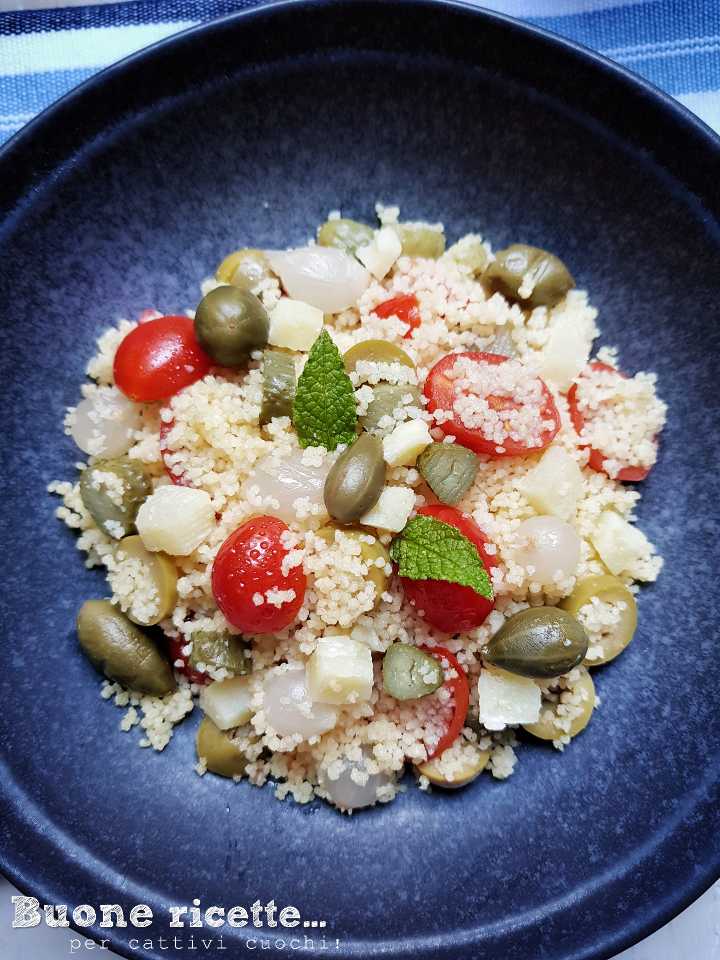
Plating Tips:
Use large bowls to serve the couscous, for an elegant presentation, I suggest individual servings for each guest, completing the recipe with a sprig of mint or basil.
Wine Pairing for Quick Couscous:
I recommend pairing vegetable couscous with a nice wine, fragrant, with an expressive, lively, fruity, and aromatic bouquet, such as a Gewürztraminer from Trentino Alto Adige.