Cacio e pepe spaghetti, or simply cacio e pepe, is a traditional recipe. Here’s how I like to prepare creamy and tasty cacio e pepe spaghetti.
If you like traditional Roman cuisine, don’t forget to read the recipe
- Difficulty: Easy
- Cost: Very cheap
- Rest time: 5 Minutes
- Preparation time: 5 Minutes
- Portions: 2
- Cooking methods: Stove
- Cuisine: Italian
- Energy 242.33 (Kcal)
- Carbohydrates 29.21 (g) of which sugars 0.52 (g)
- Proteins 10.80 (g)
- Fat 8.94 (g) of which saturated 4.66 (g)of which unsaturated 0.45 (g)
- Fibers 2.25 (g)
- Sodium 3,497.20 (mg)
Indicative values for a portion of 150 g processed in an automated way starting from the nutritional information available on the CREA* and FoodData Central** databases. It is not food and / or nutritional advice.
* CREATES Food and Nutrition Research Center: https://www.crea.gov.it/alimenti-e-nutrizione https://www.alimentinutrizione.it ** U.S. Department of Agriculture, Agricultural Research Service. FoodData Central, 2019. https://fdc.nal.usda.gov
Ingredients for 2 people:
- 6.35 oz spaghetti
- 2.12 oz pecorino romano (whole piece to grate)
- to taste pepper
- to taste salt
Tools:
- 1 Pot (3 liters capacity)
- 1 Pan round shape with 9.5-10.2 inches diameter
- 1 Grater
- 1 Cutting board
Preparation
Preparing good cacio e pepe spaghetti at home isn’t difficult, just follow a few simple tips and the result will be creamy.
Before starting, I suggest toasting the pepper in a hot pan to activate the essential oil it contains. For an original mix, I use half black pepper and half Sichuan pepper.
The best way to preserve the aroma of pepper is to crush it and not grind it. Once toasted, I usually crush it with a meat mallet until it’s reduced to powder.
Tip: for a good cacio e pepe, use long pasta. Spaghetti are fine, but you can also use bucatini, bigoli, pici, spaghettoni, tonarelli.
Cook the spaghetti (or other long pasta) in a pot with plenty of salted water for 4-5 minutes (for tonarelli, the time is reduced as it is fresh pasta).
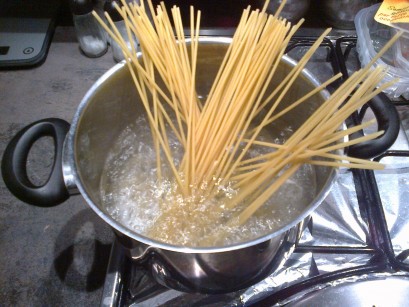
Once the pasta has softened, remove it with kitchen tongs and transfer it to a pan.
Once you’ve transferred all the pasta from the pot to the pan, cover it with the cooking water (2-3 ladles).
If the pasta dries out, add more hot cooking water little by little.
Cooking in the pan takes a few more minutes than classic cooking, so taste the pasta after 6-7 minutes and adjust according to your personal taste.
If the pasta dries out, add more hot cooking water little by little.
Cooking in the pan takes a few more minutes than classic cooking, so taste the pasta after 6-7 minutes and adjust according to your personal taste.
When the pasta is cooked, you should have cooking water in the pan that has thickened until it’s almost white and milky.
Add half the pepper at the end of cooking so the pasta starts to absorb the flavor and aroma of the pepper.
Tip: use freshly grated aged pecorino romano, the bagged pecorino is not finely ground, it’s more humid, and tends to melt with more difficulty.
Here’s where the magic starts! Turn off the pan and remove it from the heat, add the freshly grated pecorino little by little.
Use kitchen tongs and mix the pasta and water until you get the cream. You can’t go wrong, if the cacio e pepe is liquid, add some pecorino, if it is too dry, a tablespoon of water will make the cream appear!
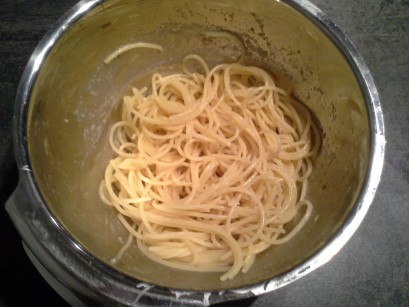
Trick: the mixing should happen off the heat and with the pasta not too hot (that’s why it should be cooked over medium-low flame). If you use pasta that’s too hot, you risk melting the pecorino and creating lumps and sticky pasta.
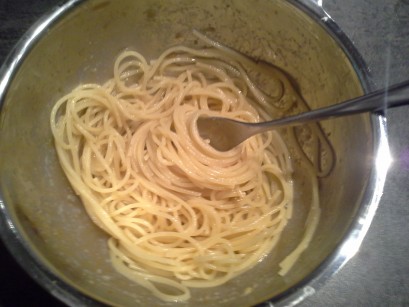
Finish the spaghetti with the rest of the pepper, now it’s ready to be served!
Your cacio e pepe spaghetti are ready!
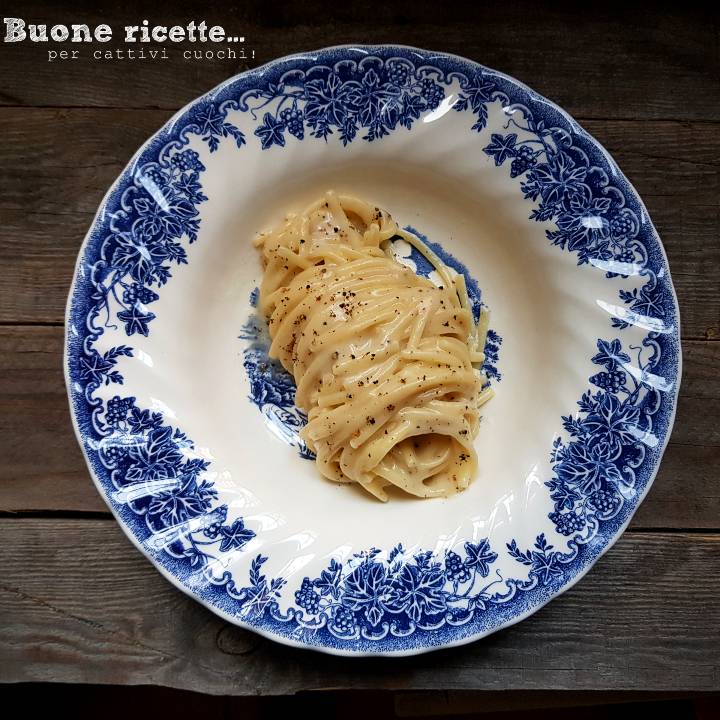
Plating Tips:
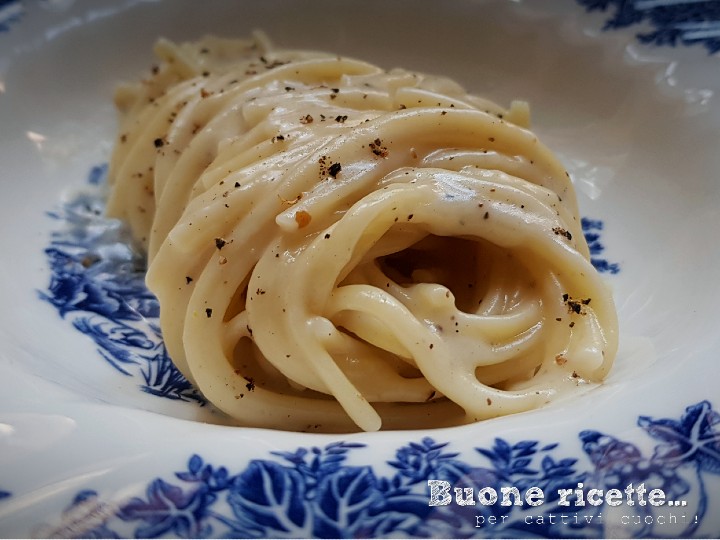
Simple dish, I would say a generous nest of cacio e pepe completed with a generous dose of pecorino cream to make the dish creamy and a final sprinkle of pepper to complete the taste. Nothing else is needed to serve it at the table… except a good glass of wine.
Wine Pairing for Cacio e Pepe:
I recommend a white wine that can balance the richness of the dish, for example, you can serve it with a Chardonnay. If you want a regional pairing, you can serve it with a Frascati Superiore or with an Est Est Est. Two spicy and persistent wines that pair well with this dish