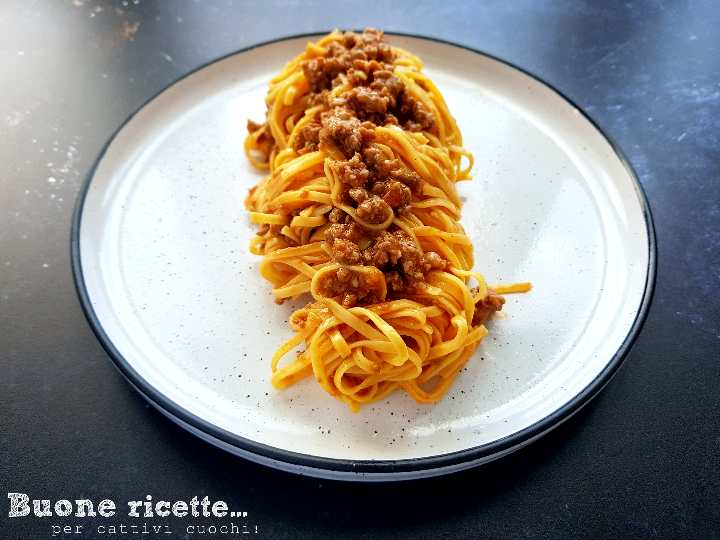
The duck ragù is a delicious and elegant dish, the cooking of the meat is important for the final result. I prefer it slightly red unlike the classic Venetian recipe which is white. With this recipe, you will easily prepare a delicious duck ragù.
If you like tasty and delicious sauces, don’t forget to read the recipe
- Difficulty: Easy
- Cost: Economical
- Rest time: 2 Minutes
- Preparation time: 10 Minutes
- Portions: 4
- Cooking methods: Stovetop
- Cuisine: Italian
- Seasonality: All seasons
- Energy 156.28 (Kcal)
- Carbohydrates 5.60 (g) of which sugars 1.29 (g)
- Proteins 16.07 (g)
- Fat 7.41 (g) of which saturated 3.48 (g)of which unsaturated 2.38 (g)
- Fibers 0.69 (g)
- Sodium 290.64 (mg)
Indicative values for a portion of 4 g processed in an automated way starting from the nutritional information available on the CREA* and FoodData Central** databases. It is not food and / or nutritional advice.
* CREATES Food and Nutrition Research Center: https://www.crea.gov.it/alimenti-e-nutrizione https://www.alimentinutrizione.it ** U.S. Department of Agriculture, Agricultural Research Service. FoodData Central, 2019. https://fdc.nal.usda.gov
Ingredients for 4 servings
- 14 oz duck
- 1 onion
- 1 carrot
- 2 stalks celery
- 1 tbsp butter
- 1 tsp tomato paste
- to taste salt
- to taste pepper
Tools
- 1 Skillet 8-9.5 inches
- 1 Cutting board
- 1 Knife
- 1 Peeler
Instructions
To fully enjoy the duck ragù recipe, I suggest serving it with fresh pasta such as tagliatelle or tagliolini.
To prepare homemade pasta, here’s the recipe and some practical tips to follow.
I recommend using the thigh, it requires more work but is much cheaper than the breast and with more fat content, the result will be better.
Deboning the duck is like deboning the chicken, here are some tips for easily deboning a thigh.
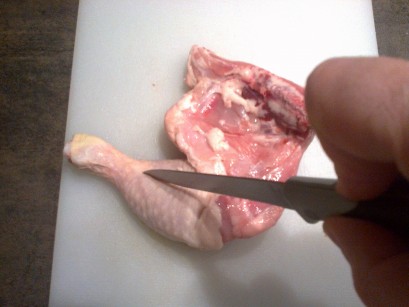
From the duck thigh, we need small diced red meat of ¼ inch by ¼ inch. Remove any cartilage, tendons, or hard parts that may be bothersome in the ragù.
Once you have completely extracted the meat, remove the non-red parts and start cutting it into pieces. It’s not difficult but requires a few minutes and some manual skill with a sharp knife.
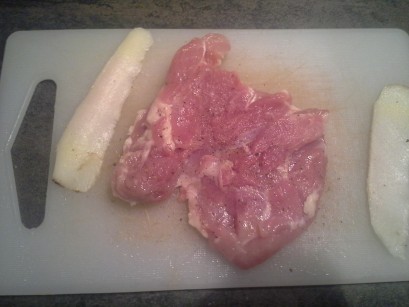
The chicken skin adds flavor to the sauce, the best way is to have a single piece almost like a steak!
Start by cutting the carrot, celery, and onion to make the base of the soffritto. The pieces must be small and uniform, I recommend 3/32 – 1/8 inch on each side.
Put them in the skillet with a tablespoon of butter and a sprinkle of pepper, when the pepper begins to fry it’s time to put the duck skin. The duck skin is used to flavor the sauce, it will not be served but should be removed when cooking is complete.
To remove it easily I leave it whole, at the end of cooking after turning it, it will be easier to remove.
After lightly browning it until it begins to ‘melt’, add the vegetables and make the classic soffritto. Once the onion begins to turn golden, add the diced duck meat and brown it over low heat so that it takes color and doesn’t burn.
If you see that the soffritto is starting to dry too much, add a little salt to the meat (this will release some liquids) or simply the pasta water that is boiling on the stove.
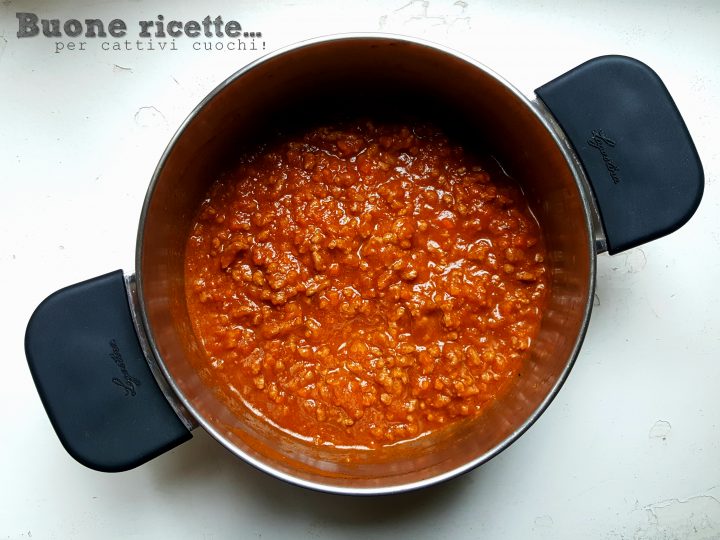
My duck ragù recipe is almost white, so it doesn’t use passata or tomatoes to avoid covering the flavor, I only add tomato paste.
Cook for another 15 minutes, after this time the skin has almost completely shriveled and dried up and you can remove it from the skillet.
At this point, the duck ragù is ready, keep it brothy so that you can toss the pasta in it to flavor. If the ragù has dried up, help yourself with a couple of tablespoons of cooking water.
Your duck ragù is ready!
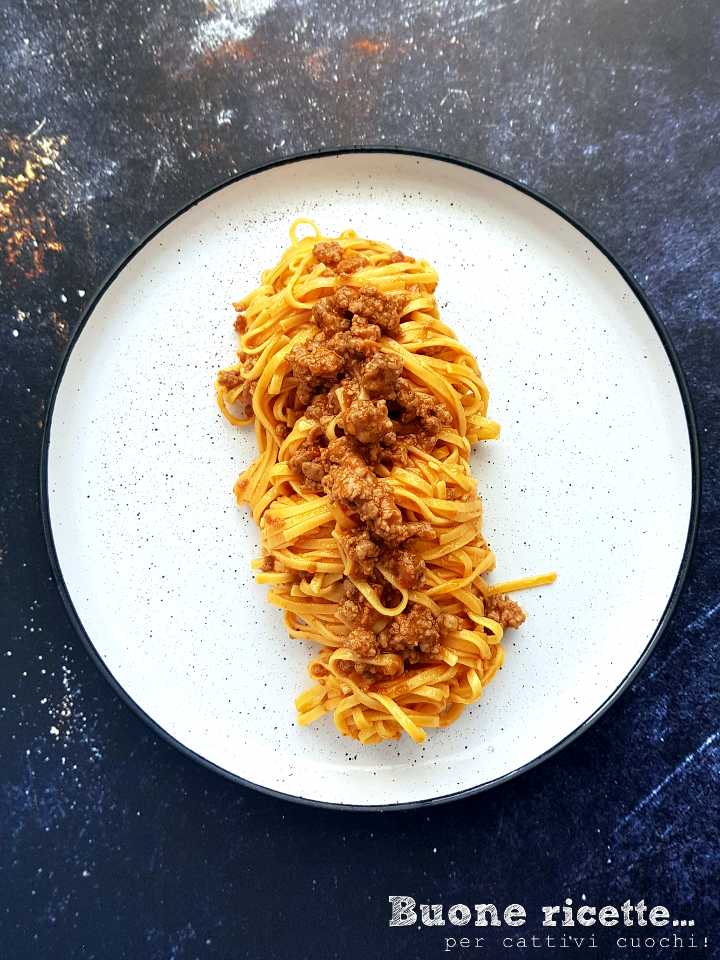
Plating Tips:
This is a classic dish whose elegance lies in the pasta and the sauce, create a nest of pasta and complete it with the ragù, being careful to dress it with the sauce so that it does not appear dry.
Which wine to pair with duck ragù:
I recommend serving this tasty dish with a full-bodied red wine such as Chianti Classico. If you want a less traditional pairing, you can try with Cannonau.