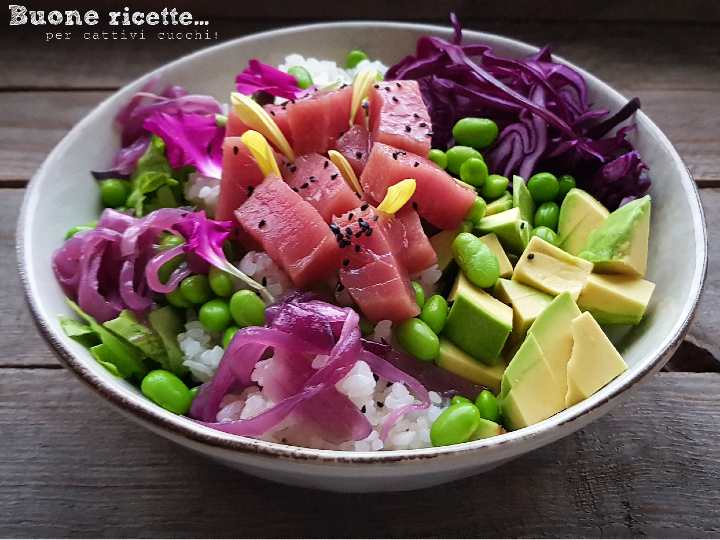
The Pokè Bowl is a typical dish of Hawaiian cuisine that is becoming very popular, so much so that it is the most ordered dish on delivery services. Today I’ll teach you how to make a delicious Pokè at home in a simple and tasty way.
Pokè can be customized to your liking by adding your favorite ingredients, here’s my favorite version and some tips to create your own version. If you like ethnic recipes, don’t forget to read the recipe
for sushi rice, Cantonese rice, maki, or gyoza (Chinese dumplings).
- Difficulty: Easy
- Cost: Medium
- Rest time: 10 Minutes
- Preparation time: 10 Minutes
- Portions: 2
- Cooking methods: Stove
- Cuisine: Italian
- Seasonality: All seasons
- Energy 446.01 (Kcal)
- Carbohydrates 34.48 (g) of which sugars 5.36 (g)
- Proteins 28.12 (g)
- Fat 24.18 (g) of which saturated 4.80 (g)of which unsaturated 15.96 (g)
- Fibers 11.71 (g)
- Sodium 939.19 (mg)
Indicative values for a portion of 250 g processed in an automated way starting from the nutritional information available on the CREA* and FoodData Central** databases. It is not food and / or nutritional advice.
* CREATES Food and Nutrition Research Center: https://www.crea.gov.it/alimenti-e-nutrizione https://www.alimentinutrizione.it ** U.S. Department of Agriculture, Agricultural Research Service. FoodData Central, 2019. https://fdc.nal.usda.gov
Ingredients for 2 people:
- 3/4 cup sushi rice (already cooked)
- 3.5 oz tuna (or other fish to be eaten raw)
- 1 head lettuce
- 3.5 oz edamame
- 1 avocado
- 1 red onion (caramelized in sweet-and-sour)
- to taste sesame seed
- 1/2 glass soy sauce
- 1.75 oz red cabbage (cut into thin strips)
Tools:
- 1 Cutting board
- 1 Knife
Preparation
The beauty of Pokè is that it can be customized according to personal taste, here are some tips for a balanced result. In general, any dish should have a balanced taste in terms of saltiness, crunchiness, and freshness. Here are some tips
Use the freshest ingredients, especially if they will be consumed raw. Wash and rinse them well under fresh running water and if necessary, pass the vegetables in a water and bicarbonate solution.
Cut the ingredients before making the recipe so they do not oxidize while waiting. I usually prepare the sushi rice and let it cool in the fridge the night before, read the complete recipe here.
In addition to rice and tuna proteins, I add avocado which with its pulp makes the dish creamy, red cabbage for added crunchiness and a slightly spicy note.
Edamame adds chewiness to the dish, it can be replaced depending on the season with fava beans, peas, beans, chickpeas, and other meaty legumes.
The last step is sesame seeds (white and/or black) and soy sauce to enrich and season the ingredients that might otherwise be dry. My favorite sauce is Koikuchi Sauce, typical of Japanese tradition.
At this point, you just need to combine the ingredients, I place the thinly sliced lettuce at the base, alongside the sushi rice, avocado, and edamame.
I complete the dish with Mediterranean Bluefin tuna, soy sauce, sesame seeds, and sweet-and-sour onions. I do not use vinegar because the sushi rice and onion already have an acidic component, if that is not enough use a mild vinegar like apple cider vinegar or rice vinegar.
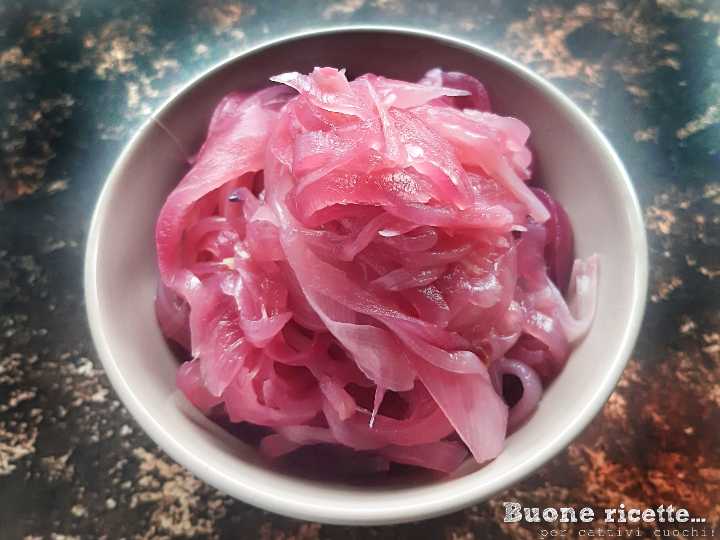
Your Pokè bowl is ready!
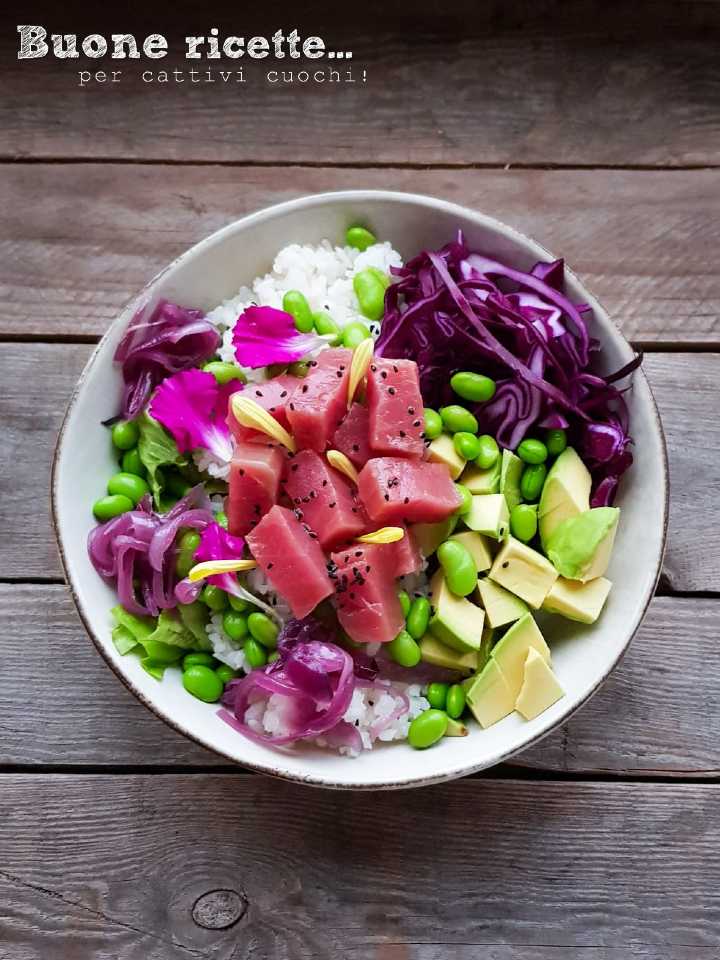
Plating tips:
The pokè is a layered dish composed of many flavors, you can plate the base ingredients at the bottom of the bowl and the other ingredients on top. The important thing is that with each forkful you can taste different ingredients.
Which wine to pair:
If you want to stay in Asia, I recommend an Asian beer or good sake.