Making a good red wine reduction is important because it allows you to enhance many dishes. Red wine reduction can be used with roasts, risottos, and even to flavor stuffed pasta or desserts. The possibilities are almost endless.
If you like red wine reductions, don’t forget to read the recipe
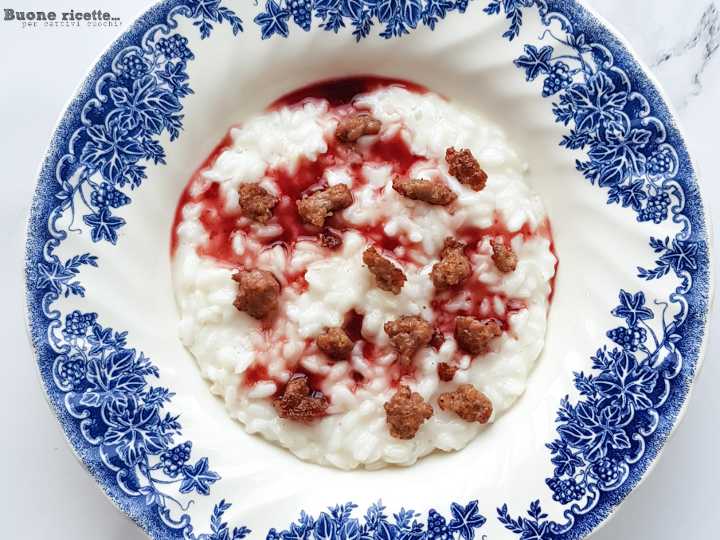
- Difficulty: Very easy
- Cost: Very cheap
- Rest time: 4 Minutes
- Preparation time: 5 Minutes
- Portions: 2
- Cooking methods: Stovetop
- Cuisine: Italian
- Seasonality: All seasons
- Energy 40.44 (Kcal)
- Carbohydrates 0.78 (g) of which sugars 0.78 (g)
- Proteins 0.00 (g)
- Fat 0.00 (g) of which saturated 0.00 (g)of which unsaturated 0.00 (g)
- Fibers 0.00 (g)
- Sodium 292.69 (mg)
Indicative values for a portion of 2 g processed in an automated way starting from the nutritional information available on the CREA* and FoodData Central** databases. It is not food and / or nutritional advice.
* CREATES Food and Nutrition Research Center: https://www.crea.gov.it/alimenti-e-nutrizione https://www.alimentinutrizione.it ** U.S. Department of Agriculture, Agricultural Research Service. FoodData Central, 2019. https://fdc.nal.usda.gov
Ingredients for 4 people
- 1 3/4 cups red wine
- to taste salt
- to taste sugar
Tools
- 1 Small Pot 1 quart
- 1 Spatula
Procedure
To make a good red wine reduction, you need to know what dish it will be used with, as the process varies based on the red wine used and the final use of the reduction.
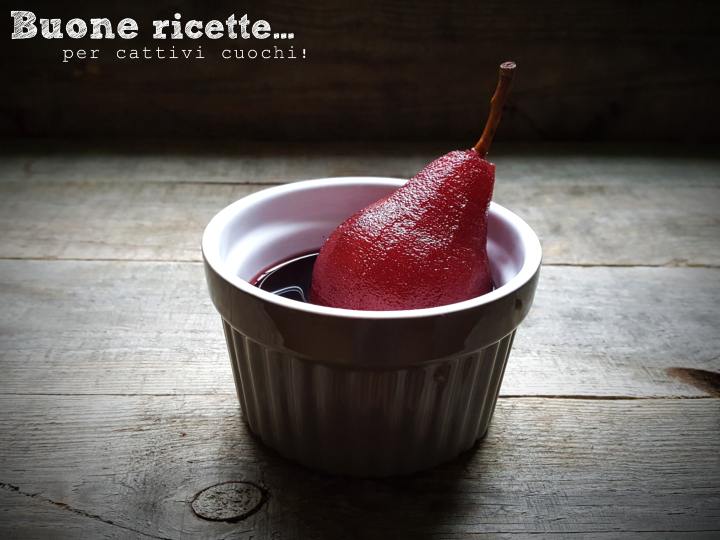
The red wine reduction for desserts is the easiest to make. Starting with red wines like Brachetto, Pinot Noir, Vernatsch, Nebbiolo, or Barolo, you will need to add sugar to thicken.
Cook the wine over low heat and let it evaporate until it has reduced by half. Add a couple of tablespoons of sugar, a pinch of salt, and cook until it starts to thicken to a syrup-like consistency.
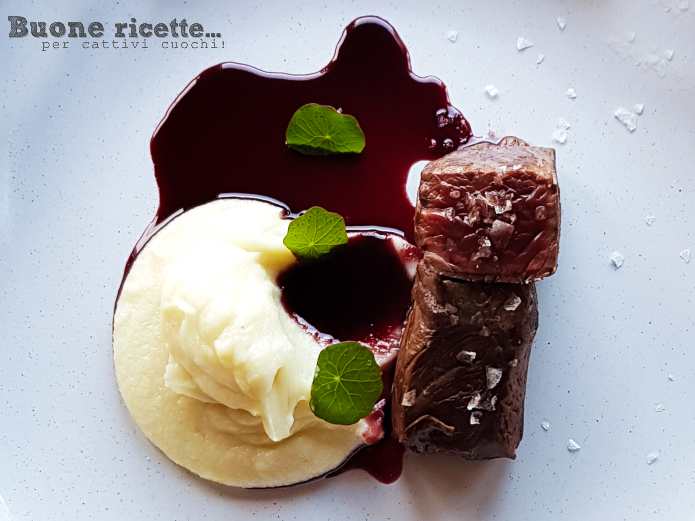
The red wine reduction for meat thickens thanks to the collagen that the meat releases into the wine during cooking. Often, cornstarch is added to “speed up” this process. Again, use low heat until the red wine is reduced by half.
A very useful trick to avoid lumps when using cornstarch (or flour) is to mix it in a small cup with some wine to create a paste. This way, when you add it to the wine, it will dissolve easily without creating lumps.
If you don’t want to use sugar because the wine reduction is for savory dishes, but you also don’t want to use cornstarch, here’s the solution for you.
Put 4 tablespoons of honey in a small pot and let it melt well. When the honey starts to color, add half of the wine and stir gently.
When it has stopped boiling, add the remaining red wine and cook on low heat for 15 minutes. Adjust with salt when cooked.
Plating Advice:
Red wine reduction tends to thicken and harden as it cools, so it’s important to serve it hot with the main course. If it becomes too hard, simply add a tablespoon of water and heat it gently.