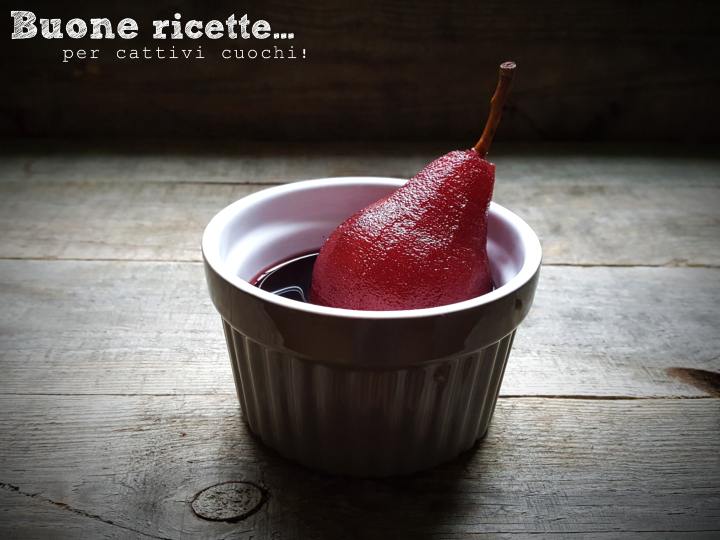
The pears in red wine are a classic winter dessert, perfect for ending a lunch or dinner with a refined dessert. Discover the recipe to make excellent pears in wine, with tips and tricks to make this dish unique.
If you like winter desserts, don’t forget to check out these recipes:
- Difficulty: Very easy
- Cost: Economical
- Rest time: 15 Minutes
- Preparation time: 10 Minutes
- Portions: 4
- Cooking methods: Stovetop
- Cuisine: Italian
- Seasonality: Autumn, Winter
- Energy 240.03 (Kcal)
- Carbohydrates 48.85 (g) of which sugars 47.81 (g)
- Proteins 0.42 (g)
- Fat 0.20 (g) of which saturated 0.01 (g)of which unsaturated 0.05 (g)
- Fibers 4.39 (g)
- Sodium 5.23 (mg)
Indicative values for a portion of 100 g processed in an automated way starting from the nutritional information available on the CREA* and FoodData Central** databases. It is not food and / or nutritional advice.
* CREATES Food and Nutrition Research Center: https://www.crea.gov.it/alimenti-e-nutrizione https://www.alimentinutrizione.it ** U.S. Department of Agriculture, Agricultural Research Service. FoodData Central, 2019. https://fdc.nal.usda.gov
Ingredients for 2 people:
- 4 Coscia pears (or Martin Sec)
- 1.06 cup red wine
- 0.63 cup Water
- 0.75 cup Sugar
- 1 pod cardamom (and/or)
- 1 Star anise (and/or)
- 1 cinnamon stick (and/or)
- 2 cloves
Tools
- 1 2 qt pot
- 1 Knife
- 1 Cutting board
- 1 Peeler
- 1 Kitchen scale optional
Method
To cook good pears in wine, you need to use the right pears. I recommend Martin Sec pears, a variety perfect for cooking because they remain crunchy and firm. If you can’t find them, you can use Coscia or Kaiser pears that are not too ripe.
For excellent pears in wine, I suggest a red wine, but you can also opt for a sweet white wine, as long as it is a quality wine because it will give flavor to the pears.
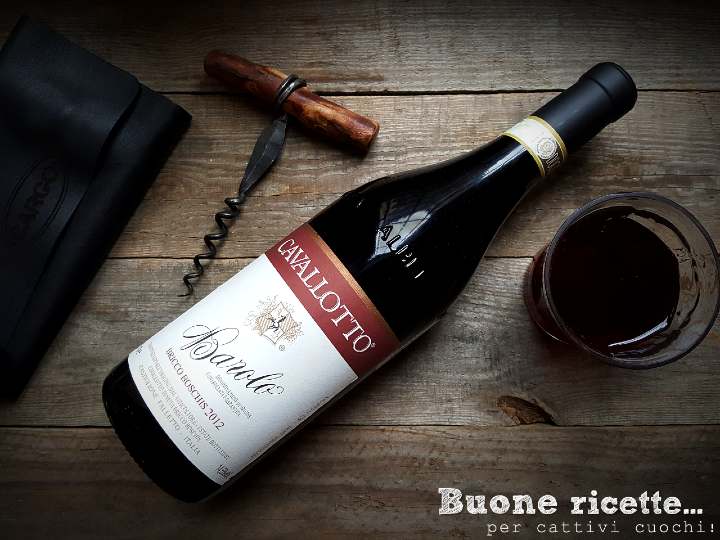
You can use a Brachetto, a Pinot Noir, or a Vernatsch (a red wine from Trentino also known as Schiava). If you want to bring out the big guns, you can also use a Nebbiolo or a Barolo.
Remove the pear skins using a peeler or knife, depending on what you find more comfortable.
The pears should cook whole in the wine, but I recommend making a hole at the bottom and removing the lower part and the internal seeds.
This way, you can enjoy the pears without having to worry about peeling and removing the seeds.
Place the wine, water, sugar, and peeled pears in a small pot and cook them over medium-low heat. The pears in red wine should simmer gently and for a long time to become caramelized and absorb the flavor and aroma of the red wine and spices.
You can use various spices to perfume and flavor the red wine; I use cinnamon, cardamom, cloves, and star anise. Obviously, you don’t have to use them all together, but according to your personal taste, the recipe shows my favorite mix.
Martin Sec pears require a longer cooking time than other varieties; cook the pears for about 20-25 minutes over medium-low heat.
If you are using Coscia or Kaiser pears, 15 minutes will suffice, although the time also varies based on the size of the pear. I prefer a crunchy pear that’s not too cooked; if you want a pear that’s more cooked, simply extend the cooking time.
After cooking, remove the pears from the red wine and continue cooking to reduce the liquid until you obtain a dense sauce. If the sauce is too liquid, you can increase the density by adding sugar (1-2 tablespoons).
Remember that the syrup will tend to be much thicker and denser when cold than when hot. For an ideal consistency, when hot, it should be still a bit liquid.
Your pears in wine are ready!
Serving Suggestions:
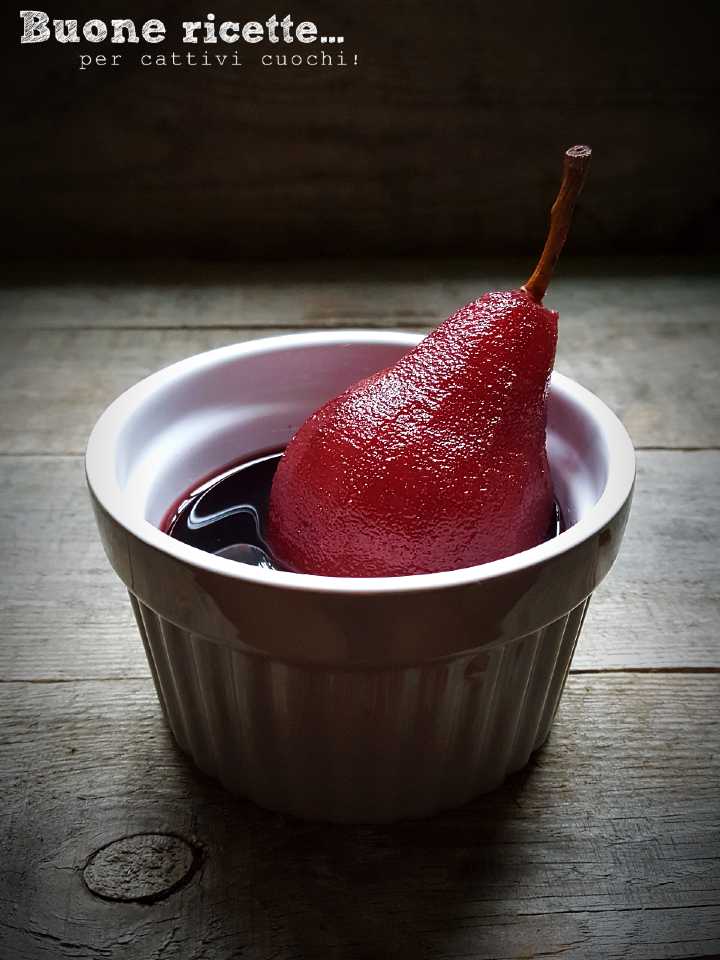
Pears in red wine are excellent served in a mini one-portion cocotte with red wine syrup as an accompaniment. If you want an original and elegant presentation, you can create a base of red wine sauce and custard.
Which wine to pair with pears in red wine:
Since this is a dessert that already includes an alcoholic note, it’s quite difficult to suggest a wine to pair with the dish. I recommend serving the dessert by itself and finishing with a coffee.
The pairing becomes easier in the case of white wine if you have used a Moscato D’Asti or di Scanzo.