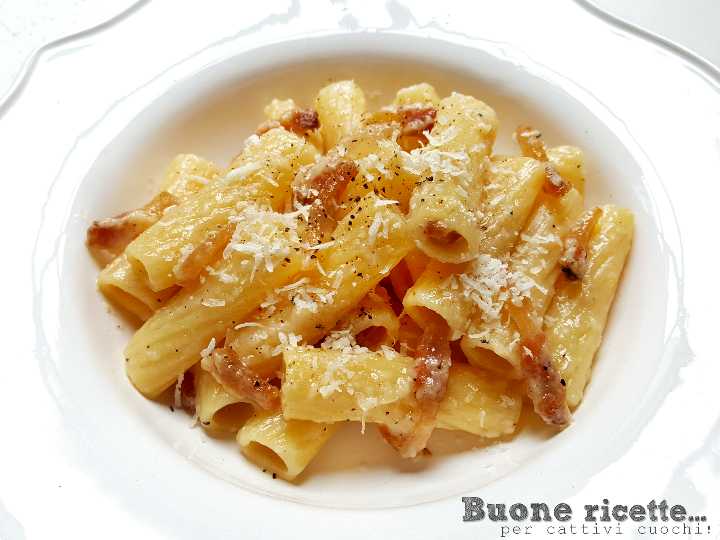
The rigatoni alla gricia is the tomato-free version of the Amatriciana, and like the red sister, there are various versions, here is the original recipe.
If you like Roman cuisine, don’t forget to read the recipe:
- Difficulty: Very Easy
- Cost: Cheap
- Rest time: 2 Minutes
- Preparation time: 5 Minutes
- Portions: 2
- Cooking methods: Stovetop
- Cuisine: Italian
- Seasonality: All seasons
- Energy 695.02 (Kcal)
- Carbohydrates 66.39 (g) of which sugars 1.99 (g)
- Proteins 18.71 (g)
- Fat 40.75 (g) of which saturated 15.55 (g)of which unsaturated 21.39 (g)
- Fibers 1.91 (g)
- Sodium 2,764.30 (mg)
Indicative values for a portion of 150 g processed in an automated way starting from the nutritional information available on the CREA* and FoodData Central** databases. It is not food and / or nutritional advice.
* CREATES Food and Nutrition Research Center: https://www.crea.gov.it/alimenti-e-nutrizione https://www.alimentinutrizione.it ** U.S. Department of Agriculture, Agricultural Research Service. FoodData Central, 2019. https://fdc.nal.usda.gov
Ingredients for 2 people
- 6 oz rigatoni
- 3.5 oz guanciale
- 1 oz Pecorino Romano
- to taste pepper
- to taste salt
Tools
- 1 Pan 8-9.5 inches
- 1 Pot 3 qt
- 1 Grater
- 1 Knife
- 1 Cutting board
Procedure
Making a good gricia is not difficult, the main part is cooking the guanciale properly so it is crunchy and tasty but without becoming bitter or burnt.
Sauté the guanciale in a pan without any fats over medium heat, the guanciale should cook in its own fat starting to sizzle until it becomes golden and crunchy.
Remember to turn off the heat as soon as it starts to golden because it continues to cook in the hot pan and may become too dry.
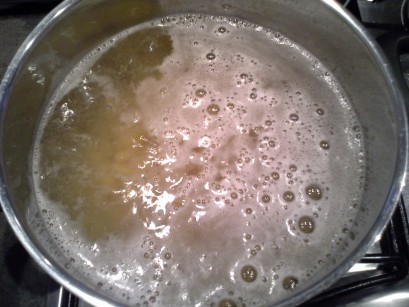
While the guanciale cooks in the pan, put a pot of salted water on the stove and bring it to a boil.
When the water boils, add the rigatoni and cook for the time indicated on the package.
When the pasta is cooked perfectly, drain it and toss it in the pan with the guanciale. It is important not to add cooking water that would soften the guanciale but toss the pasta in the oil to flavor it.
At this point, wait for the pasta to cool for a couple of minutes off the heat and add freshly grated Pecorino Romano; if the pasta is too hot, the cheese will begin to melt like mozzarella.
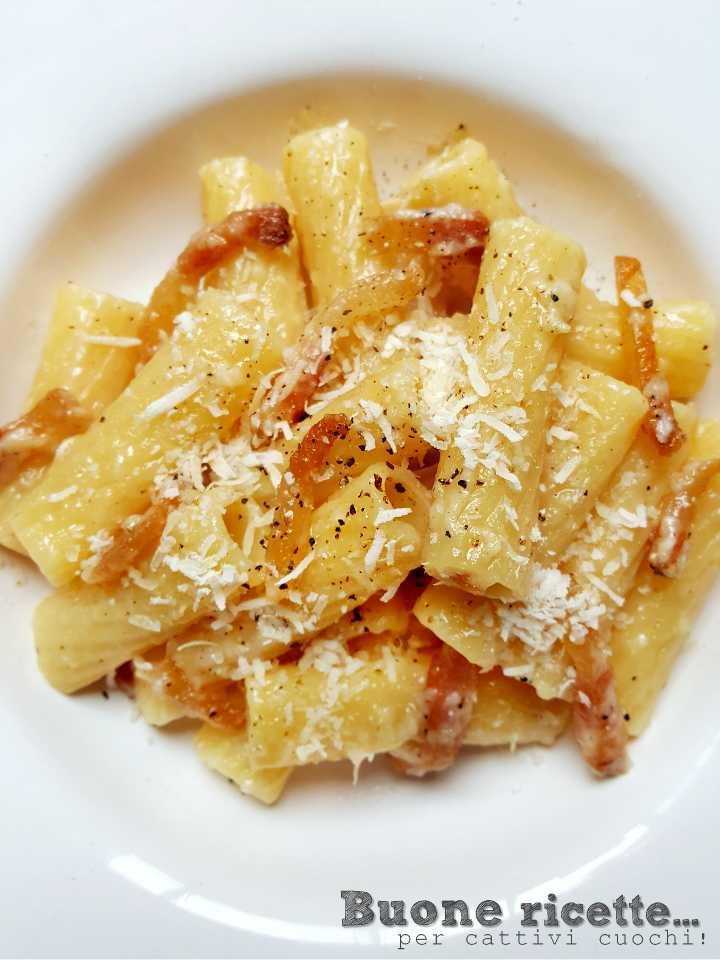
Place on a plate and finish with an extra dose of Pecorino Romano and a grinding of pepper.
Your rigatoni alla gricia are ready!
Plating Tips:
Simple presentation, a sprinkle of Pecorino Romano and pepper. One of the current trends is creamy gricia, a kind of cacio e pepe with added crunchy guanciale. To achieve the Pecorino cream, you can read the recipe here.
Which wine to pair with rigatoni alla gricia:
I recommend a white wine that can balance the heartiness of the dish, like a Chardonnay. If you prefer a regional pairing, serve a Frascati Superiore or an Est Est Est.