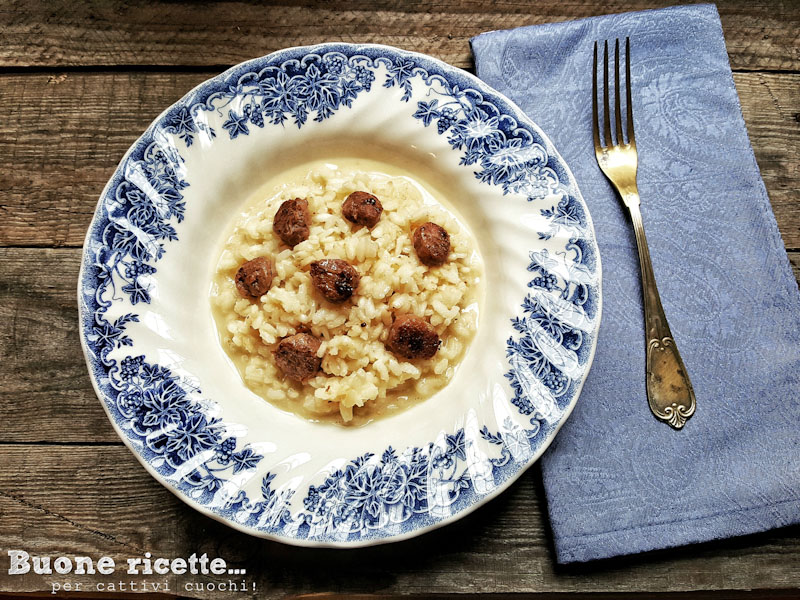
The sausage risotto is one of the typical risottos for the autumn and winter period, a rich and flavorful dish that is a pleasure to enjoy. Here are some tips for getting the most out of this recipe following grandma’s suggestions!
The Lombard version is often made using luganega, a thin sausage with a very soft filling.
If you like risottos, don’t forget to check out the recipes:
- Difficulty: Very Easy
- Cost: Very Cheap
- Rest time: 2 Minutes
- Preparation time: 10 Minutes
- Portions: 2
- Cooking methods: Stovetop
- Cuisine: Italian
- Seasonality: Autumn, Winter, and Spring
- Energy 621.15 (Kcal)
- Carbohydrates 72.69 (g) of which sugars 0.66 (g)
- Proteins 19.12 (g)
- Fat 26.76 (g) of which saturated 8.53 (g)of which unsaturated 4.81 (g)
- Fibers 1.17 (g)
- Sodium 1,300.57 (mg)
Indicative values for a portion of 150 g processed in an automated way starting from the nutritional information available on the CREA* and FoodData Central** databases. It is not food and / or nutritional advice.
* CREATES Food and Nutrition Research Center: https://www.crea.gov.it/alimenti-e-nutrizione https://www.alimentinutrizione.it ** U.S. Department of Agriculture, Agricultural Research Service. FoodData Central, 2019. https://fdc.nal.usda.gov
Ingredients for 2 people
- 1 cup Carnaroli rice
- 4 cups vegetable broth
- 5 oz sausage
- 1.5 tbsp butter
- to taste salt
- 1/4 cup Parmigiano Reggiano DOP
- 1/4 glass dry white wine
Tools
- 1 Pan 8 inches
- 1 Pot 3-4 quarts
- 1 Small Pot 2 quarts
- 1 Knife
- 1 Cutting Board
Procedure
For a good sausage risotto, you must sauté the sausage in a pan so that it flavors the rice during cooking. You can crumble the sausage or cut it into rounds, the final result will differ.
First, remove the skin from the sausage and cut it into rounds, sauté it in a dry pan. As it cooks, it will release fats, so no oil or butter is needed.
The sausage rounds should be cooked externally but not completely, as they will continue to cook in the risotto, releasing their flavorful juices. For crumbled crispy sausage, cook until caramelized.
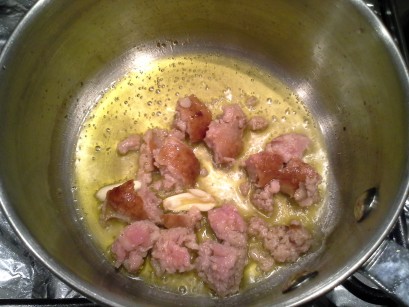
Now it’s time to toast the risotto in the pan where you cooked the sausage. A couple of minutes over high heat will suffice.
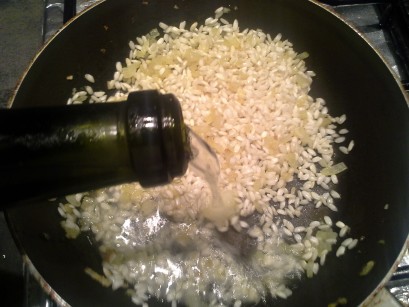
Deglaze the risotto with dry white wine and let it evaporate. Stir with a spoon to prevent the rice from burning. After 1 minute, the wine will have completely evaporated.
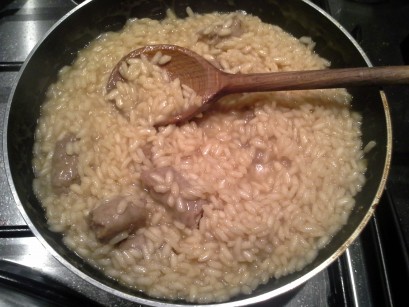
The secret to a good risotto is adding the hot broth a little at a time. Cover the rice with vegetable broth, and when it’s absorbed, add more.
Tip: For a better result, I recommend making fresh vegetable broth at home following the recipe you can find here.
The broth must be hot when added to the rice to avoid slowing down the cooking process.
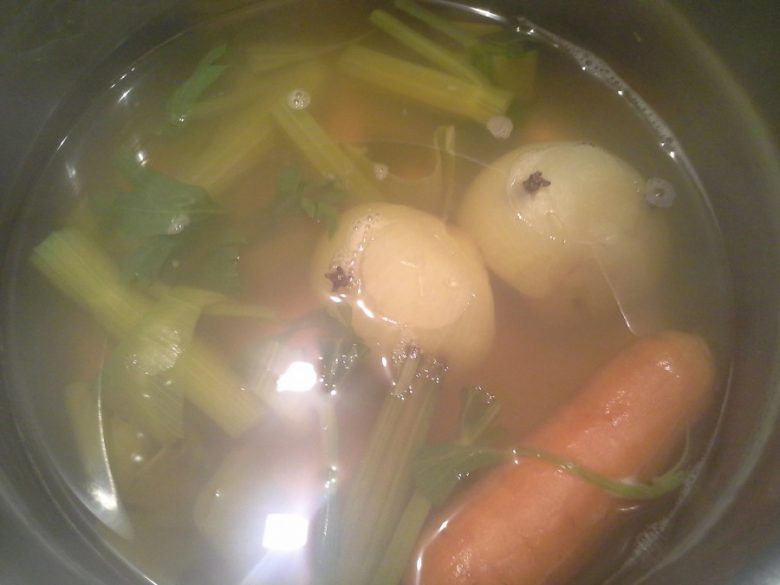
Continue cooking the rice following the package instructions. Usually, Carnaroli rice takes 13 to 17 minutes to cook.
Remove from heat and stir in a knob of butter and the Parmigiano Reggiano cheese.
Let the risotto rest for a couple of minutes to absorb the broth, and it will be ready to serve!
Your sausage risotto is ready!
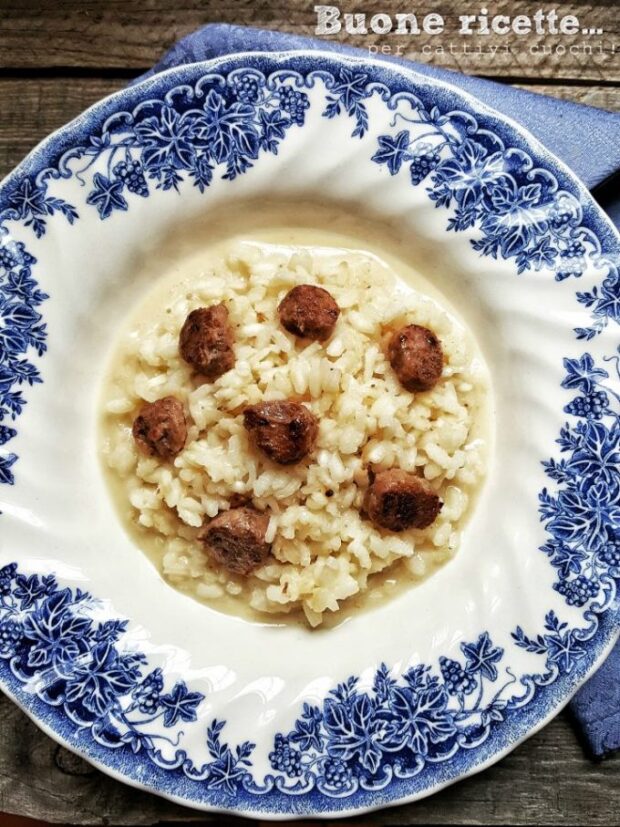
Plating Tips:
This is a traditional dish, very simple and flavorful. No special presentations are needed; I just recommend placing a few pieces of sausage on top of the risotto so that it’s visible and not “drowned” in the risotto.
Which wine to pair with sausage risotto:
An aromatic white wine that “cuts through” the fatty component of the sausage, such as a Frascati Superiore DOCG.