The swordfish with pistachio crust is a very quick dish to make but with a well-defined flavor. The combination didn’t convince me… and I was wrong! Here’s how to prepare it directly at home.
This recipe uses typical Mediterranean products and is a true concentration of flavor. If you like this recipe, don’t forget to check out the recipe:

- Difficulty: Easy
- Cost: Medium
- Rest time: 2 Minutes
- Preparation time: 5 Minutes
- Portions: 2
- Cooking methods: Stovetop
- Cuisine: Italian
- Seasonality: All seasons
- Energy 331.61 (Kcal)
- Carbohydrates 1.53 (g) of which sugars 0.68 (g)
- Proteins 32.26 (g)
- Fat 20.74 (g) of which saturated 3.66 (g)of which unsaturated 13.76 (g)
- Fibers 1.72 (g)
- Sodium 703.12 (mg)
Indicative values for a portion of 150 g processed in an automated way starting from the nutritional information available on the CREA* and FoodData Central** databases. It is not food and / or nutritional advice.
* CREATES Food and Nutrition Research Center: https://www.crea.gov.it/alimenti-e-nutrizione https://www.alimentinutrizione.it ** U.S. Department of Agriculture, Agricultural Research Service. FoodData Central, 2019. https://fdc.nal.usda.gov
Ingredients for 2 people
- 10.5 oz swordfish (in slices)
- 1/4 cup chopped pistachios
- to taste salt
- to taste extra virgin olive oil
- to taste pepper
Tools
- 1 Pan 8-10 inches
- 1 Cutting board
- 1 Knife
Procedure
For the best result, I recommend using whole pistachios chopped into bits to make the coating. Remove the violet skin from the pistachios, toast them in the oven, or if you’re short on time, boil them for 2 minutes in hot water.
The boiling should be quick; it serves only to soften the dry skin. After removing the skin, I recommend toasting the bare pistachios over high heat. Be careful not to let them color or burn; shake the pan often to ‘toss’ them.
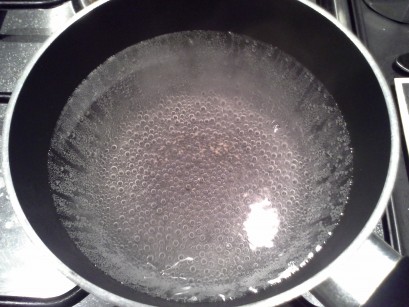
For the pistachio coating to adhere well to the swordfish slice, the swordfish should be slightly moist, so avoid drying it.
If the slice is too dry, you can help by rubbing a thin layer of oil evenly on the swordfish.
Using a kitchen knife, coarsely chop the pistachios until you obtain uniformly sized bits.
I advise against using a food processor, as you may end up with pistachio powder and large pieces. Using the powder will burn quickly, while the large pieces won’t become flavorful.
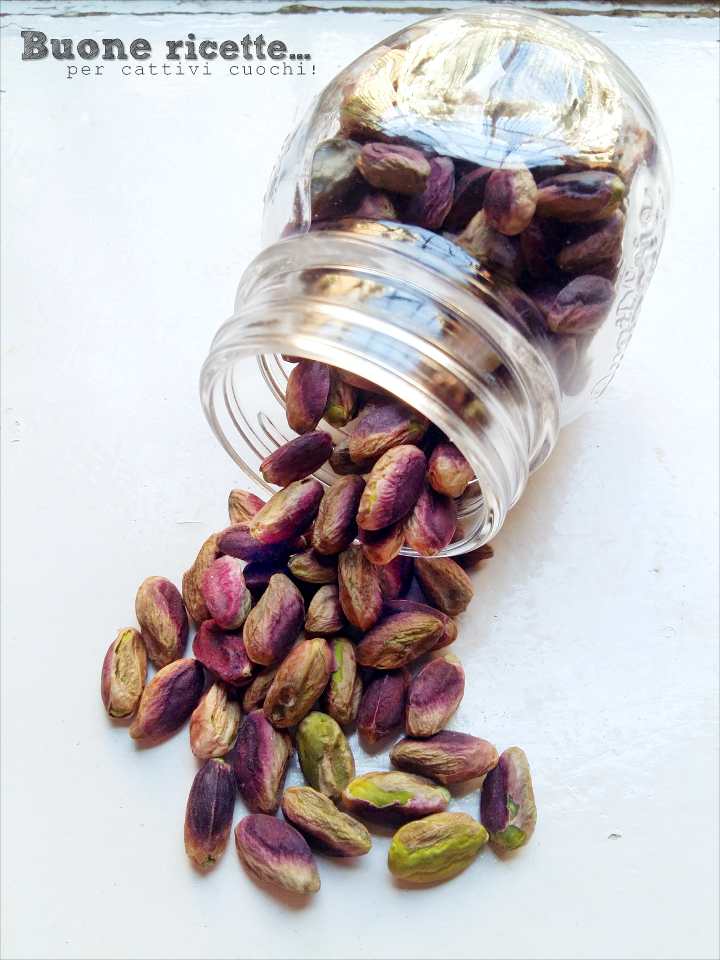
Place a pan on the stove with a dash of oil and heat over medium flame. Once warm, add the swordfish slice.
The cooking should be quick and even; the heat should toast the swordfish and form an outer crust without overcooking the center.
If you like, you can flavor the dish with a crushed clove of garlic in its skin.
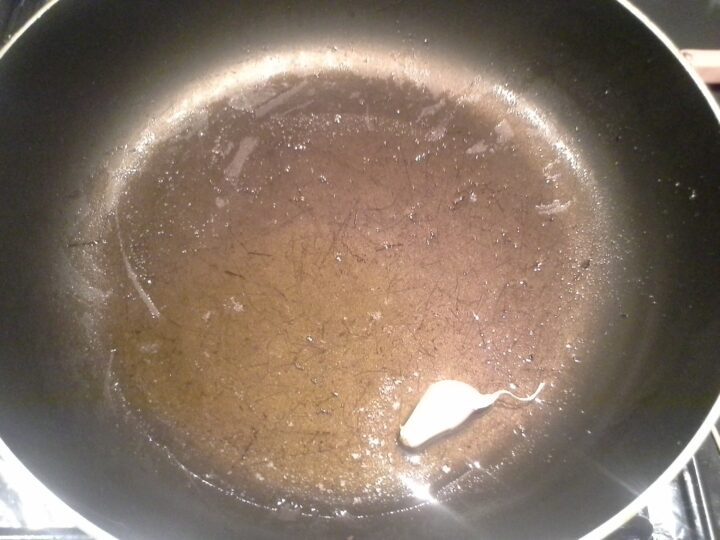
After a couple of minutes, turn the slice over using a spoon or fork; the pistachio crust is quite brittle, and if not turned carefully, it may detach from the swordfish.
To achieve the perfect slice, the center of the fish should be just seared. Overcooking the swordfish in pistachio crust risks making the dish too dry or chewy.
After two minutes of cooking on medium heat on the second side, you can turn off the flame. If the slice is very thick, use your eyes to determine the cooking level by looking at the side edge. When the cooking level of the swordfish reaches halfway, it’s time to turn it.
You can complete the cooking by searing the edges after cooking the two main sides.
Your swordfish with pistachio crust is ready!
Plating Tips:
Arrange the swordfish with pistachio crust on a bed of light seasonal salad, enhanced with tomatoes and red onions soaked in water to make them lighter and more digestible.
Wine Pairing for Swordfish with Pistachio Crust:
To enhance the flavor of the swordfish, you can serve a Negramaro Rosé, a wine reminiscent of flowers and red fruits like cherries and blueberries. Alternatively, you can serve it with an Etna Bianco Doc, a full-bodied and aromatic wine that pairs well with swordfish and pistachios.