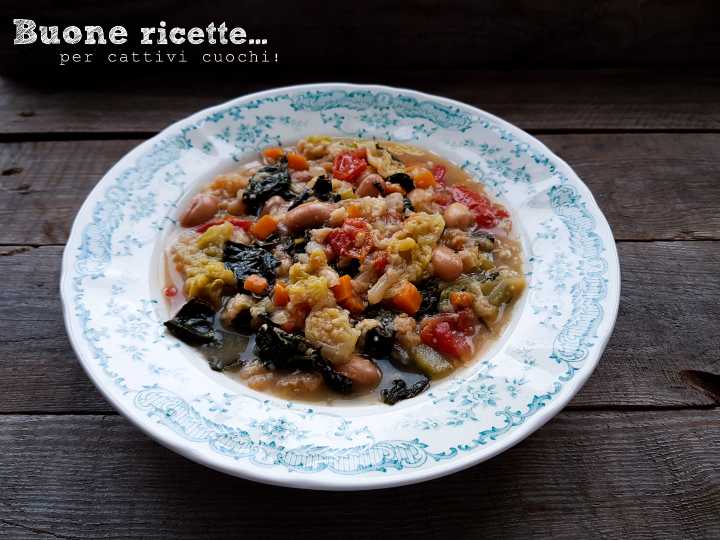
The ribollita is a classic of Tuscan cuisine. Learn to prepare this dense and flavorful soup with simple steps. Ribollita is the ultimate recycling dish, as suggested by the name of the recipe itself, born from the cooking of a series of leftovers used for other Tuscan recipes.
If you like classic autumn recipes, I recommend reading
- Difficulty: Very easy
- Cost: Very economical
- Rest time: 1 Day
- Preparation time: 10 Minutes
- Portions: 4
- Cooking methods: Stovetop
- Cuisine: Italian
- Seasonality: Autumn, Winter
- Energy 281.81 (Kcal)
- Carbohydrates 49.01 (g) of which sugars 7.07 (g)
- Proteins 17.41 (g)
- Fat 3.19 (g) of which saturated 0.53 (g)of which unsaturated 0.38 (g)
- Fibers 14.61 (g)
- Sodium 153.28 (mg)
Indicative values for a portion of 250 g processed in an automated way starting from the nutritional information available on the CREA* and FoodData Central** databases. It is not food and / or nutritional advice.
* CREATES Food and Nutrition Research Center: https://www.crea.gov.it/alimenti-e-nutrizione https://www.alimentinutrizione.it ** U.S. Department of Agriculture, Agricultural Research Service. FoodData Central, 2019. https://fdc.nal.usda.gov
Ingredients for 4 people:
- 9 oz white beans (cannellini) (dry or canned)
- 8 oz kale
- 1 onion
- 1 stalk celery
- 1 carrot
- 2 San Marzano tomatoes (ripe or peeled)
- 1/4 savoy cabbage
- 1 bunch parsley
- A few leaves thyme
- to taste extra virgin olive oil
- to taste salt
- to taste black pepper (freshly ground)
- to taste chili pepper (optional)
Tools
- 1 Pot 4 quarts
- 1 Cutting board
- 1 Knife
- 1 Blender
Procedure
There are many recipes to make a good Tuscan ribollita, here’s how I like to prepare it
If you are using dry cannellini beans, you will need to soak them the night before for at least 24 hours, changing the water frequently. After completing the ‘washing,’ you will need to boil them in plenty of water until they are cooked, which can take up to 1 and a half hours.
If using canned cannellini beans, drain them well to remove the water in which they are stored, as it would be heavy and indigestible.
Tip: For a creamier soup, put half of the cannellini beans in the hand blender jar and create a real puree with some water. This will speed up the process, not having to wait for them to be overcooked, and will make the ribollita creamier.
In a pot, add a drizzle of oil and sauté the onion, carrot, and celery, which you have previously diced into uniform cubes.
While the sautéed mixture is cooking, focus on the herbs (thyme, parsley), which should be finely chopped and added to the pot.
Dice the tomato; I hate the skin, so I always prefer to remove it by blanching them in boiling water for 30 seconds after scoring them on the surface.
Chop the chili pepper if fresh or pulverize it if dried.
TIP: For a less spicy but more pungent flavor, try ginger. Ginger is very fibrous, and if not chopped well, it might be too present when you taste the ribollita. Grate it finely, extracting its juice with the help of two spoons that will serve to squeeze the ginger from the pulp.
Add to the pan with the sautéed mixture, the herbs, the savoy cabbage, and the kale cut into strips, and sauté for about 10 minutes.
When the kale is stewed, add the diced tomato, the cannellini puree, and water to generously cover the ingredients. Cook over low heat for about 60 minutes.
At the end of cooking, taste the last whole beans and adjust with salt and extra virgin oil, set aside for the next day.
There are two schools of thought: that the ribollita is cooked with Tuscan unsalted bread or that the bread is at the base.
Both versions are good; I recommend placing the unsalted bread in the pot, covering it with the soup, and letting it rest for a day.
The next day, put it back on the stove and cook for another 20-30 minutes so that the crumbled bread will make your soup creamy and thick.
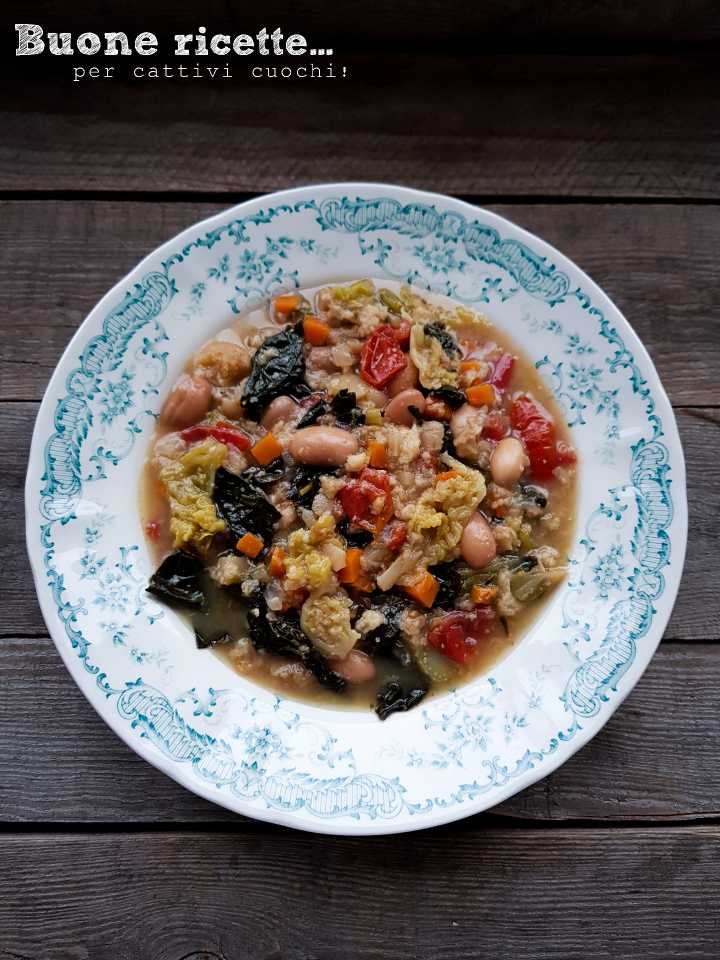
Your Tuscan Ribollita is ready!
Serving suggestions:
Place a slice of toasted Tuscan bread on the plate and generously pour the ribollita, which should soak the bread until it disappears. I recommend very elegant soup bowls to accentuate the contrast of a simple dish presented in a refined, elegant way.
Wine pairing with Tuscan Ribollita
I think the answer is obvious, but in case you are looking for confirmation, this soup should be served and enjoyed with an excellent Chianti.