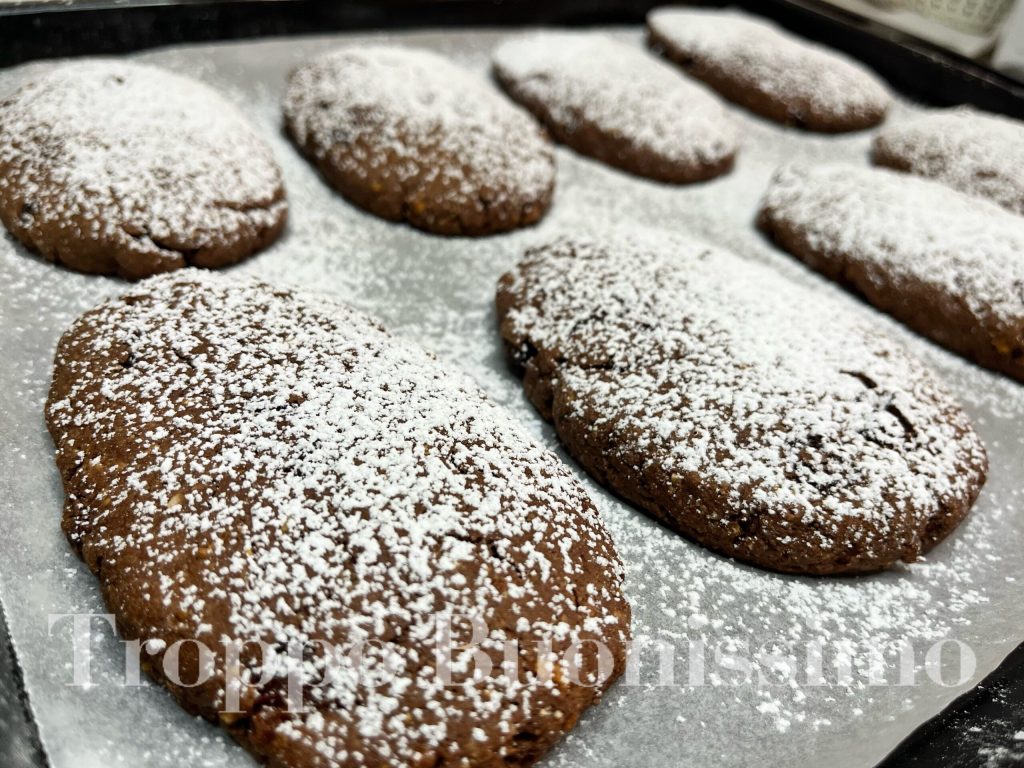
The bread of the dead is a traditional dessert from Lombardy, prepared for All Saints’ Day. This typical recipe dates back centuries when it was made as a tribute to the deceased, a symbol of affection and remembrance. Soft inside, with a delicate crunch outside, the bread of the dead is enriched with dry biscuits, raisins, almonds, and a mix of spices that fill the house with autumn scents. Perfect for the colder days, this dessert is ideal to enjoy with a cup of tea or hot coffee. Discover how to prepare this All Saints’ Day dessert, simple yet rich in history and flavor, by following my step-by-step recipe!
Also, check out these recipes:
- Difficulty: Medium
- Cost: Medium
- Rest time: 2 Days
- Preparation time: 30 Minutes
- Cooking methods: Oven
- Cuisine: Italian
- Seasonality: Autumn, Day of the Dead
Ingredients
Ingredients for the bread of the dead
- 3.5 oz dry biscuits (shortbread cookies)
- 3.5 oz amaretti
- 10.5 oz ladyfingers
- 2 cups all-purpose flour
- 0.5 cups unsweetened cocoa powder
- 1.25 cups sugar
- 4.25 oz almonds
- 4.5 oz dried figs
- 4.5 oz raisins
- 6 egg whites
- 0.5 cup fortified wine
- 0.5 tsp ground cinnamon
- to taste nutmeg
- 2 tsp baking powder
- to taste powdered sugar (for decoration)
Tools
- Board
Steps
To prepare the bread of the dead, start by soaking the raisins in a small bowl directly in Vin Santo (Passito or Marsala are also fine).
Use a blender to crumble the dry biscuits, amaretti, and ladyfingers.
Next, coarsely chop the almonds and dried figs and add them to the crumbled biscuits.
Mix these ingredients well with the sifted cocoa and granulated sugar.
Add the sifted flour and baking powder, the fortified wine with raisins, cinnamon, grated nutmeg, and egg whites.
Combine all the ingredients with a spatula. When the mixture is compact, transfer it to a lightly floured board and work it with your hands until you get a consistent dough. Create a block and cut it into 3.5 oz slices each.
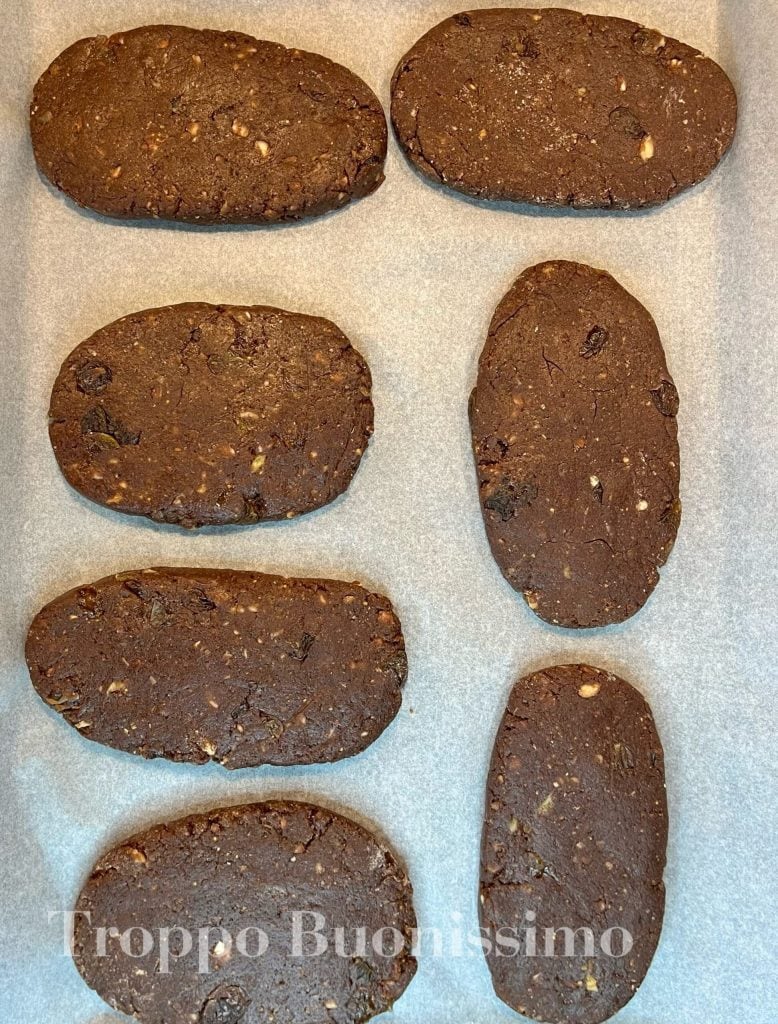
Now shape the mixture into small, rather flat loaves, about 0.5 inches thick, 5-6 inches in length, and 2 inches wide. Avoid adding flour at this stage to not compromise the final result.
Prepare a baking sheet or tray by covering it with parchment paper and place your bread of the dead, spacing them a few inches apart. During baking, they will grow a bit.
Bake the cookies in a preheated oven at 350°F for about 25 minutes. Then, remove them from the oven, sprinkle with powdered sugar, and let them cool.
Serve your bread of the dead only after letting them rest for at least two days (stored in an airtight container), the right time to let your cookies soften.
Enjoy your meal!
Storage
Here are some tips to best store the bread of the dead, so it stays fresh and flavorful:
Airtight container: Once the bread of the dead has completely cooled, store it in an airtight container. In this way, it will remain soft and won’t lose moisture.
Cool, dry environment: Store the container in a cool, dry place, away from heat or moisture sources. If well closed, the bread of the dead can remain fresh for about 4-5 days.
FAQ (Questions and Answers)
What can I use instead of dried figs?
I have never tried replacing them with anything else, but I can suggest trying with the same quantity of dates or dried apricots. The important thing is that it’s soft and sweet dried fruit!
What can I substitute for amaretti?
You can replace them with the same amount of ladyfingers, dry shortbread cookies, or cocoa biscuits.
The important thing is that they are dry biscuits, not too sweet or moist, so they blend well into the dough without ruining the texture.What is meant by fortified wine?
Fortified wine is a wine that is more alcoholic and sweeter than usual. Examples include Marsala, Passito, and Vin Santo.