
Barbera risotto, Roccaverano and hazelnuts. Ancient and new flavors from Langa. With origins deeply rooted in tradition, not only in Piedmontese but also in other regions, farmers used and still use to pour a glass of predominantly red wine into the soup, ravioli and rice. Thus, the soup changes color, changes taste, becomes invigorating, and then everything is drunk by raising the plate to avoid losing even a drop.
Today, a spoon is used, and in local restaurants, you can still see someone asking for ravioli with wine.
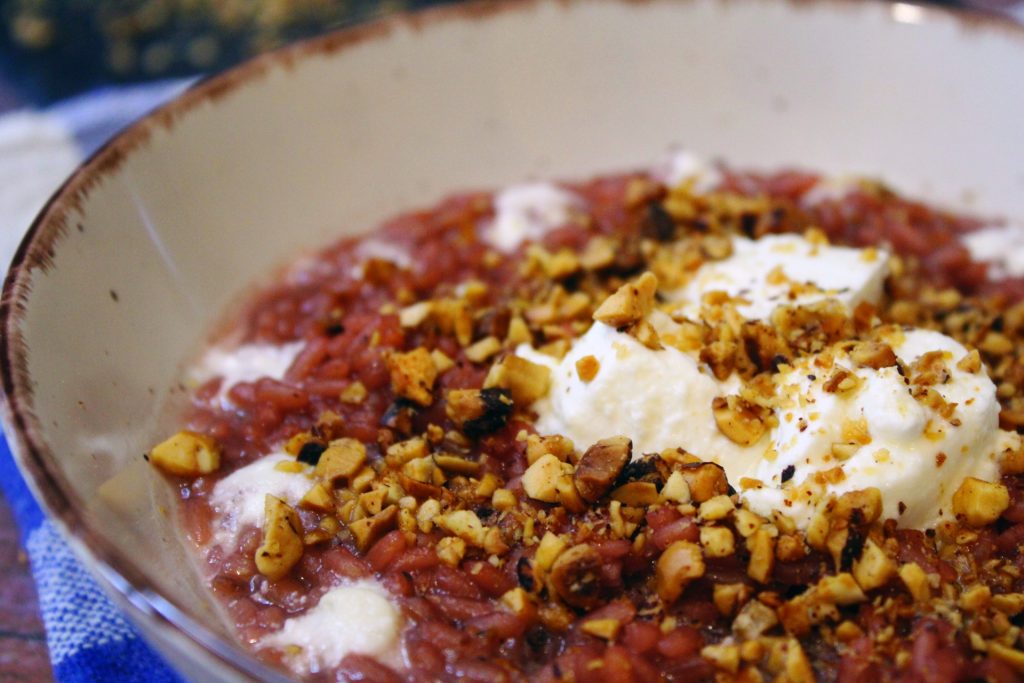
A little indulgence granted to many tastes. From this encounter also comes the classic barbera risotto, not just a touch to tone down the fat, but a wise dose to give body to the risotto, and in the case of barbera, a beautiful ruby color; and if you then add pure Roccaverano fondue and toasted, ground hazelnuts… you won’t be able to resist licking your lips. A little extra treat! Some truffle shavings, and surely you will hear cherubs singing in chorus!
Ah! Once in Langa, this gesture of adding wine to soup, ravioli, or meat broth was called “Fè la surbia”. Another typical saying from Vercelli goes like this: “Al ris, al nassa int l’aqua e ‘l mora int al vin” The rice is born in water and dies in wine.
And I can’t help but suggest other recipes of this exquisite ingredient called rice!
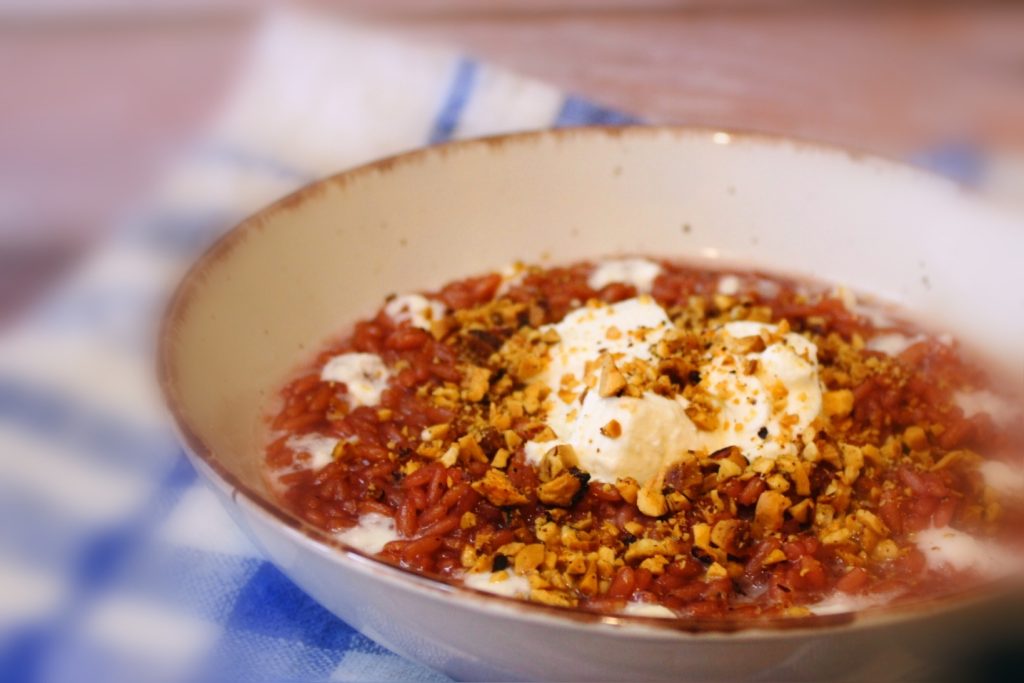
- Difficulty: Easy
- Cost: Affordable
- Preparation time: 10 Minutes
- Portions: 4
- Cooking methods: Stovetop
- Cuisine: Italian
- Seasonality: Fall, Fall, Winter, and Spring
Ingredients
Rice, barbera wine, and toasted hazelnuts. With three ingredients, an explosion of flavor!
- 1 1/2 cups Carnaroli rice
- 1 2/3 cups barbera (I prefer and recommend a full-bodied one!)
- 14 oz goat cheese (Raw milk Roccaverano indeed 😊!)
- 2 espresso cups goat milk
- 8 cups meat broth
- to taste salt
- to taste olive oil
Useful Tools
Risotto pan, dishes, glasses, cutlery… And much more can be found in the Shopping Tips space
- Pans
Steps
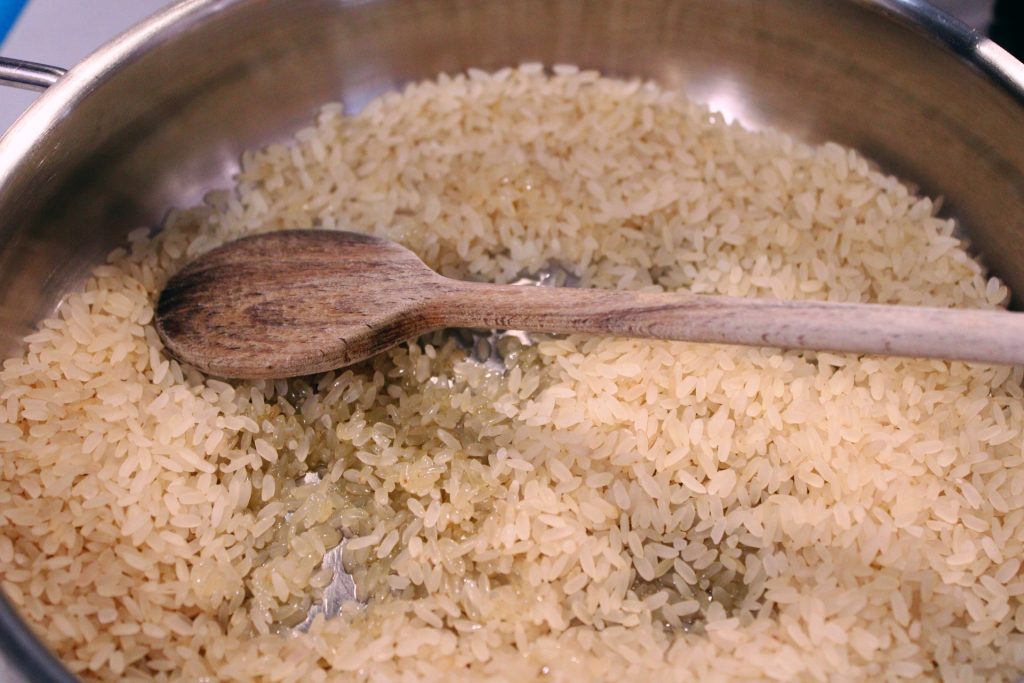
Making risotto is relatively simple, but it hides some pitfalls: it sticks to the bottom, and a double-bottom pan helps; you must pay attention to the toasting; when the rice starts to change color, it’s better to deglaze with hot liquid; in this specific case, I add the wine at room temperature. In this risotto, I’ve chosen not to make a sautéed onion, a good olive oil will serve as the base.
Heat the oil and add the rice. Stir continuously with care.
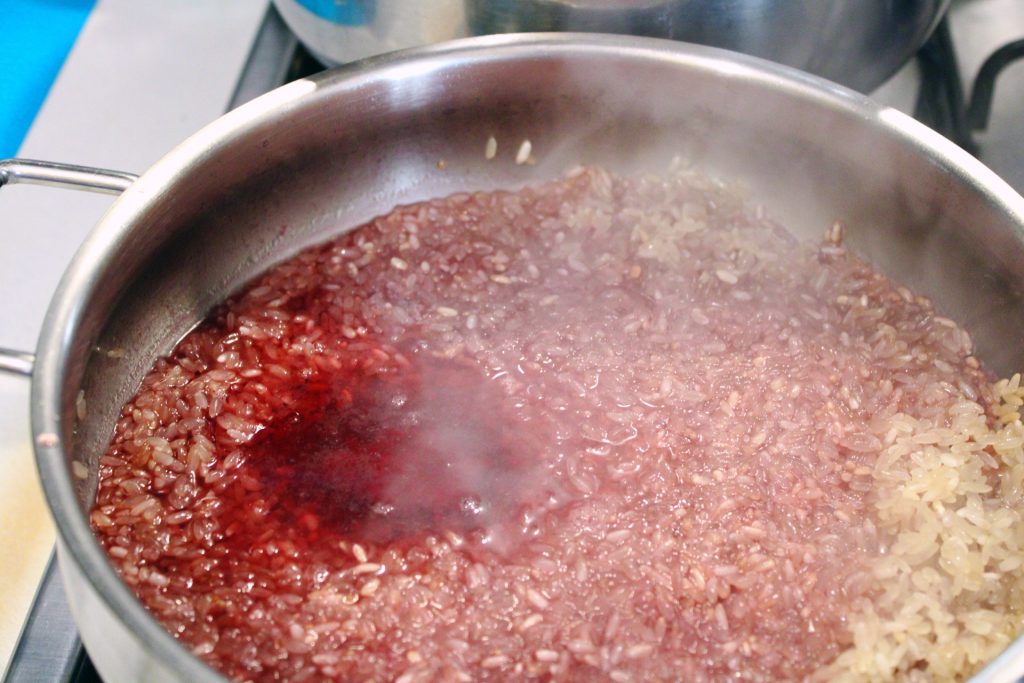
Deglaze with the wine, adding the recommended amount little by little. Then continue cooking and moisten with the hot broth. Leave the risotto slightly creamy.
During cooking, dissolve the Roccaverano in the hot milk until you obtain a cream.
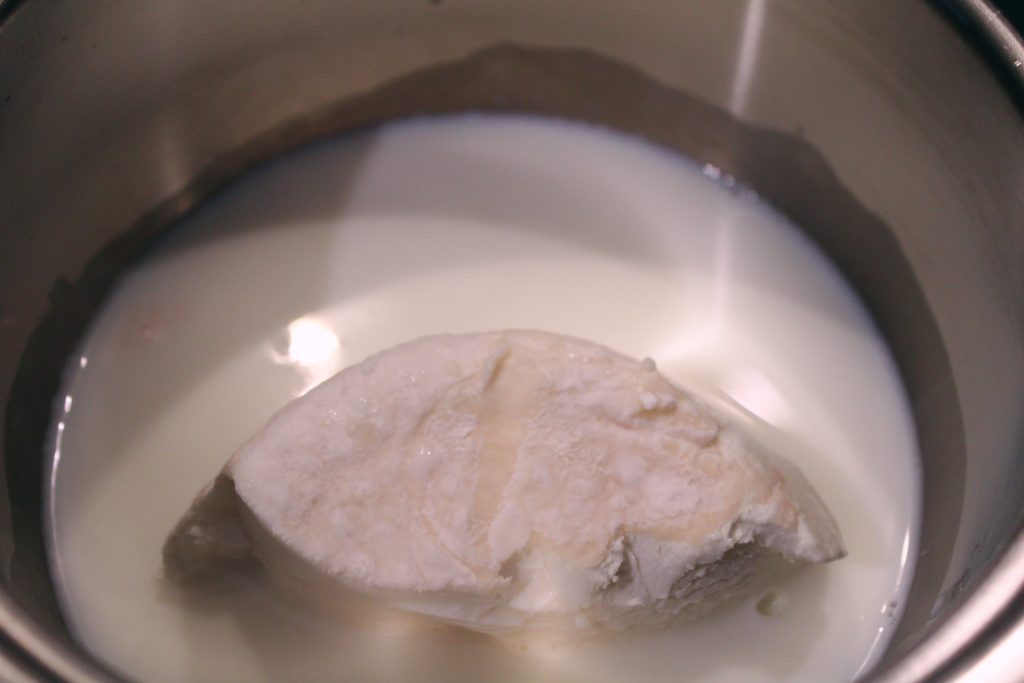
At the end of cooking, transfer to the serving dish, finish with the cheese sauce and chopped toasted hazelnuts.
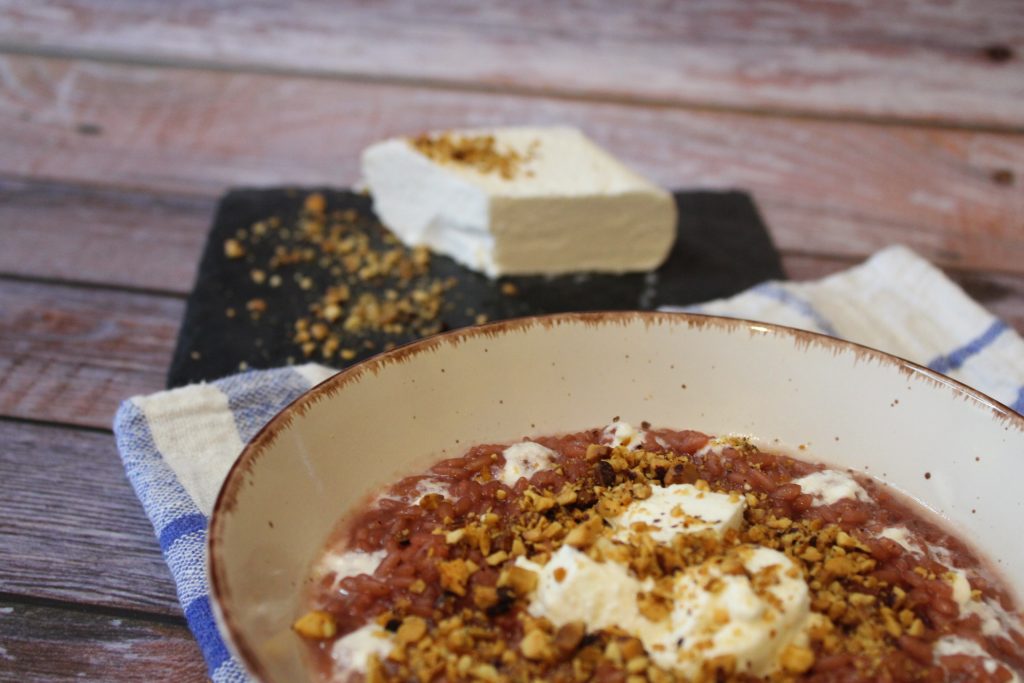
Serve hot and enjoy slowly!
Some Additional Tips
Dissolve the robiola in hot milk, to warm and soften the cheese. If you use a light-aged version, it will have a delicate flavor; if you prefer a more robust taste, I recommend a moderately aged Roccaverano to not overshadow the wine’s aromatic notes. I suggest a full-bodied, well-aged barbera for a top result! I don’t recommend adding Parmesan or similar cheeses to preserve the original taste. As suggested above, some truffle shavings will enhance the dish.
