
Drunken pear mustard recipe with Madernassa pears, wine, and sugar
Few ingredients for a mustard that elevates your cheese to a sensation of goodness never tasted before!
Am I exaggerating?
Try it to believe it…
We’ve already talked about Madernassa pears, I also make this mustard with the pears from my old tree, but, alas, this year I had too many recipes to make 😜
I tried with this variety because it holds up well during cooking, doesn’t fall apart, and with this preparation becomes shiny just right.
There are 4 or 5 varieties of pears I use, some I never buy, I find them too sweet; I don’t like fruit that’s too sweet, just ripe enough for some, too ripe for me, as I pick it directly from the tree and start checking the ripeness as soon as the fruit has completed its shape, so as soon as there’s a hint of sugar for me it’s ready to pick 😁
and with the excuse of having to keep blood sugar in check, I cook using a limited percentage of sugars, where possible, I love sweets that aren’t too sweet, jams that have the taste of fruit and mustards where I can recognize the origin. I like to distinguish the ingredients.
- Difficulty: Easy
- Cost: Cheap
- Rest time: 3 Days
- Preparation time: 1 Hour
- Portions: 10
- Cooking methods: Stovetop
- Cuisine: Italian
- Seasonality: Fall, Winter
Ingredients
- 2.2 lbs pears (Madernassa or cooking pears, already peeled.)
- 3 cups sugar
- 2 cups wine (Barbera or dolcetto, I used local wines.)
- 2 cloves
Tools
A bowl for marinating, a double-bottomed pot… Jars if you want to store it
- Bowls
- Pots
- Jars
Steps
It takes days, but the longest and “hardest” step is peeling the pears.
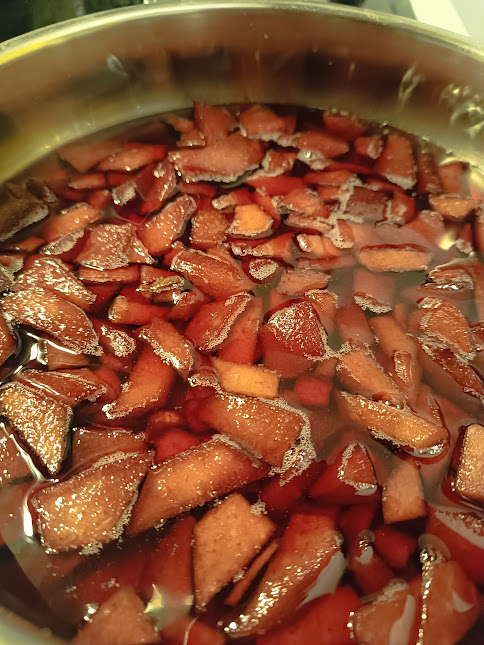
After peeling the pears, slice them thinly or chop them in the food processor, depending on your preference; I make them both ways. Place them in a bowl and cover them with wine, letting them infuse overnight; it will release color and aroma.
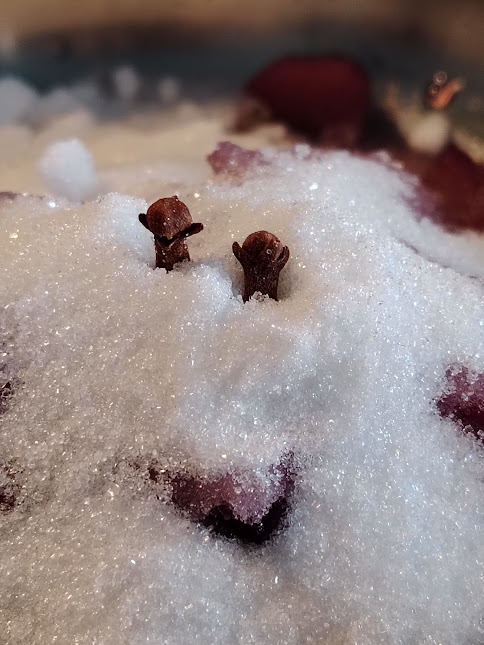
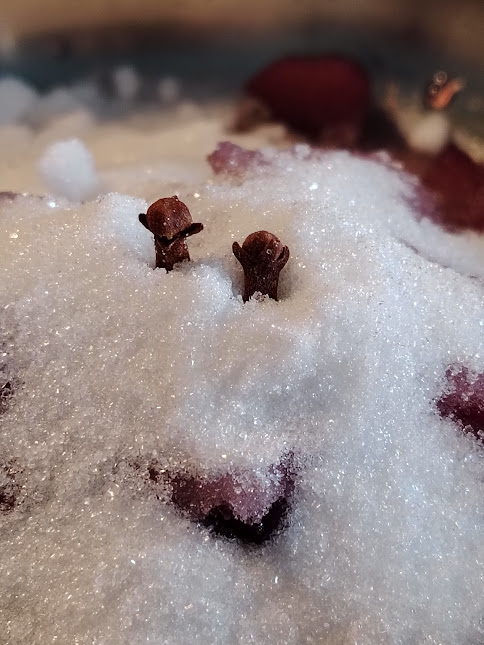
In the morning, drain and add the sugar and cloves, mix and let them macerate until the next morning. Leave them uncovered.
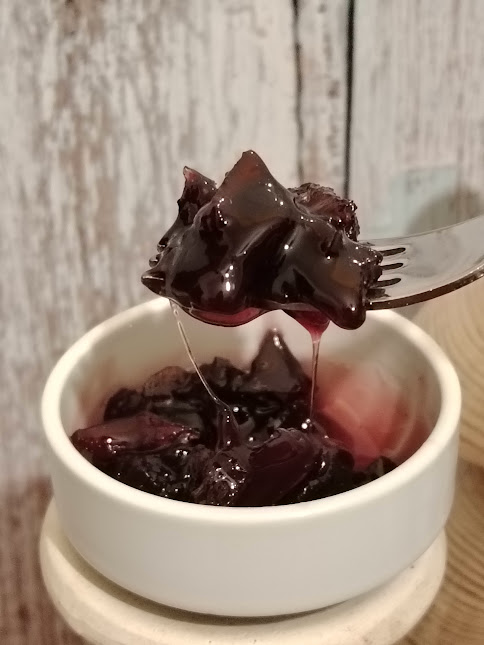
In the morning, place the pot on the stove on low heat and bring to a boil, count five minutes, and then turn off the heat. If you’re cooking a larger quantity, double the time. Let it rest until the next morning, without using the lid. Repeat this process three times, you will notice they are ready when, once cold, they have a nice syrupy and dense consistency, this depends a lot on the type of pears, whether they are more or less watery. Once ready, if you want, remove the cloves and pour into jars, sterilize, and you will have a delicious mustard for some time to accompany your dishes.
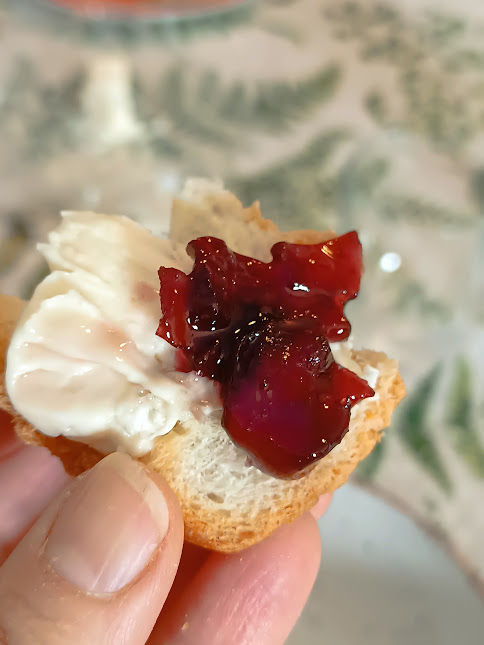
Serve with aged cheeses, both sheep and goat; I always try it on these varieties, as my son produces them on the farm.
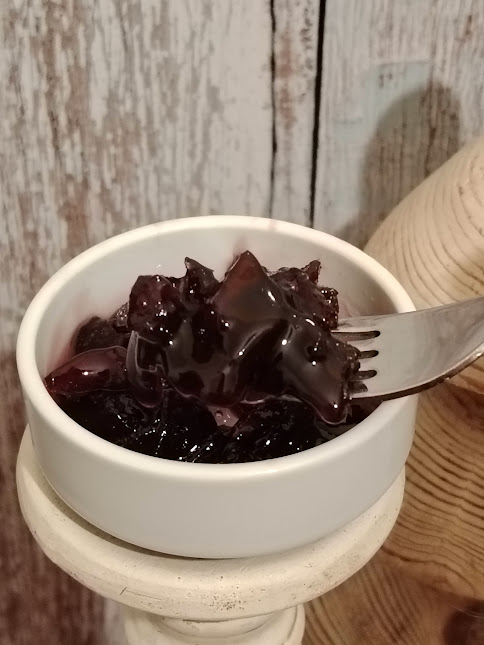
An excellent mustard also to accompany boiled meats, ideal with raw meat, aged sheep’s robiola, and hazelnut granules.
Storing your mustard:
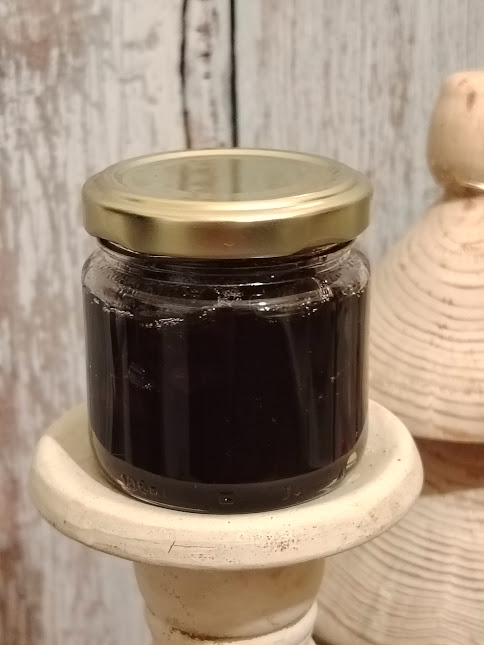
As mentioned above, the ideal is to store in sterilized jars, in the refrigerator it keeps for about a month.
As mentioned above, the ideal is to store in sterilized jars, in the refrigerator it keeps for about a month.
