
Natural mint syrup.
In my garden, mint has taken over. I use it as a flavor for summer preparations.
Given the abundance, I thought of making mint syrup, to use as I please
After collecting the leaves without wearing gloves, I found my fingers stained dark. And like all vegetable stains on fingers and nails, they are not easy to remove. So, I often find myself fighting with lemon juice to lighten them. Among tomato plants and other leaves, my hands have a greenish appearance. I should wear gloves, but the sensitivity suffers. And after all, smelling like mint or lavender doesn’t bother me. Aesthetically, dark hands are not a virtue. My personal freedom is worth more.
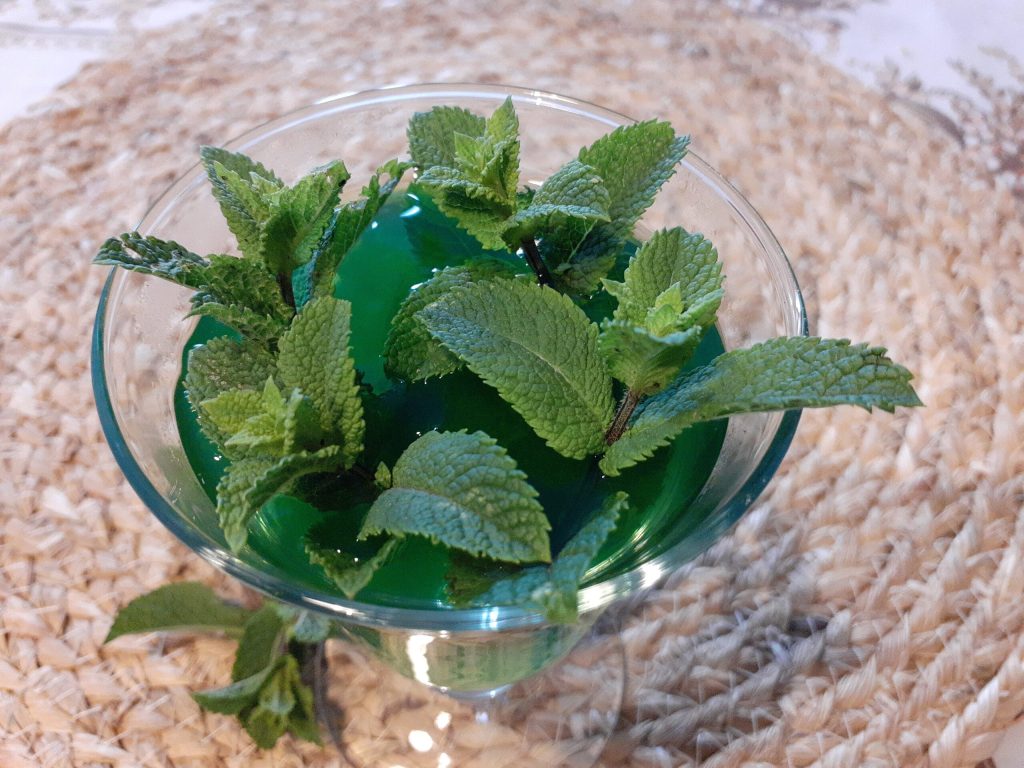
- Difficulty: Easy
- Cost: Economical
- Preparation time: 2 Hours
- Cooking methods: Stovetop
- Cuisine: Italian
- Seasonality: Spring, Summer
Ingredients
- 2 l water
- 300 g mint (Fresh mint leaves)
- 1 kg sugar
- 3 ml lemon juice
Tools
- Pots
- Strainers
- Pitchers
Steps
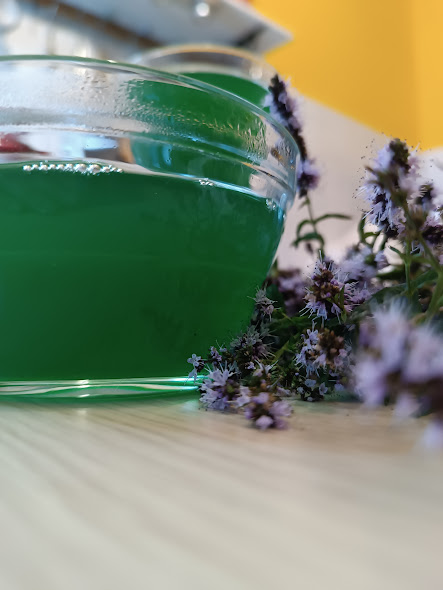
Gently wash the mint leaves and let them dry with the help of a cloth. Combine all the ingredients and let them infuse overnight. Take the syrup and place it on the stove over medium heat. Boil gently and occasionally check the fluidity on a small plate. Remember that the syrup is naturally more liquid when hot, let it cool to know the right density.
Strain well and squeeze the leaves. Put back on the heat and let it boil.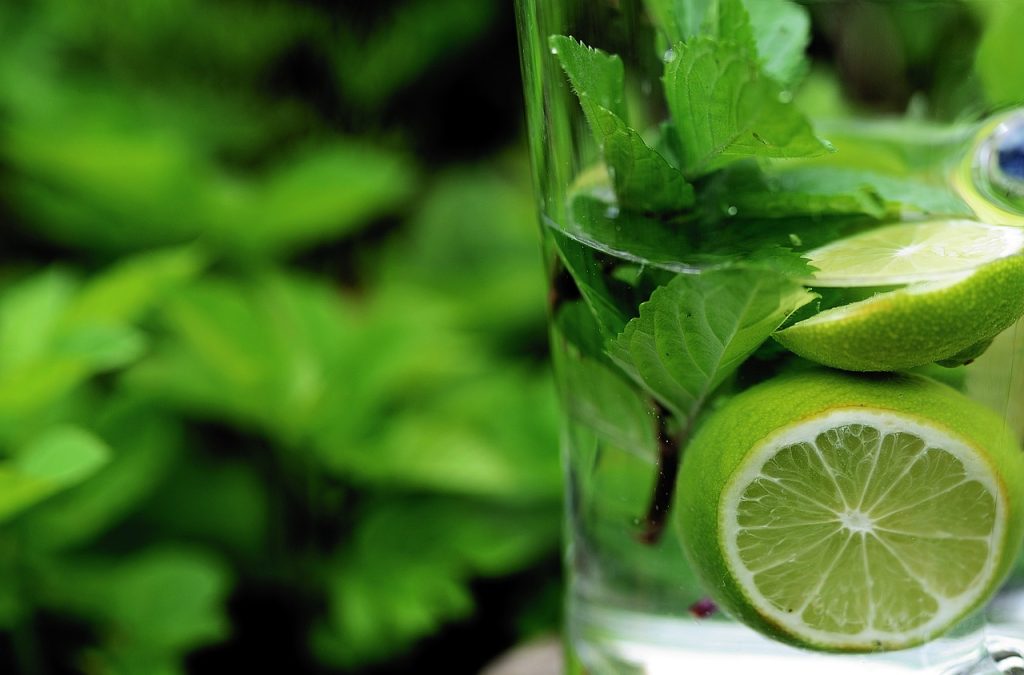
I added a few drops of chlorophyll just before bottling to give a greater color note. Bottle while hot and store in the dark. When consuming it, dilute it with 10 parts water.

A fresh and natural mint syrup. You can enjoy it diluted in water or fruit salad.
As a garnish on ice creams and puddings. Or in the chocolate and mint semifreddo.
I will soon write the recipe.
Follow me for updates…
