
Pappardelle with farmyard ragù recipe
In the beating heart of the Italian countryside, especially in renowned regions like Tuscany, Emilia-Romagna, and Marche, the preparation of ragù is much more than a mere culinary act; it is a true ritual embodying tradition and the art of good living.
This dish, fundamental in the Italian gastronomic arsenal, requires specific ingredients that enhance its unique and genuine flavor.
Of particular note is the use of less noble animal parts, such as chicken feet, wings, livers, and gizzards, which, together with minced pork and beef neck, form the rich and savory base of the ragù.
Fresh ingredients like onion, carrot, celery, and rosemary, sautéed in a pan, blend with a generous glass of red wine, followed by the indispensable tomato sauce, creating a melody of flavors that speaks of fertile lands and expert hands.
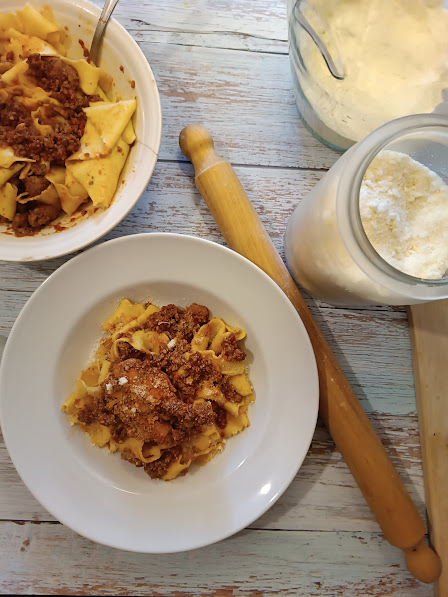
- Difficulty: Easy
- Cost: Affordable
- Preparation time: 1 Hour
- Portions: 6
- Cooking methods: Slow cooking, Stovetop
- Cuisine: Italian
- Seasonality: All seasons
Ingredients
As mentioned above, this is a dish of authentic traditional cuisine, with a good mix of minced meat, chicken feet or wings, chicken gizzards and livers, or rabbit livers, but pork liver is also fine; a simple cuisine to use the less noble parts of farm animals.
- 10.5 oz mixed minced meat (Pork and veal)
- 2 chicken wings
- 7 oz sausage
- 3.5 oz chicken livers (+ 3.5 oz of chicken gizzards)
- 1 glass red wine
- 24.5 oz tomato sauce
- 1 cup soffritto mix
- to taste olive oil
- to taste salt
- 1.3 lbs egg pappardelle (Prepared following the egg pasta recipe)
Tools
to prepare this recipe, you will need classic kitchen tools, which I can recommend for purchase if you wish to renew some of them by clicking Here they are all items I use in my kitchen
Steps
Let’s start by making a chop of fresh vegetables for the soffritto…and then gradually add the rest…
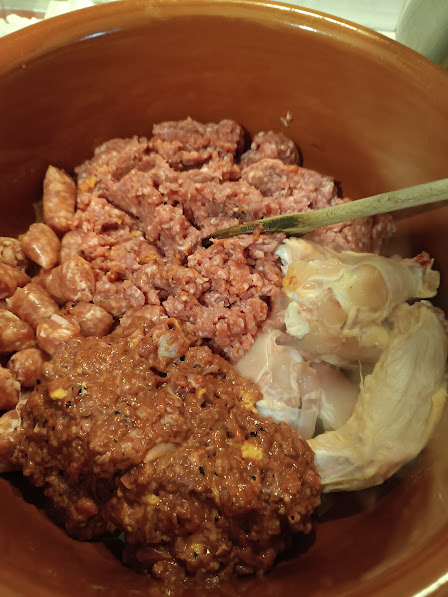
First, make a chop of onion, celery, and carrot for the soffritto; then brown it in the clay pot and add the minced meat, the chicken, and the finely chopped offal; let it brown well until all the liquid that will form evaporates.
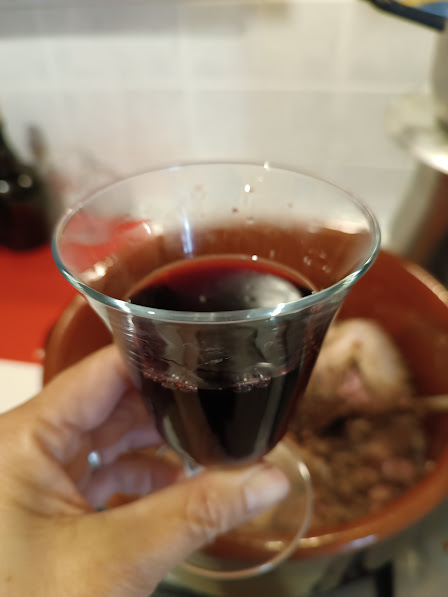
At this point, you can add the red wine, let it evaporate well…
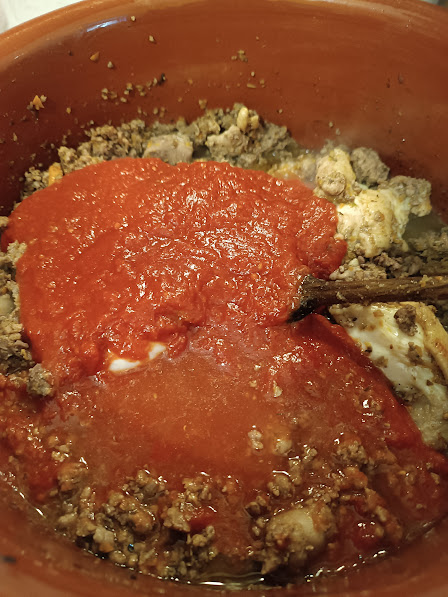
And add the tomato sauce, mix well, cover, and continue cooking over low heat for at least three hours, checking occasionally!
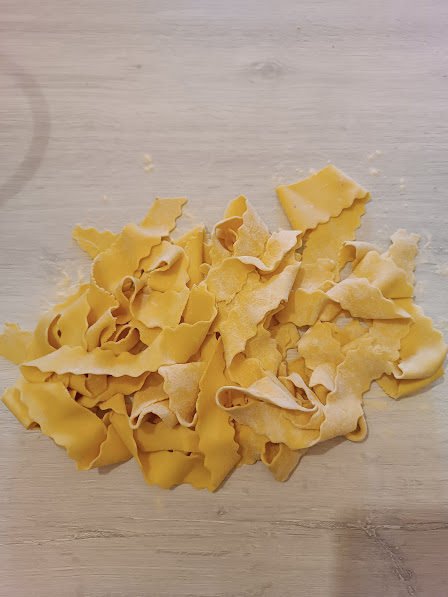
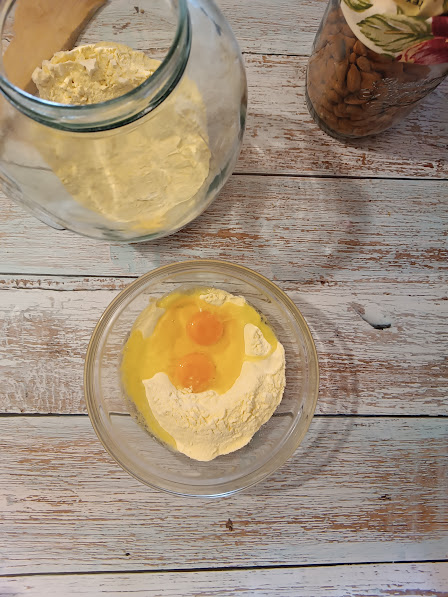
While your ragù cooks, prepare your pappardelle, for the pasta follow the instructions, which you then have to knead the semolina with the eggs to obtain a smooth and homogeneous dough that is not too soft. You can roll it out with a rolling pin; I use it when it’s just the two of us, otherwise I use the pasta machine.
Once the dough is rolled out, cut the pappardelle about two to three centimeters wide.
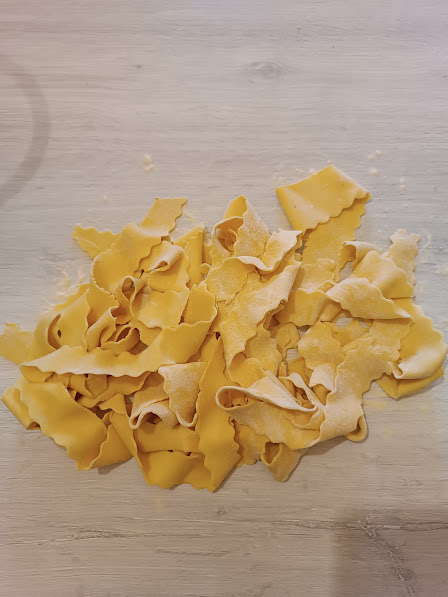
Cook in plenty of salted boiling water and serve with aged Tuscan pecorino or Grana Padano. Every time I prepare them, they polish the plate clean!
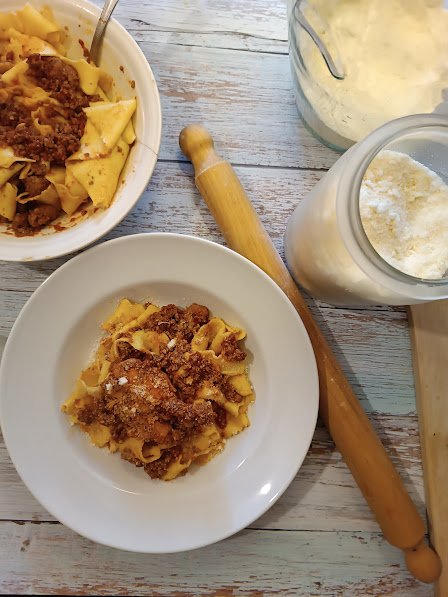
When I prepare this ragù, I make large portions as I store it in the freezer for everyday lunch use; divided into small containers.
I regularly do this with many condiments to always have the week’s lunch started. When you work, it’s always better to organize your days practically;
managing housework is easier, and we always have a resource available for any surprises, from friends and family!
FAQ (Questions and Answers)
The secret of an unmistakably rich and deep ragù lies in its slow cooking process; a diligent wait that symbolizes the philosophy of slowness and patience as culinary principles.
It is the terracotta pot, often left to cook at the edges of the fireplace or on the wood stove, that characterizes this process, ensuring an even distribution of heat and imbues the dish with an aura of authenticity and tradition.
The result is a ragù that encapsulates the warmth of kitchens of yesteryear, ready to be the perfect condiment for a portion of egg pasta, rolled out by hand with care and love.
My true Romagna mother-in-law used to tell me that ragù is not just a dish; it is a bridge that connects past and present, an invisible bond that unites generations.
That slow cooking, that skillful mixing of ingredients represent a declaration of love for the land and its riches,
a ritual that renews every time a pot of ragù begins to simmer, bringing back to life flavors, smells, and traditions that define the deep essence of Italian cooking.
