
Strascinati recipe with vegetables and salted ricotta
As you know, we always have vegetables at home, and we need to consume them because my chest freezer is almost full. I preserve some dried ones, a few in jars, but every day lunch and dinner are guaranteed; eggs complete everything… Not buying meat and cheese, we consume very little of it, between legumes and vegetables, we’re good.
I always make pasta at home, I buy semolina directly from the mill, the price is more advantageous, and the freshness of the grind is guaranteed.
I store it in single portions; for lunch, I’m out for work, so my husband always has almost ready lunch, and as a good Romagnolo, he also enjoys fresh pasta, and I can have fun with shapes and sauces.
My kitchen experience, I must say, covers a good part of Italy, I’m of Calabrian origins, Mother-in-law and husband are from Romagna, father-in-law Neapolitan, Piedmontese residence! I have fun!
In this recipe, I used seasonal vegetables, even turnips, which in truth are already finished in the garden, but I dried a little to make powder just to color the pasta
As always, the weight is indicative. If not strictly necessary, I don’t weigh the vegetables; I go by eye, by taste.
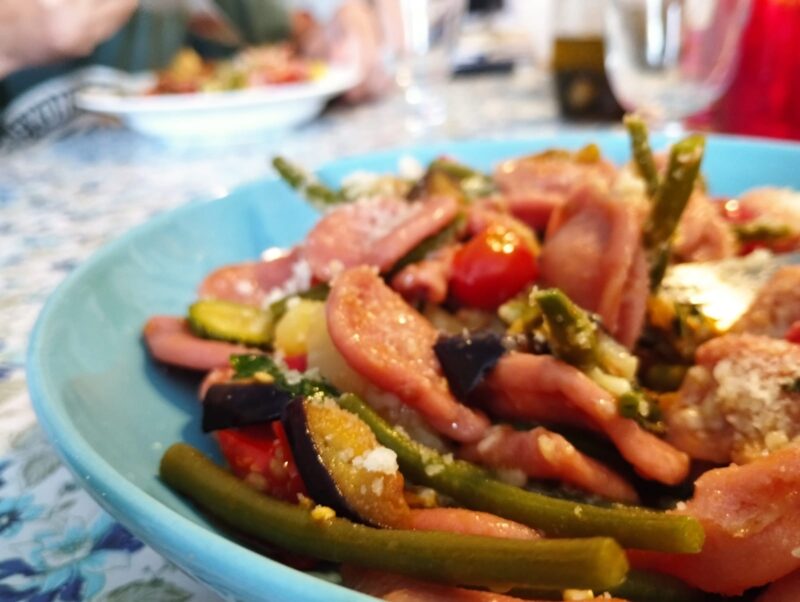
- Difficulty: Easy
- Cost: Economical
- Preparation time: 2 Hours
- Portions: 4
- Cooking methods: Stovetop
- Cuisine: Italian
- Seasonality: All seasons
- Energy 290.18 (Kcal)
- Carbohydrates 52.97 (g) of which sugars 1.04 (g)
- Proteins 10.18 (g)
- Fat 3.88 (g) of which saturated 0.04 (g)of which unsaturated 0.21 (g)
- Fibers 1.92 (g)
- Sodium 252.10 (mg)
Indicative values for a portion of 250 g processed in an automated way starting from the nutritional information available on the CREA* and FoodData Central** databases. It is not food and / or nutritional advice.
* CREATES Food and Nutrition Research Center: https://www.crea.gov.it/alimenti-e-nutrizione https://www.alimentinutrizione.it ** U.S. Department of Agriculture, Agricultural Research Service. FoodData Central, 2019. https://fdc.nal.usda.gov
Ingredients
Vegetables and homemade fresh pasta….
- 10.58 oz re-milled durum wheat semolina
- 1 beetroot, boiled (In powder; if you want to use it fresh, blend it finely and use less water. You need about 100 grams fresh)
- 1 eggplant (Medium)
- 1 zucchini (Medium)
- 1 bunch green beans
- 2 potatoes
- 1 bunch arugula
- 8 zucchini flowers
- 1.76 oz salted ricotta (To grate)
- 1 chili pepper
- to taste salt
- to taste olive oil
Tools
Work surface or cutting board, pot for pasta, pan for the sauce
Steps
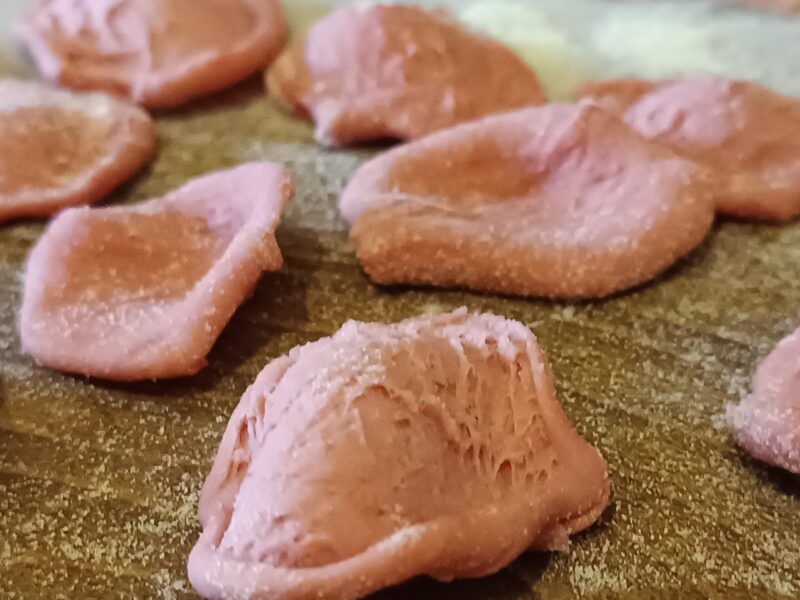
Work the semolina with the beetroot powder or fresh beetroot, adding lukewarm water as needed to obtain a firm dough, but not too dry
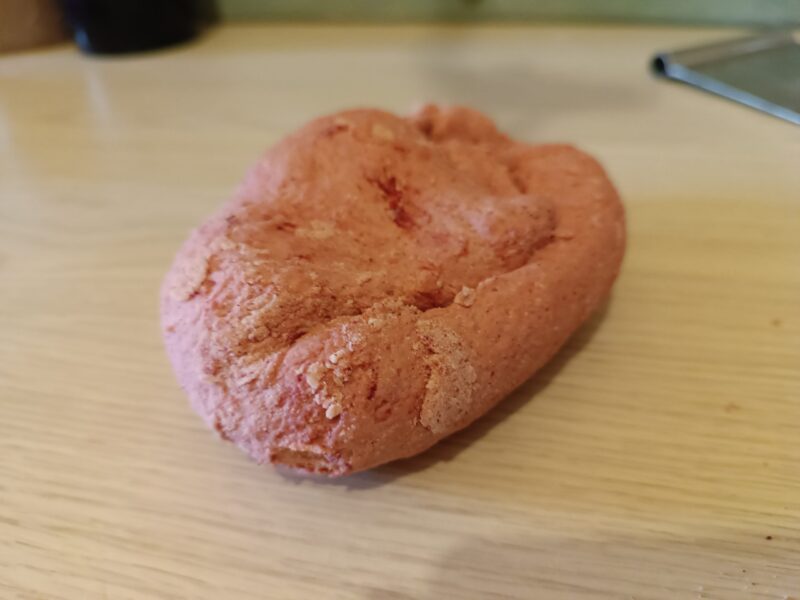
Make small sausages, about 0.39 inches in diameter, and cut them into pieces about 0.59 inches long; with the help of a spatula or a knife, drag the pasta, opening the curl that forms
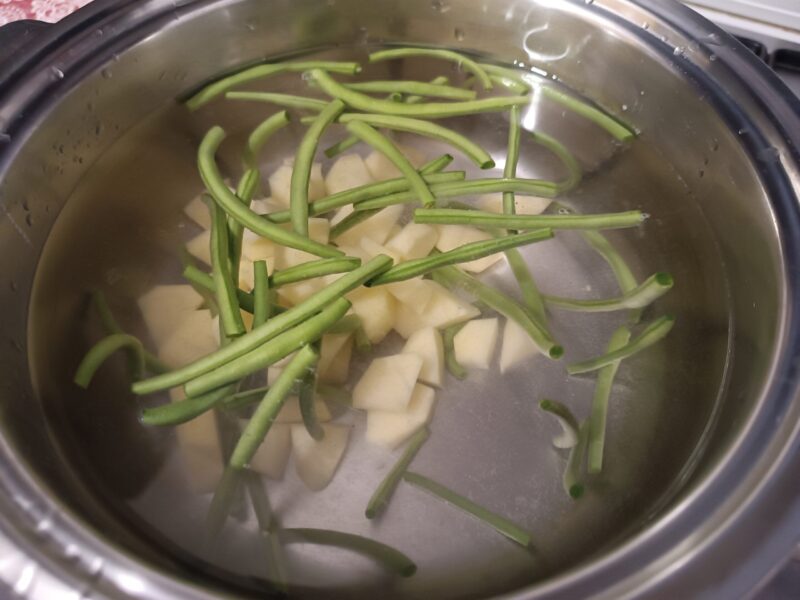
In the meantime, cook the diced potatoes and green beans in salted water, which you will then use to cook the pasta.
After making the pasta, you can sauté a chili pepper in olive oil, then add the eggplants cut into small pieces, and the zucchini sliced and cherry tomatoes halved.
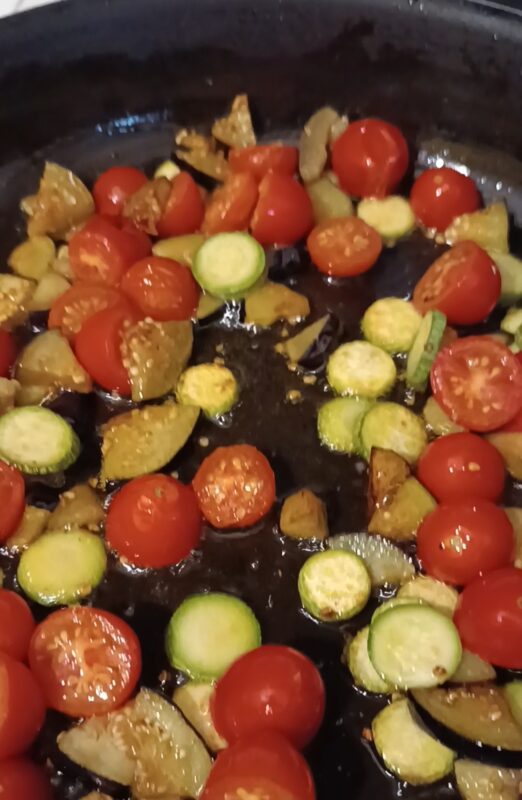
After browning the vegetables a little, they should not fall apart but remain crispy, add the chopped flowers and arugula.
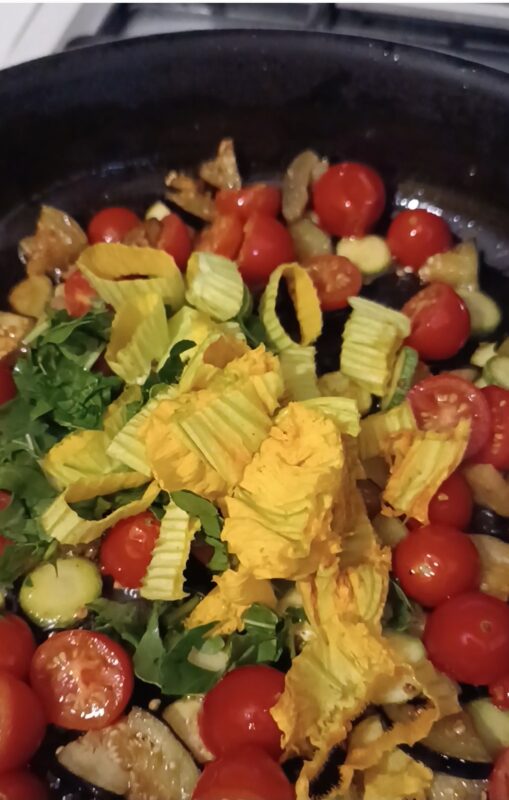
Cook the pasta, adjust the salt, and after draining, add it to the sauce. If needed, add some pasta cooking water to mix well.
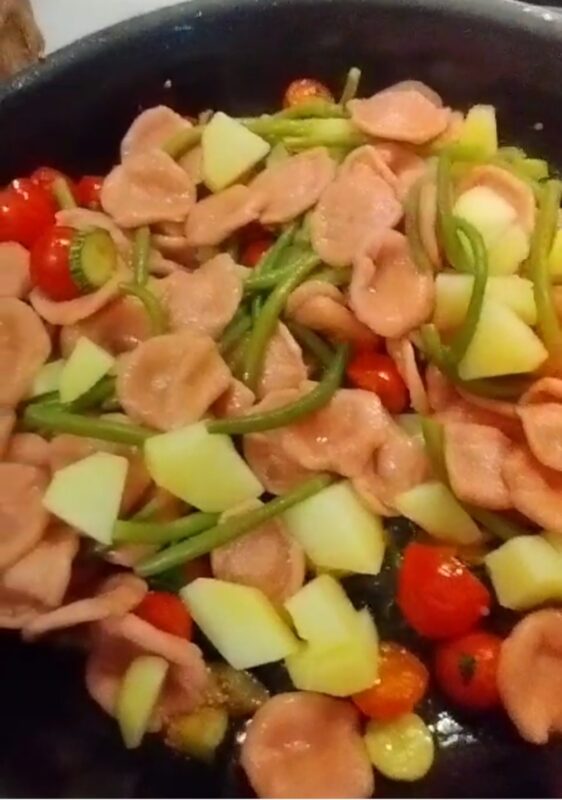
Let it flavor for a few minutes and serve…
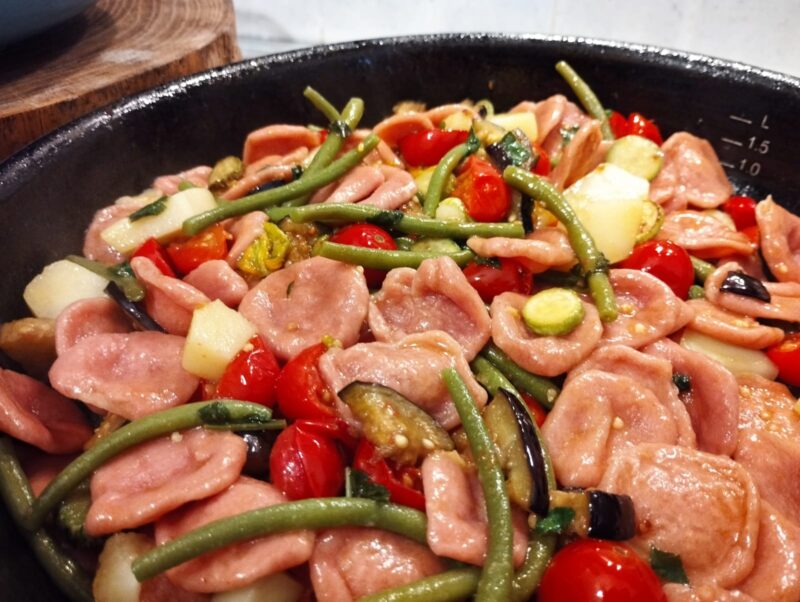
With a generous sprinkling of salted ricotta! A rustic, good, and fragrant pasta!
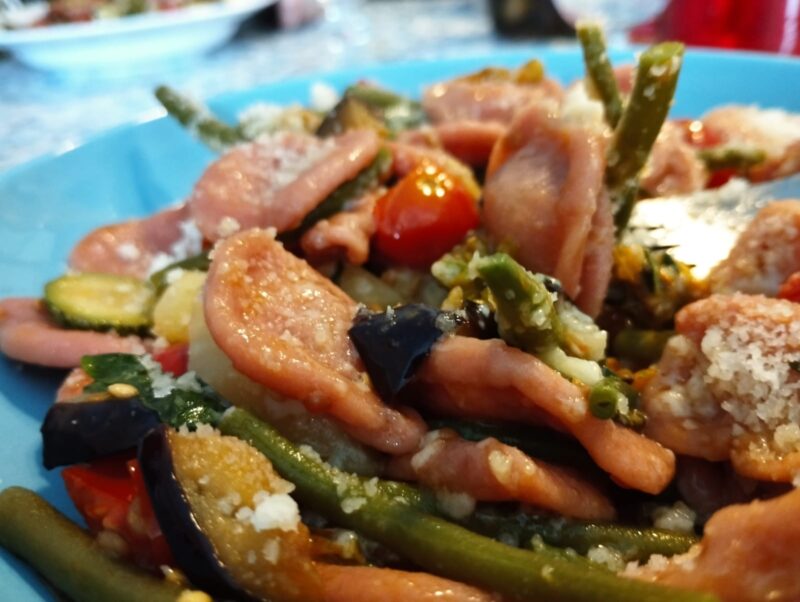
You can freeze the pasta, first on the tray and, subsequently in bags; the leftover seasoned pasta is excellent even the next day. Optionally, if you prefer, instead of using salted ricotta, you can use fresh sheep ricotta. It will create a cream that sticks well to the pasta!
