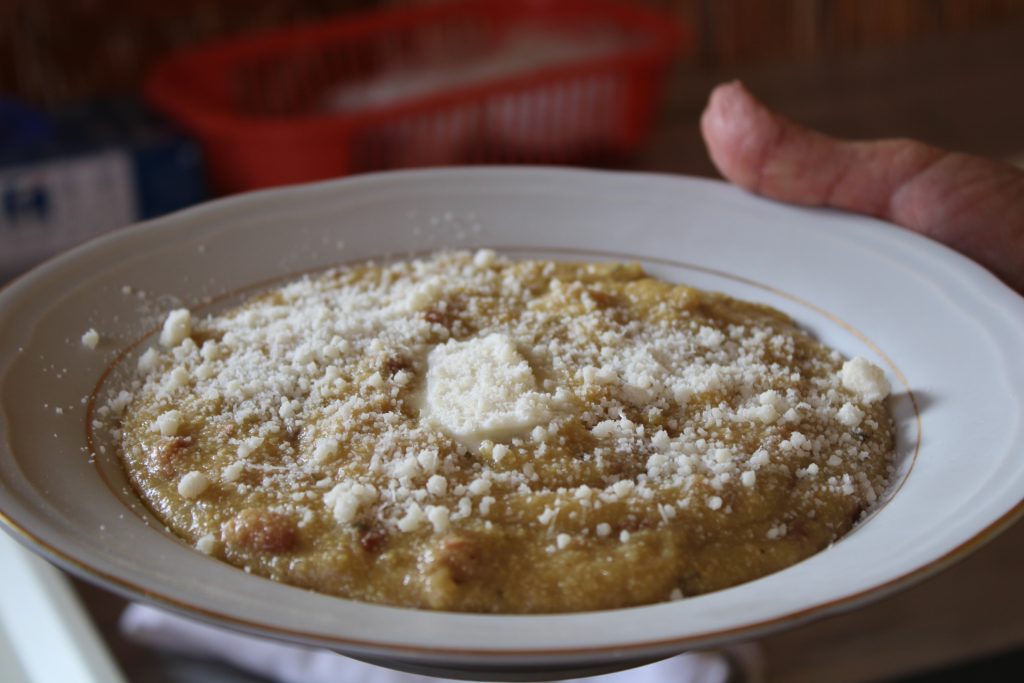
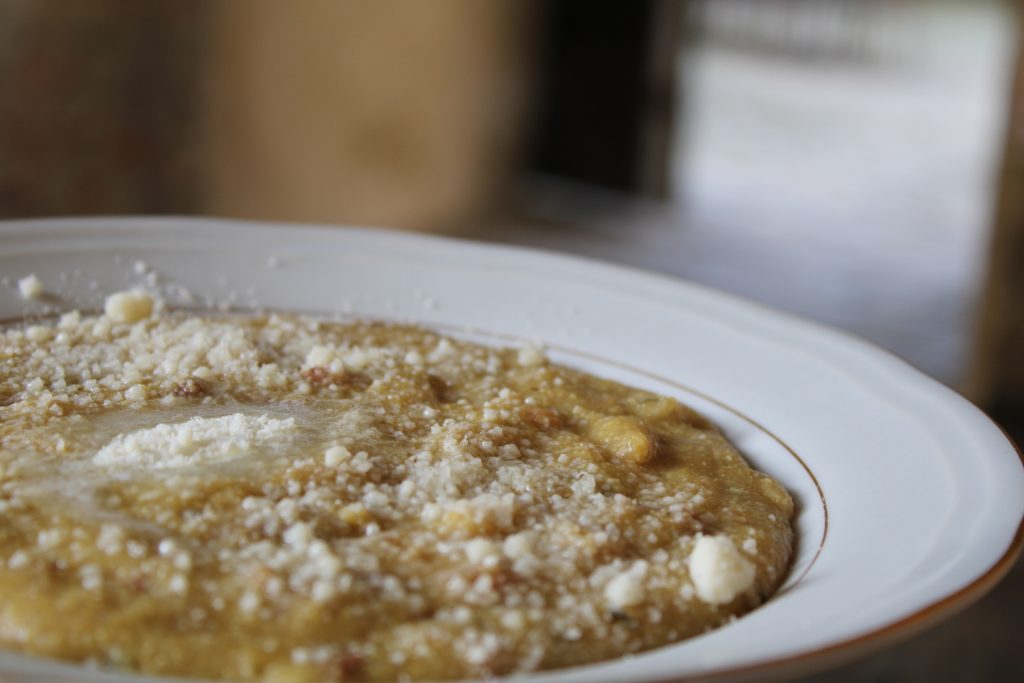
The bread of Monastero Bormida with municipal designation of origin. We are in the heart of Langa Astigiana to celebrate a dish that is the soul of the local farming tradition: the bread.
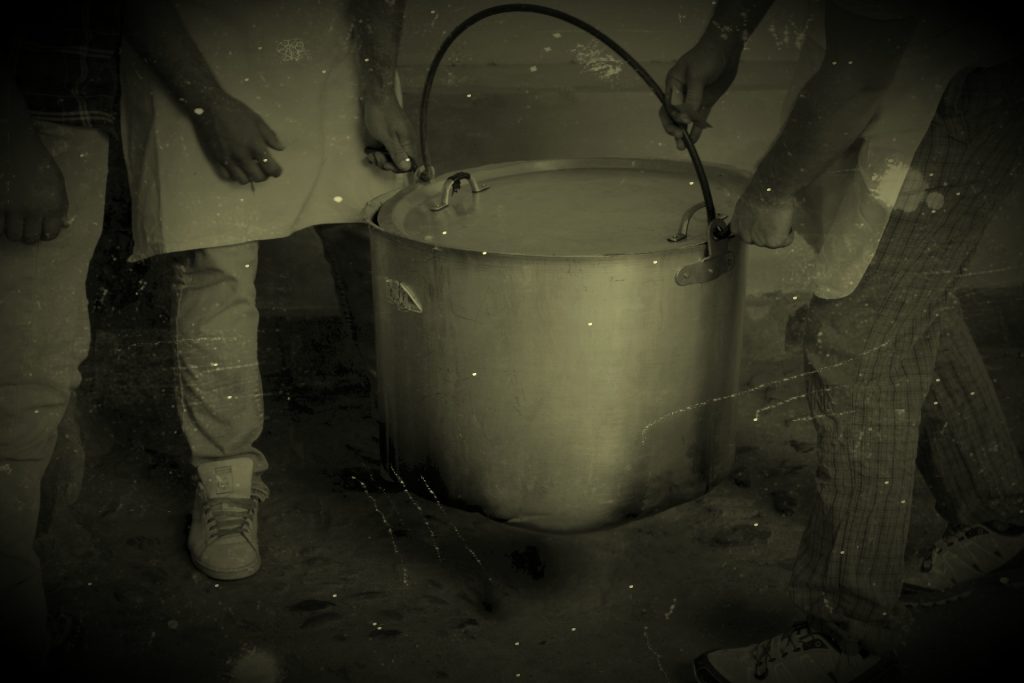
A specialty also recognized with the De.Co. mark. An appointment in a prestigious setting: the kitchens of the Monastero Bormida castle; the cooks are at work to begin the bread ritual, needing to clean, cut, and cook the vegetables necessary to complete this ancient recipe, which has returned to prominence thanks to the passion of the local committee, aiming not to lose its historical identity. A lot of work will be needed to have everything ready for Sunday, a day entirely dedicated to this event that has been held for several years: El dè d’la puccia, or the day of the bread. The kitchens come alive in a hustle and bustle of cooks slicing, sautéing, and wisely measuring the necessary ingredients.
You will need onions, cabbage, and beans, finally lard and polenta… In a slow cooking process that lasts several hours. And I’m here to offer you the recipe derived from the guidelines drawn up by the municipality itself. Keep reading to learn the whole story. I am providing you with the recipe approved by the council with a decree for De.Co recognition.
In the meantime, I suggest you take a look at the following recipes to discover how our beautiful Italy is rich in culinary nuances.
- Difficulty: Easy
- Cost: Economical
- Rest time: 8 Hours
- Preparation time: 1 Hour
- Portions: 10
- Cooking methods: Stovetop
- Cuisine: Regional Italian
- Region: Piemonte
- Seasonality: Autumn, Winter
Ingredients
In the bread, you will need ingredients indicated in the guidelines, and I assure you that their combination creates a dish rich in flavor. Cornmeal from the eight-row corn cultivated in the municipalities of Langa Astigiana Val Bormida, likewise the lard must be produced with pigs raised in the sixteen municipalities, extra virgin olive oil produced in Liguria, non-calciferous water, without coloring treatment, yellow onions cultivated in the provinces of Asti, Alessandria and Cuneo like the curly cabbage and borlotti beans; butter from Piedmontese cow’s milk and Grana or Parmesan cheese. The use of Roccaverano DOP seasoned to the point of grating is allowed. Naturally, it won’t be easy outside the territory to find the right ingredients, but you will do your best to find quality products.
- 17.64 oz Savoy cabbage
- 8.82 oz borlotti beans (Dry or fresh)
- 5.29 oz yellow onion
- 2.64 oz lard
- 17.64 oz cornmeal (Eight-row, even better)
- 3 tbsps extra virgin olive oil
- to taste salt
- to taste water
- to taste butter (For dressing)
- to taste Grana Padano DOP
Useful Tools
pot to cook the bread, bowl to soak the beans, cutting board for the cabbage, and also knives; you actually don’t need much for this complete first course
- Bowls
- Terracotta Pots
- Knives
- Cutting Boards
Steps
Slice, sauté, cook, and then wait… The night before, soak the beans. Cook and save the cooking liquid.
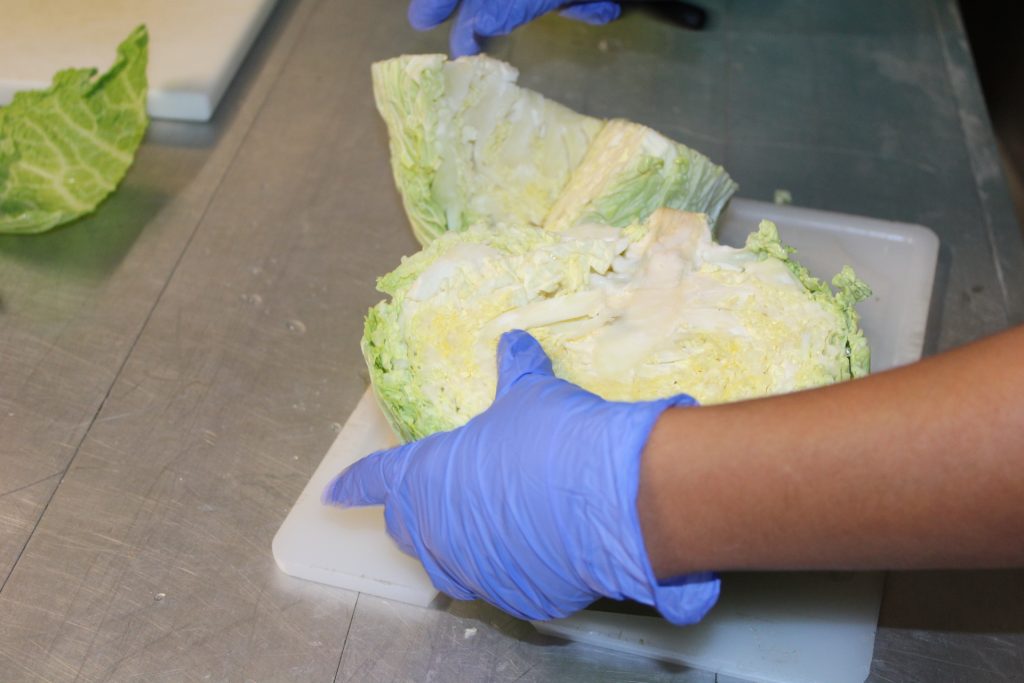
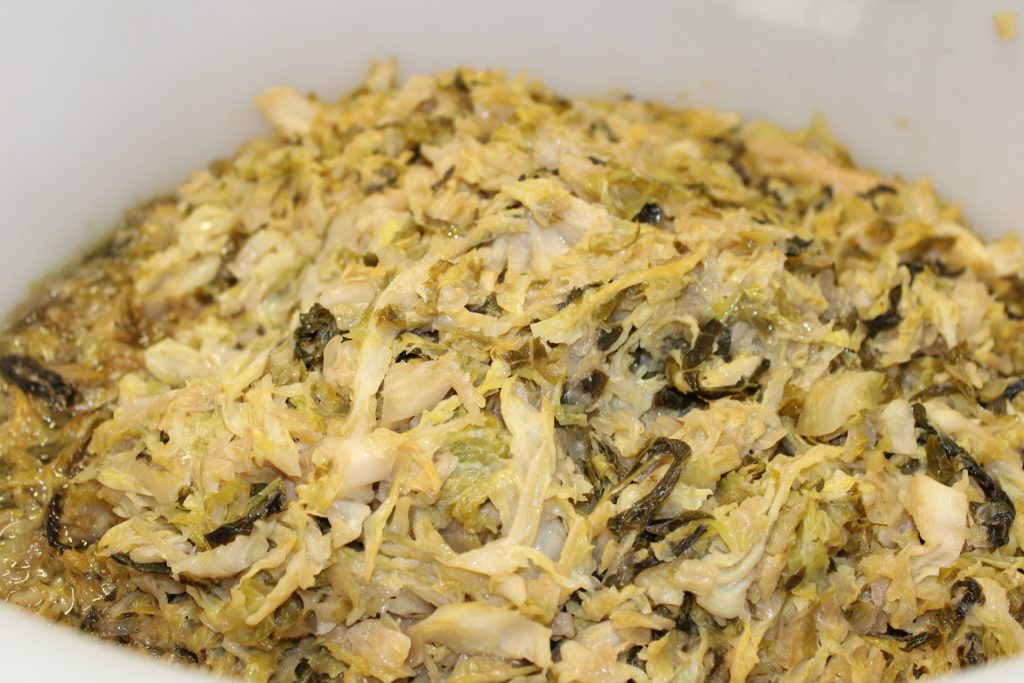
First, slice the cabbage into thin strips
Do the same with the onions.
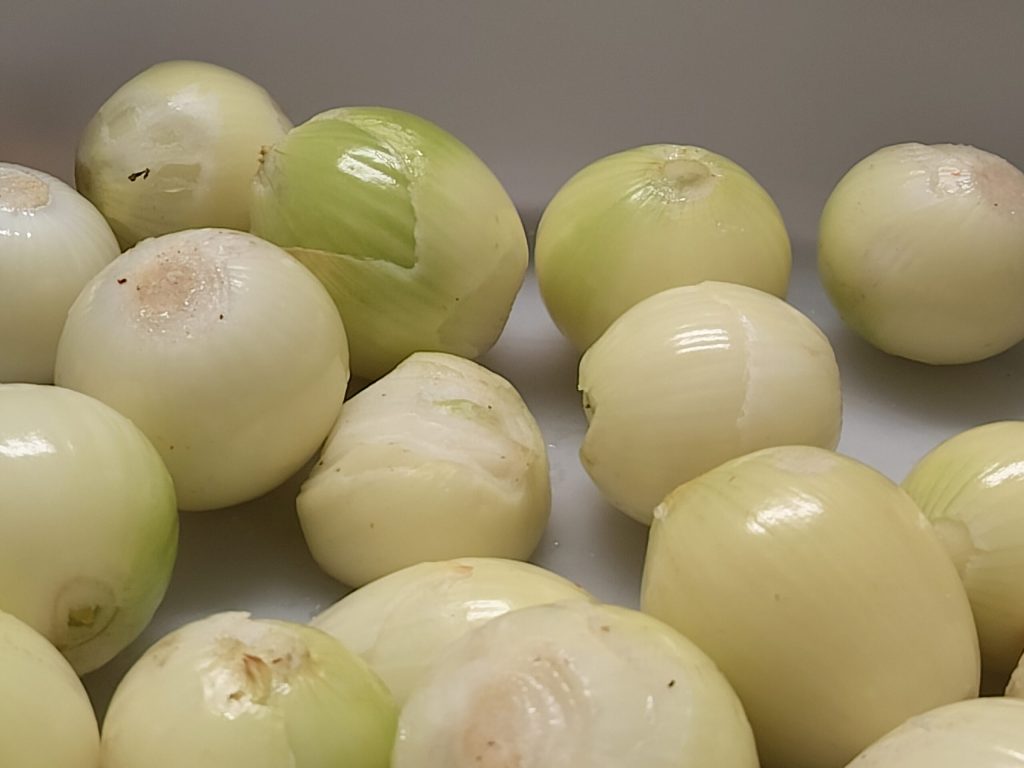
Make a sauté with the onions, lard, and a little olive oil. Once ready, add the cabbage; after a good browning, add the beans with their broth and enough water, and let it boil for about an hour.
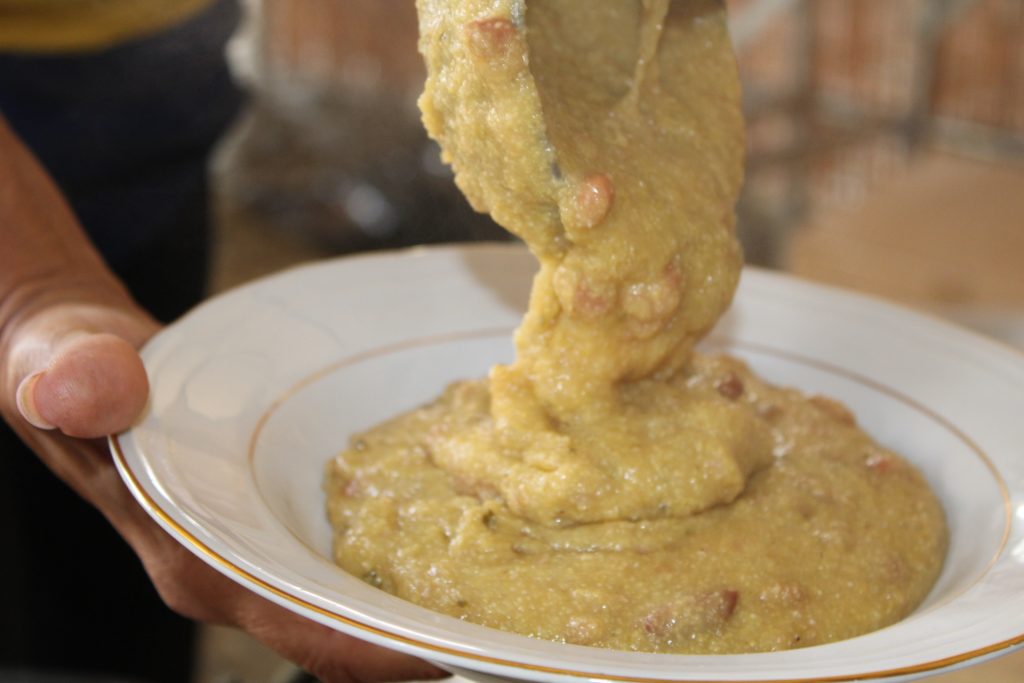
At this point, add the cornmeal, stirring continuously to avoid lumps.
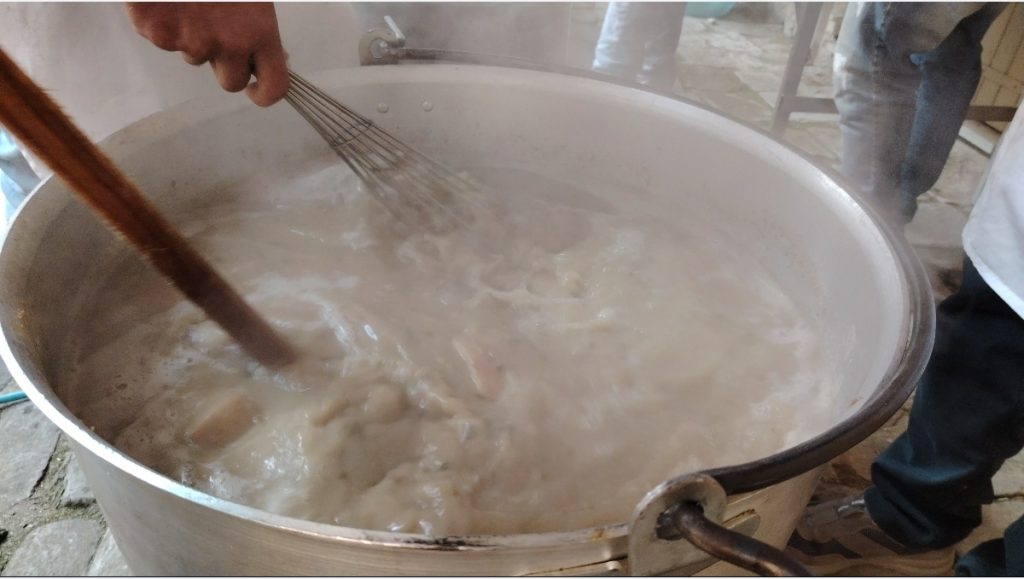
Cook for at least three-quarters of an hour
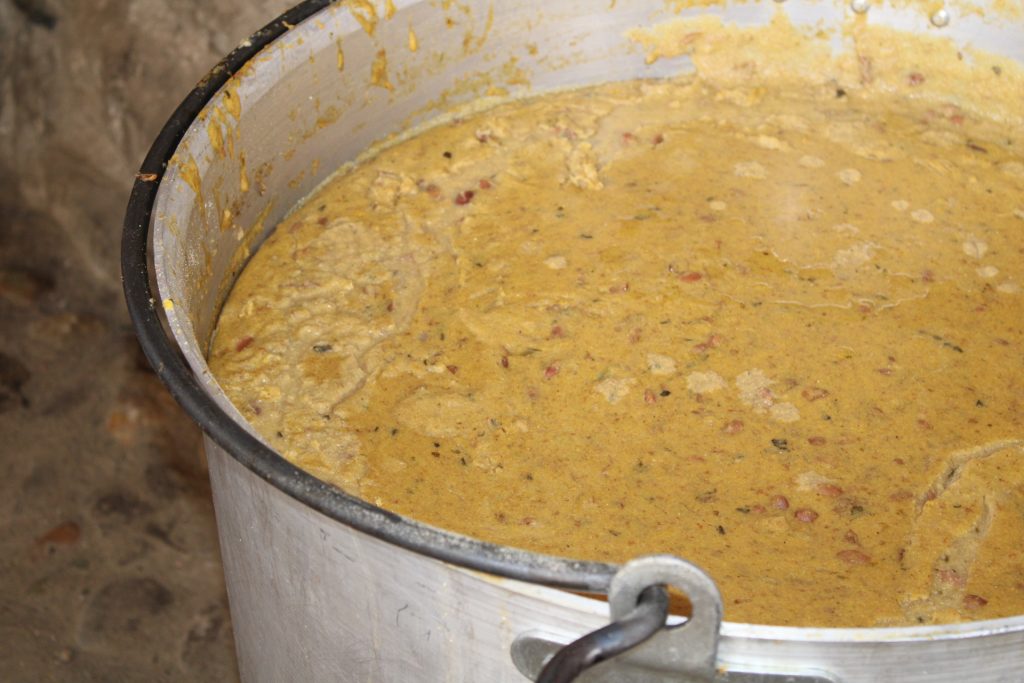
Serve with butter and Parmesan
Some more advice
The polenta should be very soft; if there’s any left over, once completely cold, you can then cut it into strips and fry it in hot oil.