
The Mostaccioli of Soriano Calabro… Between Culture and Goodness… Ancient and Delicious Recipe
In the etymological dictionary of 1928, Giovanni Battista Marzano lists the ingredients to prepare the sweet Calabrian mostaccioli of ancient origin, which seem to have Arabic, Greek, or Latin origins. Initially, they had a ritual origin
They are made with flour, honey, and cooked wine Soriano Calabro in the province of Vibo Valentia, is the homeland of the mostaccioli. I know and remember the Calabrian mostazzolari well, having been born just in the neighboring town; there was a time when I lived right behind their artisanal workshop. I remember that behind my house, the golden and fragrant honey was poured into bowls to knead the mostaccioli… Every day we children would go to peek, and not only that, because we always gained something… The work done by the masters, fast and precise, and with small colored and shiny papers, which we children loved so much, and always waited for a small square to fly away to delight in the sudden gift received, decorated the various forms of the mostaccioli from the Latin mustoceum deriving from mustacea, an ancient cake that was prepared for wedding ceremonies.
The monks of the San Domenico convent around the 16th century taught the local pastry chefs this ancient art. The shapes of the mostaccioli are about fifty; there are flowers, horses, knights, women, fish, and even today in the small streets of Soriano Calabro, we find pastry chefs preparing the mostaccioli.
This sweet is found only in Calabria, in Soriano, as a craft, to then travel throughout Italy to let people know their goodness.
Every year, I waited for the little package that arrived in the mail until I decided I would have to learn to prepare the mostaccioli by myself… Said and done… Try today, try tomorrow, finally I found the right balance of flavors… The aroma of chestnut honey has already remained in my heart, today I can say I can enjoy the mostaccioli not only at Christmas but whenever nostalgia hits me.
Subsequently, some typical sweets, perhaps revisited in shape, but not in flavor, which remains absolutely original.
With these quantities, you can obtain about forty small mostazzoli, if you prefer to make different figures, the result will obviously change
- Difficulty: Easy
- Cost: Economical
- Rest time: 12 Hours
- Preparation time: 1 Hour
- Portions: 30/40
- Cooking methods: Electric oven
- Cuisine: Italian
- Seasonality: All seasons
Ingredients
Flour, chestnut and wildflower honey, aromas…
- 5 cups flour
- 8.8 oz chestnut honey
- 8.8 oz wildflower honey
- 0.7 oz lard
- 0.7 oz mosto
- 1 pinch cinnamon
- 1 tsp anise
Tools
Mixing bowl, bowl for warming the honey, sharp knife or cookie cutters
Steps
In a few moves, we’ll achieve the right consistency… Time will then work for us…
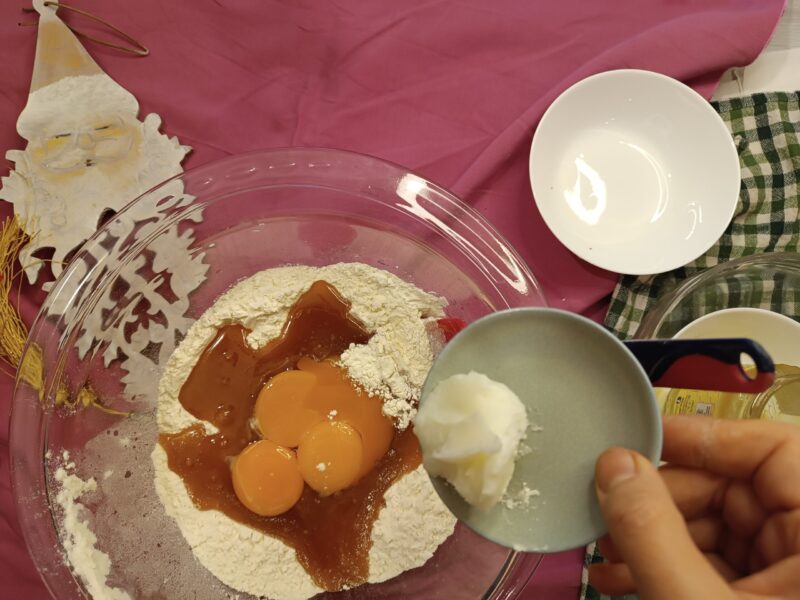
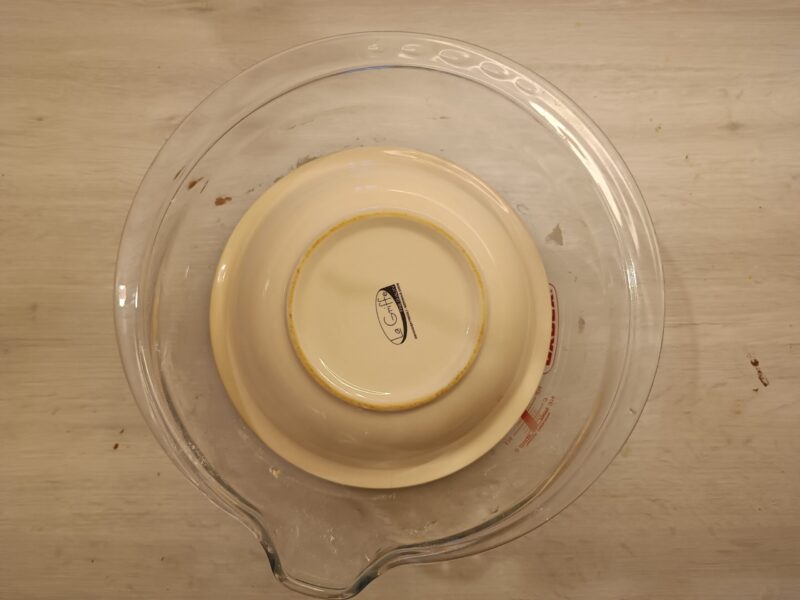
Warm the honey to make it more fluid, pour the flour into the bowl, add the honey and all the other ingredients.
Mix well and then transfer to the work surface; knead until you obtain a homogeneous dough
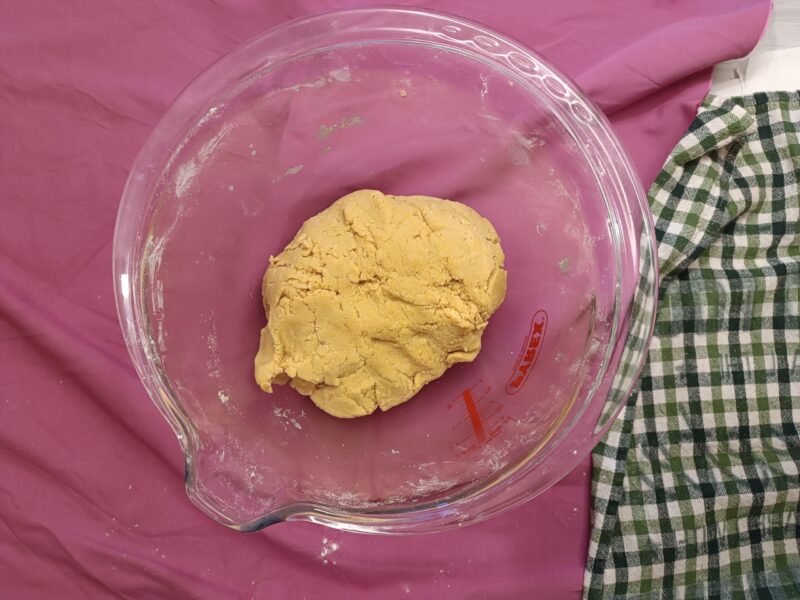
Put back in the bowl, cover and let rest in the refrigerator overnight, or until evening.
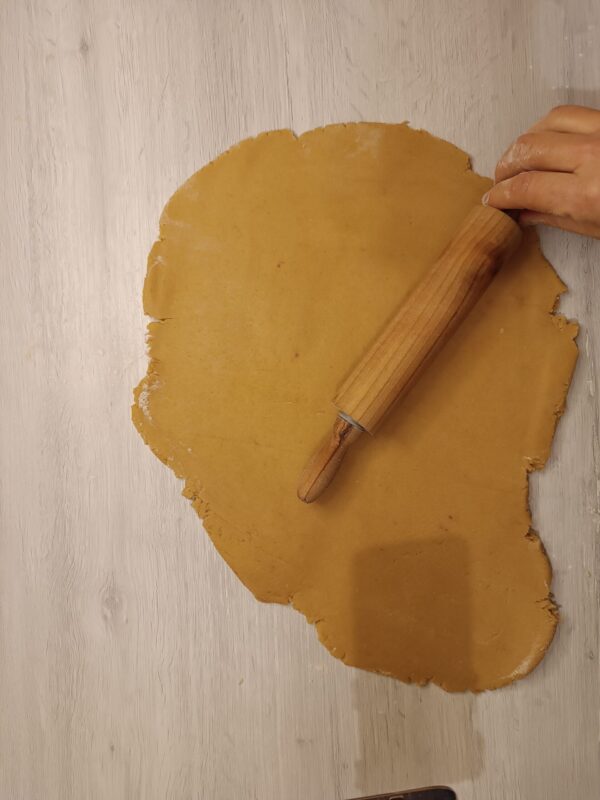
Remove from the refrigerator and after flouring the work surface, roll out the dough to a thickness of about 1/4 inch
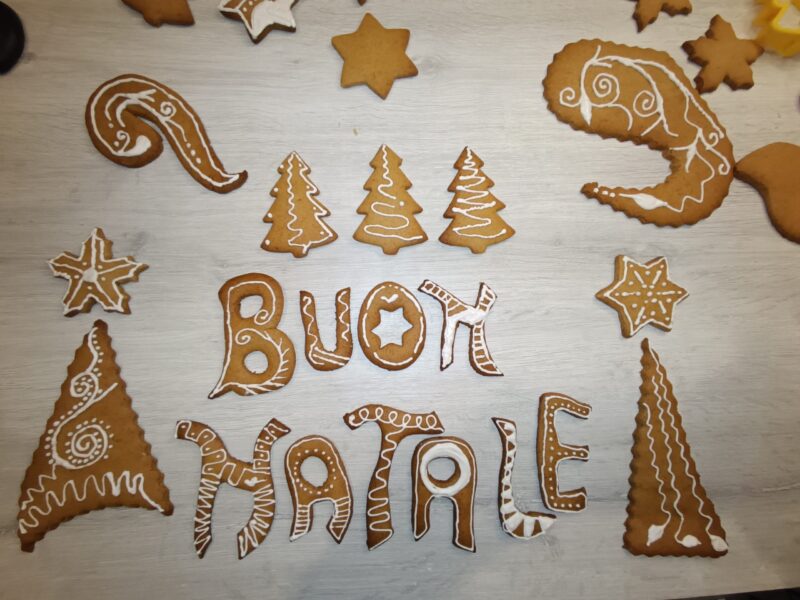
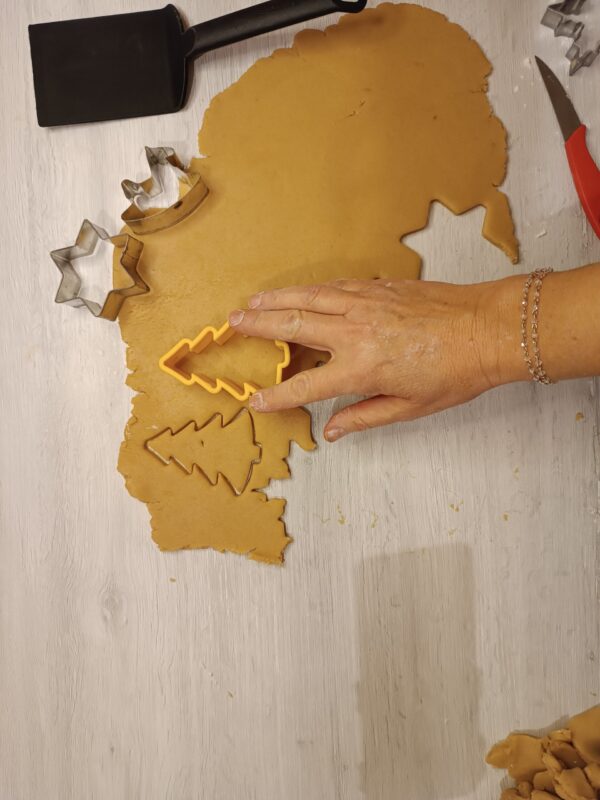
Cut out the desired shapes, as written above the shapes were originally anthropomorphic or imaginative; I cut out Christmas and fantasy figures on this occasion.
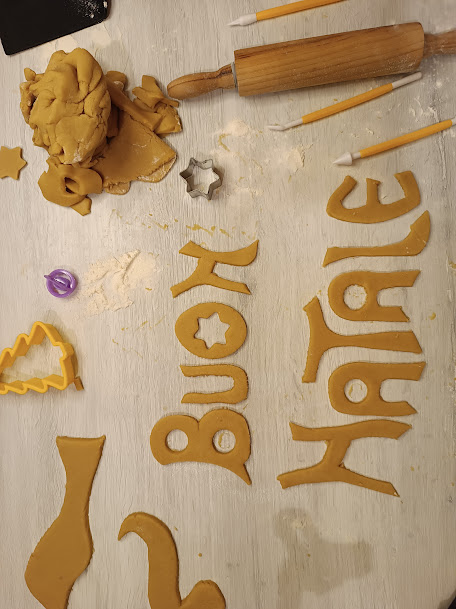
I also cut out the letters to form some texts. Heat the oven to a temperature of 300°F and when it reaches the temperature, bake; if you create small cookies, they will be cooked in about 15 minutes, otherwise, it takes a few more minutes.
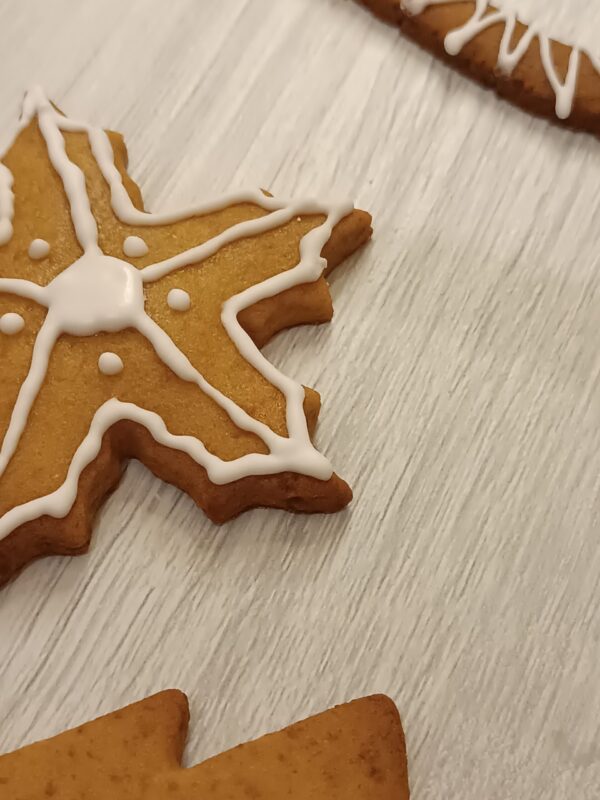
You can leave the cookies natural, or as I did, decorate them with royal icing. Decorate and let cool well. Their flavor and texture will improve after two days
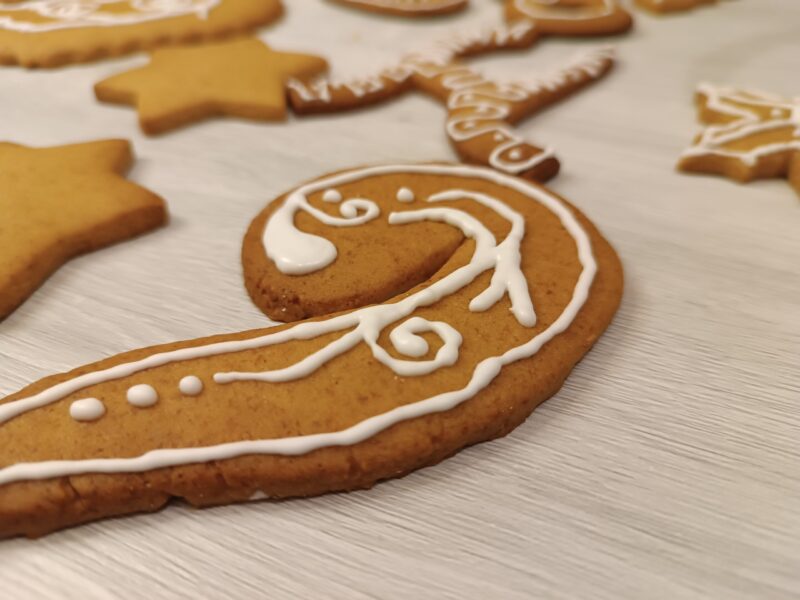
They keep for a long time; they are special cookies, not for dipping, but have a more doughy consistency
For me, they are the cookies of cuddles and memories.
They keep in a tin box for many days, becoming softer over time. You can get creative with the shapes and I guarantee their goodness. It’s a cookie kneaded with honey, so not crumbly, a historical and unique cookie in its production. You won’t find it as an industrial product. To make it delicious, add chopped almonds to the dough, and you won’t regret it.
