
The Taste of Time. Braids soft for the morning breakfast.
The first years in the north tasted of adventure and wore the color of white smocks.
For the two of us, in first and third grade, the route to school felt like an epic journey.
In an era when the school bus was still a mirage; every morning we left early together with our neighbor, also a schoolmate, with our brown satchels, ready to face that endless path that led to school.
When it rained the walk became a test of endurance, especially on the way back; we would arrive soaked from head to toe, not because there weren’t umbrellas, but because every puddle was too tempting not to stop and play.
We kept our snack secretly in our satchels; the homemade sandwich with mortadella or those first apricot snacks that you can still find at the supermarket.
But the true enchantment awaited halfway: every morning we passed a bakery that displayed sweet treasures, different from those of our homeland.
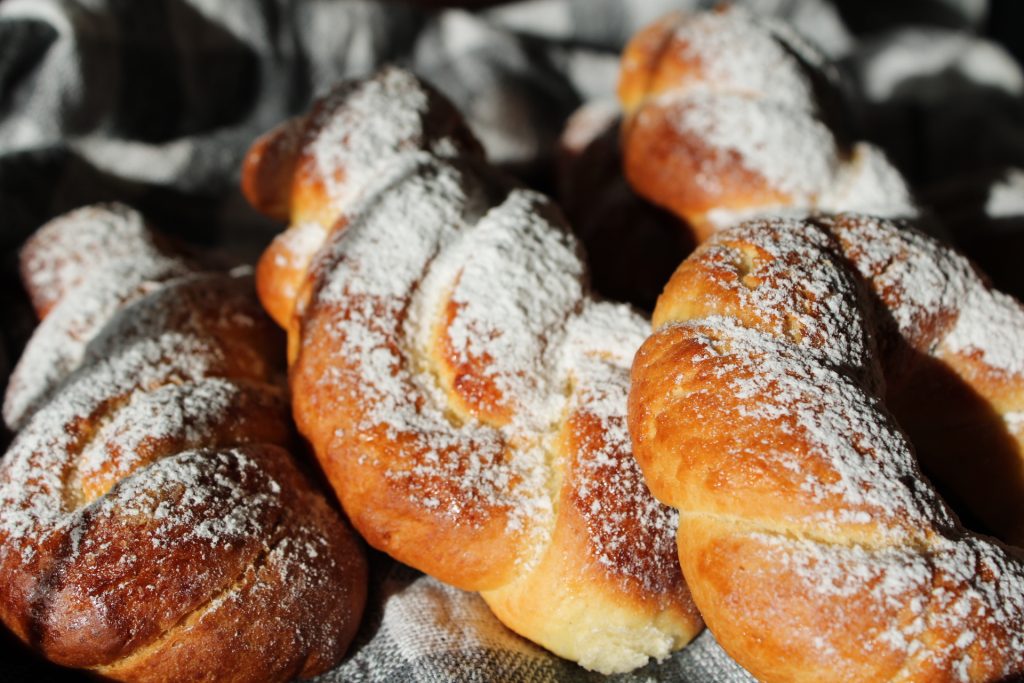
Behind the glass, among sweet peaches and other delights, a tray full of braids and soft sugar-dusted doughnuts reigned supreme.
With our noses pressed to the window we looked with such intensity that we could taste them with the help of imagination.
I grew up and I never forgot that display window, those mornings.
And from desire now turned into a slow ritual, made of waiting and hands in the dough.
Everything begins with the little starter, which I mix carefully and leave to rest until the surface is covered with small bubbles.
“Sometimes it takes years, flour and patience to give reality’s taste to dreams”.
Other recipes dedicated to breakfast
- Difficulty: Easy
- Cost: Inexpensive
- Rest time: 4 Hours
- Preparation time: 2 Hours
- Portions: about 15 pieces
- Cooking methods: Oven
- Cuisine: Italian
- Seasonality: All seasons
Ingredients
Flour, eggs and yeast are part of the ingredients.
- 8 cups all-purpose flour
- 5 eggs
- 1.5 cups granulated sugar
- 2/3 cup vegetable oil
- 7 tbsp milk
- 1 cube fresh baker's yeast (compressed)
- 1 lemon zest
- 1 egg yolk (For brushing)
- 1 tbsp + 1 tsp milk
- 1 tsp salt
Tools
A large bowl, a work surface for kneading. Oven tray. All the equipment I use can be found in my shopping recommendations.
- Jars
- Sugar Sifter
- Mixers
Steps
Mix milk, flour and yeast to make a little starter…
First, dissolve the yeast in 2/3 cup (150 ml) of milk taken from the total, and add 3/4 cup (about 100 g) of flour, taken from the total weight; add 1/4 cup (about 50 g) of sugar and mix well. Let rise until doubled and the surface looks bubbly.
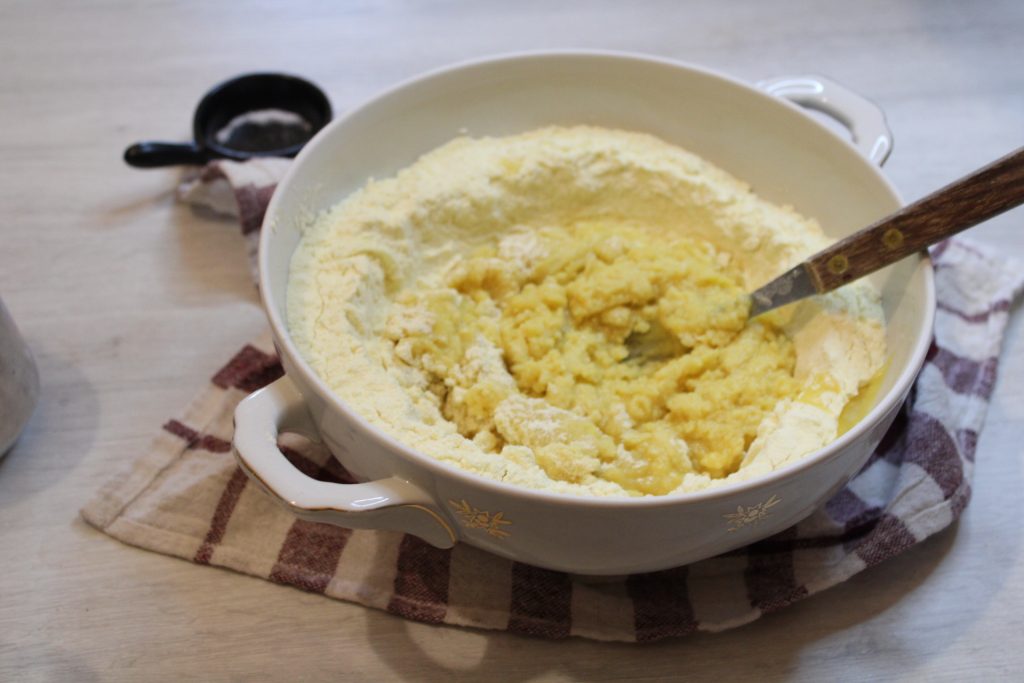
In a bowl combine the flour, salt, warm milk, eggs, oil and the remaining sugar. Finally add the lemon zest and the little starter. Knead carefully until you obtain a smooth, elastic dough.
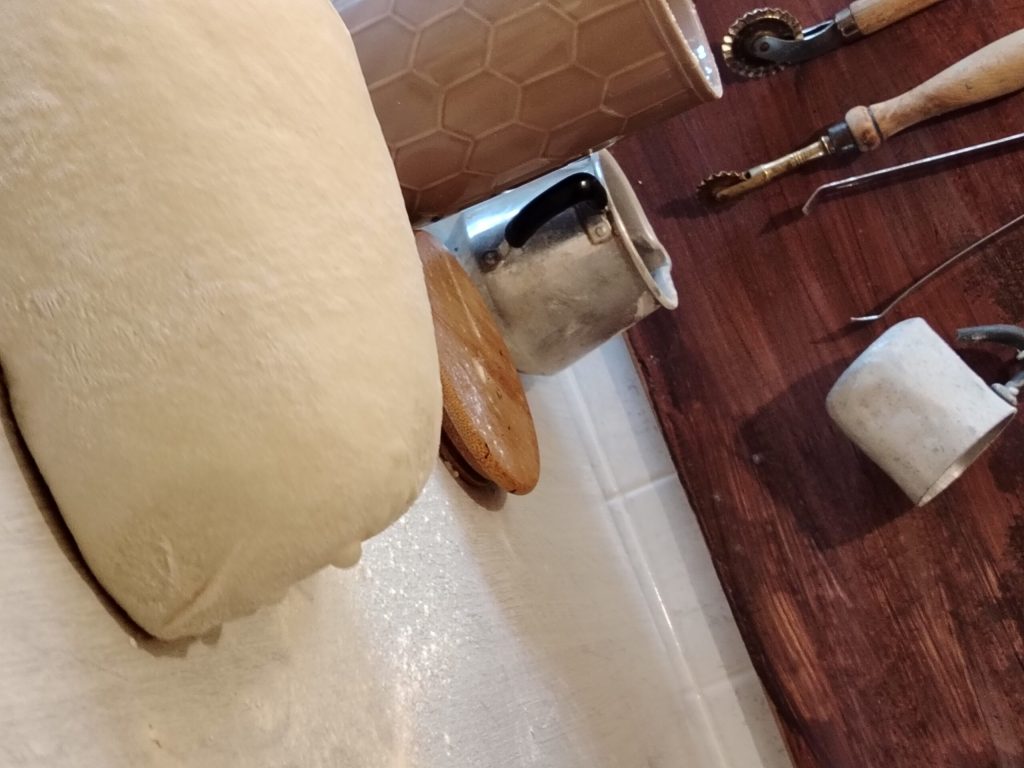
Cover in a large bowl and let rise in a warm, not too dry place; I recommend the turned-off oven with a small pot of boiling water on the bottom.
When the rising time is over, shape the dough into little sticks.
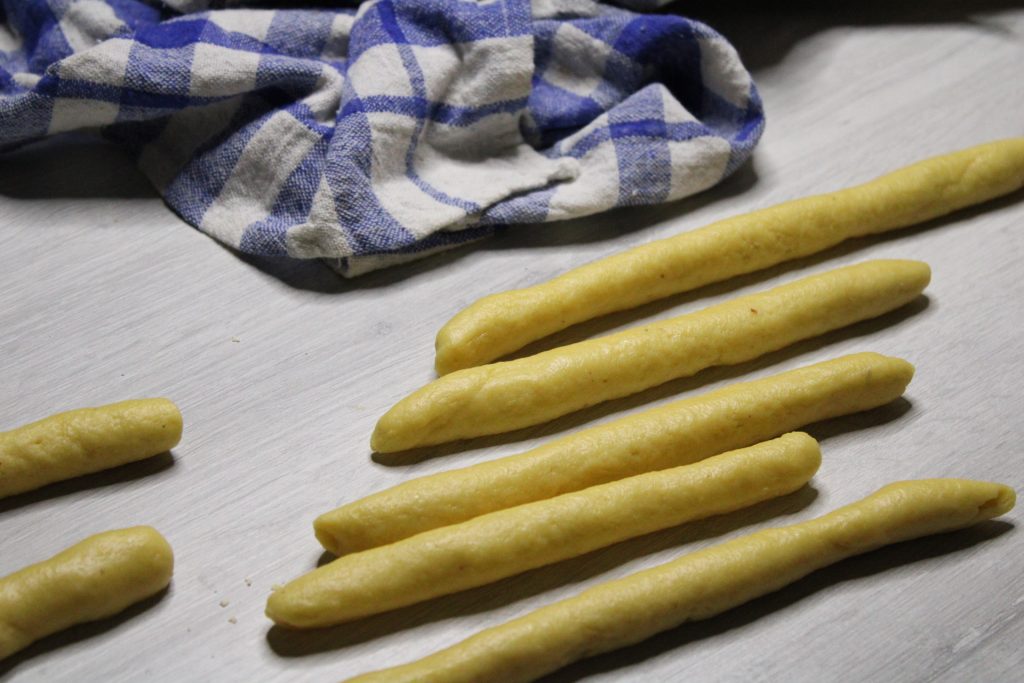
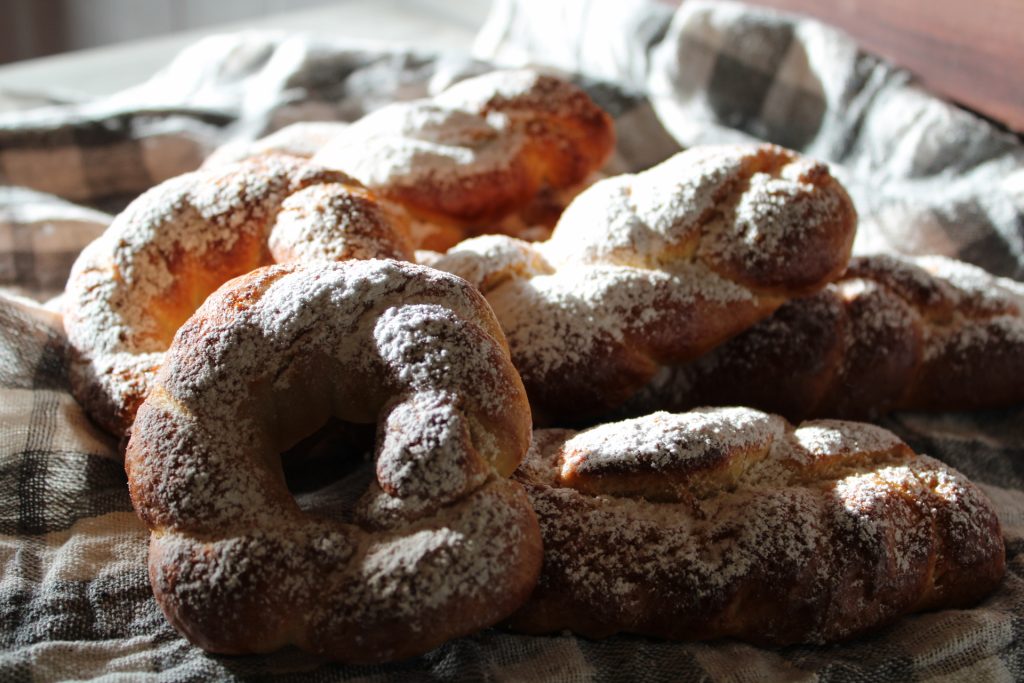
Then form braids and doughnuts. Let rise again. During the final rise, I think of blessed youth and I smile.
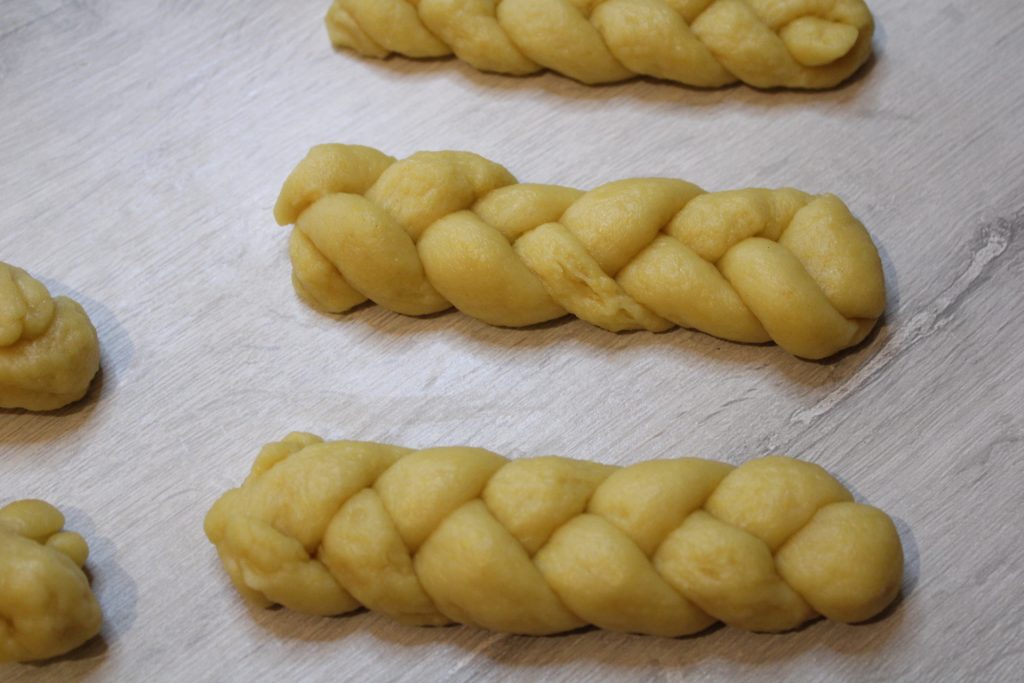
Brush the surface with an emulsion of milk and egg yolk and sprinkle with sugar if you like.
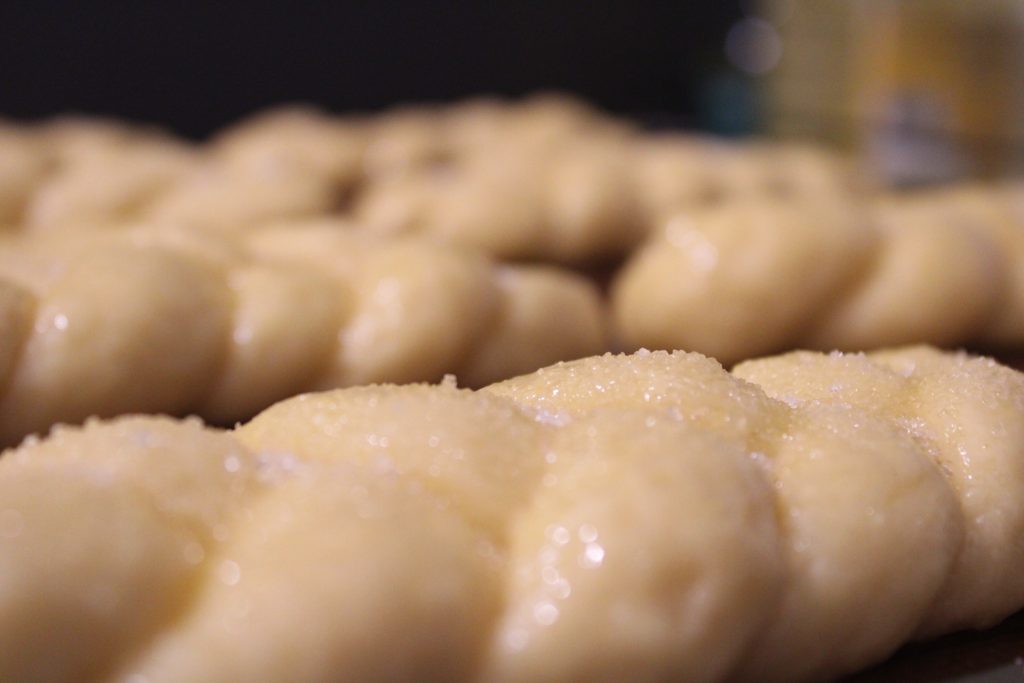
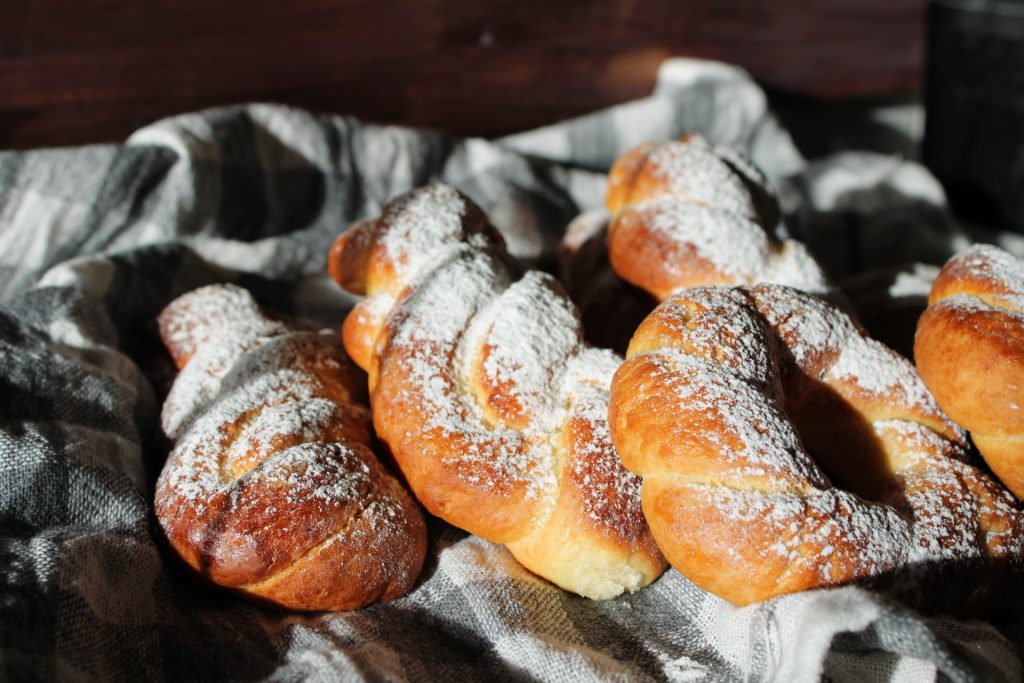
Bake in a preheated oven at 338°F (170°C) until done. It will take about 20–25 minutes. Dust with powdered sugar if you didn’t sprinkle granulated sugar on top.
A Few Extra Tips
Let the dough rise well at every stage. You can also add chocolate chips or raisins to the dough. If you prefer to work in two stages: prepare the little starter and the first dough the evening before, rest in the refrigerator in a well-sealed container. The next morning shape and do the final rise.
