
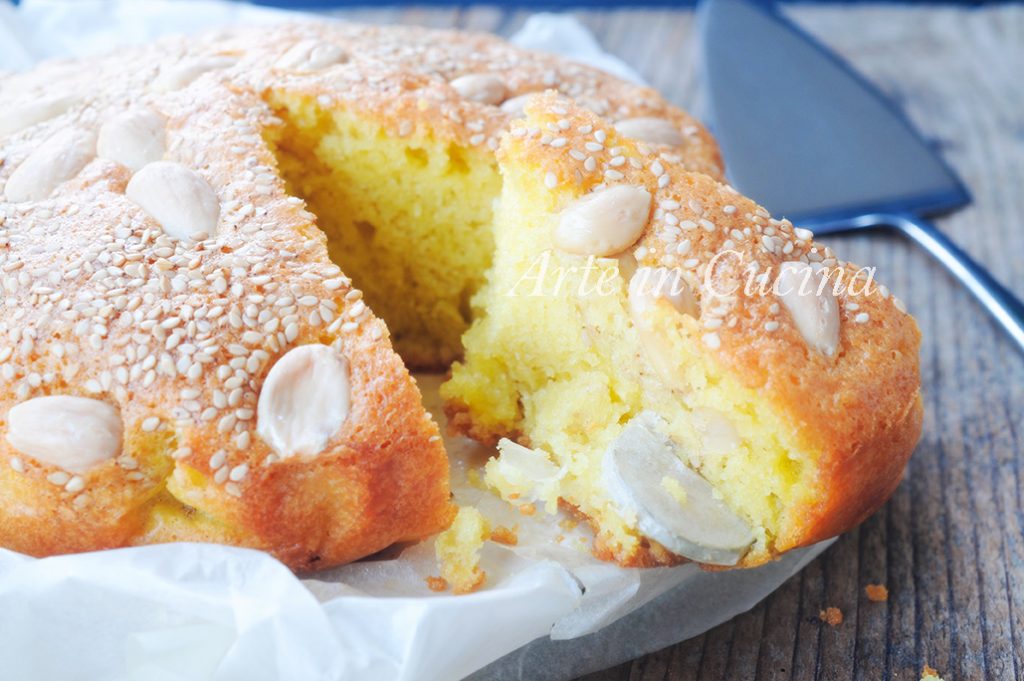
GREEK VASILOPITA NEW YEAR’S CAKE AND EPIPHANY, a fortune cake with a coin, easy recipe, soft and delicious with almonds
The Greek Vasilopita is a delightful Greek tradition associated with New Year’s and Epiphany. This festive cake, whose name derives from Saint Basil (Vasilios in Greek), is prepared and shared with family during the end-of-year celebrations, Christmas, or Epiphany.
The preparation of this cake requires very simple ingredients like flour, butter, sugar, and eggs. In many Greek families, the Greek Vasilopita is enriched with flavors like vanilla, orange, or lemon, giving the cake a delightful aroma.
What really makes the Vasilopita special is the tradition of inserting a coin or a small religious icon inside the cake before baking it. This symbolic gesture is associated with good luck for the new year.
The person who finds the coin in their slice is destined to have luck and prosperity for the coming year.
Join me in the kitchen today for the Greek Vasilopita.
Published December 29, 2016, 22:53
- Difficulty: Very easy
- Cost: Very cheap
- Preparation time: 15 Minutes
- Cooking methods: Oven
- Cuisine: Italian
Ingredients
- 8 tbsp butter
- 1/2 cup sugar
- 2 eggs
- 2 egg whites
- 1 1/4 cups all-purpose flour
- Half packet vanillin
- Half packet baking powder for desserts
- 1 tbsp sesame seeds
- to taste blanched almonds
Steps
Preheat the oven to 350°F
Cream the butter with sugar, then add 2 eggs and a tablespoon of water.
Sift the flour with baking powder and vanillin and add them to the mixture.
Whisk the egg whites until stiff and fold them into the rest of the batter using a spatula.
Pour everything into an 8-inch pan, insert a coin wrapped in aluminum foil, sprinkle with sesame and almonds.
Bake for about 30 minutes, monitor your oven, and always perform a toothpick test before taking it out.
If prepared for New Year’s, according to tradition, the new year’s number should be written on the cake dusted with powdered sugar.
Bon appétit
If you like the recipe, click the stars at the bottom of the article. THANK YOU!
Additional information provided by a user who lived in Greece: “Vasilopita, meaning Saint Basil’s pie, the Santa Claus of Greek children, was actually the bishop of Caesarea.
It is cut at midnight, and traditionally a piece is cut for Jesus, one for the house, and one piece for each family member; whoever gets the gold coin will be the lucky one of the year.
The tradition is closely linked to the miracle of St. Basil. While the Orthodox do not celebrate the Epiphany, which doesn’t exist, January 6th is the day of Theophany, meaning the light of God, and the baptism of Jesus in the Jordan is celebrated.”
So it’s not a cake for Epiphany based on the information I found, but this doesn’t prevent us from making it for that occasion as well.
Greek Vasilopita New Year’s and Epiphany Cake
New: Subscribe to my WhatsApp channel
FOLLOW ME ON TELEGRAM AND ENABLE NOTIFICATIONS
FOLLOW ME ON TIKTOK
FOLLOW ARTE IN CUCINA ON INSTAGRAM
