
The concept of ANTIPASTO, as we understand it, exists only in Italy.
If proposing a Multiethnic Menu, I would suggest as STARTERS, from China, the steamed Chinese buns made of flour, water, and yeast, in their various types, some of which are already present on the blog, such as:
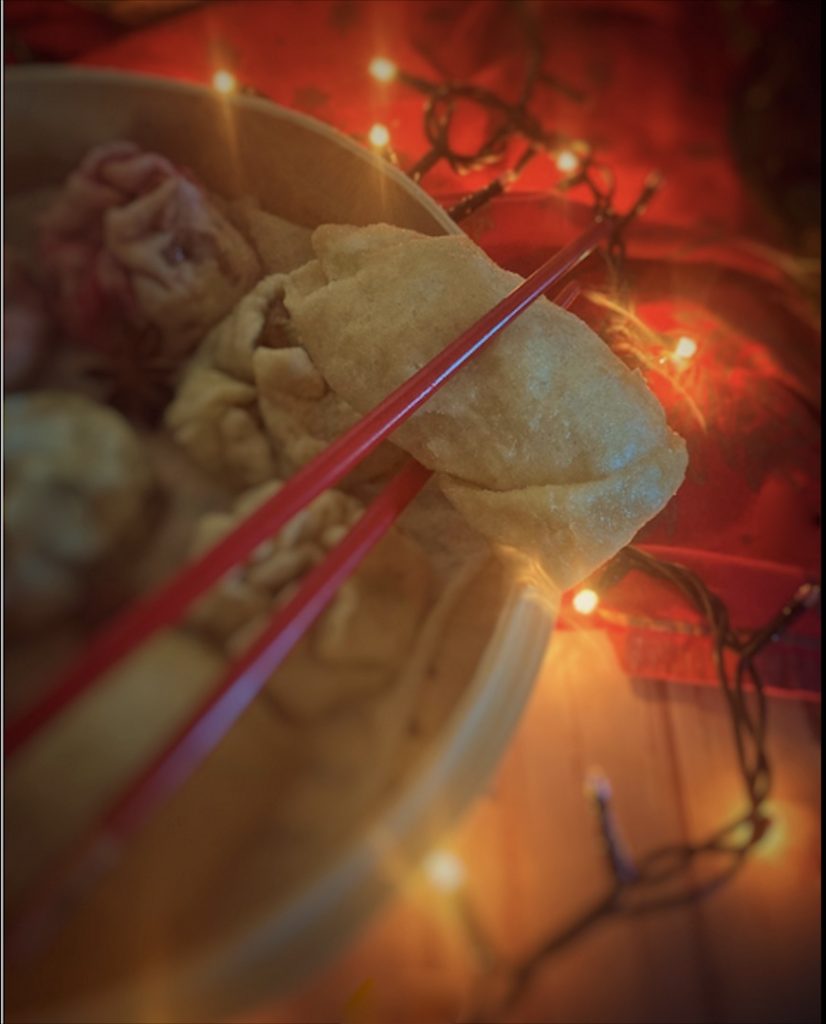
– BAOZI, also called bao or bau, stuffed with tofu – the red ones in the photo –
– CHAR SIU BAO, filled with roasted and spiced pork shoulder, typical of Canton – the white ones in the photo –
– MANTOU, today’s recipe.
❓What are the differences❓
▶Mantou are never stuffed, they are rolled over themselves and shaped into small rectangular buns.
▶ The dough is for all made of flour, water, and yeast, but the Char siu bao (bao filled with char siu, which is roasted pork) differs from it by the addition of “baking powder” (a mix of leavening agents) to just yeast.
They are among the specialties that can never be missed in a Dim-Sum restaurant accompanied by green tea, as is customary in dim-sum.
The Chinese love eating them for breakfast, but they can be consumed at any time of the day.
Suitable for everyone, vegans, vegetarians, and omnivores!

- Difficulty: Easy
- Cost: Very cheap
- Rest time: 3 Hours
- Preparation time: 10 Minutes
- Portions: 6 buns
- Cooking methods: Steaming
- Cuisine: Chinese
- Seasonality: All seasons
Ingredients
- 3/4 cup flour
- 1/2 tsp fresh yeast
- 3 1/3 tbsp water
- 1 tsp sugar
Tools
- 1 Steamer bamboo steamer
Steps
The basic ingredients are wheat flour, water, and yeast.
As for shape and size, they vary from 1 1/2 inches of soft and fluffy bun to 6 inches of dense and firm bread that constitutes the meal of workers.
In a large bowl, whisk together the flour, sugar, and yeast.
Make a hole in the center and slowly pour the warm water and mix until the dough forms a ball.
Knead for 15-20 minutes.
Place the dough in a bowl and cover it with a towel.
In a warm place, let it rise for about 2 hours.
After the dough has risen, form medium-sized balls and place each on a piece of parchment paper (each ball has its own).
Roll them over themselves until they form a rectangular bun.
Let rise for another 20 minutes.
Place the buns in a steamer and steam them for about 20 minutes.
Oriental variations:
Before the advent of the Song dynasty, the term mantou generally referred to any type of bun or flatbread.
The word mantou is closely related to the Turkish terms manty and mantı.
These are, in fact, typical filled dumplings.
In Japan, filled buns are referred to as manjū (饅頭), and usually contain bean paste or a mixture of minced meat and vegetables. In particular, a meat manjū is called nikuman (肉まん).
In the Philippines, the filled buns are called siopao.
In Korea, the term mandu (饅頭) refers to a type of dumpling.
Mongolian cuisine, being among the closest to northern Chinese where mantou originated, respects the full meaning of the term and also the structure of the word, which becomes mantuu.
You can use a bamboo steamer or a pot with steam cooking basket.
