
The Tuscan kale pesto is an alternative way to use an ancient vegetable that has been cultivated for hundreds of years in Tuscany and that has recently gained the status of a superfood thanks to its many qualities, becoming known throughout Italy and beyond: cavolo nero, or Tuscan kale. Ribollita is perhaps the most famous dish, but this is a very versatile vegetable: from crostoni topped with kale and extra virgin olive oil to minestrone where it gives a sweet hint, and even kale chips which have recently become a real trend. One day I found myself with a good bunch of this vegetable and thought: why not try making a pesto? Some time ago I made the zucchini pesto, experimenting with flavors, and I tried to create a pesto that was tasty, easy, quick… and tasted of Tuscany! 😉

- Difficulty: Very easy
- Cost: Very affordable
- Preparation time: 15 Minutes
- Cooking methods: No-cook
- Cuisine: Italian
- Energy 35.26 (Kcal)
- Carbohydrates 1.45 (g) of which sugars 0.69 (g)
- Proteins 0.56 (g)
- Fat 3.32 (g) of which saturated 0.37 (g)of which unsaturated 1.20 (g)
- Fibers 0.56 (g)
- Sodium 76.68 (mg)
Indicative values for a portion of 29 g processed in an automated way starting from the nutritional information available on the CREA* and FoodData Central** databases. It is not food and / or nutritional advice.
* CREATES Food and Nutrition Research Center: https://www.crea.gov.it/alimenti-e-nutrizione https://www.alimentinutrizione.it ** U.S. Department of Agriculture, Agricultural Research Service. FoodData Central, 2019. https://fdc.nal.usda.gov
Ingredients
The ingredient list is very short, but their quality must be excellent so that the aromas blend together. The Tuscan kale, for example, should have “taken the cold,” meaning it should be the one harvested in late autumn/winter that has experienced a few frosts. Only that kale is the most suitable! Also, it is very important to know how to clean it. The leaf has a central rib that is very bitter if cooked; to remove it there is a method that I demonstrated at the beginning of this reel, a necessary step before any preparation that contains this vegetable.
- 17.6 oz Tuscan kale (blanched)
- 2/3 cup water (reserved cooking water from the kale)
- 1 clove garlic
- 2.1 oz pine nuts (about 1/3 cup)
- 1 pinch salt
- 3.3 tbsp extra virgin olive oil (about 1.7 fl oz)
Tools to prepare Tuscan kale pesto
- 1 Food processor
- 1 Spatulas
How to make Tuscan kale pesto
Making Tuscan kale pesto is very easy; all you need is a good food processor (I have my faithful Bimby TM31), blanched and cold kale, the reserved cooking water… and ten minutes!
In the food processor finely chop the garlic. I ran the Bimby on turbo for 5 seconds.
I used very little garlic because the risk is overshadowing the flavor of the Tuscan kale, which is quite delicate; however you can increase it to taste. I recommend doing a few trials to find the right balance, starting with a little at a time.
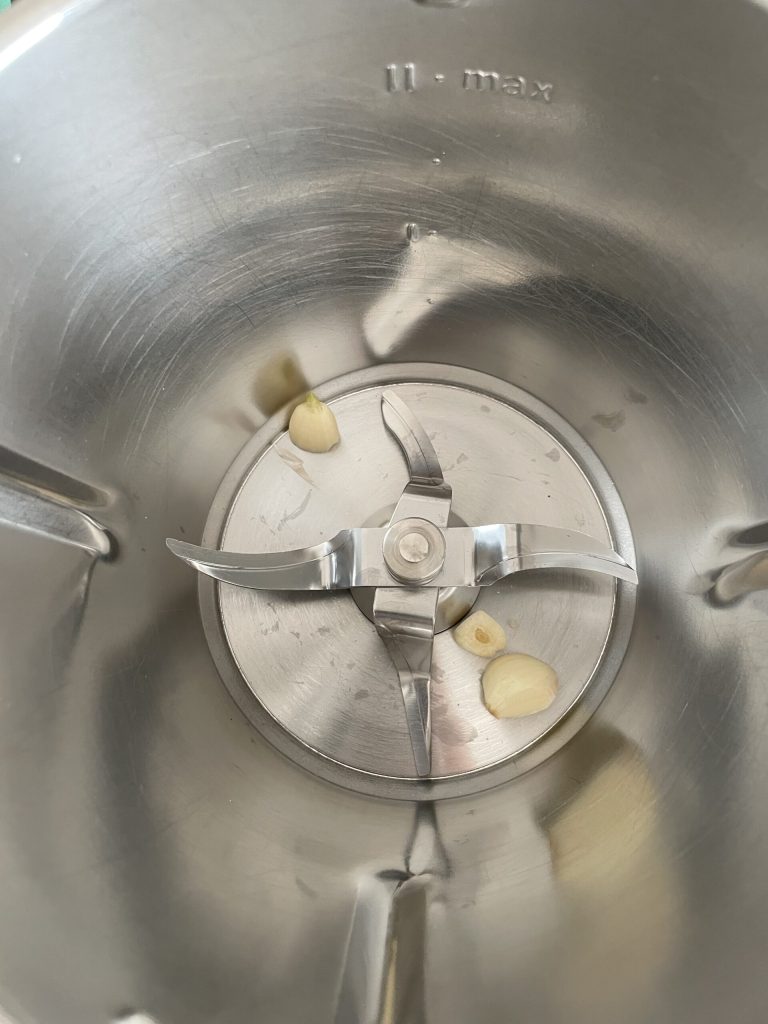
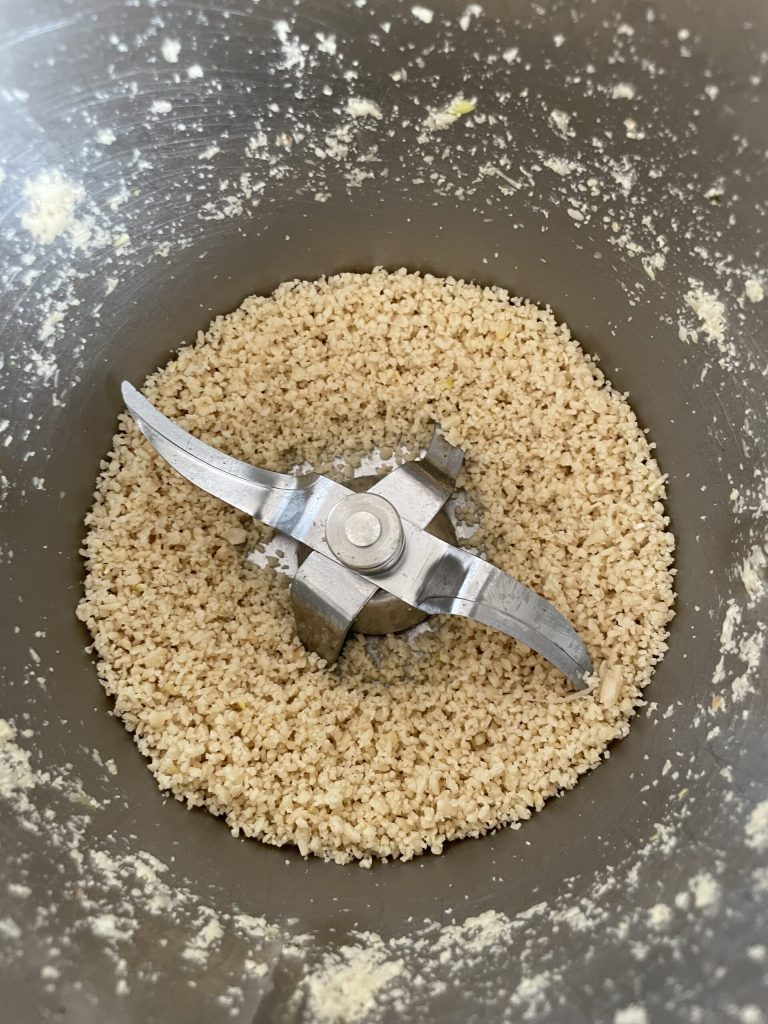
After the garlic, add the pine nuts and blend at maximum speed; for me always turbo but 10 seconds.
If you prefer, you can substitute with other nuts (I think peeled almonds or cashews would work well) as long as they are dry and well chopped.
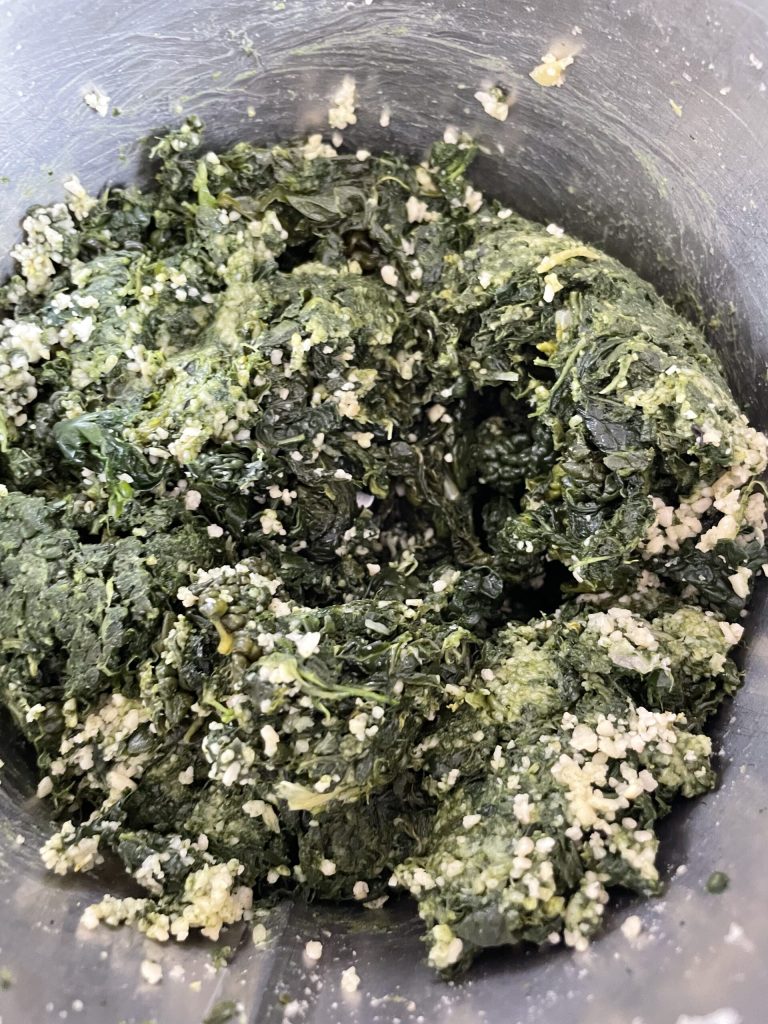
At this point add the blanched kale (previously cooked and squeezed) chopped, and part of the reserved cooking water, which will help emulsify the mixture. I set the Bimby to speed 4 and while it was running I added the water little by little through the hole.
I recommend pouring it a little at a time to check as the emulsion forms.
When the pesto has reached a creamy consistency, add the pinch of salt and the oil at low speed. I did 1 minute at speed 3/4.
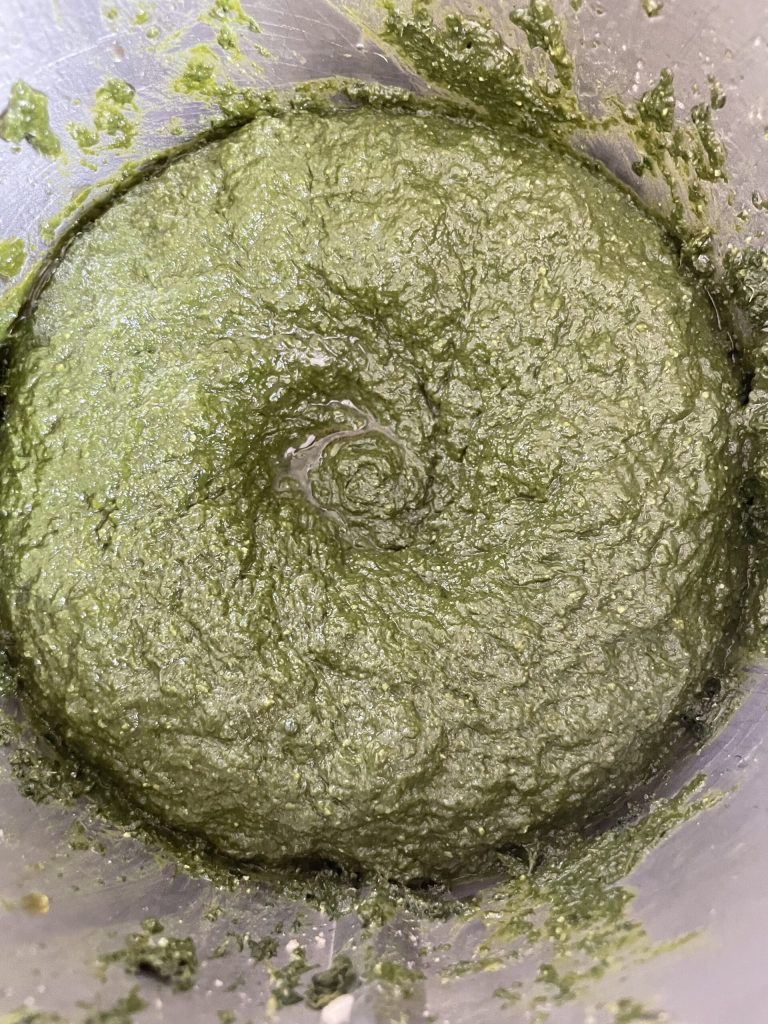
At this point the Tuscan kale pesto is ready. It can be used immediately or placed in a jar, adding a little more oil on top for preservation.
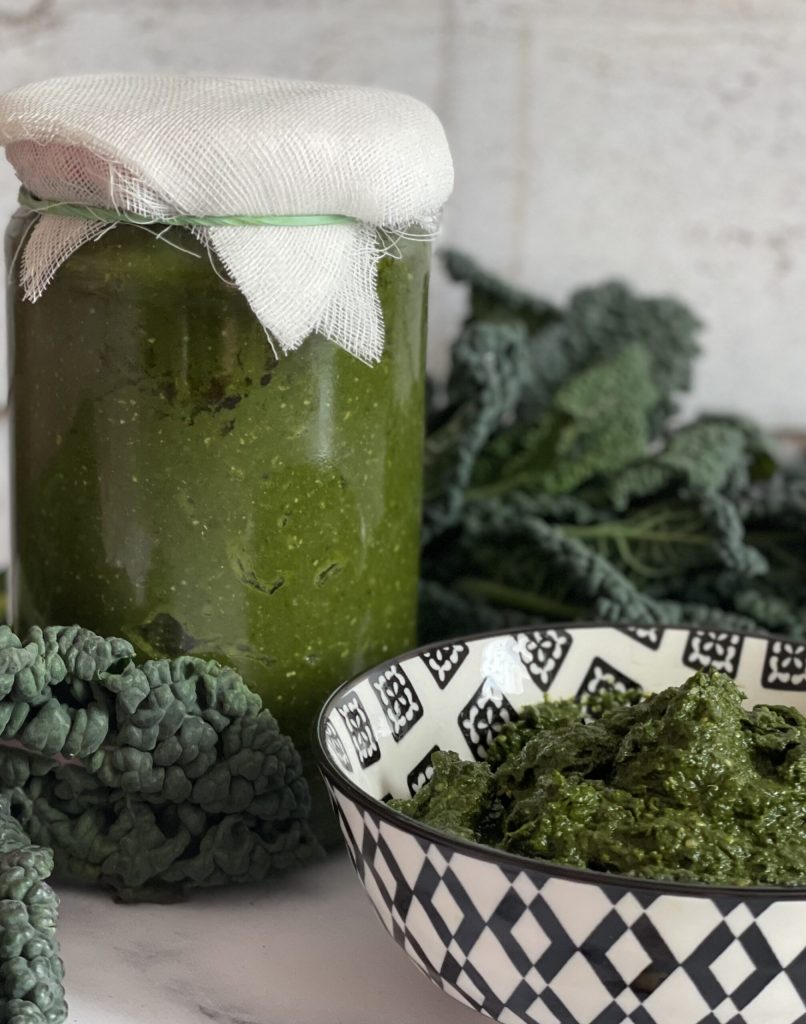
Storage and use of Tuscan kale pesto
Tuscan kale pesto is at its best, of course, with pasta, sprinkled with a little grated Parmesan. I have also successfully tried it on a white pizza topped with pecorino and Colonnata lard for an incredible explosion of Tuscan flavors. In a sealed jar it keeps in the refrigerator for one week. If you enjoyed this recipe, follow me on my Instagram page where I post many other recipes and tips!
