
The gluten-free Nikuman is the version suitable for those who do not consume gluten of the Nikuman (肉まん), a Japanese steamed bun filled with meat, very popular as street food, especially in winter.
It is derived from the Chinese baozi but has evolved with Japanese tastes and techniques.
Its filling consists of pork meat, shiitake mushrooms, green onion, ginger, sesame oil.
There is no traditional Japanese gluten-free version; mine is structured using rice flour (including glutinous) and kuzu as a texture aid.
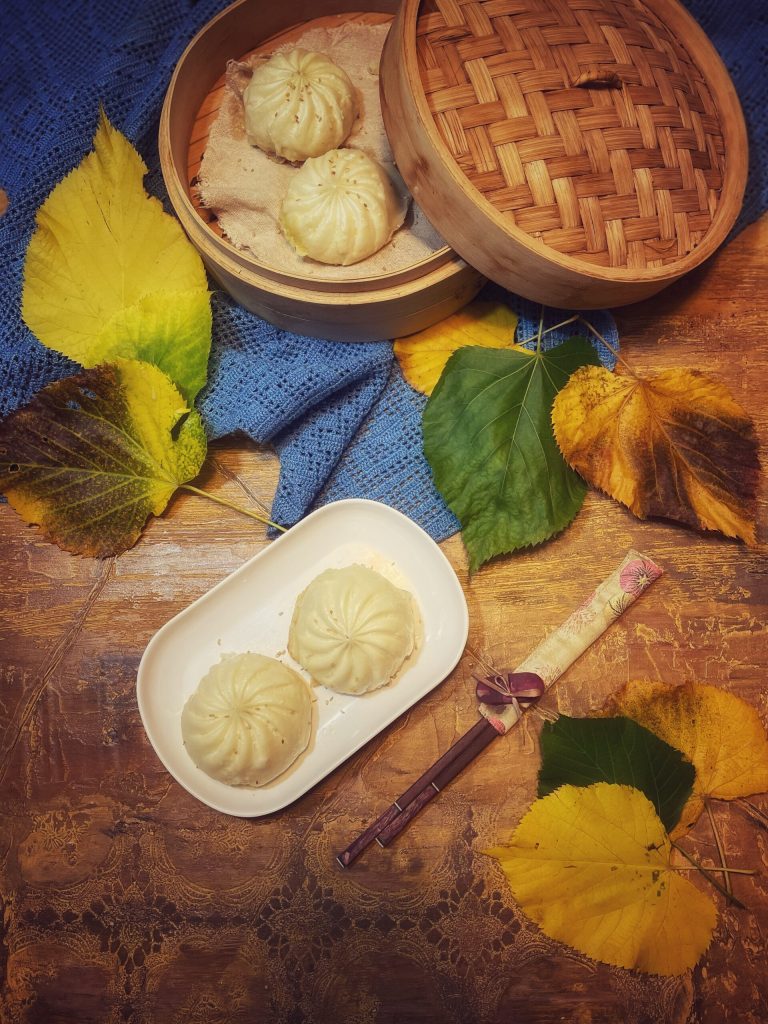
- Difficulty: Difficult
- Cost: Economical
- Rest time: 1 Hour 30 Minutes
- Preparation time: 10 Minutes
- Portions: 8 Pieces
- Cooking methods: Steaming
- Cuisine: Japanese
- Seasonality: All Seasons
Ingredients
- 4.94 oz rice flour
- 2.12 oz glutinous rice flour
- 1.41 oz tapioca starch
- 0.35 oz kuzu
- 1 tsp active dry yeast
- 0.11 oz salt
- 1.35 tbsp vegetable oil
- 6.4 oz water (warm)
- 7.05 oz ground pork
- 2 shiitake mushrooms (chopped)
- 1 green onion
- 1 tbsp fresh ginger (grated)
- 1 tbsp soy sauce
- 1 tbsp sesame oil
- 1 tsp sugar
- 1 tbsp gluten-free potato starch (or cornstarch)
Tools
- 1 Steamer Basket
Steps
Prepare the dough:
In a bowl, mix the rice flour, glutinous rice flour, tapioca starch, kuzu, sugar, and salt. Add the dry yeast (if active) and mix.
Pour the warm water and the oil. Knead until you get a fairly homogeneous mixture (it may be softer than classic bread due to the use of gluten-free flours). Cover and let it rise in a warm place until it doubles (~45–60 min).
The filling:
Mix all the filling ingredients until well combined.Shape the buns:
Divide the dough into 8 equal parts. On a surface lightly dusted with tapioca starch, roll each piece into a disc (~4 inches in diameter). Place about 0.88 oz of filling in the center and close by pinching the edges upwards to form a pouch. Place them on parchment paper squares.Second rising:
Cover and let rest about 20–30 min.Steaming:
Prepare a steamer (bamboo or metal basket or steamer) with parchment paper under each bun. Bring to a boiling steam and cook for 12–15 minutes with the lid tightly closed. Do not lift during cooking.Serve hot.
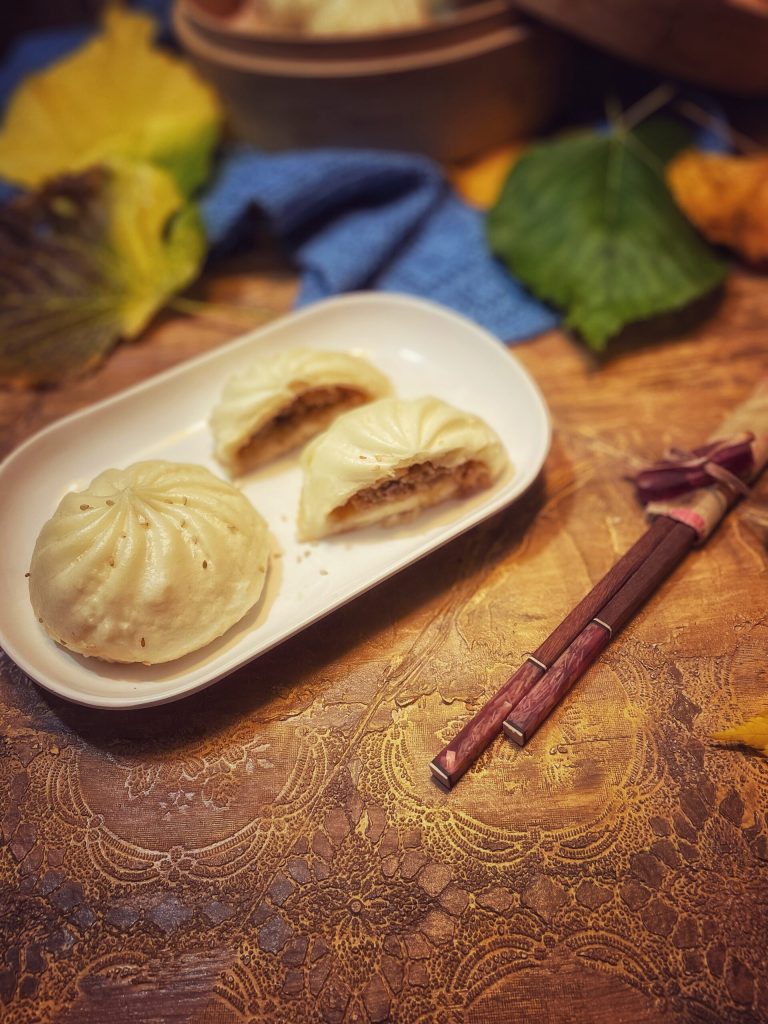
Notes on the Gluten-Free Adaptation:
• The use of glutinous rice flour helps give elasticity and that “chewiness” typical of nikuman.
• Kuzu serves as a gluten-free binder/stabilizer.
• Ensure that all the ingredients (such as soy sauce, starch, rice flour) are certified gluten-free if you have celiac disease.
• By adjusting water and dough, you may get larger or smaller buns; check the dough consistency (not too hard, nor too soft).
• By adjusting water and dough, you may get larger or smaller buns; check the dough consistency (not too hard, nor too soft).
FAQ (Frequently Asked Questions)
What is the difference between nikuman and baozi?
The Nikuman is the Japanese “adapted” version of the Baozi, with ingredients and seasonings more aligned with the Japanese palate, while Baozi is more varied and traditional in Chinese culture.
The dough of the nikuman is softer, often slightly sweet with refined white flour.
The filling of the Japanese version is with pork, shiitake mushrooms, green onions, ginger, sesame oil, while that of the baozi varies widely, from meat, vegetables, tofu, cabbage, eggs, to sweet fillings (including red beans).
The yeast in baozi is usually fresh or dry beer yeast → more neutral dough.
That of the nikuman is usually dry yeast + more sugar → sweeter and softer dough.What is kuzu?
The kuzu powder is obtained from the root of the Pueraria lobata, a common plant in the East with blue or violet flowers, it is rich in quercetin, isoflavones, and antioxidants, the use of this powder is so common that it has long been used as a therapeutic food capable, with its properties, of addressing many issues, especially intestine and stomach.
Find another recipe on the blog that uses kuzu: Crystal Bread.
