
The Maldivian tuna paste, locally known as “Rihaakuru,” is one of the fundamental and traditional ingredients of Maldivian cuisine.
It is a thick, dark brown paste, obtained by the long cooking of tuna boiling liquid, concentrated until it becomes a salty, savory, umami cream.
It is the Maldivian equivalent of Japanese miso or Filipino bagoong, but entirely fish-based.
The Maldives is an archipelago without large agricultural resources: tuna has always been the main food.
In the past, to preserve every part of the fish and reduce waste, the broth obtained from boiling the tuna was used.
This broth was reduced for hours, transforming into a concentrated paste: thus the rihaakuru was born.
Even today, it is considered a symbol of Maldivian culinary identity, used as a base for dishes, seasoning, or dipping sauce with roshi, as in the photo, the one tasted during our trip to the Maldives in November 2025.
The recipe is to obtain about 200–250 g (approximately 7-9 oz) of paste, enough for 10–12 people as a base or seasoning, since only a small amount is used at a time (1–2 teaspoons per serving).
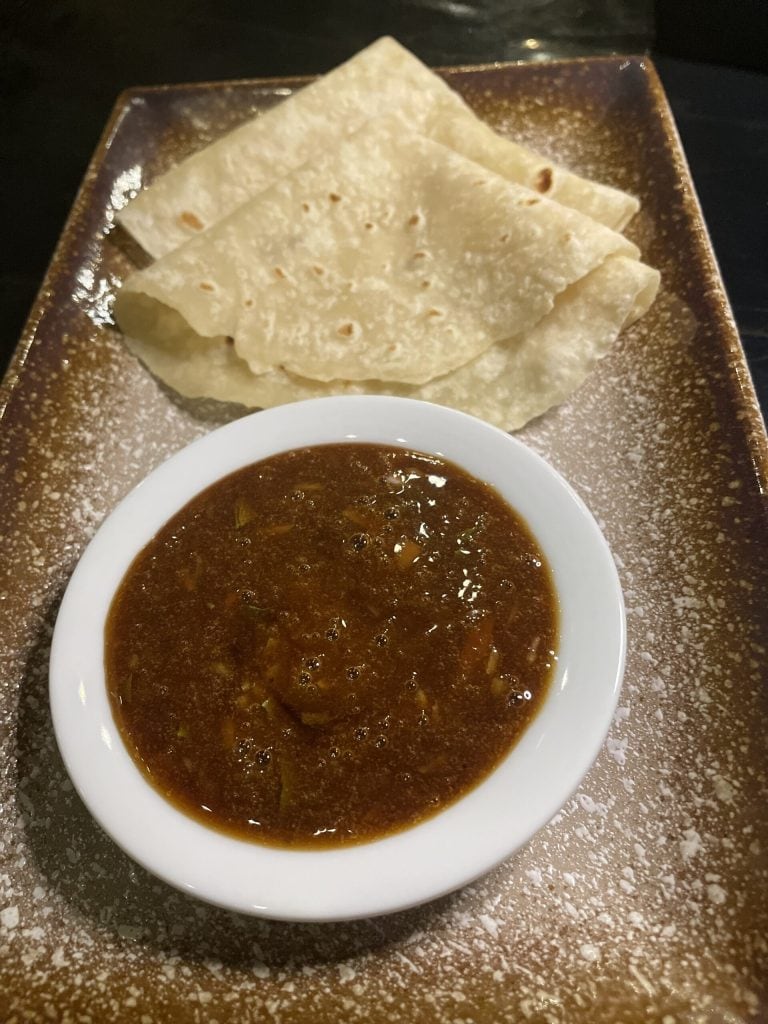
- Difficulty: Easy
- Cost: Medium
- Preparation time: 5 Minutes
- Portions: 10People
- Cooking methods: Boiling
- Cuisine: Asian
Ingredients
- 2.2 lbs tuna (Heads, bones, chunks or fillets)
- 8.5 cups water
- 2 tablespoons salt
Steps
Place all the tuna in a large pot with the water and salt.
Bring to a boil and cook over medium-low heat for 2–3 hours, until the fish is completely cooked.
Strain the liquid, discarding bones and solid parts.
Return the liquid to the heat and reduce over low heat for another 4–5 hours, stirring often.
The result will be a dark brown, dense, concentrated, salty, and flavorful paste.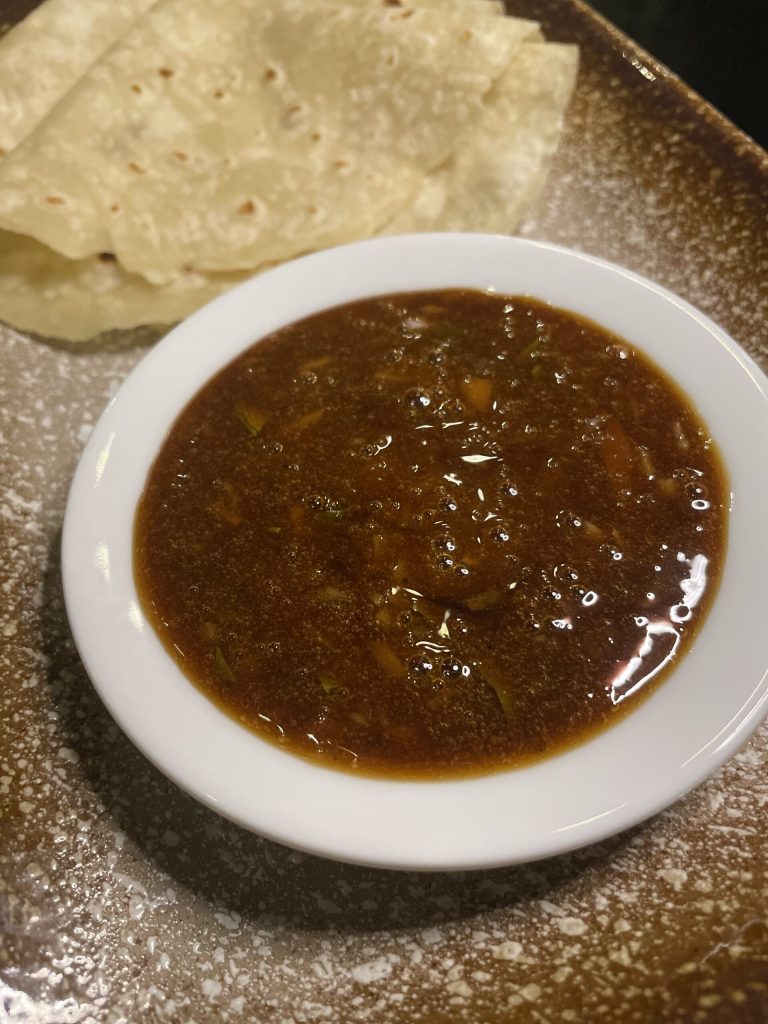
Typical Uses:
It is a very strong and salty food, to be used in small quantities, almost like a natural “bouillon cube.”
• As a dipping sauce with roshi and vegetables.
• To flavor curries and soups.
• As a rice seasoning (like Mas Baiy).
• Even on its own, with chopped onion, lemon, and chili (homemade snack).
FAQ (Frequently Asked Questions)
Is tuna the most commonly used fish in the Maldives? Do the Maldives export it?
Yes, tuna is the most commonly used fish in the Maldives, and it is also the national food par excellence.
🐟 Why it’s so important:
• The Maldives are located in tropical waters rich in tuna, especially yellowfin and skipjack.
• Tuna is consumed fresh, boiled, dried, smoked, preserved in oil, or transformed into rihaakuru.
• It is present in almost all traditional dishes: Mas Huni, Riha, Mas Baiy, Garudhiya, Valhomas Rice…
🌍 Export:
Yes, the Maldives exports tuna, and it is one of the country’s main economic sources after tourism.
The main exported products:
• Canned or pouched tuna (especially in water or oil)
• Fresh refrigerated or frozen tuna
• Smoked and dried tuna (Valho Mas)
• Maldive Fish (towards Sri Lanka)
Main markets:
• Europe (especially Germany, Italy, United Kingdom)
• Japan
• Sri Lanka
• Middle East
♻️ Sustainable Method
• The Maldives are famous for using pole and line fishing, without industrial nets, considered among the most sustainable in the world.
