
The samosas probably originated in the Middle East between the 8th and 10th centuries, where they were called sambusak or sanbusak.
They later arrived in India through Persian/Afghan traders and invaders. Here they took on a triangular shape and a spicy filling of potatoes, legumes, and meat, typically Indian.
In Indian samosas, the dough is typically made from wheat flour and water, rolled thin and then deep-fried; it remains light and crispy.
Here are the characteristics of Sri Lankan Samosas:
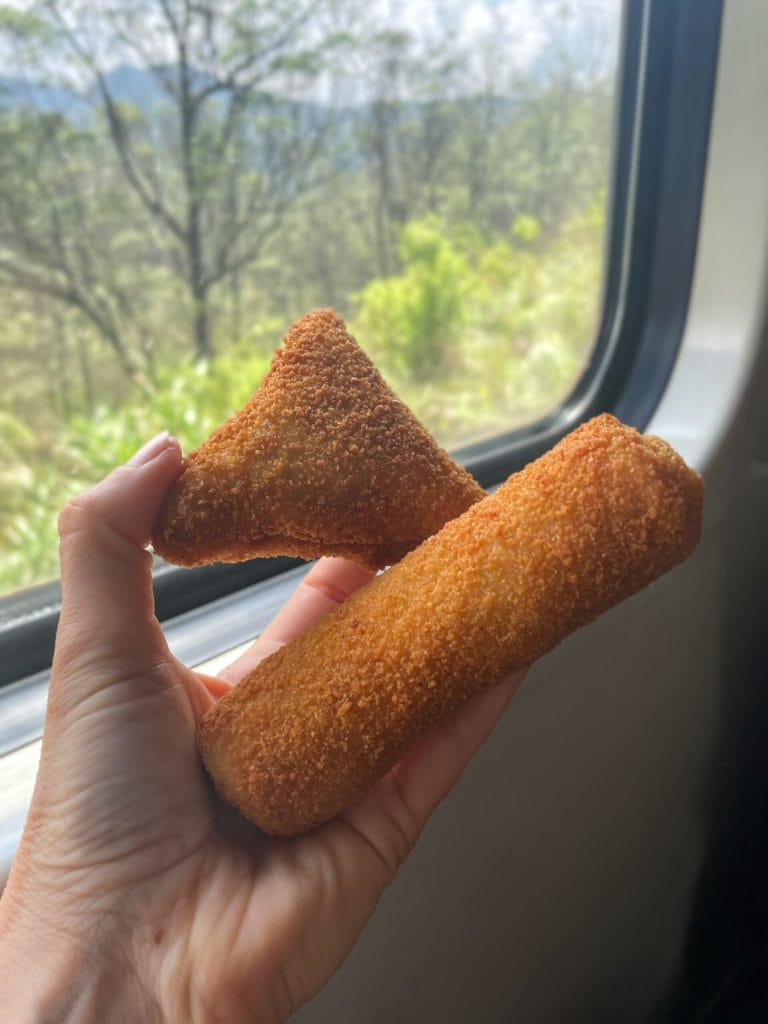
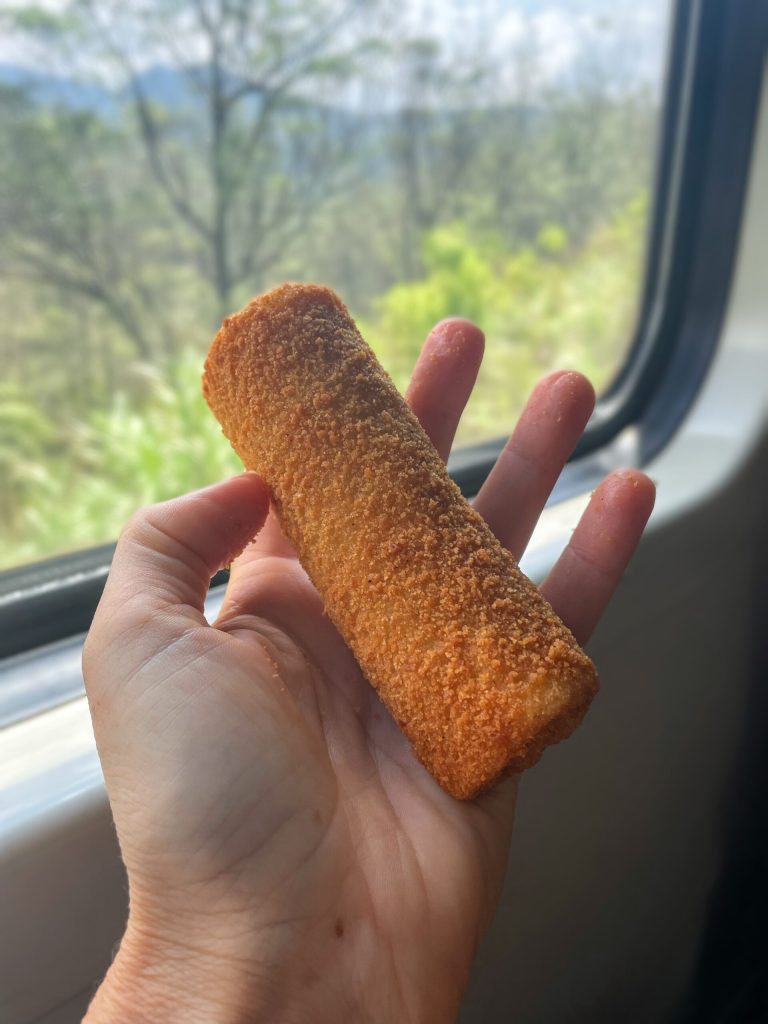
• The shape can vary between triangular and cylindrical.
• Filling often includes mixed vegetables, lentils, sometimes meat or fish, with milder local spices.
•The dough is thicker, often breaded or lightly battered, resembling a “breadcrumb-like” crispy fry, giving a more crunchy and compact texture, less airy than Indian samosas.
• The frying might seem almost “baked” because the breading absorbs less oil than the thin Indian dough, or because local street food is sometimes fried at a moderate heat.
• They can have a slightly sweet aftertaste due to the use of local spices like turmeric and Sri Lankan curry powder.
Sri Lanka has adapted snacks imported from India (brought by Tamils and Indian merchants) to local dietary habits and available flours, resulting in a more substantial variant, suitable for being sold as substantial street food.
These were tasted during the train journey between Ella and Kandy in Sri Lanka in November 2025.
- Difficulty: Medium
- Cost: Economical
- Preparation time: 10 Minutes
- Portions: 12 Pieces
- Cooking methods: Frying
- Cuisine: Sinhalese
- Seasonality: All seasons
Ingredients
- 1.75 cups flour
- 0.4 cups rice flour
- 1/2 cup water (warm)
- as needed salt
- 1/2 teaspoon baking soda
- 2 tablespoons vegetable oil
- as needed breadcrumbs
- 7 oz potatoes (boiled)
- 1.75 oz peas (blanched)
- 1.75 oz carrot
- 1 onion
- 1 clove garlic
- 1 teaspoon curry powder
- 2 tablespoons vegetable oil
- pinches salt and pepper
Steps
Prepare the dough:
Mix the flours with salt and baking soda.
Add water gradually and the oil.
Knead until you get a soft but not sticky dough. Cover and let rest for 20 mins.Prepare the filling:
Sauté onion and garlic in a little oil, add curry, peas, chopped carrots, and mashed potatoes.
Adjust salt and pepper. Let cool.Assembly:
Roll out the dough to about 1/16 to 1/8 inch thick.
Cut into circles or rectangles, place the filling in the center, close into a triangle or cylinder, pressing the edges well.Frying:
Pass in breadcrumbs and fry in oil until evenly golden, turning once.
Drain on a paper towel and serve hot.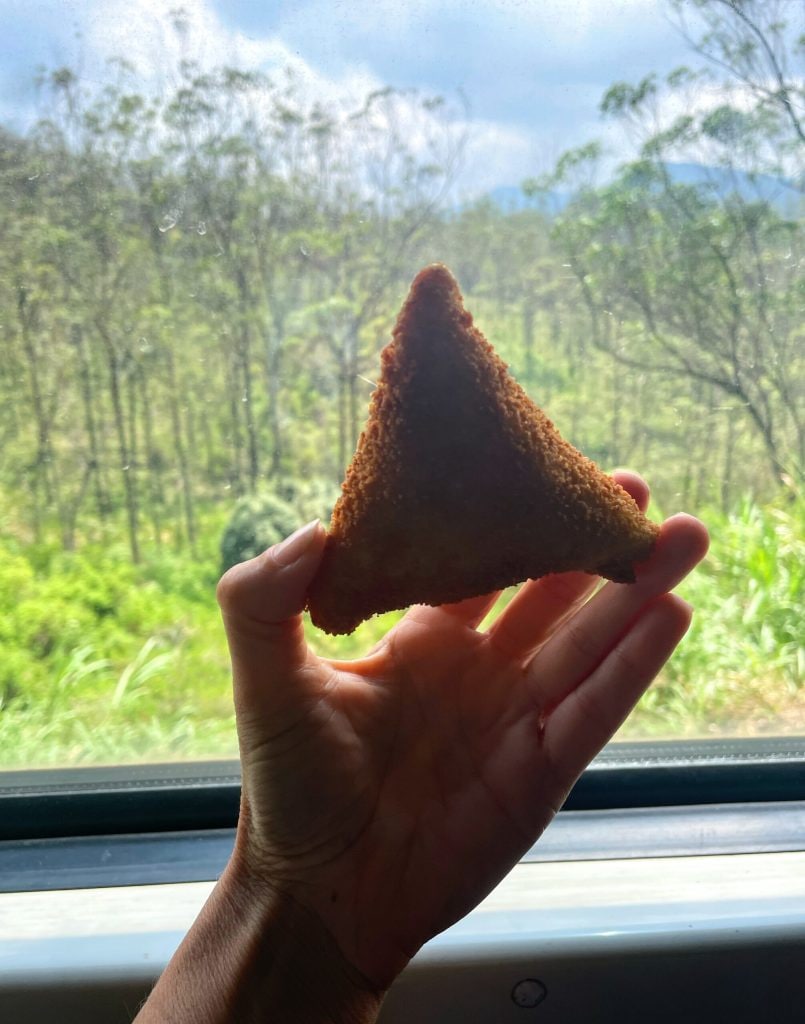
FAQ
Why is the dough for Sri Lankan samosas different from Indian ones?
1. Type of flour
In India, samosas are almost always made with soft wheat flour (maida), very fine, giving a thin and crispy dough.
In Sri Lanka, a combination of wheat flour and rice flour or even ground lentil flour is often used, depending on the region. This makes the dough denser, slightly grainy, and less elastic.
2. Method of preparation
Indian dough is rolled thin and quickly fried, so it remains light and crispy.
The Sri Lankan version is often breaded or lightly battered before frying. Some vendors use a bit of baking powder or baking soda, which creates a “soft-crispy” effect similar to breading.
3. Type of frying
Deep frying for Indian samosas.
Less hot oil frying or double pass in Sri Lanka: first slow browning, then brief immersion. This causes the dough to slightly puff up and become crispy on the outside, almost “oven-fried”.Where and how have samosas spread the most?
• India and Pakistan: the most widespread version, triangular, thin and crispy dough, filled with potatoes, peas, meat, or lentils.
• Sri Lanka: adapted version for local taste, with thicker dough, sometimes breaded, slower frying.
• Kenya and East Africa: samosas arrived with Indian traders (Gujarati and Tamil) during the colonial period.
Here, samosas are closer to the Indian ones, triangular, spicy filling, often vegetarian or with minced meat.
They do not have the more “breaded/soft-crispy” dough typical of Sri Lanka, as they derive directly from India.What are the differences between samosas in India, Sri Lanka, Kenya, and the Middle East?
• India and Kenya: thin and crispy dough, triangular.
• Sri Lanka: thicker dough, sometimes breaded or “soft-crispy,” substantial street food.
• Original Middle East: meat filling, smaller, not always triangular, lighter dough.
