
The Polos Curry, or green jackfruit curry, is a traditional Sri Lankan dish, rooted in local cuisine for both cultural and therapeutic reasons.
Its use dates back centuries, especially in rural areas where jackfruit (in Sinhalese polos) grows spontaneously and is considered a gift of nature.
Jackfruit is the national fruit of Sri Lanka.
In its young and green form (polos), it is cooked as ‘vegetable meat’ due to its appearance and texture similar to stewed meat.
It is a peasant dish, popular for its affordability, satiating capacity, and adaptability in vegetarian or vegan meals.
In many families, polos curry is linked to seasonality: it is prepared when the fruit is available, especially during the dry season.
Polos Curry is part of the ‘Badapu Thunapaha’ category, meaning the ‘roasted and spiced’ curries.
This is what I tasted during my Ayurvedic week at Villa Nivartana in Bentota in October 2025.
Another recipe on the blog based on green jackfruit:
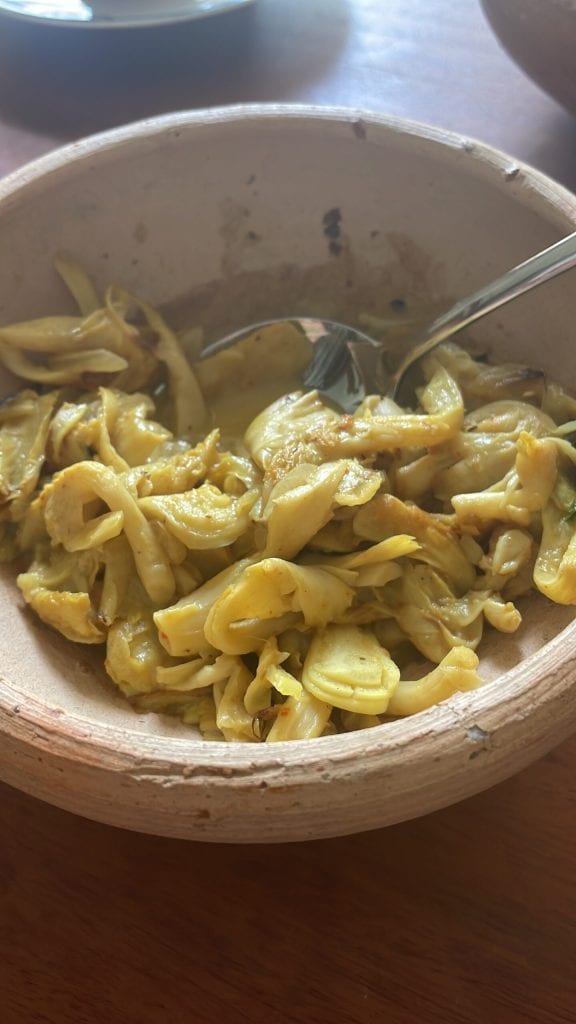
- Difficulty: Easy
- Cost: Very inexpensive
- Preparation time: 10 Minutes
- Cooking methods: Boiling, Slow Cooking
- Cuisine: Sinhalese
- Seasonality: All seasons
Ingredients
The spices: 1 stick of cinnamon, 2 cardamom pods, 2 cloves (whole spices)
½ teaspoon of turmeric powder
2 tablespoons of curry powder, Sri Lankan toasted curry powder
2 tablespoons of red chili powder (adjust as desired)
- 1.3 lbs green jackfruit (peeled and cut into cubes)
- 3 tbsps coconut oil
- 1 onion
- 3 cloves garlic (minced)
- as needed fresh ginger (minced)
- 2 green chilies
- 3 curry leaves
- 2 pandan leaves
- 3 cups coconut milk
- 1 tsp tamarind paste
- as needed salt
Steps
Preparation of the jackfruit
Clean the green jackfruit, remove the spiky skin and hard seeds, and cut it into cubes. Place the pieces in water with a pinch of turmeric to prevent them from browning.
Light Marination
Mix the jackfruit pieces with turmeric, salt, red chili powder, and part of the curry powder so everything is well covered.
Tempering / Spicy Sautéing
Heat the oil. Add curry and pandan leaves, let them sizzle for a moment.
Then add onion, garlic, ginger, green chilies. Cook until the onion becomes translucent.
Add the whole spices (cinnamon, cardamom, cloves) and mix.
Adding the Jackfruit
Add the marinated jackfruit to the sauté and mix well to flavor it. Let it cook for a few minutes over medium-low heat.
Adding Liquids and Acidity
Pour in 1 cup of water (or if preferred, diluted coconut milk) and the tamarind paste. Stir and partially cover the pot. Let it cook until the jackfruit becomes tender, about 30 minutes.When the jackfruit is almost cooked, add the thick coconut milk. Reduce the flame. Continue to slowly cook until the sauce thickens and adheres to the jackfruit. Stir gently to avoid the jackfruit breaking apart completely.
Taste and adjust the salt. If you want more intensity, add half a dose of curry powder towards the end.
Let it rest for a few minutes before serving.
Serve hot with white rice or idiyappam .
Accompany it with light side dishes: Pol Sambol, stewed vegetables.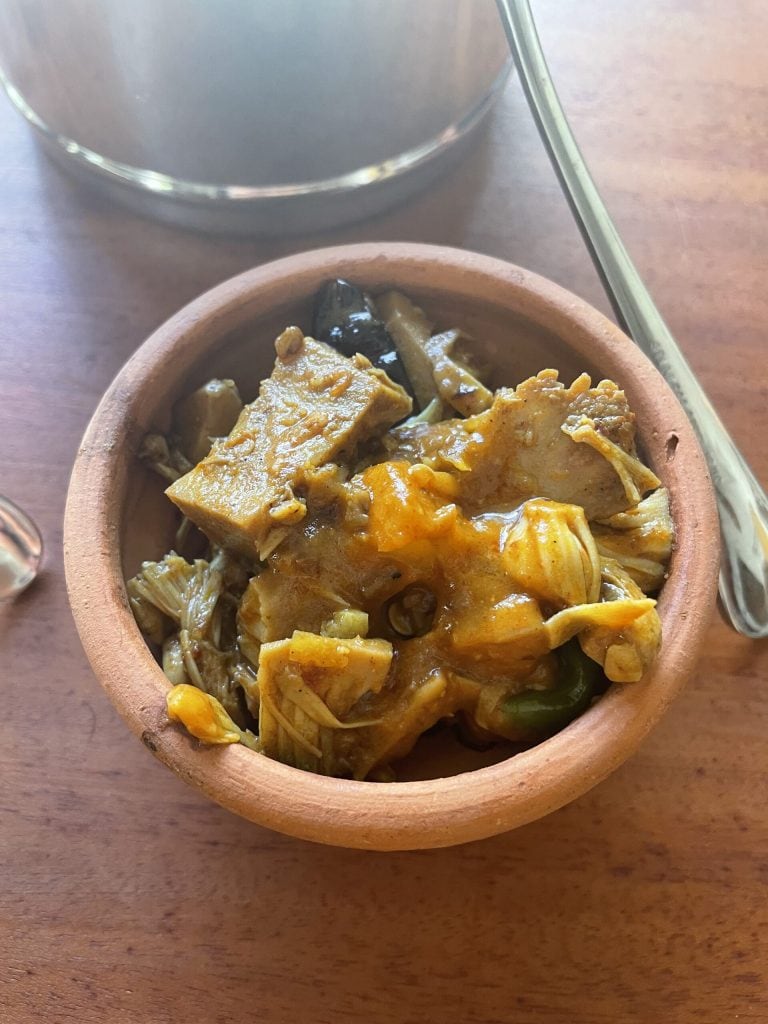
FAQ (Questions and Answers)
What is the use of Polos curry in Ayurveda?
In Ayurveda, green jackfruit is valued for its balancing effect and its benefits for digestion and vitality.
Here’s why:
Rasa (taste): Astringent and sweet — two tastes that calm Pitta and regulate Kapha, but should be used sparingly for Vata.
Guna (qualities): Heavy, dense, and nourishing — useful in cases of strength or weight deficit.
Virya (energy): Tends to be cooling, ideal in hot climates or for internal excess heat.
Prabhava (specific action): Helps regulate the intestines, improve liver function, and in young form is considered a natural detoxifying food.
Ayurvedic Indications of Polos Curry
Useful in sattvic vegetarian diets, meat-free but nourishing.
Aids in purification processes (Ama Pachana) and as support in phases of Personalized Ayurvedic Diet (Pathya).
It is often used during Panchakarma treatments as a balancing dish if well balanced with digestive spices.
In the photo one of my Ayurvedic lunches with polos curry: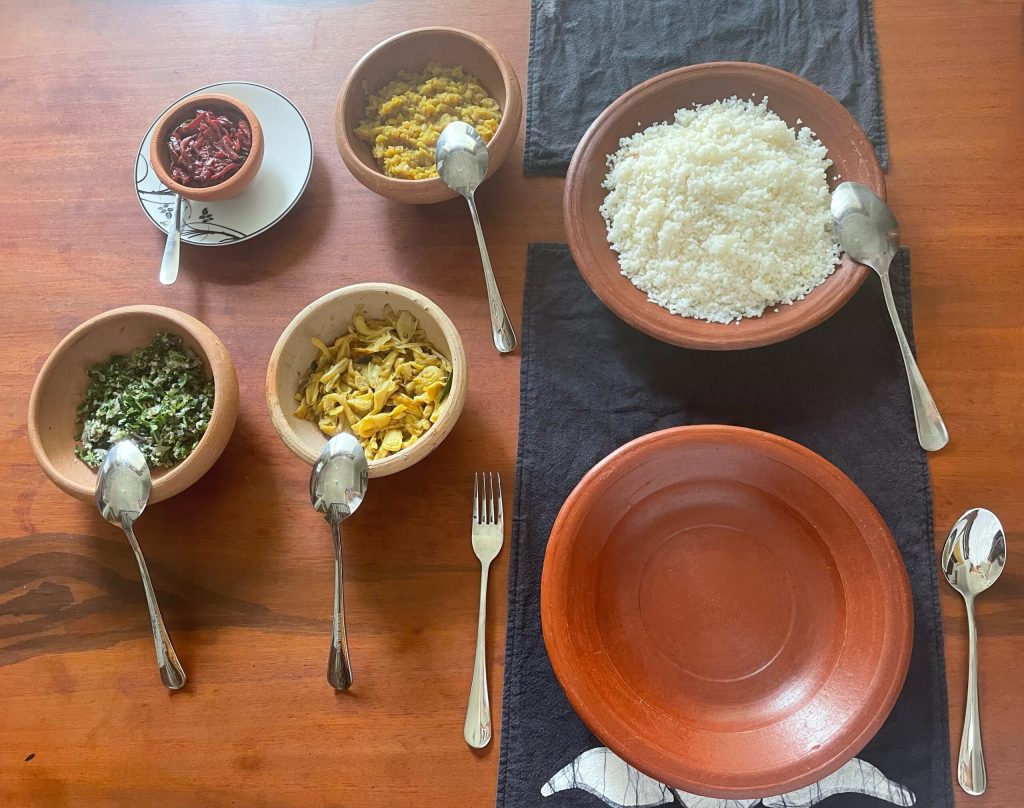
What is the difference between green and ripe jackfruit?
The difference between green jackfruit and ripe jackfruit is significant, both in taste, texture, culinary use, and Ayurvedic properties.
Green Jackfruit (Polos in Sri Lanka)
Stage: Young fruit, not yet ripe.
Taste: Neutral, slightly astringent.
Texture: Fibrous, firm, similar to stewed meat.
Use in cooking:
Savory dishes: curries, stews, vegan dishes as a meat substitute.
Absorbs spices and flavors well.
Ayurvedic benefits:
Astringent and cooling, balances Pitta.
Promotes digestion, indicated in detox processes.
Useful for those avoiding meat.
Ripe Jackfruit
Stage: Fully developed and sweet fruit.
Taste: Very sweet and fragrant, with tropical notes similar to mango, pineapple, and banana.
Texture: Soft, fleshy, and juicy.
Use in cooking:
Sweets, desserts, jams, smoothies.
Also eaten raw.
Ayurvedic benefits:
Heavy and sweet, can increase Kapha if consumed in excess.
Nourishing and strengthening, good for those needing energy or recovery.
Should be consumed moderately by those with digestive issues or mucus tendency.What are the other names of Jackfruit around the world?
Asia
Sri Lanka: Kos (ripe) / Polos (green, unripe)
India (in various languages):
Hindi: Kathal
Tamil: Palaa
Malayalam: Chakka
Kannada: Halasina hannu
Telugu: Panasa
Bengali: Kanthal
Indonesia and Malaysia: Nangka or gori for the young fruit
Philippines: Langka
Thailand: Khanun
Vietnam: Mít
China: 菠萝蜜 (Bōluómì)
Africa
In Swahili: Fenesi
Latin America
Brazil (Portuguese): Jaca
Spanish: Yaca
Europe
In English: Jackfruit
In Italian: Jackfruit or giaco (rarely used)
The English name jackfruit likely derives from the Portuguese jaca, in turn from the Malayalam chakka. The Portuguese brought the fruit to Europe in the 16th century.Are Durian and Jackfruit the same fruit?
Durian and jackfruit resemble each other in outer appearance, as both are large fruits, with a spiky skin and oval shape.
However, they differ significantly in smell, taste, and internal texture.
Durian has a pungent smell and creamy pulp, while jackfruit has a sweeter smell, more fibrous, and chewy texture, and resembles the taste of pineapple and banana.
Appearance:
Both are large fruits, with a spiky (full of spines or bumps) outer skin and an oval shape.
Origin:
Both originate from Southeast Asia and are often confused due to their appearance.
