
Kiribath literally means “milk rice” in Sinhalese (“kiri” = milk, “bath” = rice). It is one of the oldest and most symbolic dishes of Sri Lanka.
Traditionally prepared during holidays, weddings, the first days of school, or auspicious celebrations. It is considered a bringer of prosperity.
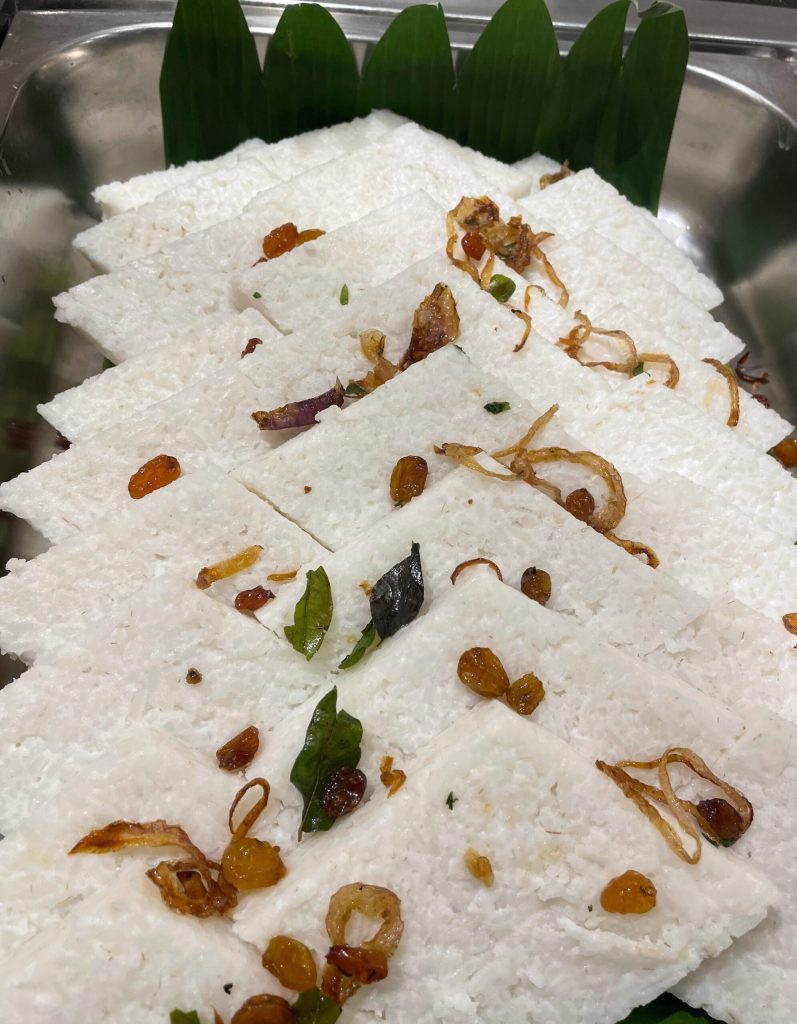
The rice is cooked in coconut milk until it becomes thick and creamy, then poured onto a tray, allowed to cool, and cut into regular shapes.
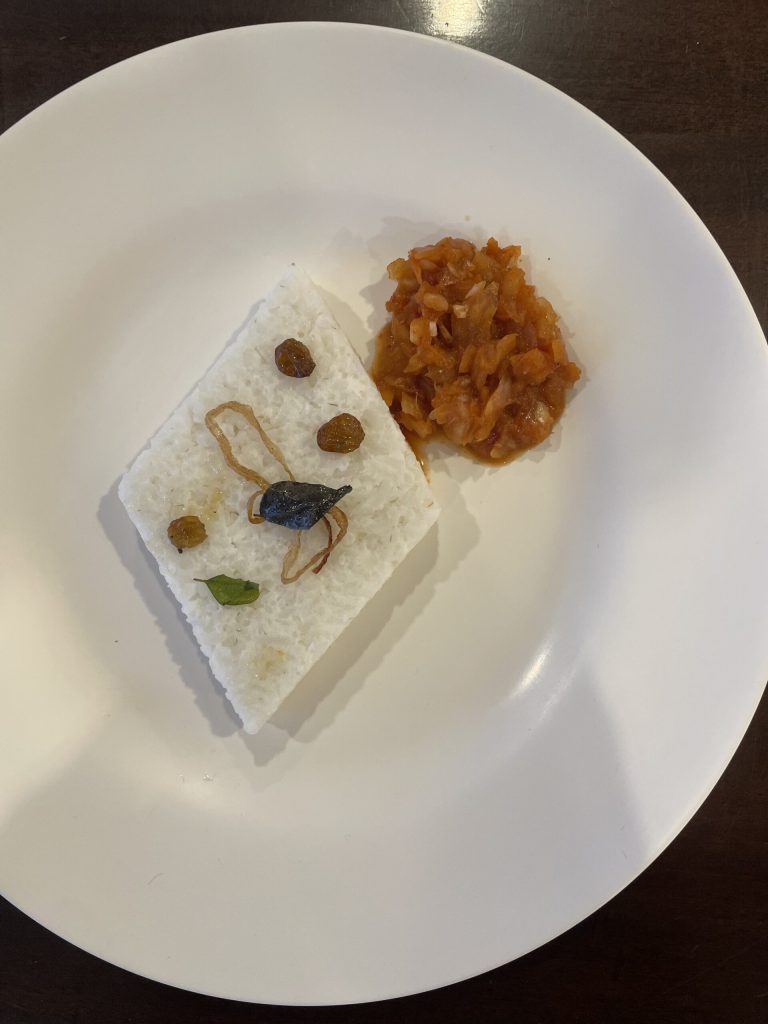
It is served with Lunu Miris (a spicy paste made with onion and chili), like the one tasted at the VIP lounge of Colombo airport during our trip to Sri Lanka in November 2025 (see photo) or with coconut sambol.
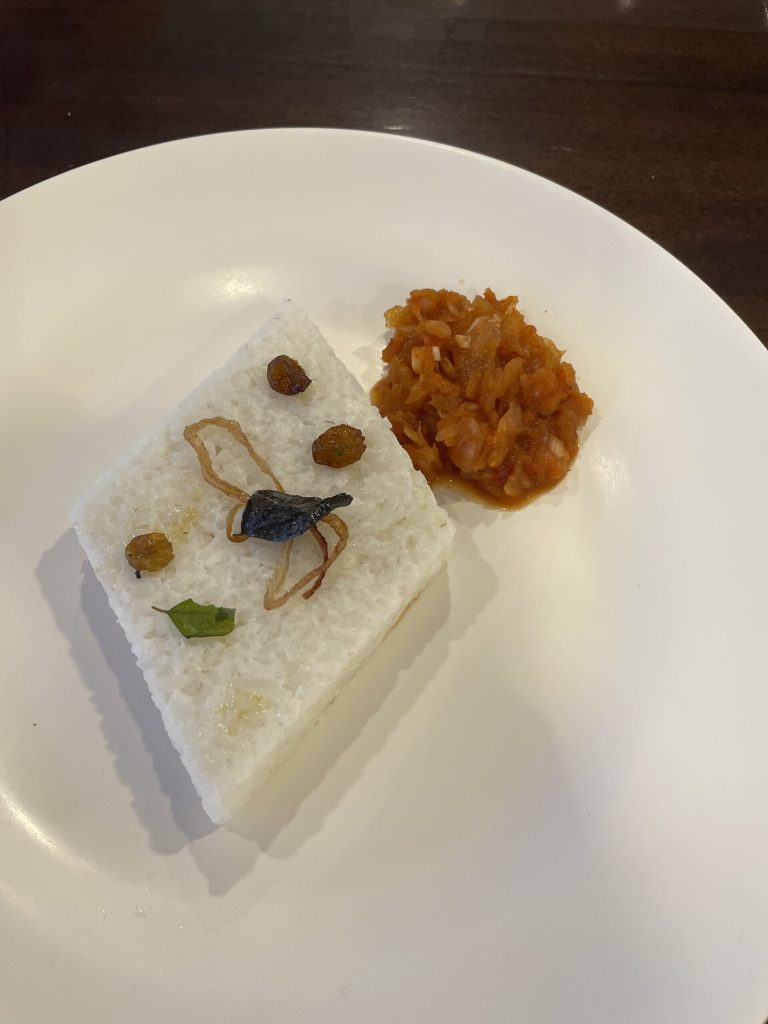
- Difficulty: Very easy
- Cost: Very cheap
- Rest time: 10 Minutes
- Preparation time: 10 Minutes
- Portions: 4 People
- Cooking methods: Boiling
- Cuisine: Sinhalese
- Seasonality: All seasons
Ingredients
- 1 cup samba rice (short grain)
- 2 cups coconut milk
- 1 cup water
- 4 leaves curry
- 1 onion
- to taste raisins
- 1 pinch salt
- to taste coconut oil (or ghee)
Steps
Wash the rice: Rinse the rice several times until the water is clear. This removes excess starch and makes the Kiribath creamier.
Cook the rice: In a pot, combine the rice, water, and salt. Bring to a boil, then reduce heat and let it cook for about 10 minutes.
Add the coconut milk: Pour the coconut milk into the partially cooked rice, add the curry leaves. Stir continuously over low heat for 10-15 minutes until the mixture becomes thick and creamy (not liquid).
Pour into mold: Transfer the rice onto a plate or tray lightly greased with coconut oil, level the surface with a wet spoon.Decorate: Sprinkle with onions fried in coconut oil or ghee and raisins. Press lightly.
Cool and cut: Let it sit until it solidifies, then cut into squares or diamonds.
Serve: Traditionally accompanied by Lunu Miris (onion and chili paste) or coconut sambol.
FAQ
Is there an equivalent of kiribath in India?
Yes, there is a similar dish in India, but with some regional differences.
• In Southern India, especially near Sri Lanka in Tamil Nadu, there is “Paal Sadam” or “Paal Pongal”, which literally means “milk rice.” This is also made with rice cooked in either cow or coconut milk and sometimes sugar or sweet spices.
• In Kerala and Tamil Nadu, there is “Paal Kozhukattai”, where rice is cooked with coconut milk and sugar, similar to the sweet Kiribath in some festive versions.
• In some areas of Tamil Nadu, there is a similar ritual use: Paal Sadam is served during festivals and ceremonies as a wish for prosperity.
•Main difference: Sri Lankan Kiribath is often savory and served with condiments like Lunu Miris, while Indian versions tend to be sweeter or neutral, and rarely spicy.Why don’t Indian and Sri Lankan women shave?
Cultural and Religious Reasons
• Traditions and Beauty Norms: In India and Sri Lanka, body hair is not always taboo as in the West. For many women (especially rural or traditional), hair on legs/arms is accepted as natural, part of femininity or maturity (e.g., in some Indian tribes like the Wè, hair symbolizes fertility). Hair removal is more focused on intimate areas (armpits, groin) for hygiene, not aesthetics.
• Religion: In Hinduism (majority in India) and Buddhism (Sri Lanka), shaving is ritual for monks/novices (head and body for purity), but for laywomen, it is optional. In Islam (minority in both), it is recommended to remove pubic/armpit hair for cleanliness (fitrah), but not full body. No rule prohibits shaving; on the contrary, it is encouraged for hygiene.
Practical and Social Reasons
• Economic/Social Factors: In poor areas (many rural zones), creams/laser are costly (e.g., laser sessions in Sri Lanka ~400 LKR), hence the preference for natural. Male pressures vary: some Indian men accept hair, others don’t due to Bollywood/Western influence.
• Genetics and Climate: Thicker hair for climatic adaptation; frequent shaving irritates hot/humid skin, so it is avoided.
