
Also known as bao or bau, baozi are delicate and fluffy, very similar to mantou 馒头, the Chinese steamed buns made from flour, milk, and yeast, but unlike the latter, they are filled.
Legend has it that during the Three Kingdoms period (220 – 280 AD), from the classic Chinese bread mantou empty and without seasoning, the filled bun was invented to administer medicinal herbs to the emperor, who was fond of Chinese bread.
Chinese people love to eat them for breakfast, but they can be enjoyed at any time of the day.
Some define them as Chinese hamburgers. Especially because in certain areas, like in Taiwan, the steamed bun is later cut and filled just like a sandwich.
There are many types with various fillings*, the most classic ones are with pork, cabbage, ginger, onion, soy sauce, and rice vinegar.
This time, however, I want to give you a vegan recipe, with tofu and shallot.
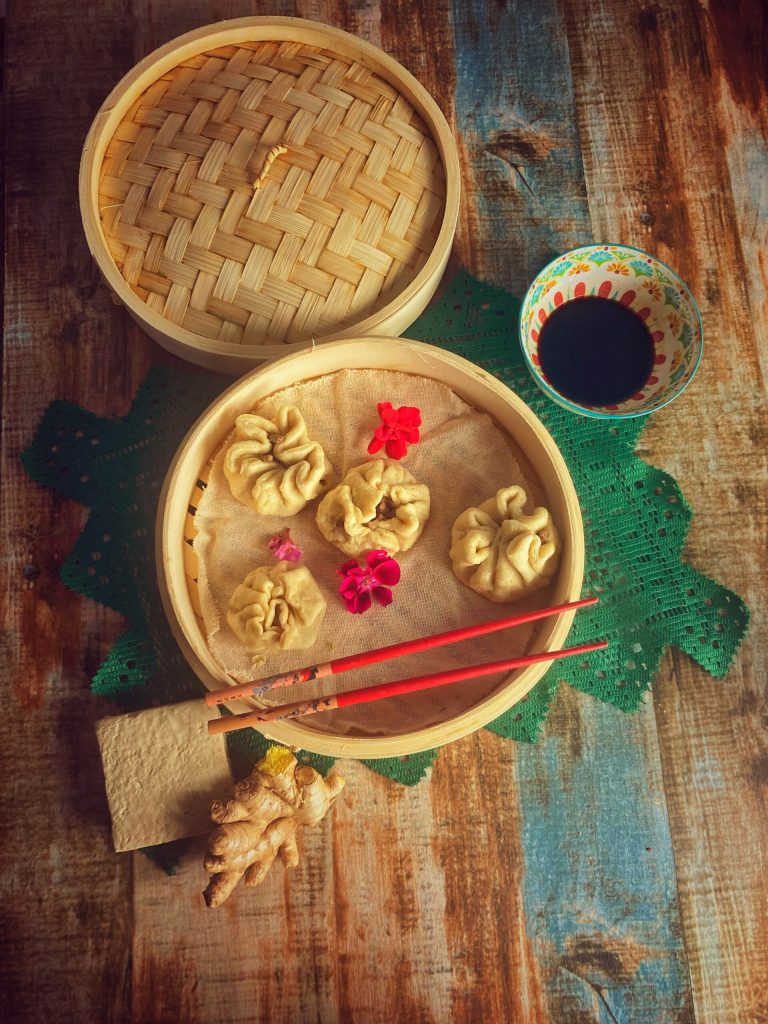
- Difficulty: Medium
- Cost: Very inexpensive
- Rest time: 2 Hours
- Preparation time: 10 Minutes
- Portions: 6 buns
- Cooking methods: Steam cooking
- Cuisine: Chinese
For the dough of Chinese baozi:
- 3.5 oz flour
- 0.3 oz cornstarch
- 0.1 oz fresh yeast
- 1.7 fl oz water
- 1 tsp sugar
- 2.3 oz tofu
- to taste soy sauce
- to taste fresh or powdered ginger
- 1 1/2 shallot
- 1 1/2 clove garlic
Preparation of tofu Chinese baozi:
Pour the flour, cornstarch, sugar, and yeast dissolved in water into a bowl.
After kneading for at least 10 minutes, form a ball, cover it with a sheet of plastic wrap, and let it rise for 2 hours until it doubles in size.
Prepare the filling: crumble the tofu, sauté it with soy sauce, ginger, and garlic. Add the raw chopped shallot.
Take the dough and, on a floured surface, prepare discs about 6 inches in diameter and 1/5 inch thick.
Gently flatten the ball in the palm of your hand, create a groove in the center to place a spoonful of filling.
Sealing the baozi requires a particular technique, to give it the characteristic spiral shape, fold the edge over itself, forming pleats. Video HERE.
Don’t worry if the closure is not perfect; the important thing is that the dough is not too thick, or it will remain raw on top.
Cut out some squares of parchment paper and place a baozi on each, put the buns in the steamer basket and let them rest for about 20 minutes to finish rising.
Steam the baozi for about 15 minutes: when they look steamy and fluffy, they are ready.
Turn off the water and let them rest in the warm inside the basket for another 5 minutes.
Serve hot and accompany with soy sauce.
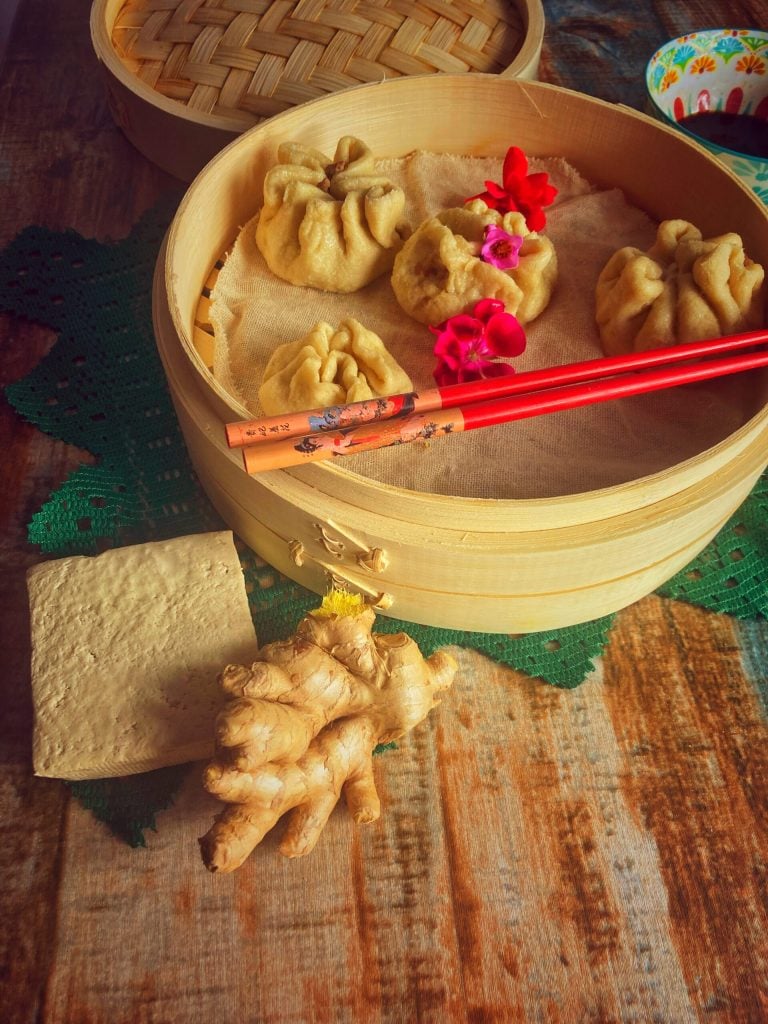
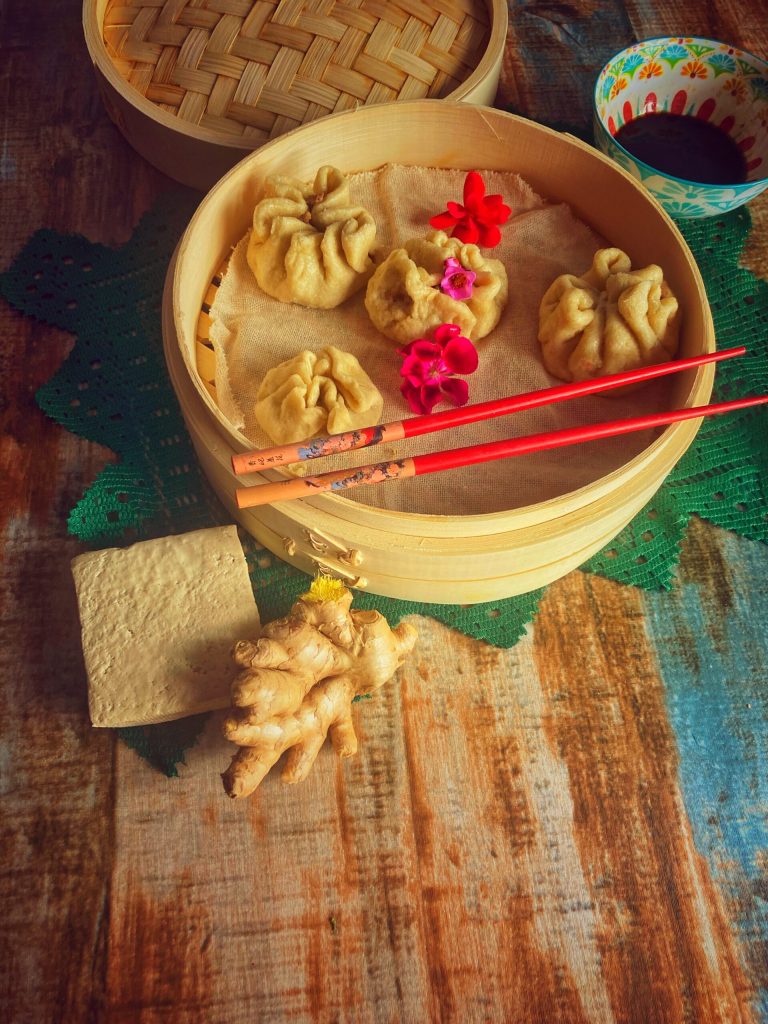
*The different fillings:
Cha siu baau or char siu bau or manapua, filled with barbecue pork, typical of Canton
Goubuli, a variety from the city of Tianjin; the name literally means “Dogs don’t pay attention to you”
Xiaolongbao or tangbao, filled with soup, served with a straw, typical of Shanghai. It is considered different from other baozi and more similar to jiaozi.
Doushabao , filled with sweet red bean paste
Lingyoong bau, filled with sweetened lotus seed paste
Naihuangbao, filled with custard
Caibao, filled with vegetables
