
The earliest traces of food prepared and cooked on the street date back to the dawn of our civilization, around ten thousand years ago.
The Greeks already described the Egyptian custom, tradition of the port of Alexandria then adopted throughout Greece, of frying fish and selling it on the street.
From Greece, the custom passed to the Roman world, enriching and transforming into countless variants.
However, there is a great misunderstanding about street food: since it was born poor and from the primary need to feed the populace at low cost, it has always been little considered, especially by us Italians.
Today, thanks to globalization, street food is increasingly asserting itself as the last stronghold of tradition and territorial identity.
We have examples especially here in Italy such as Pani ca’ meusa, a sandwich with spleen, or Stigliole, with lamb intestines, both typical of Sicilian markets, or like Turcinieddhri from Lecce, also with lamb and goat intestines but served as rolls, or the Murzeddu Calabrian sandwich with bovine entrails, or the rosetta with porchetta from the Castelli Romani, or the lampredotto which is still sold in the last kiosks, or lampredottai, left in Florence.
And it is precisely the lampredotto that is the protagonist of the Italian stage of “Around the World in 15 Sandwiches”.
The name lampredotto derives from lamprey, a vertebrate vaguely similar to the eel once very common in the waters of the Arno, because its shape resembles that of the lamprey’s mouth.
The lamprey was a dish loved by English nobility, but also by the Florentine one. Since not everyone had access to such a delicacy, the Florentines decided to find an alternative that was equally tasty but less expensive. Thus, they invented “lampredotto”.
The poor and peasant population had nothing else available but offal, using the abomasum (one of the four stomachs of cattle: reticulum, rumen, omasum, and abomasum), also known as glandular stomach, they unknowingly created this dish of
Florentine cuisine.
Martina also tells you about it in the video; the friendly guide who accompanied me on the visit to the Sant’Ambrogio district in Florence, in November 2024.
Lampredotto is made up of a tastier and leaner part of the abomasum, the gala, and the spannocchia, a bit fattier.
It is simmered for a long time in water with tomato, onion, parsley, and celery.
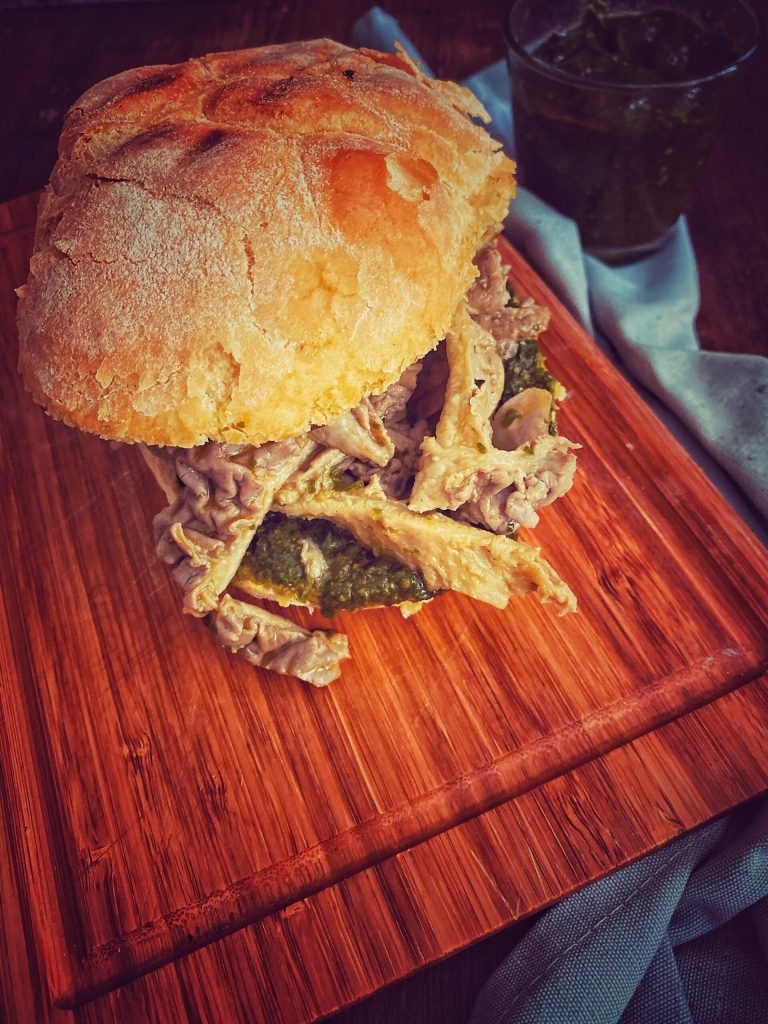
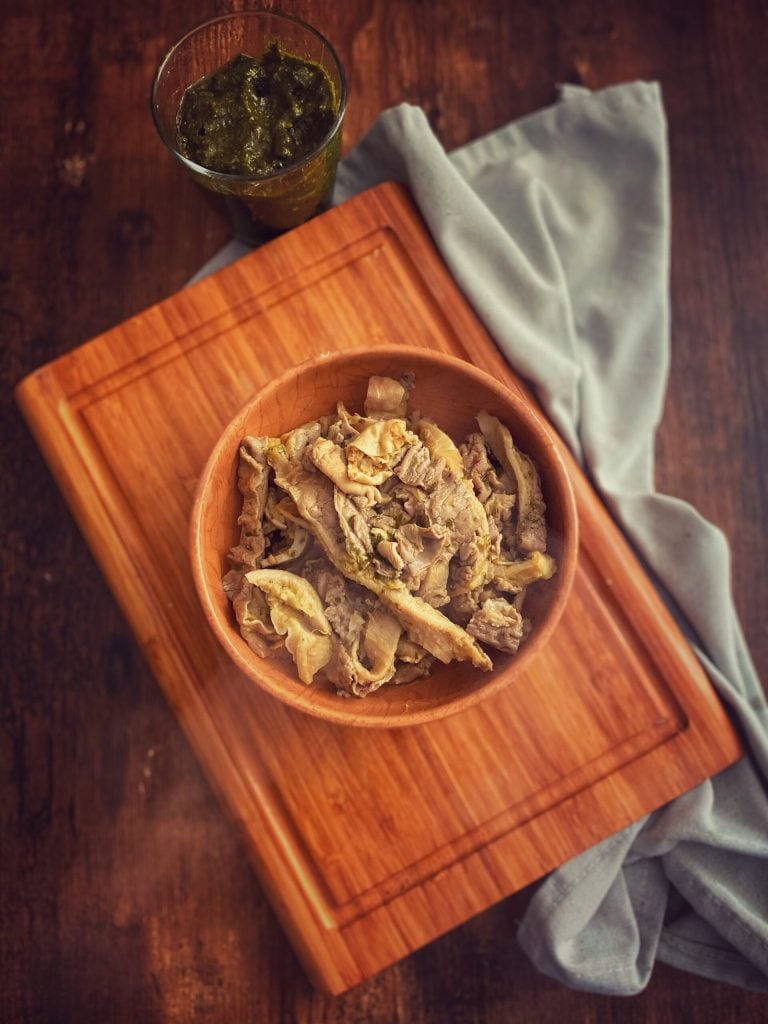
It can be enjoyed either as a normal boiled meat seasoned with green sauce, or in the way most loved by Florentines: cut into pieces as a filling for a salty Tuscan sandwich, the semelle,
whose top is generally soaked in the lampredotto cooking broth.
- Difficulty: Easy
- Cost: Cheap
- Rest time: 30 Minutes
- Preparation time: 10 Minutes
- Portions: 6 sandwiches
- Cooking methods: Boiling
- Cuisine: Italian
Ingredients
- 2.2 lbs abomasum
- 2 tomatoes
- 3 carrots
- 1 onion
- 6 semelle or rosette rolls
- 1 bunch parsley
- 2 cloves garlic
- 4 salted anchovies
- 1 tablespoon capers
- 1 hard-boiled egg
- to taste extra virgin olive oil
- to taste pepper
- 4 stalks celery
- to taste salt and pepper
Preparation
Wash the abomasum well under running water, making sure to get into the folds of the meat.
Prepare (clean and chop) the ingredients to make the vegetable broth: celery stalks, carrots, tomatoes, and onion.
Put everything in a pot with about 3 quarts of water and bring to a boil, to make the vegetable broth.
Add the salt, adjusting the seasoning first, and only after add the whole abomasum, lowering the heat to a minimum and covering with a lid, allowing it to cook for about 1 hour.
Meanwhile, prepare the green sauce: desalinate and debone the anchovies, peel the garlic, wash the parsley, put all the ingredients in the blender and blend until it becomes a sauce.
When the abomasum is cooked, let it rest for half an hour in the pot with the broth.
Chop the cooked abomasum with a knife, outside of its cooking broth.
Heat the rolls on a griddle or similar.
Open the rolls and dip the slices in the cooking broth, now add the lampredotto seasoned with salt and pepper and the green sauce.
N.B. Dip the bread for at least 0.4 inches and take it out immediately, to avoid it becoming too soggy.
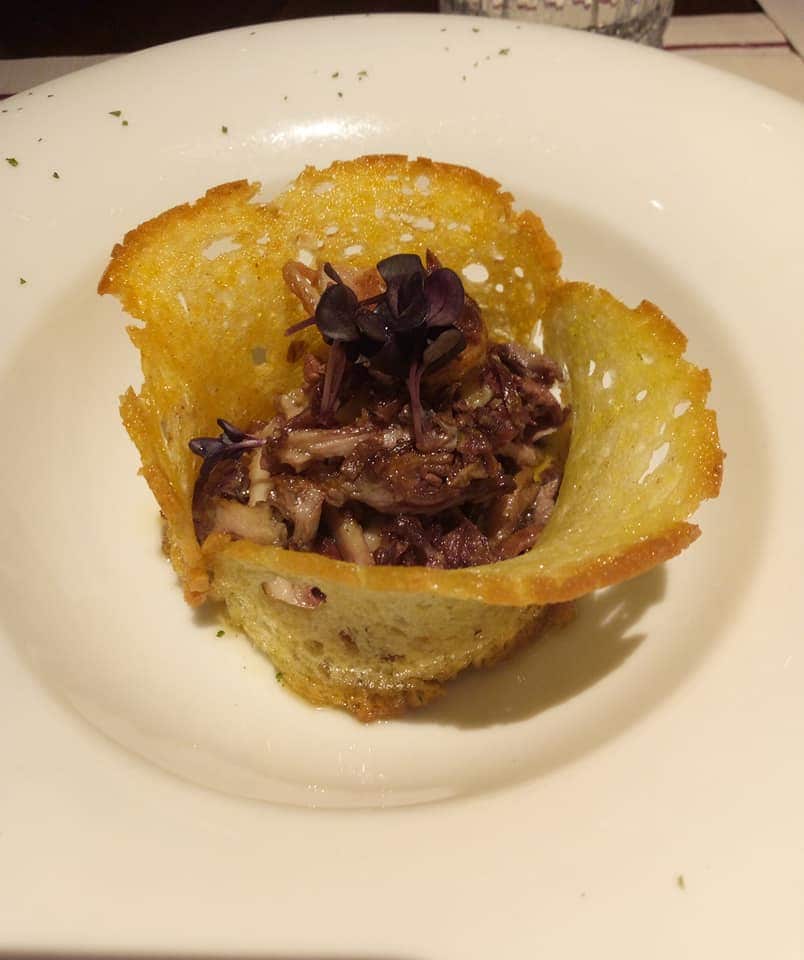
This is a “chic” plate version, served at Osteria Belguardo in Florence, then cooked on a griddle with citronette and wrapped in crispy bread veils.
The best wine to pair…

To best enhance the flavor of the lampredotto, the advice is to pair it with a good Chianti.

