
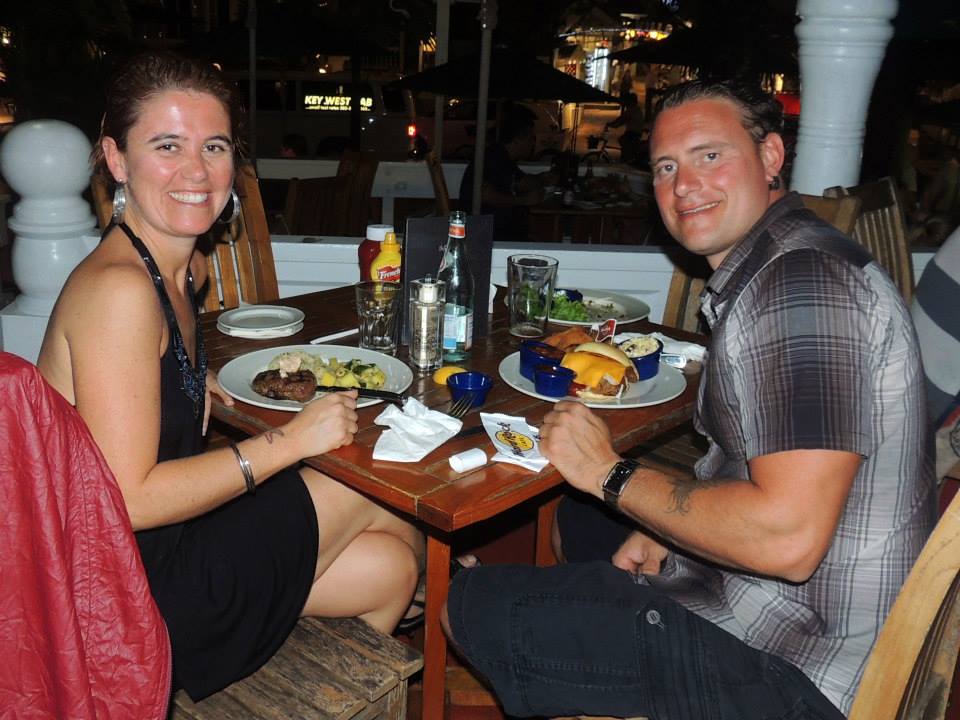
Undoubtedly one of my favorites… First tasted in Key West, at the Hard Rock Cafe, in November 2013, it has become one of my top choices every time I see it on the menu… I’m talking about Pulled pork!
Sometimes abbreviated as pulled, literally “shredded pork,” it is a dish originating from North Carolina.
Made from pork shoulder that, after being seasoned, is cooked slowly and for a long period over charcoal.
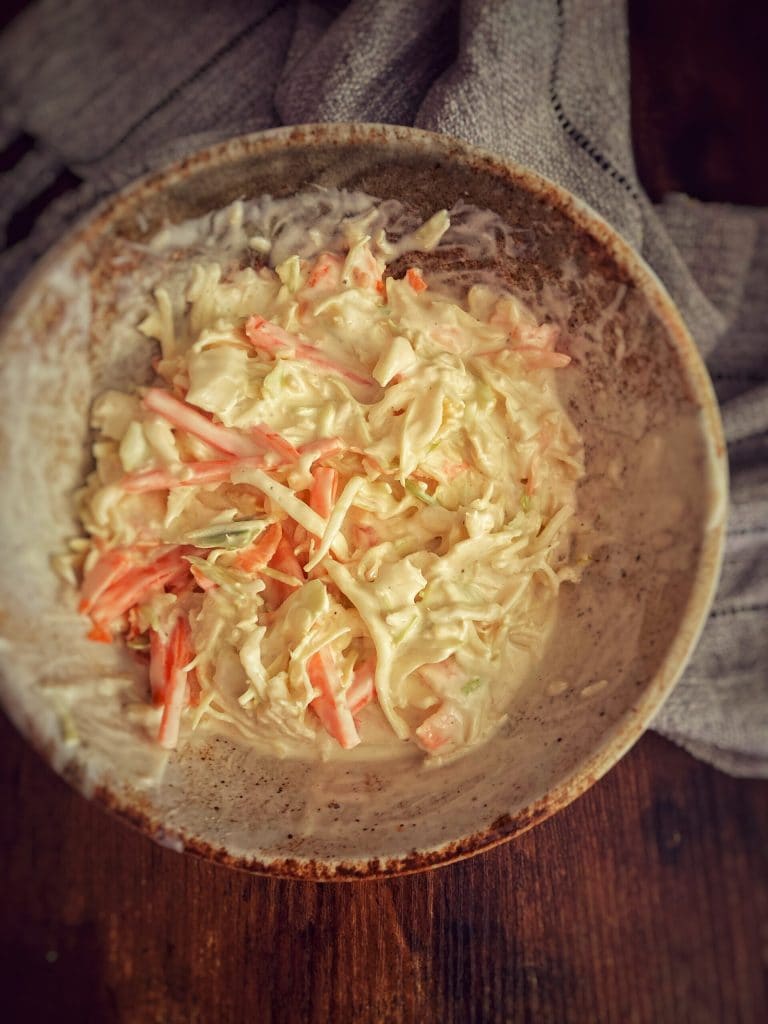
The pulled pork can be served on a plate or used as a filling for sandwiches along with coleslaw (cabbage salad dressed with mayonnaise, yogurt, and carrots).
It originated during the colonial era thanks to the Taino Indians, who used to cook meat and fish on a structure of green wooden sticks placed over a pit full of glowing coals.
A system that the Spaniards called barbacoa, distorting the Indian name.
The custom of cooking meat over coals in the current USA dates back to the mid-sixteenth century when the Spaniards exported pigs to the south, first to Florida and Alabama and later to Virginia.
By the time of the Civil War, pigs were domesticated, and pork had become the main meat of the South.
Since then, pork has become synonymous with barbecue in the Southern States of America.
The cooking process is fundamental: low and slow, at low temperature and very slowly.
This is how the whole pig was (and still is) cooked on a spit.
The process took an entire night, and the next day the meat was slightly smoked.
It was then pulled to be shredded: hence the name pulled pork.
For at-home cooking, a barbecue with a lid is necessary.
As mentioned, the recipe calls for slow, indirect cooking, where the smoke is important to ensure color and aroma in the meat.
Choice of meat: pulled pork is made by cooking a section of the pig that in the United States is called Boston Butt, which is the upper part of the pig’s shoulder and part of the neck.
The presence of the bone is not essential, but it significantly enhances the flavor.
Brine: it should be prepared with a basic mixture of water in which salt and sugar have been dissolved, in a ratio of 3 parts salt to 1 part sugar.
To shorten the time, you can proceed with an initiation of broth (with a syringe), each kilogram of meat should correspond to 80/100 ml of marinade to be injected.
Rub: the spice mixture that will completely coat the piece of meat after emerging from the brine.
It can be customized, but it always contains salt, pepper, sugar, and paprika.
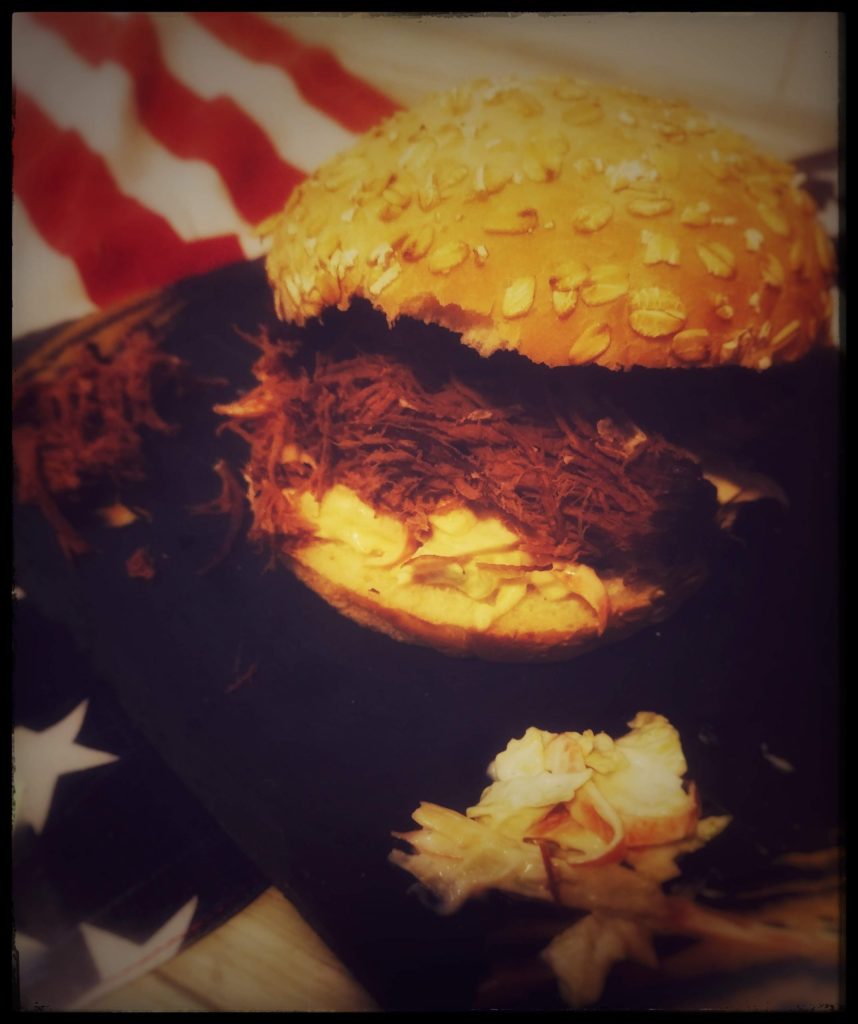
In the “sandwich” version, it is called burger with pulled pork, in which the pulled pork is placed loose in the bun, accompanied by sauces and other ingredients that complement its taste.
Just as we ate it in Key West – see photo below – and as follows in the recipe.
The sandwich is stuffed with coleslaw and pulled pork, but you can also add other ingredients like BBQ sauce, onions, and cheddar cheese.
The amount of meat will not clearly be all for the sandwich, but it is worth choosing a piece of at least 4.4 lbs as it is a rather long and laborious process.
Check out my review of the slow cooker Crock-pot SCCPRC507B.
- Difficulty: Medium
- Cost: Inexpensive
- Rest time: 2 Days
- Preparation time: 10 Minutes
- Portions: 2 sandwiches
- Cooking methods: Grill
- Cuisine: American
Ingredients
- 4.4 lbs pork shoulder (or whole neck (capocollo))
- 2 tablespoons coarse sea salt
- 1 tablespoon black pepper
- 1 tablespoon brown sugar
- 1 tablespoon mustard
- 1 tablespoon garlic powder
- 1/2 tablespoon oregano
- 1 teaspoon paprika
- 2 hamburger buns (American buns)
- 1/2 lb white cabbage
- 2 carrots
- 1 scallion (or onion)
- 7 oz yogurt
- 1 teaspoon white wine vinegar
- 1 tablespoon mustard
- 3 oz mayonnaise
- to taste salt and pepper
Tools
- Barbecue smoking chips
Preparation
The brine:
Trim the meat of excess fat with a sharp knife. In a large enough container, prepare a 5% salt brine with about three times the weight of the meat in water. Submerge the meat in it and store it overnight in the refrigerator.
Alternatively, you can proceed with an injection to shorten the time. That is, injecting 40% beef broth + 40% amber beer + 20% melted butter. Make 5-6 injections (about 300 ml), trying to distribute them evenly. Let rest in the refrigerator for 2 hours.
Prepare the rub:
Mix all the ingredients in a small bowl.
Spread the rub evenly over the shoulder. To do this, you need to grease the shoulder with extra virgin oil and massage it with the spices (the USA variant replaces the oil with mustard).
Place the shoulder in a baking dish and let it rest.
If you don’t have 24 hours, arrange for at least a minimum of 60 minutes resting time.
The low and slow cooking:
With a gas grill, just set it to low. To smoke: in a metal container, put the chips (there are special ones), dampen them with a little water and place the container over the burner. For 30 minutes, you’ll see a lot of smoke, and that’s exactly how it’s supposed to be.
With a charcoal grill, simply place about 20 briquettes in a snake and light the first 5. For smoking, after lighting the fire and positioning the pulled on the grill, throw a handful of smoking chips over the lit briquettes.
Cook the meat very slowly on the barbecue at a temperature of 257°F for about 6-7 hours until it becomes tender and soft.
The cooking must be indirect, that is, if the coals are positioned to the right of the grill, the pulled goes to the left (or vice versa), never putting the pulled over the coals.
Continue cooking until you get a bark (a nice dark mahogany crust) that satisfies you and in any case not before reaching an internal temperature of 154-158°F at the heart of the piece of meat.
Remove the shoulder from the barbecue, cover it with aluminum foil, and let it rest for at least 30 minutes.
At this point, you just have to pull it (shred it) with the help of a fork, or with “special claws” or a fork, breaking down the piece of meat.
Assemble the sandwich.
Prepare the coleslaw: peel the carrots and finely julienne cut, remove the outer leaves of the cabbage and cut the rest into thin slices.
In a salad bowl, mix the cabbage, carrots, and finely sliced scallion.
Prepare the dressing: in a bowl, mix the yogurt with mayonnaise, mustard, vinegar.
Adjust with salt and pepper.
Dress the julienned vegetables with the obtained dressing. Let rest for at least 10 minutes in the fridge.
Cut the buns in half. In a pan, toast the bread slices.
Assemble the sandwiches: cover with coleslaw then the meat, or vice versa, as you please, and if you wish, add some BBQ sauce.
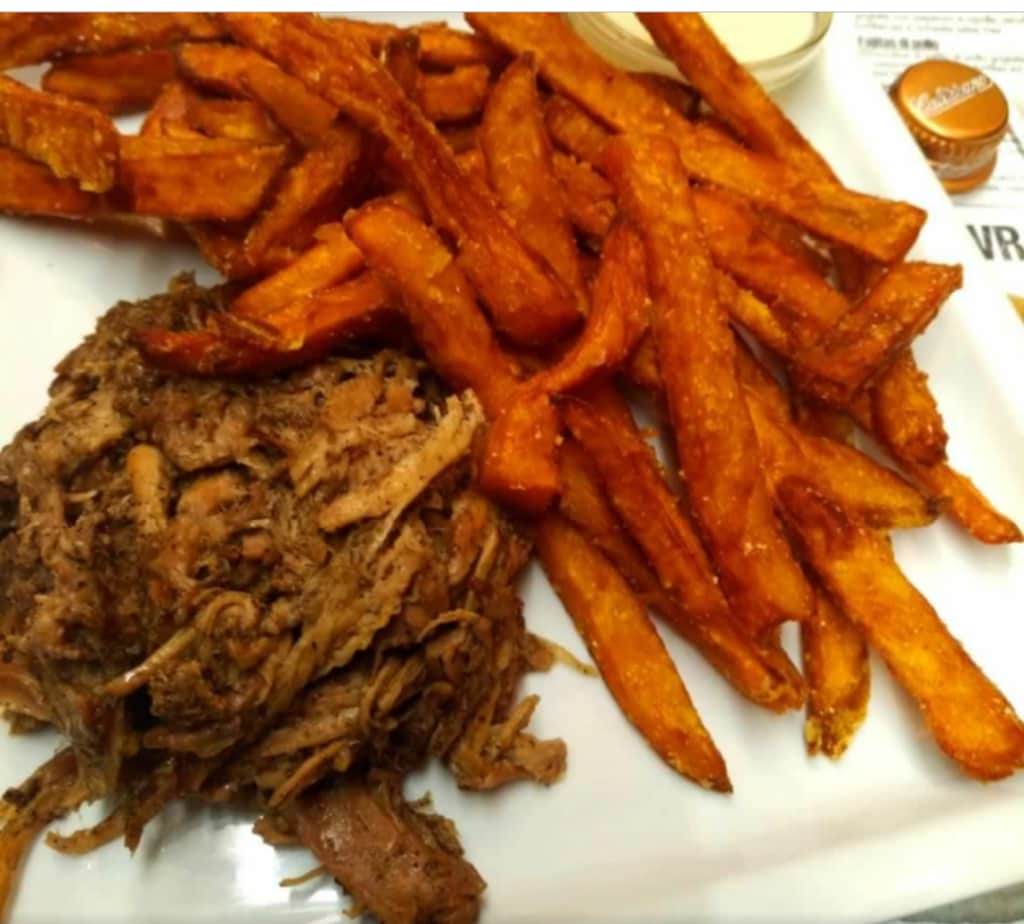
Eaten on its own, I’ve often tasted it with a side of sweet American potatoes.
Hard Rock Cafe in Key West. November 2013.
Pulled pork in other cuisines…
In Mexican cuisine, shredded pork is called Carnitas and, accompanied by onions, cilantro, beans, and guacamole, it is used to fill tacos.
In Hawaiian cuisine, the equivalent of pulled pork is called kalua pig or kalua pork and is made by cooking the pork, wrapped in taro leaves, for long periods in a sort of oven dug into the ground where coals are placed.
In Chinese cooking, shredded pork is often used seasoned with soy sauce, Chinese cabbage, and ginger, to fill dumplings to be steamed or grilled.
These are characterized by being juicy and very tasty, and pulled pork is a perfect filling to achieve this result.
Recipes with a more Central European flavor are instead baked potatoes stuffed with pulled pork and garnished with sour cream and chives.
Cooked together with fresh cabbage and bean sprouts, in chicken broth and coconut milk, it makes a refined Thai soup with a hint of curry and a touch of spiciness.
As smoking essences, the recommendation is for fruity woods like cherry, apple, or oak, find the Chips for smoker and barbecue, 6 liters, also online.
VIDEO RECIPE:
On my YouTube channel, you can find the video recipe for making Pulled pork with the Crockpot, the slow cooker.
But you can also prepare it with a kamado: thanks to the slow and indirect cooking, the Kamado is the best tool to prepare a tender and flavorful pulled pork. The meat cooks slowly, making it easy to shred.
Cook the pork shoulder for about 8 hours at 230°F, using applewood for smoking.
