
During dinner at the “Messner” restaurant in Venice, on our March 2019 trip, we tried another Venetian specialty: bigoli in sauce.
Traditionally, this humble dish was eaten on Fridays or during holidays that required “lean” cooking (Ash Wednesday, Good Friday, and Christmas Eve); the name bigoli refers to the shape of the pasta that resembles a caterpillar, which in the Venetian dialect is called “bigat“.
To make this pasta, it was necessary to use a bigolaro, a machine fixed to the table through which the dough was passed with a specific die; today it is possible to make this pasta using a press with a specific die.
The size is crucial, with a diameter of about 1/8 inch and a maximum length of 12 inches.
Similar to thick spaghetti, bigoli are egg pasta that is still made with a press today. In addition to being prepared with soft wheat flour, they can also be made with whole wheat flour, with or without eggs.
If you want to make them by hand, find the recipe HERE.
Other specialties tasted during our Venetian trip:
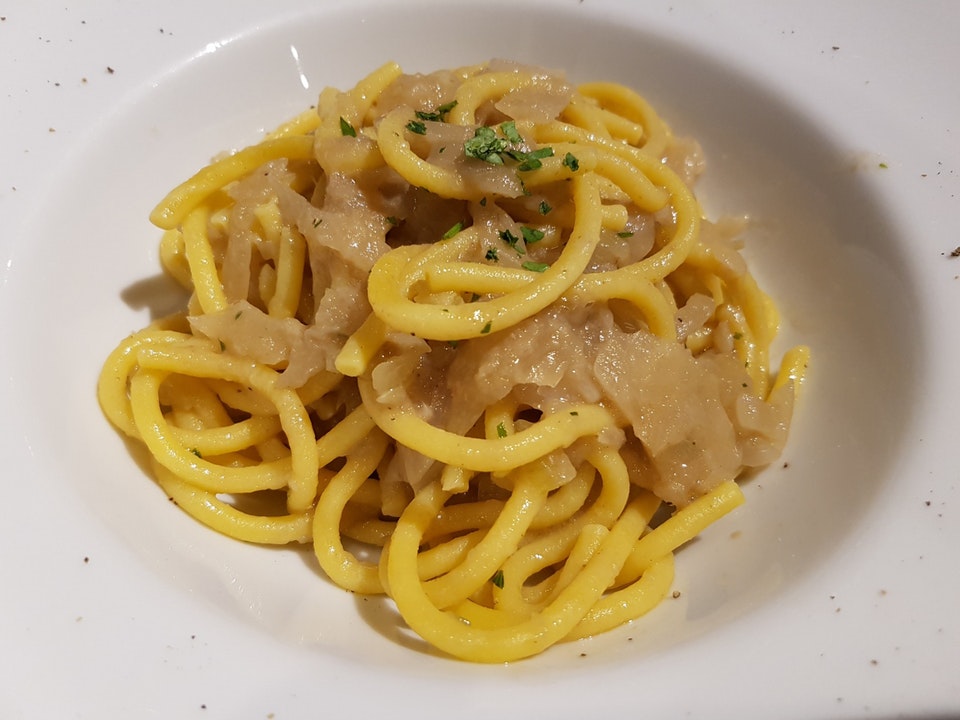
- Difficulty: Easy
- Cost: Economical
- Preparation time: 10 Minutes
- Portions: 4 people
- Cooking methods: Stovetop
- Cuisine: Italian
- Seasonality: All seasons
Ingredients
- 12 oz Bigoli
- 8 salted sardines or anchovies
- 1 Chioggia onion (white)
- to taste salt, pepper, extra virgin olive oil
Preparation
Sauté a finely chopped onion in a pan with a drizzle of oil and a little cooking water to prevent it from browning. Clean the sardines (desalt them and, if you bought them whole, remove the bones as well) and cut them into pieces, adding them to the sautéed onions. Continue cooking, stirring with a wooden spoon, until the sardines have blended into a cream together with the onions. Cook the bigoli and drain them al dente. Dress them with the sauce and finish with freshly ground black pepper.
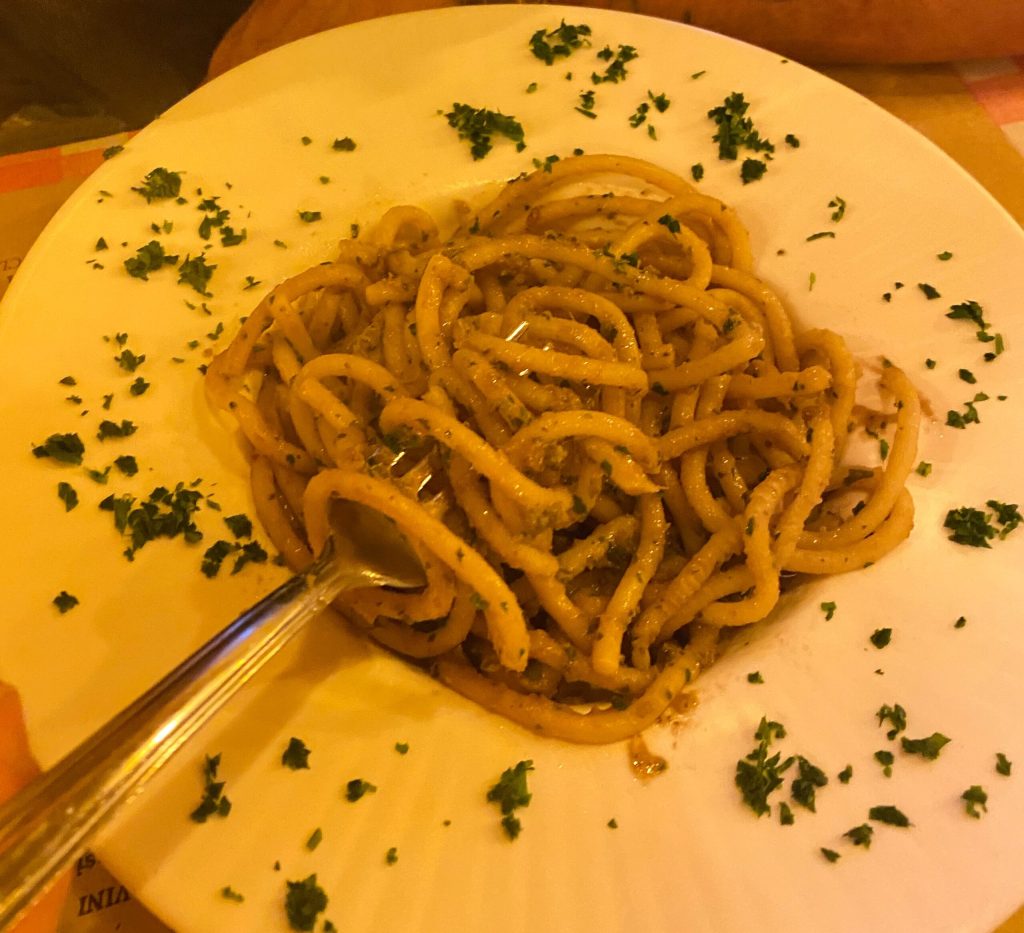
These (also in the video) were tasted during our trip to Chioggia in May 2024 at the “Osteria Veneta” restaurant:
Notes
Bigoli have always been part of Venetian history to the point that to say it’s time to go to lunch, one says: go to bigoli.
However, a line of thought suggests that the term bigolo comes from the typical curved stick that in past times was used to carry water or flour, thus widely used by the boys serving the master pasta makers.
Don’t add too much salt: the presence of anchovies will indeed give the dish the right saltiness.
Affiliate link #adv
As always, the quality of the pasta is important for the success of the dish: bigoli in sauce.
