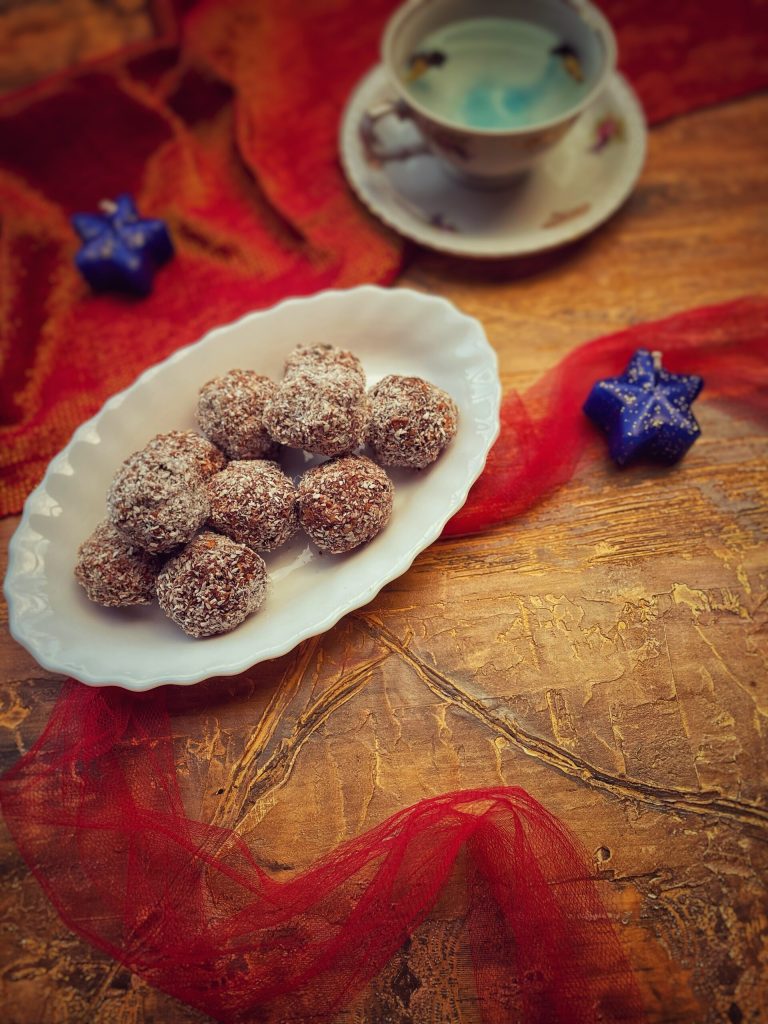
Havregrynskugler, also known as chokladboll in Sweden, are raw oat truffles that originated during World War II in Denmark, where due to food rationing, there was a limited amount of wheat flour, prompting many to seek substitutes like oats.
They are mixed cold and served rolled in coconut.
Today, they are a true Christmas tradition. Prepared during the Advent weeks, often involving the whole family.
They are somewhat the alternative “Christmas cookie”: no baking involved, but enjoyed immediately, perhaps with a cup of gløgg (spiced hot wine)….
- Difficulty: Very easy
- Cost: Cheap
- Rest time: 2 Hours
- Portions: 15Pieces
- Cooking methods: No cooking
- Cuisine: Danish
- Seasonality: Christmas
Ingredients
- 3/4 cups rolled oats
- 7 tbsps butter (soft)
- 3/4 cups powdered sugar
- 2 tbsps unsweetened cocoa powder
- 2 tbsps milk
- as needed grated coconut
Steps
1. In a bowl, mix all the ingredients well (except for the coconut).
2. Work them until you get a homogeneous and compact mixture.
3. Form walnut-sized balls.
4. Roll them in the coconut.
5. Let rest in the fridge for 1–2 hours before serving.
Note: They are not baked! They keep in the fridge for days.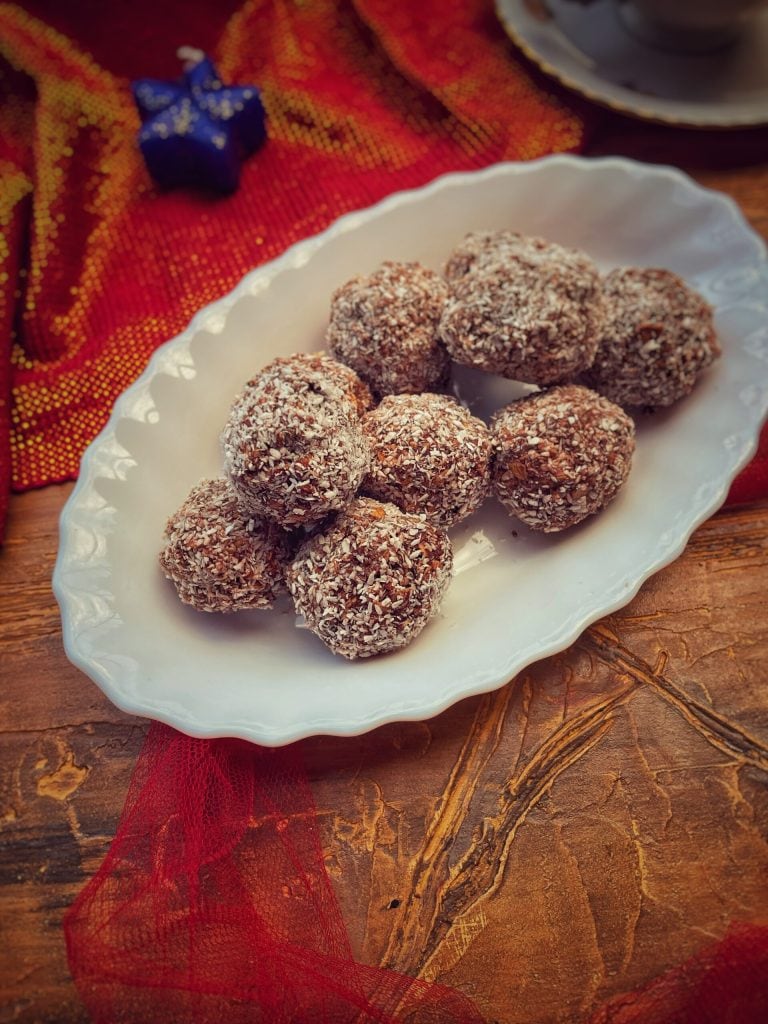
Merry Christmas, in Danish is “Glædelig Jul” or simply “God Jul”. The words can be used interchangeably to wish for the Christmas season.
Merry Christmas, in Danish is “Glædelig Jul” or simply “God Jul”. The words can be used interchangeably to wish for the Christmas season.
FAQ (Questions and Answers)
What is the difference between Danish Havregrynskugler, Finnish Kaurakeksit, and Swedish Havrekakor?
All three use oats, but they are quite different.
• Havregrynskugler are Danish, raw oat and cocoa truffles, with no baking involved. They are mainly prepared at Christmas and have a chocolatey taste, often with a hint of coffee or coconut.
• Kaurakeksit are Finnish oven-baked cookies, thin and crispy. Simpler, rustic, ideal for breakfast or snack.
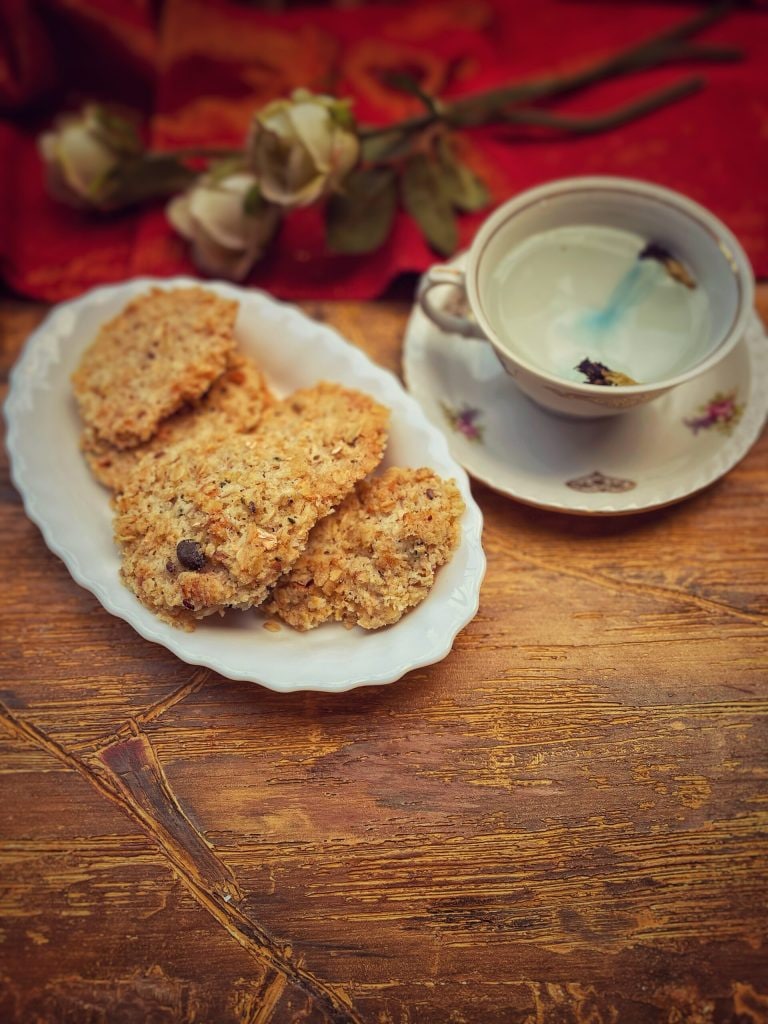
• Havrekakor (in the picture below) are Swedish, also oven-baked, but softer. Sometimes they contain vanilla, cinnamon, or raisins.
In short:
Danes eat them raw and delicious,
Finns like them crispy,
Swedes prefer them soft and fragrant.