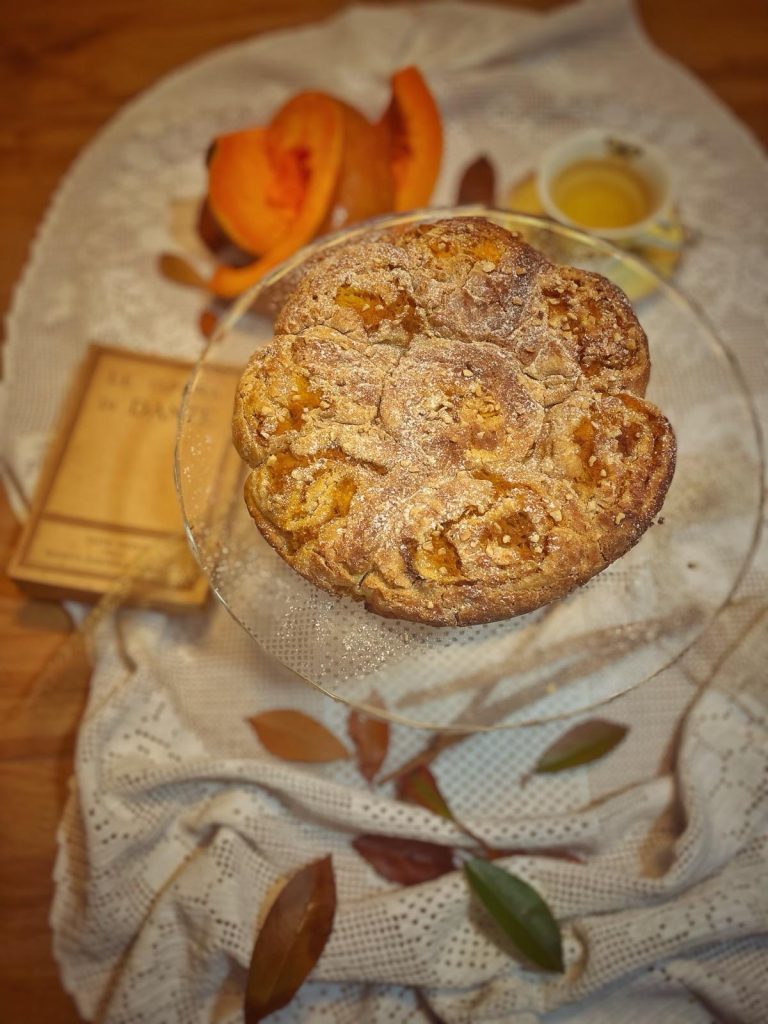
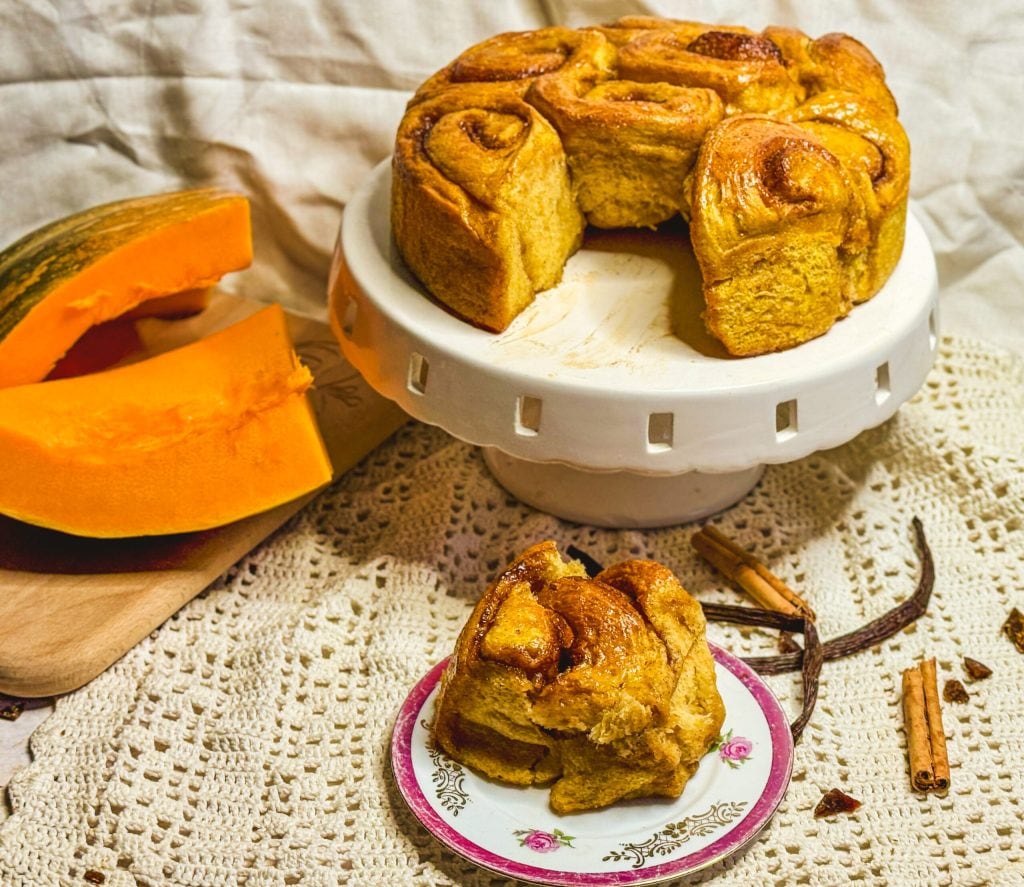
The vegan pumpkin and cinnamon rose cake is the autumnal and cruelty-free version of the classic Mantuan cake. Soft, fragrant, and without eggs or butter, it is perfect for those looking for a fluffy and light dessert with an intense flavor.
The pumpkin in the dough gives natural softness and moisture, while the cinnamon adds the typical aroma of cinnamon rolls. The use of seed oil instead of butter makes the cake lighter but just as delicious.
Perfect for breakfast or a snack, this vegan cake is also beautiful to bring to the table: many rolls open into “roses” and create a spectacular dessert. You can personalize it with brown sugar, orange zest, chocolate chips, or nuts. Perfect for breakfast but also at tea time… or to take to a dinner with friends!
As often happens, this recipe was made by my colleague ViaggiandoMangiando 80 gluten-free. You can find the link to her recipe at the bottom of the page!
Do you like yeasted desserts? Check out these links
- Difficulty: Easy
- Cost: Economical
- Rest time: 8 Hours
- Preparation time: 30 Minutes
- Portions: 12
- Cooking methods: Oven
- Cuisine: Italian
- Seasonality: Spring, Autumn, Autumn, Winter
Ingredients
The amount of flour and liquids in the vegan pumpkin rose cake can vary greatly depending on how dry or moist the pumpkin you use is. For this reason, my advice is to add the liquids only after incorporating the pumpkin and adjust them gradually, until you get a soft but not sticky dough.
Also, it can be helpful to keep about 50 g of extra flour on hand: if the dough is too soft or moist, you can add it little by little until you achieve the perfect consistency for working and rolling the rolls.
This simple trick helps you prepare a soft and vegan pumpkin rose cake without risking too sticky or difficult-to-handle doughs.
- 4 1/2 cups all-purpose flour
- 4 1/2 oz sourdough starter
- 7 oz pumpkin (puree)
- 3/4 cup almond milk (unsweetened)
- 2 tbsp vegetable oil
- 2 tbsp water
- 1 1/2 tbsp sugar
- 2 tbsp brown sugar
- 1 pod vanilla
- 1/2 tsp ground cinnamon
- 1 tsp salt
- 1/4 cup brown sugar
- 2 tbsp vegetable oil
- 1 tsp ground cinnamon
- 1/3 cup powdered sugar
- 2 tbsp water
- 1/2 tsp ground cinnamon
Tools
- 1 Immersion Blender
- 1 Stand Mixer
- 1 Work Surface
- 1 Rolling Pin
- 1 Metal Scraper
- 1 Springform Pan
Steps
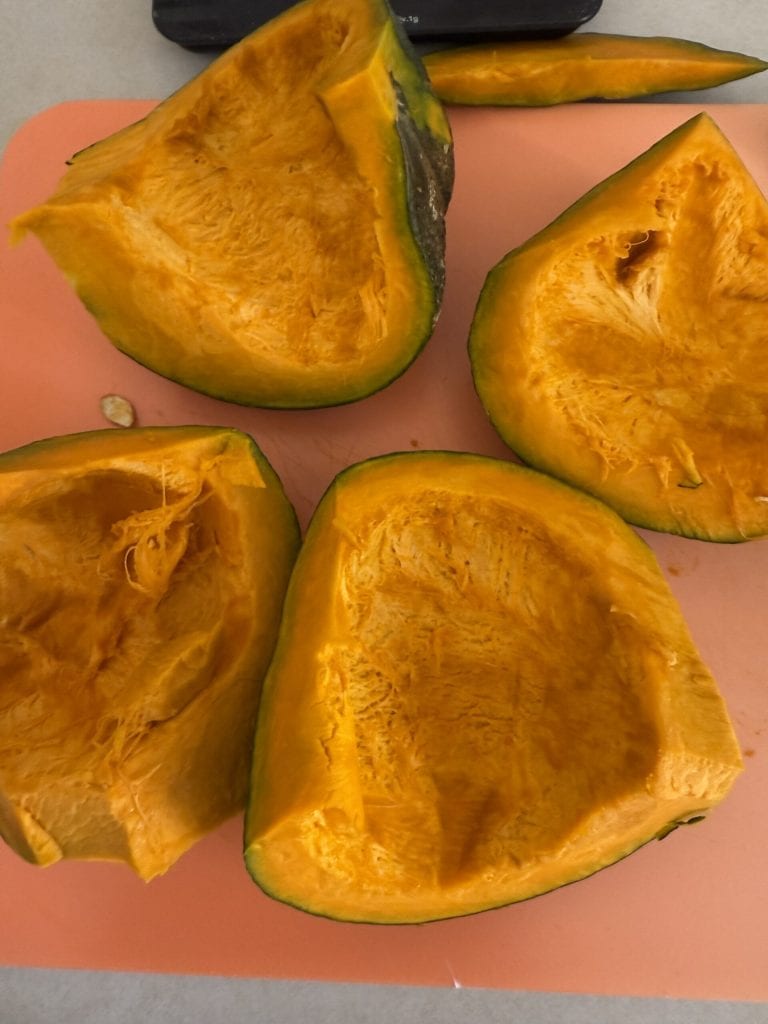
Cut the chosen pumpkin in half and remove the seeds. Place the halves in the oven and bake at 350°F for 20–25 minutes, until the pulp becomes soft and easily workable.
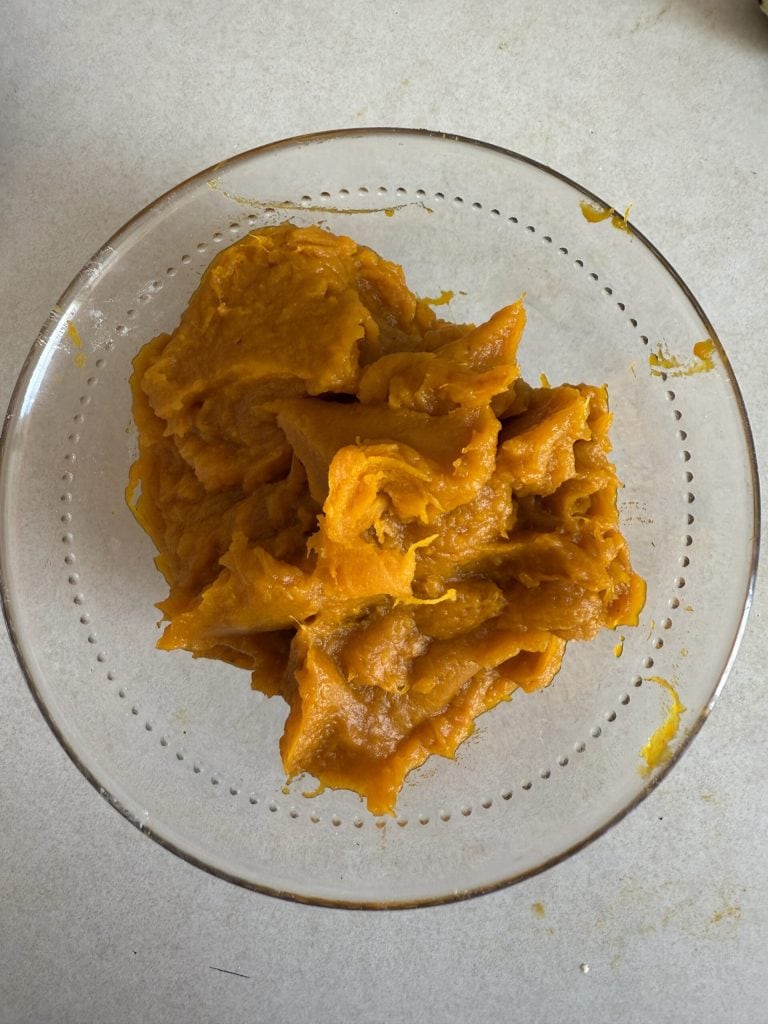
With a spoon, scoop the cooked pulp and transfer it to a bowl. Blend it with an immersion blender until you get a smooth and homogeneous puree. Let it cool completely before proceeding with the vegan pumpkin and cinnamon rose cake dough.
In the stand mixer, using the paddle attachment, break up the previously refreshed and doubled sourdough starter. Add 1/3 cup of liquids: I prefer to mix water and almond milk for convenience, but you can also use just water. Mix briefly to combine.
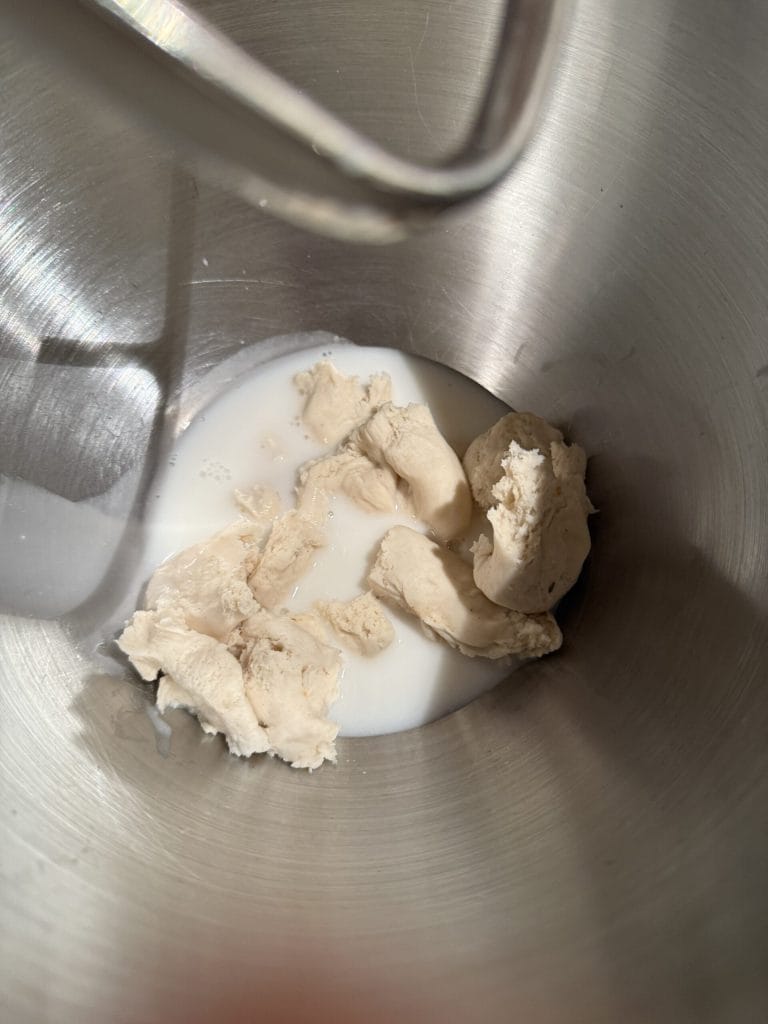
Add the whole cane sugar, which will give an intense aroma to the preparation. Run the stand mixer at low speed to blend the ingredients well.
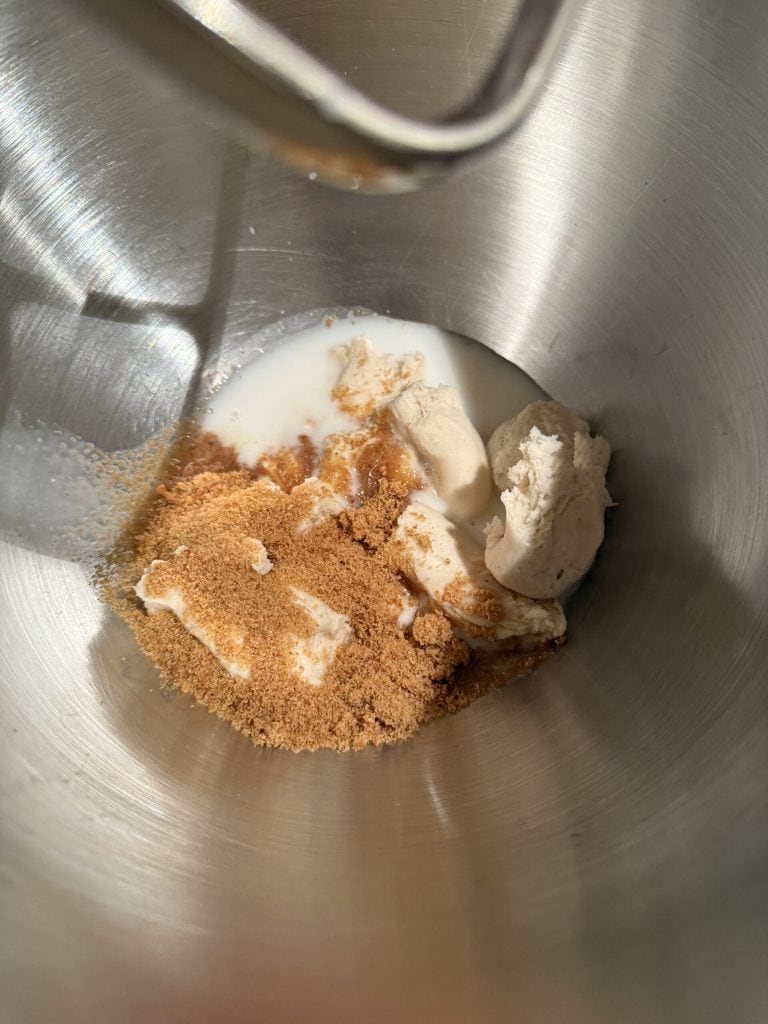
Ensure that the sourdough starter is completely dissolved in the liquids and sugar before proceeding to the next step. This ensures even and optimal leavening of the dough.
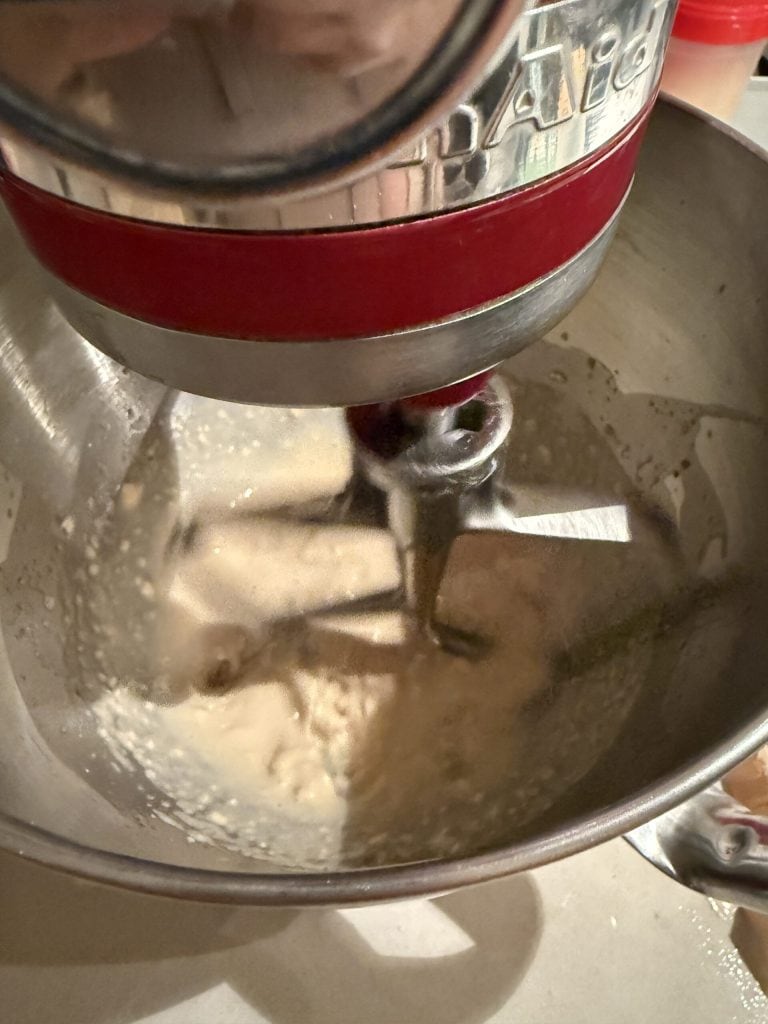
With the stand mixer running at low speed, add the cooled pumpkin puree. I recommend adding it little by little, so you can better control the moisture of the dough and get the right consistency.
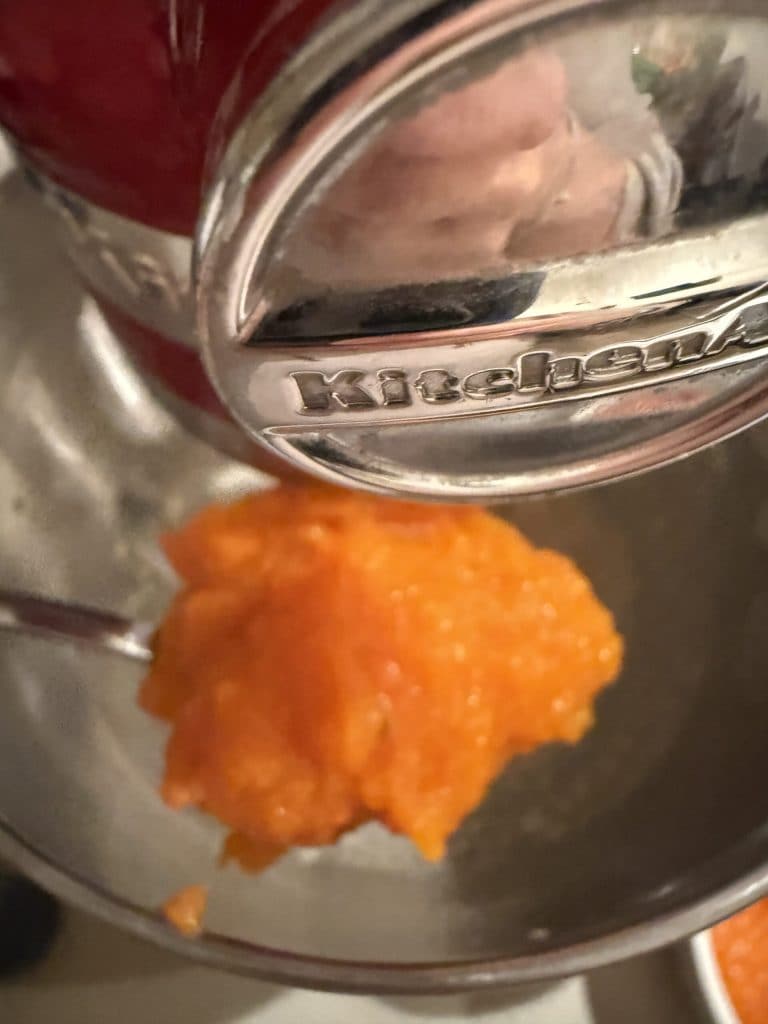
Once the pumpkin puree is completely absorbed, add the white sugar. Alternatively, you can choose to mix the two types of sugar and use half with the yeast and the other half in this step: the result will still be balanced and fragrant.
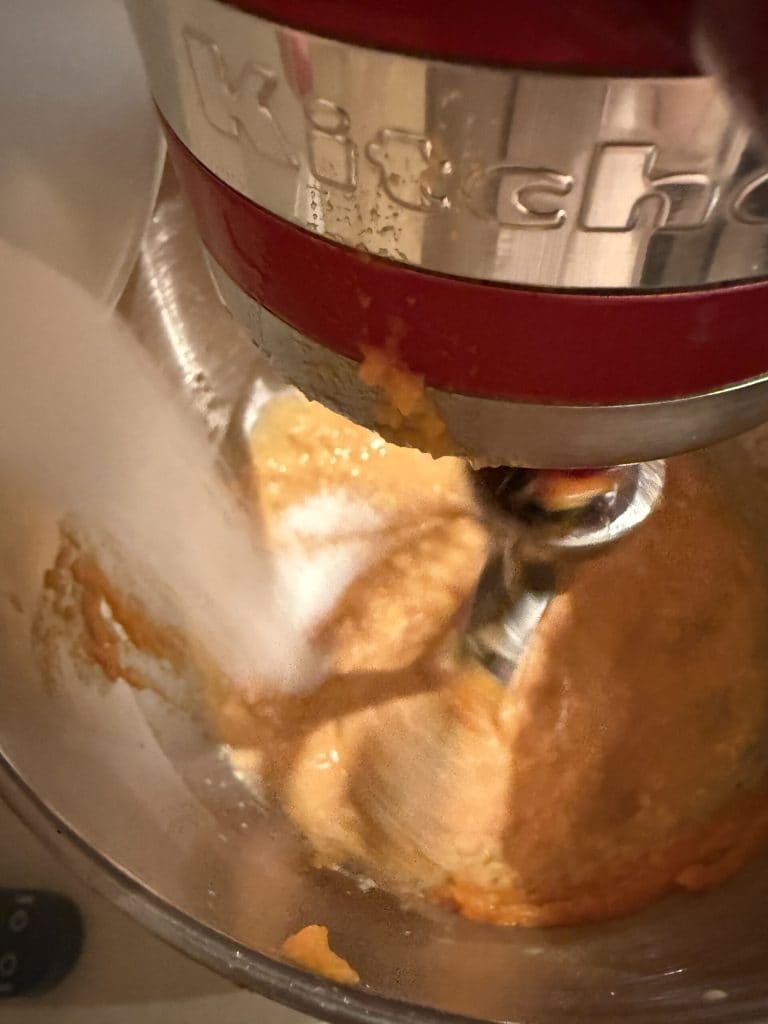
Start adding the flour: to better control the moisture of the pumpkin, I recommend adding at least half before proceeding with the liquids. Once absorbed, continue alternating the liquids with the remaining flour, to obtain a balanced and easily workable dough.
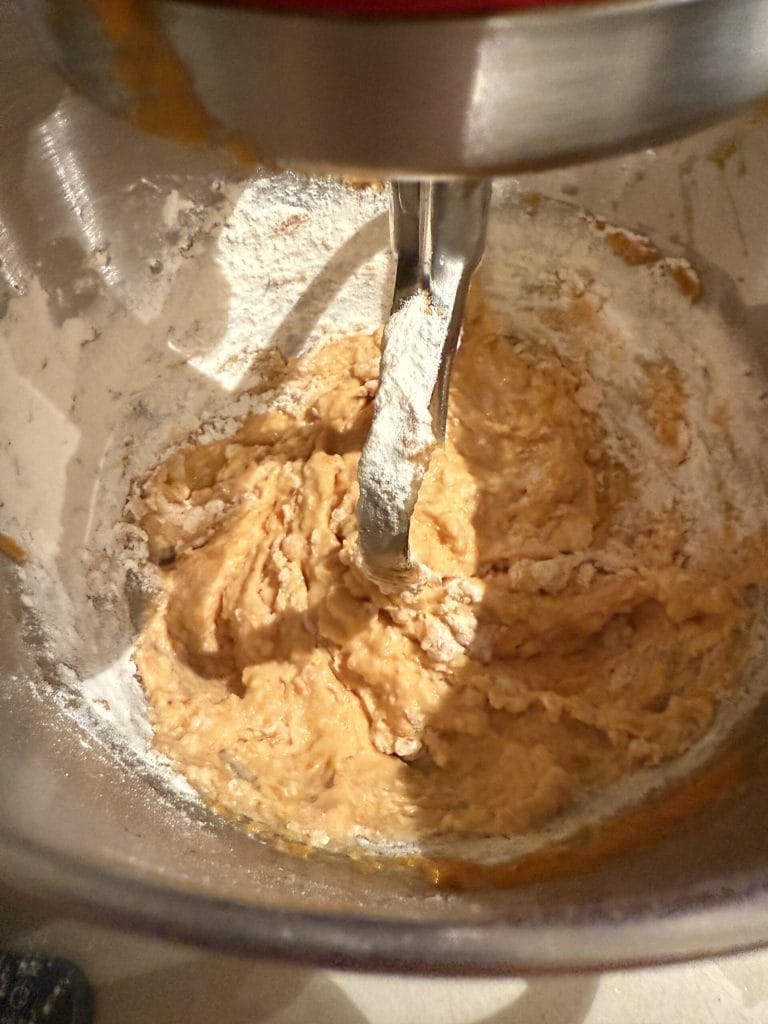
At the end of adding liquids and flours, the dough should appear still rough but already able to cling to the paddle. This consistency indicates you can proceed with the next steps of processing. Alternatively, you can try adding flour or liquids based on the problem encountered.
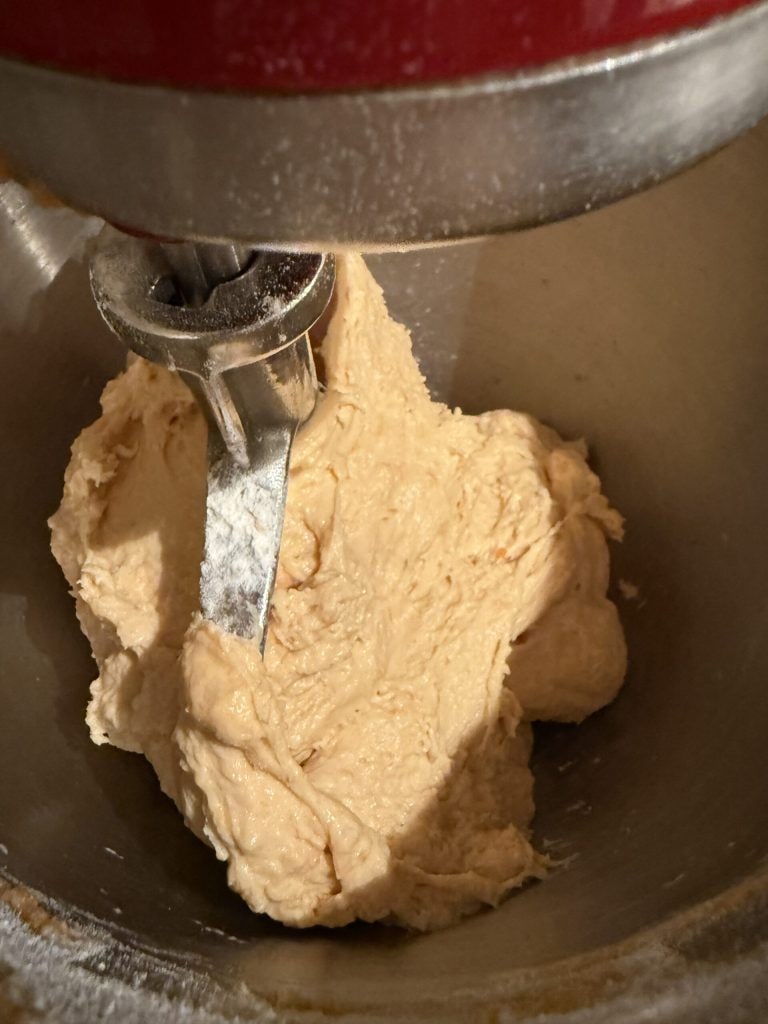
Replace the paddle with the hook, increase the speed and start kneading the dough to develop the gluten. It will be ready for the next step when it is shiny, well clinging to the hook, and with the bowl sides completely clean.
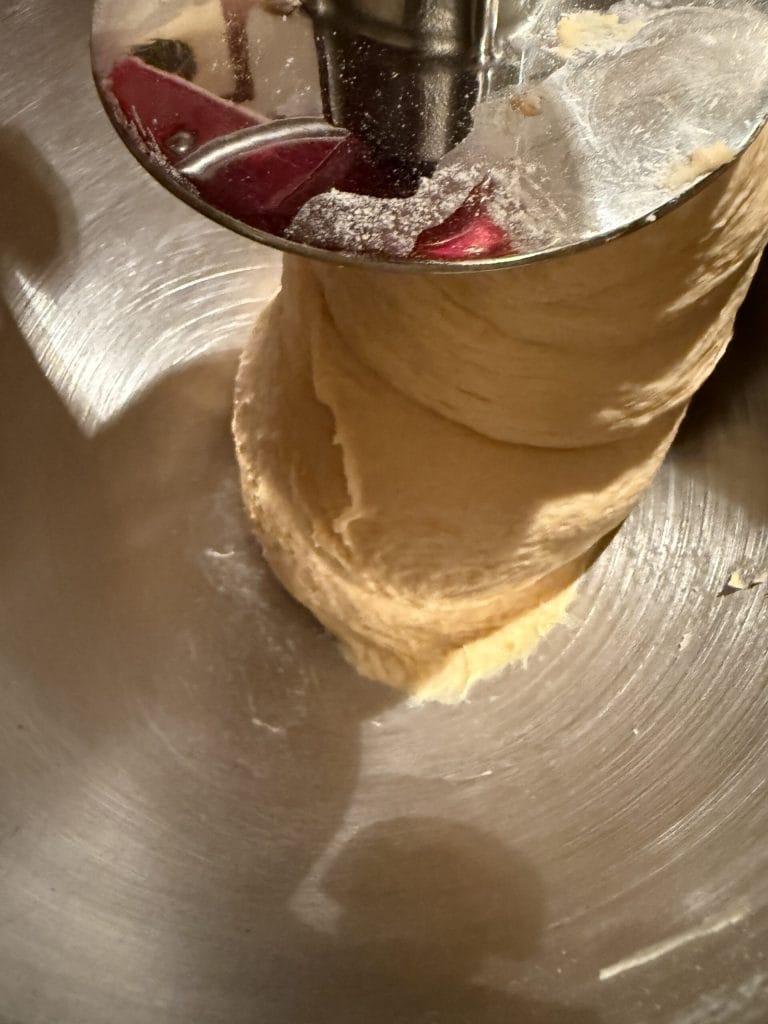
Add the vegetable oil and let the dough develop the gluten again. When it is compact again, add the aromas: the cinnamon and the seeds from the vanilla pod. Mix everything well, then add a pinch of salt to finish the dough. Continue kneading until it is well developed again: at this point, the dough is ready!
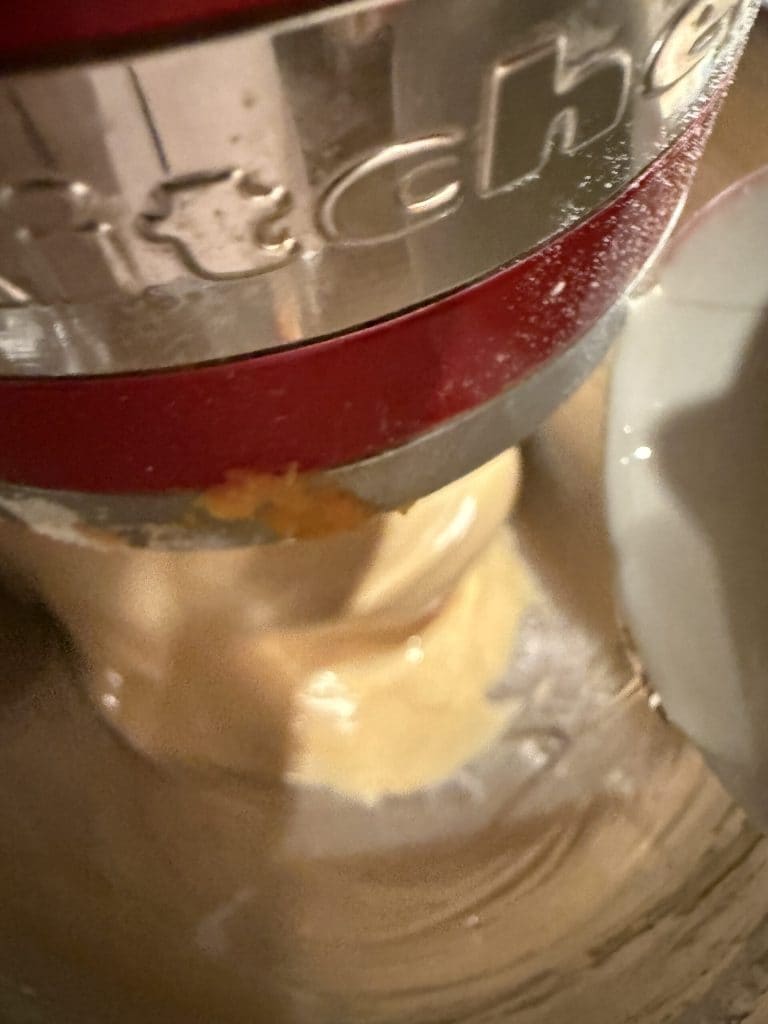
Transfer the dough to a slightly oiled container and let it rest at room temperature. After about an hour, perform three sets of “slap and fold” to strengthen the structure. Then close the container and place the dough in the refrigerator overnight, so it develops flavor and softness.
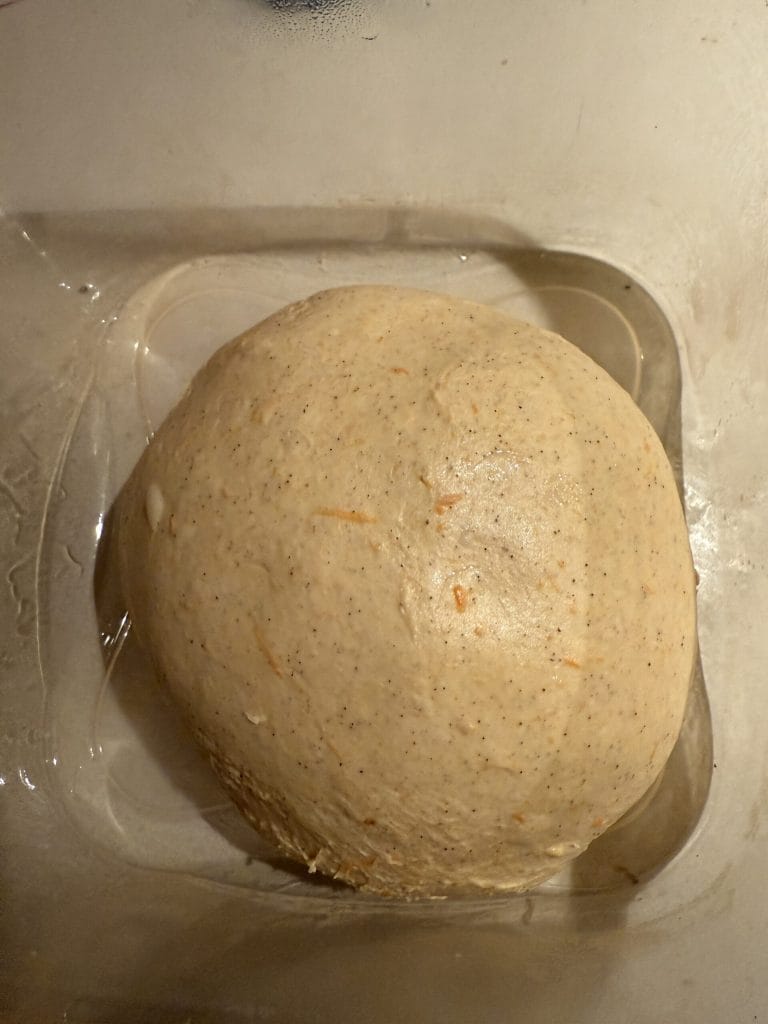
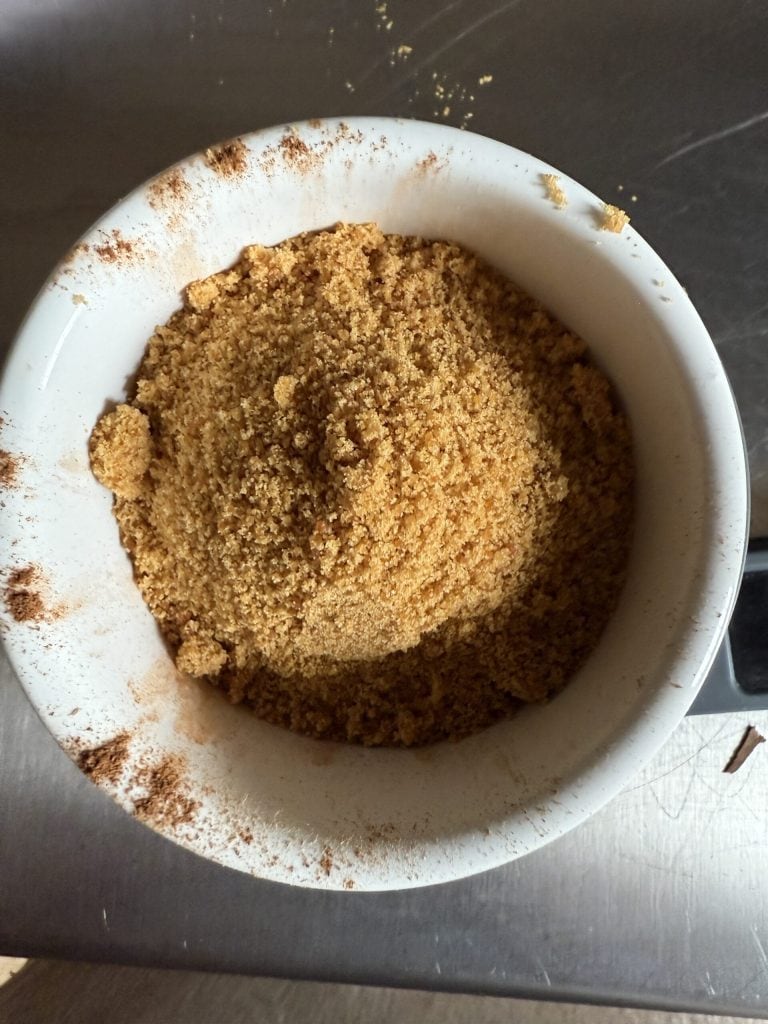
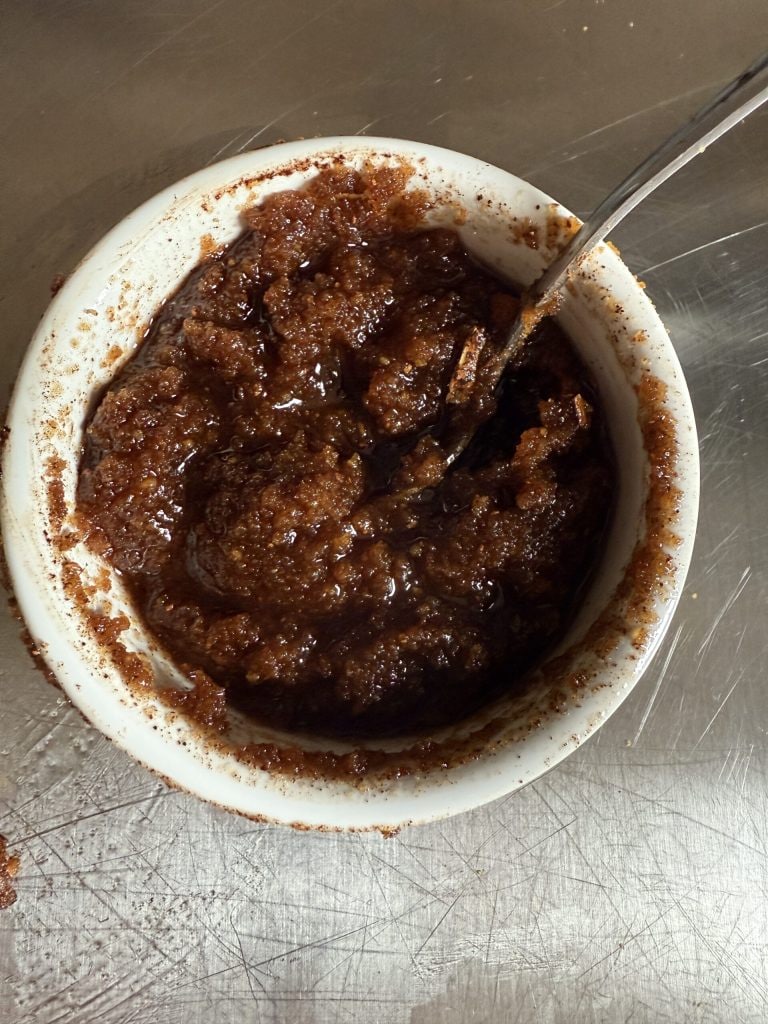
The next day, take the dough out of the refrigerator and let it come to room temperature. Meanwhile, prepare the filling: in a small bowl, mix brown sugar and cinnamon until you get a uniform and fragrant mixture.
Add the vegetable oil in a stream while mixing.
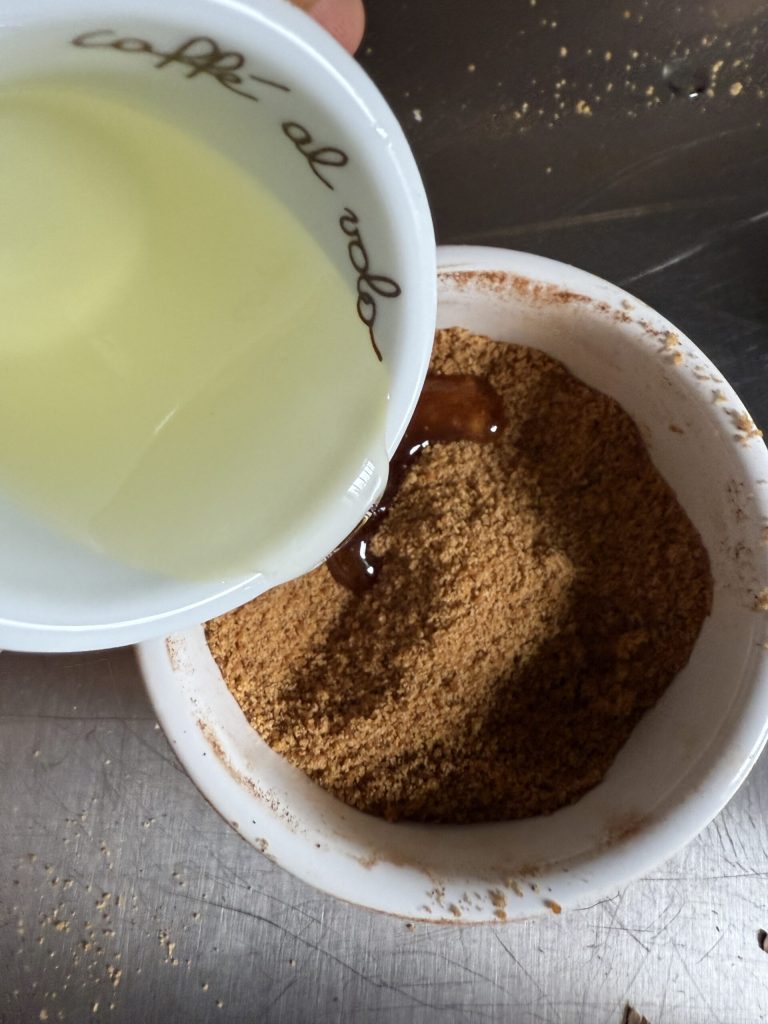
The filling should be thick and full-bodied, with a consistency similar to molasses, to adhere well to the dough without dripping.
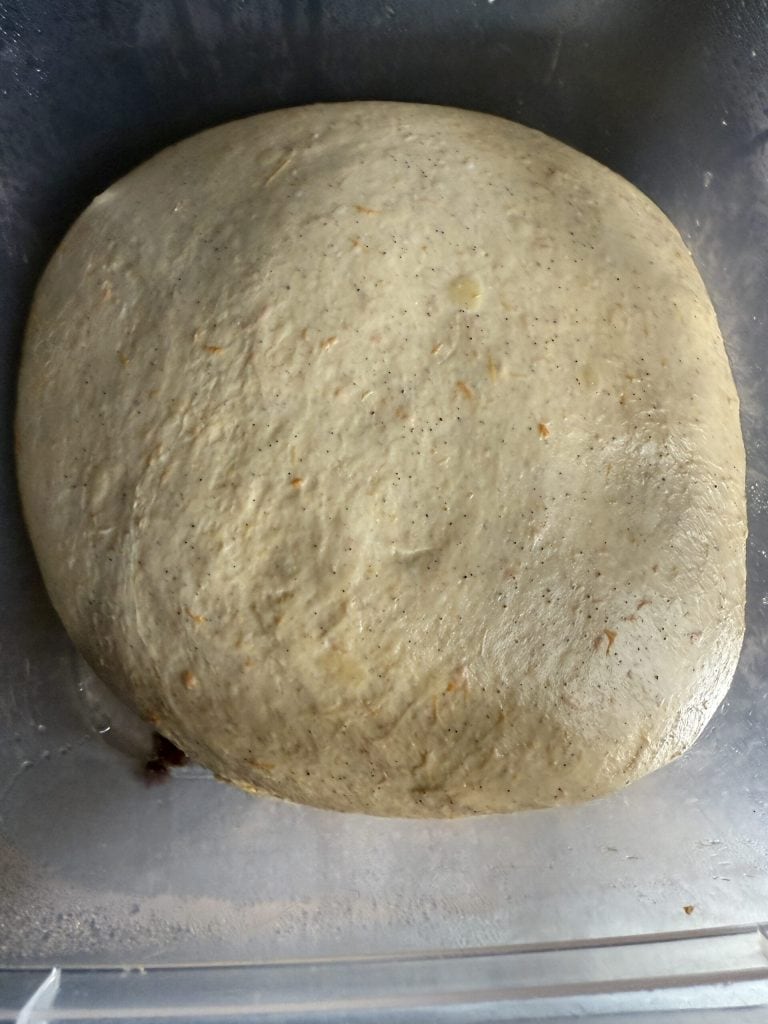
Take the dough, which should be nearly doubled, and turn it out onto a work surface. I prefer steel because doughs do not stick; if you use a wooden board, it is advisable to brush it with a little vegetable oil to prevent the dough from sticking.
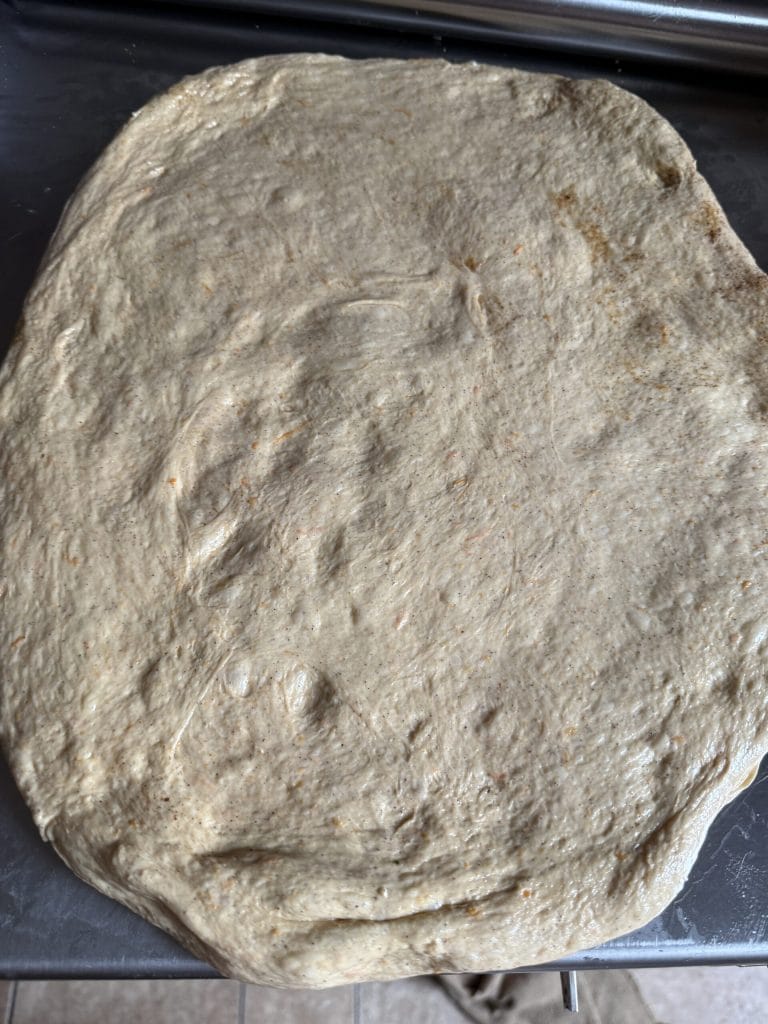
With a rolling pin, roll out the dough into a rectangle about 16×12 inches, ready for filling.
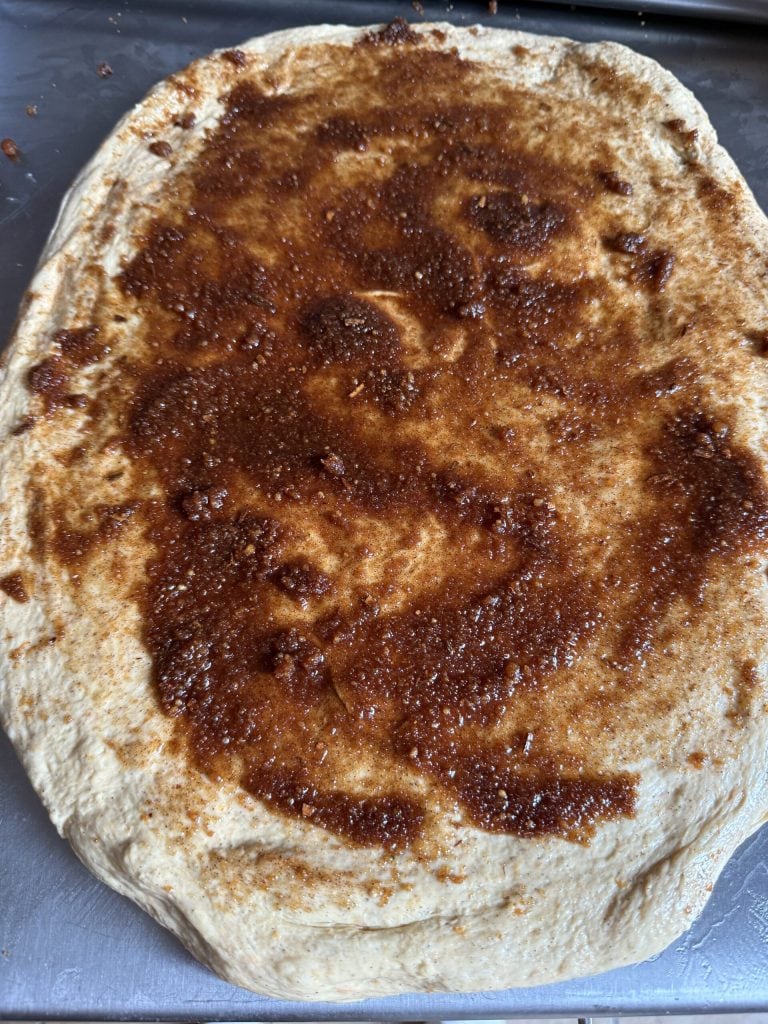
Spread all the filling on the rolled-out dough, leaving a few centimeters border along the edges, so that the closure is simpler and cleaner.
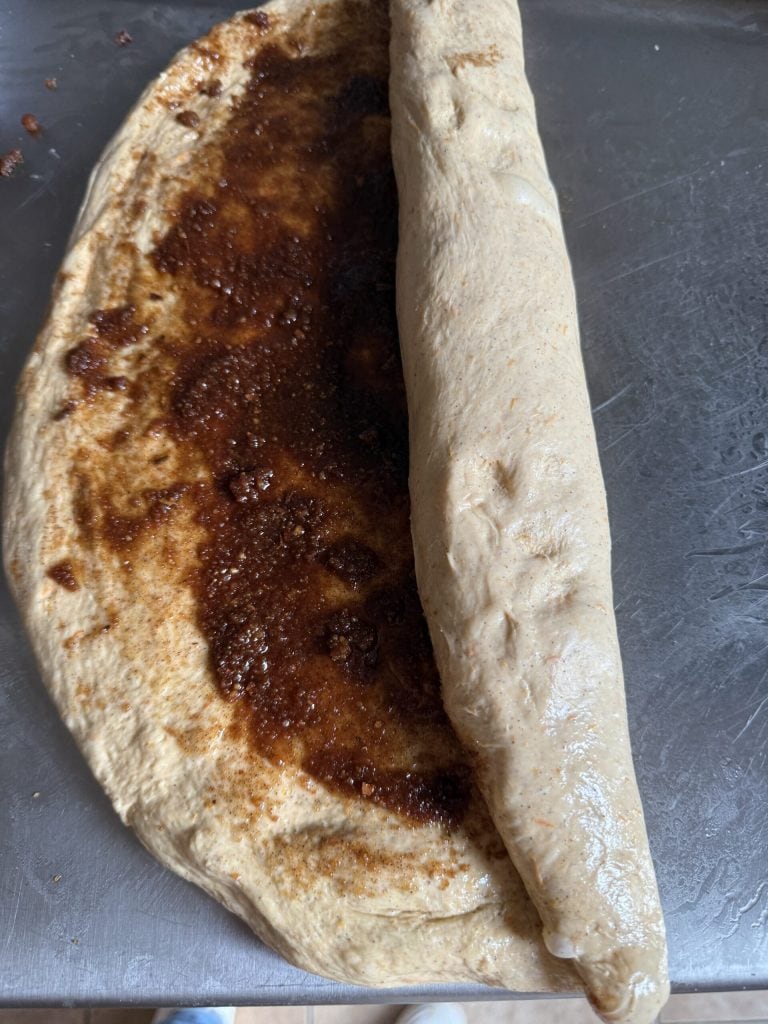
Gently roll up the filled dough like a long sausage, following the example in the photo. Make sure to seal the edges well to prevent the filling from leaking during rising and baking.
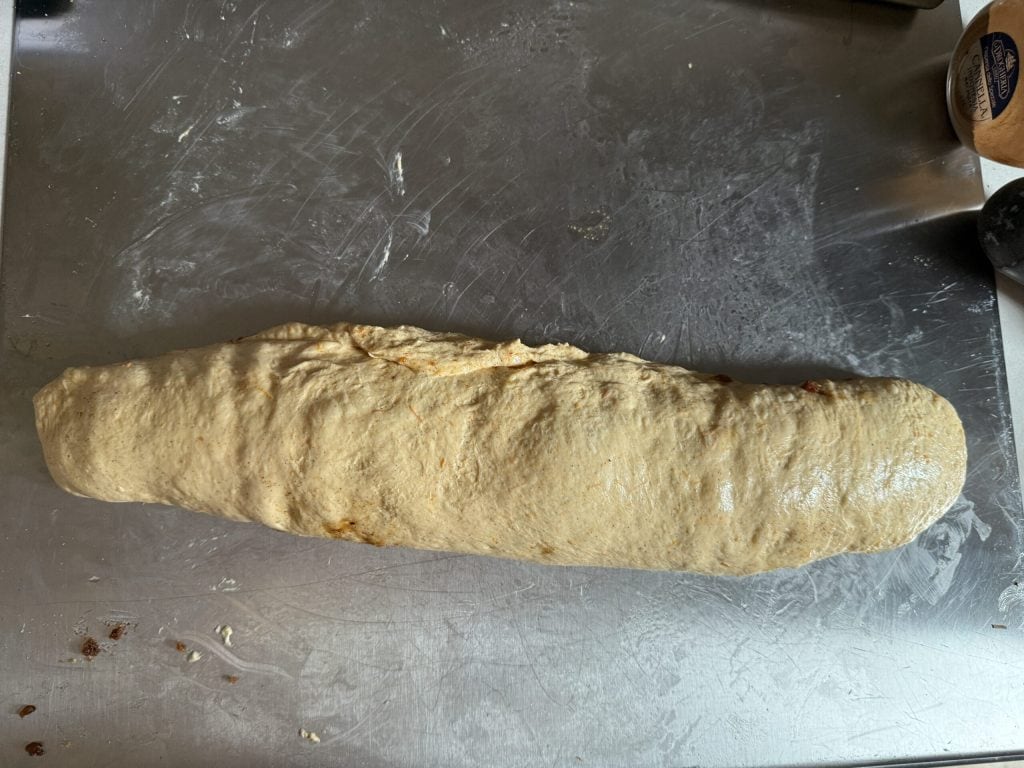
Once rolled, use a metal scraper or a sharp knife to cut wheels, each the height of the springform pan you intend to use. This way, the roses will maintain their shape during baking.
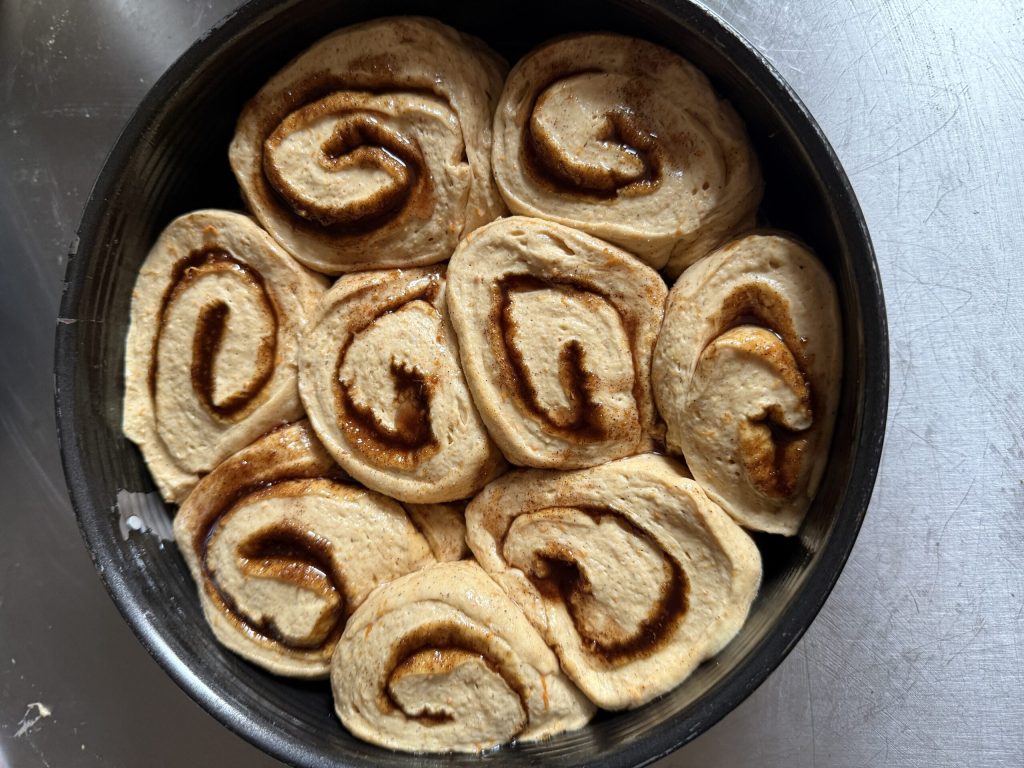
As you cut the wheels, place them in a 24–26 cm springform pan lightly sprayed with cooking spray. Then cover with a silicone lid or plastic wrap for the final rise, so the roses will grow soft and even.
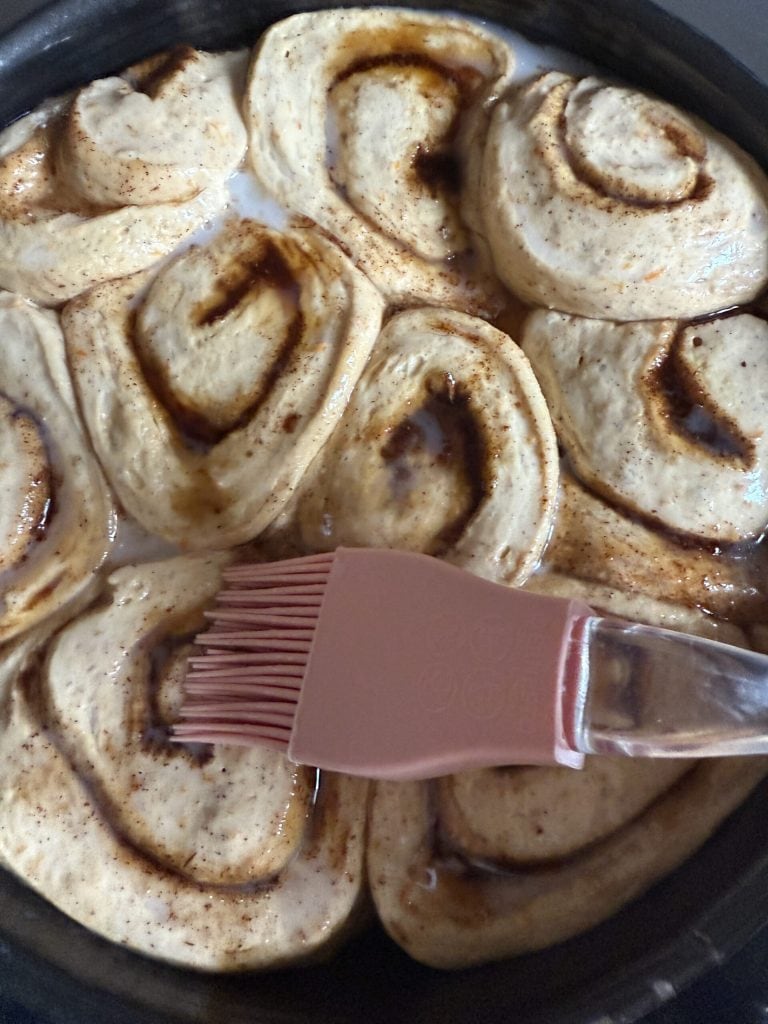
When the wheels are almost doubled in volume, preheat the oven to 350°F. Before baking, gently brush the surface with a bit of almond milk for a uniform bake and a slightly glossy browning.
Bake the vegan pumpkin and cinnamon rose cake for about 40 minutes at 350°F. Thanks to the pumpkin and filling, the cake should not be completely dry: the inside will remain soft and fragrant, while the surface will be golden.
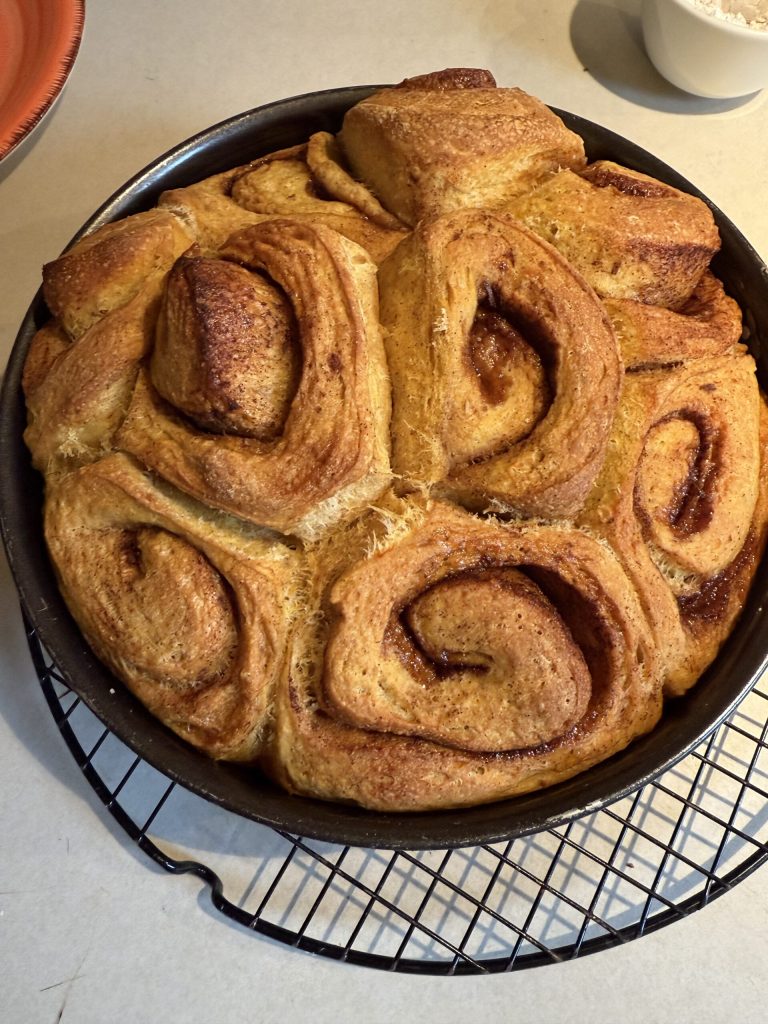
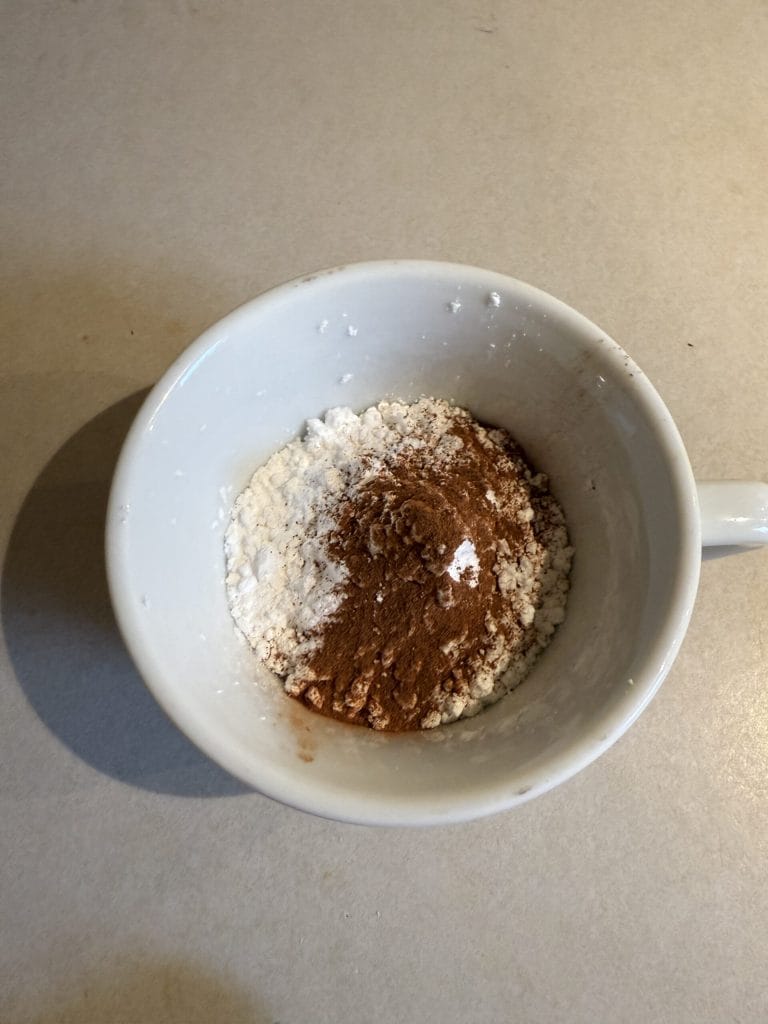
As soon as the rose cake is out of the oven, you can prepare the glaze. In a small bowl, mix powdered sugar and cinnamon until you get a uniform and fragrant mixture, ready to decorate the cake.
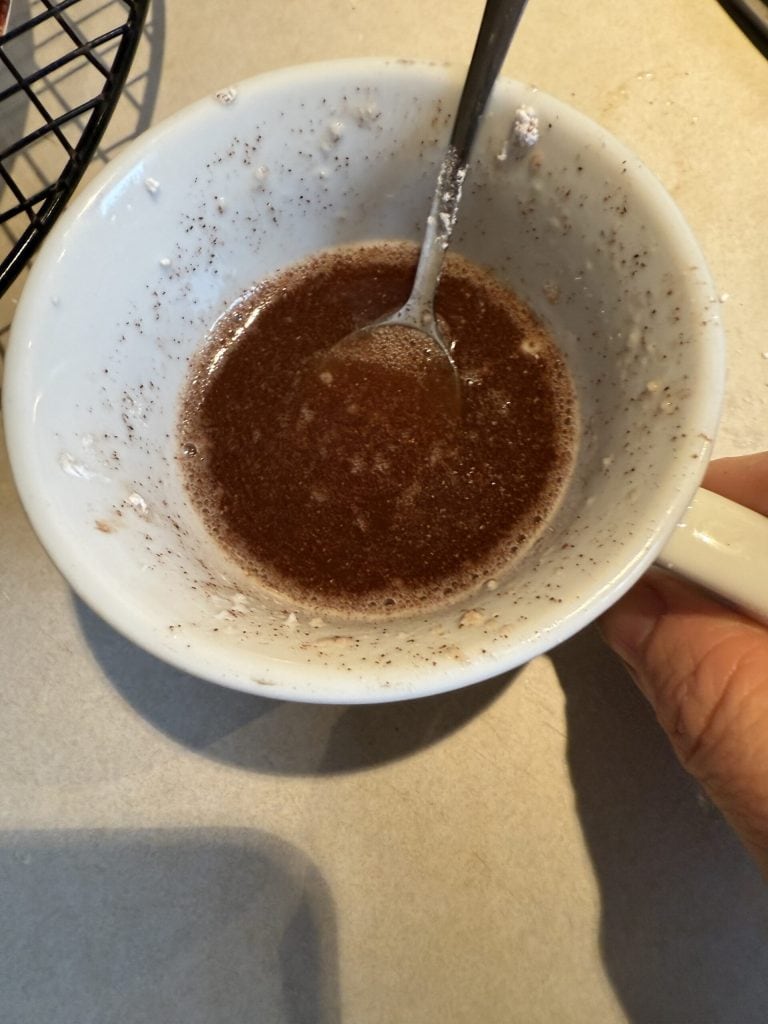
Add a little hot water to the powdered sugar and cinnamon, mixing quickly until you get a smooth and slightly fluid glaze. Now you are ready to glaze the vegan pumpkin and cinnamon rose cake and make it even more delicious and fragrant.
Gently brush the vegan pumpkin and cinnamon rose cake with the prepared glaze.
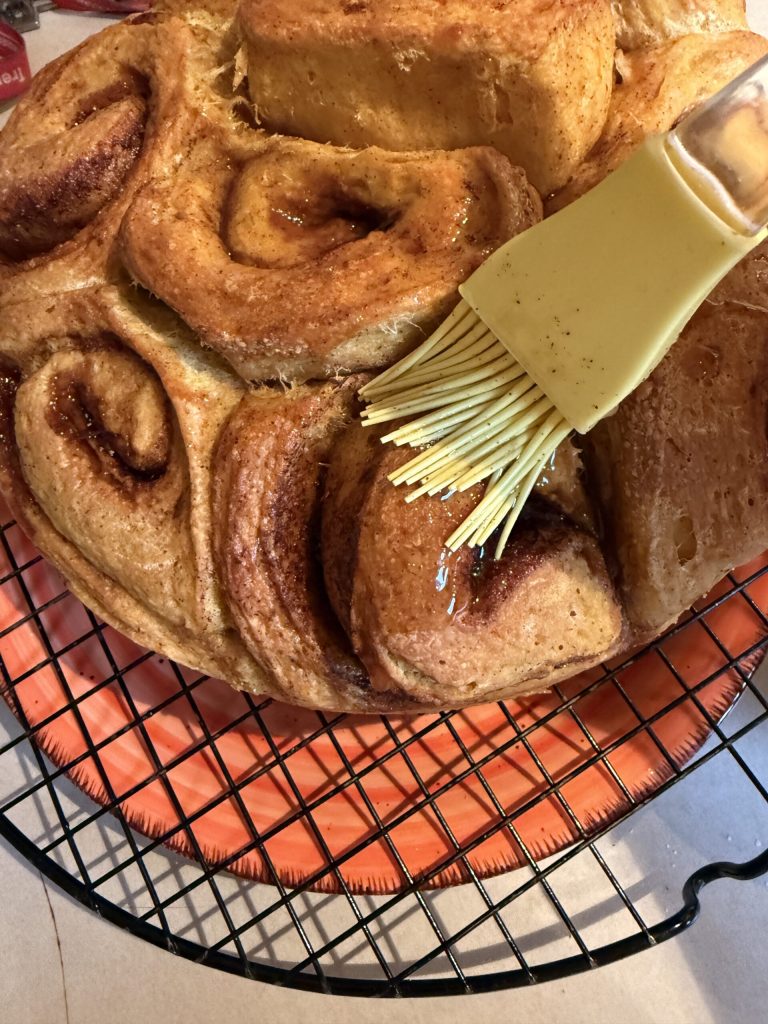
Let it cool completely before cutting and enjoying it, so the glaze sets and the flavors blend perfectly.
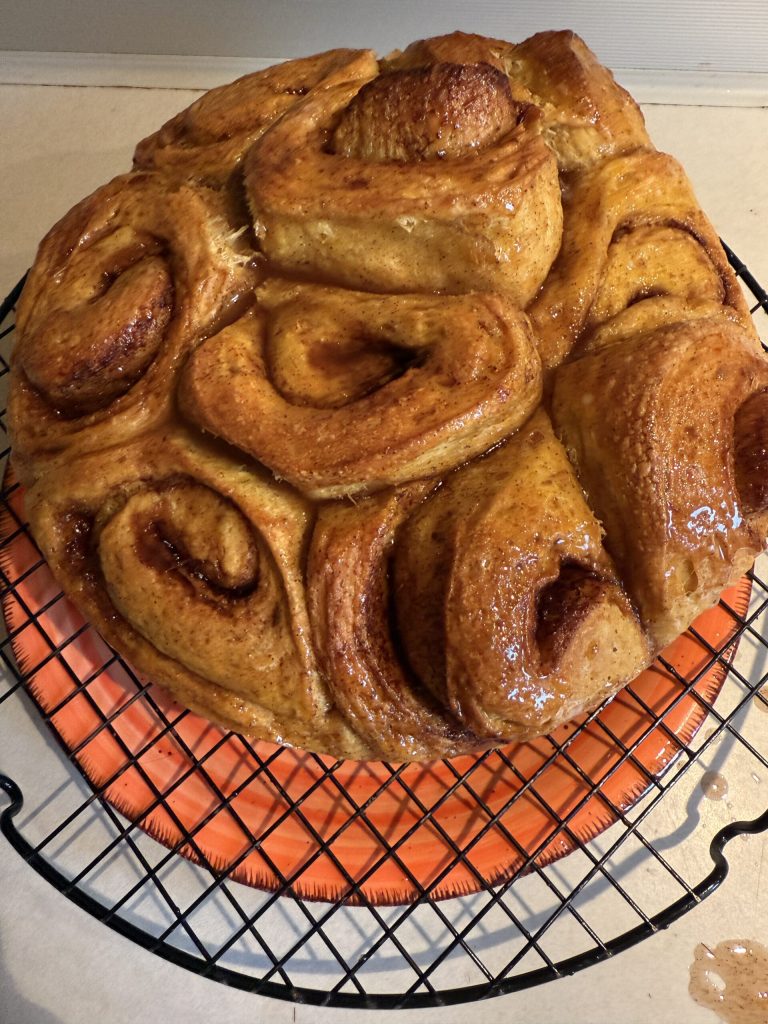
The vegan pumpkin and cinnamon rose cake is finally ready to be enjoyed! Soft, fragrant, and delicately sweet, it’s perfect at any time of the day: ideal for breakfast or snack, to share with friends and family.
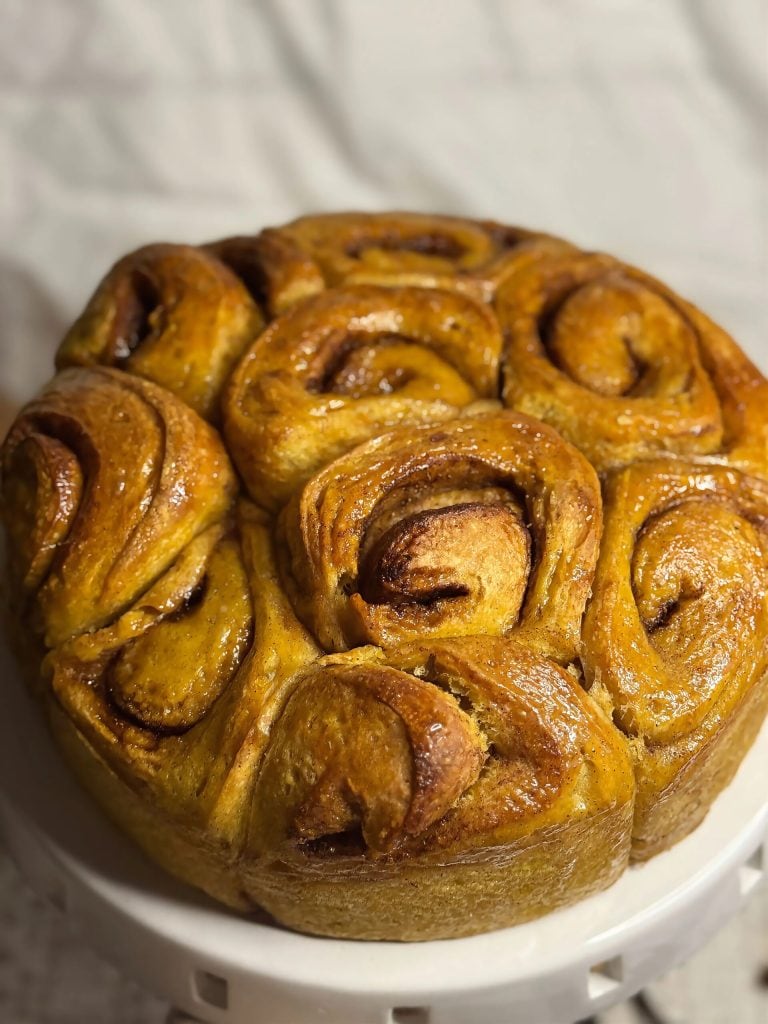
Storage and Tips
The vegan pumpkin and cinnamon rose cake keeps well at room temperature for 2–3 days if stored in an airtight container or covered with plastic wrap, away from heat sources. In the refrigerator, it can last up to 5 days, but it is advisable to let it return to room temperature before enjoying it, so it retains all its softness and aroma.
As for variations, the basic version with brown sugar and vanilla gives an intense aroma, but those who prefer a lighter or more neutral-tasting dessert can use refined sugar. The flavors are easily customizable: you can add orange zest, nutmeg, or cloves for an even more autumnal touch. The filling can also be interpreted in different ways: in addition to the classic sugar and cinnamon mixture, you can add dark chocolate chips or chopped nuts. For those who want to experiment, there is also the possibility of a savory version, replacing sugar and flavors with vegan ricotta and spices, for a perfect brunch or appetizer idea.
FAQ (Questions and Answers)
Can I make the vegan pumpkin and cinnamon rose cake without sourdough starter?
Yes, you can replace the sourdough starter with dry or fresh yeast, but the rising times will change:
For dry yeast: use about 7–8 g (1 packet) and dissolve it in the dough liquids. The dough may require 2–3 hours at room temperature for the first rise, instead of the long rise in the refrigerator.
For fresh yeast: use about 15–20 g, dissolved in the liquids, with similar rising times.
After the first rise, shape the rolls and leave the final rise of 45–60 minutes before baking, until they are almost doubled in volume.
Note: using yeast will make the dough rise faster, and the flavors will be slightly different, but the result will still be soft and fragrant.Can it be frozen?
Yes, once baked and completely cooled, you can freeze the whole cake or slices. Wrap it well in plastic wrap or place it in a freezer-safe airtight container. When you want to enjoy it, defrost at room temperature and, if desired, slightly warm the slices to restore softness and aroma.
What kind of pumpkin should I use?
The most suitable varieties are Delica, Mantovana, or Butternut, with sweet, firm, and dry pulp. This type of pumpkin ensures a soft dough without becoming too liquid.
Can I make a gluten-free version of the Pumpkin Rose Cake?
Of course! My colleague and friend Selene has prepared one on her blog, you can find the link to the recipe HERE