
🇬🇧The Gammon is a traditional British dish consisting of a cut of ham (a brined pork leg) that is smoked, oven-cooked, and served with sides like potatoes, vegetables, and sauces.
It’s a very popular dish in England, especially during the Christmas holidays. 🎄
The gammon is the cut that comes from the hind leg of the pig, cooked or smoked after salting.
Choose a gammon joint with or without bone, preferably with the rind (or fat part) if you want to get a crispy crust.
Ideal weight: about 6-7 oz per person (for example, a piece of 7-9 lbs for about 12-15 people) according to English guides.
If you have bought a fresh pork leg (not already brined), you absolutely need to brine it yourself, otherwise it won’t be a true gammon
There are two traditional methods for cooking the whole gammon in the UK, and the choice depends on personal preferences and family tradition.
Method 1: Boiling + Oven (the most common) or Method 2: Oven Only (with rind), I chose method 1.
In the tradition of the English Sunday Roast, the gammon is served with sides like roast potatoes, peas, cabbage, carrots, and parsnips, gravy or mustard sauce. I opted for oranges, roast potatoes, peas, and glazed carrots.
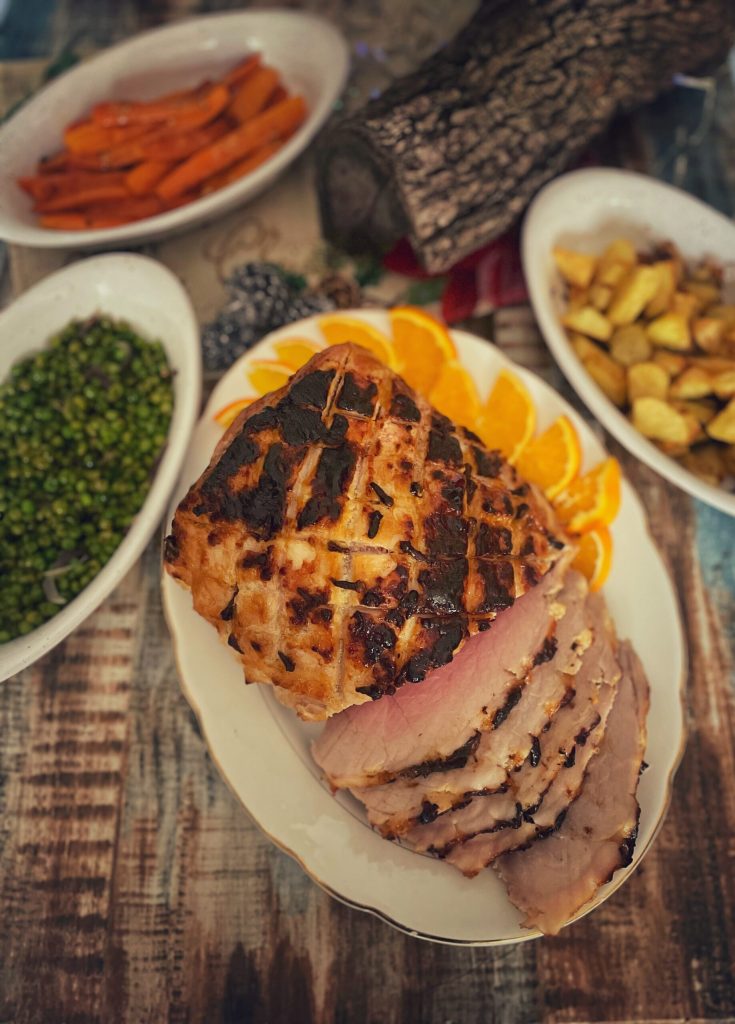
- Difficulty: Medium
- Cost: Medium
- Rest time: 10 Days 12 Hours
- Preparation time: 20 Minutes
- Portions: 12People
- Cooking methods: Boiling, Oven
- Cuisine: English
- Seasonality: Christmas, All seasons
Ingredients
- 4 qt water
- 12 oz coarse salt
- 1 cup sugar
- 2 leaves bay leaves
- to taste spices (1 tsp black peppercorns • 1 tsp cloves • 1 tsp coriander seeds • 1 cinnamon stick (optional) • A sprig of thyme or rosemary (optional))
- 9 lbs boneless pork leg with rind
- 1 onion
- 1 carrot
- 2 leaves bay leaves
- 10 peppercorns black pepper
- 3 cloves (and for covering)
- 2 tbsp honey (or maple syrup)
- 5 tbsp brown sugar
- 2 tbsp mustard
- 1/2 orange (juice only)
Steps
1. Brine:
Bring half of the water to a boil with salt, sugar, and spices until everything is dissolved.
Add the other half of cold water to cool the liquid.
Completely submerge the leg in a large container (glass or food-safe plastic).
Cover and refrigerate or place in a very cold place for 7-10 days, turning it every 1-2 days.2. Boiling:
If the gammon is very salty (due to brining), soak it in cold water for 12 hours, changing the water 1-2 times.
Transfer it to a large pot and cover with cold water.
Add onion, carrot, spices, and bring to a boil.
Skim the surface, then reduce the heat and simmer on low for about 2.5-3 hours (40-45 minutes per kg), until the meat is tender.
3. Preparation for the oven:
Remove the gammon from the pot, let it cool.
With a sharp knife, remove the rind, leaving the fat layer intact.
Score the fat in a diamond pattern.
Insert a clove in the center of each diamond.If oven only: bake in a static oven at 320°F: 30 minutes per 1 lb
→ For 9 lbs = approximately 4 hours
• Halfway through cooking, cover with foil if it colors too much.
• In the last half-hour, remove the rind, score the fat, apply the glaze, and increase the temperature to 430°F for browning and caramelizing.
4. Glaze and cooking:
Prepare the glaze by mixing maple syrup or honey, sugar, mustard, and orange juice.
Brush the gammon’s surface with the glaze.
Bake at 430°F (convection 400°F) for 30 minutes, brushing 1-2 times during baking until golden and caramelized.
Serving:
• Let rest 15 minutes before slicing and serving with gravy and sides.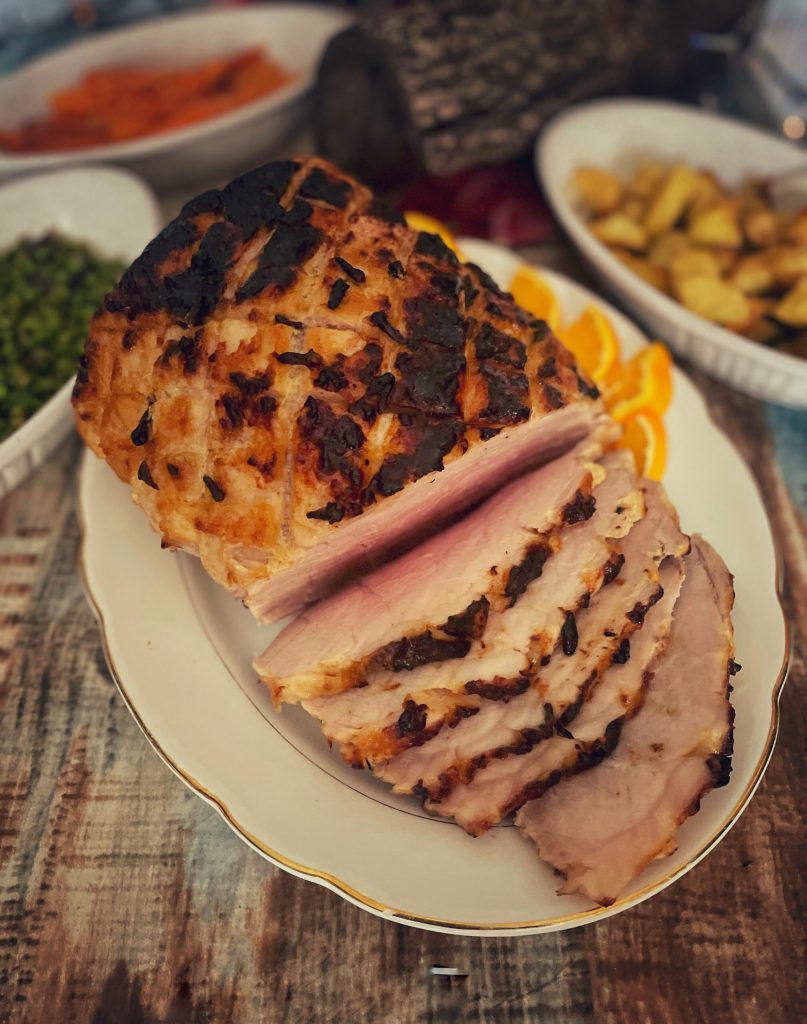
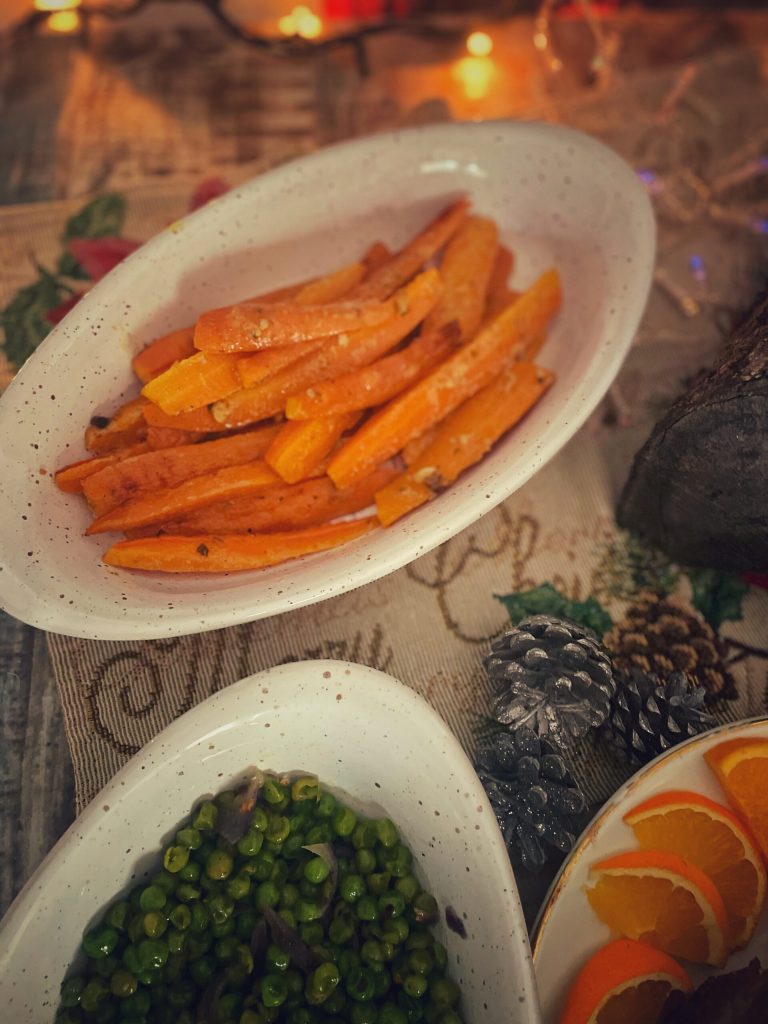
The recipe for glazed carrots
Ingredients for 2 people:
6-7 Carrots
1 tbsp Honey
1 tbsp Lemon juice
1 tsp Mustard
1 clove Garlic
Oregano (or thyme)
Extra virgin olive oil
Salt
Pepper
Preparation
Wash the carrots and peel them with a peeler. Cut them in half lengthwise.
In a small bowl, mix honey with mustard and lemon juice.
Add a drizzle of extra virgin olive oil, salt, pepper, chopped garlic, a handful of oregano, and blend with a fork or whisk.
Place the carrots in a baking dish, without overlapping them, and sprinkle with the liquid.
Pour a splash of water at the bottom to facilitate cooking and prevent them from drying out too much.
FAQ (Questions and Answers)
Are gammon and glazed ham the same recipe?
Gammon and glazed ham are not exactly the same, but they are related:
• Gammon is the raw meat cut (shoulder or hind leg of pork) that is salted or smoked and must be cooked before eating. It’s very common in the UK, especially during Christmas.
• Glazed ham is the end result: cooked ham (often gammon itself) that is glazed, meaning brushed with a sweet mixture (honey, mustard, brown sugar, spices, fruit) and then baked until caramelized.
Thus: gammon can become glazed ham after cooking and glazing.
• Gammon = raw or just boiled/roasted meat
• Glazed ham = cooked and glazed ham (often starting from gammon)Can I get a precise indication of the cut to use in Italy for gammon?
Italian equivalent of gammon:
• Fresh pork leg (whole or half), with or without bone, with rind and fat.
• Ask the butcher: “A whole fresh ham for oven cooking, with rind”.
• Typical weight: from 4 to 11 lbs.
🔥 Tips:
• DO NOT use cured ham (like Parma or San Daniele).
• If you want the smoked flavor like in smoked gammon, you can choose an artisanally smoked leg or use a smoker before oven cooking.
• If you prefer a more manageable version, you can use a boned leg section (but always fresh).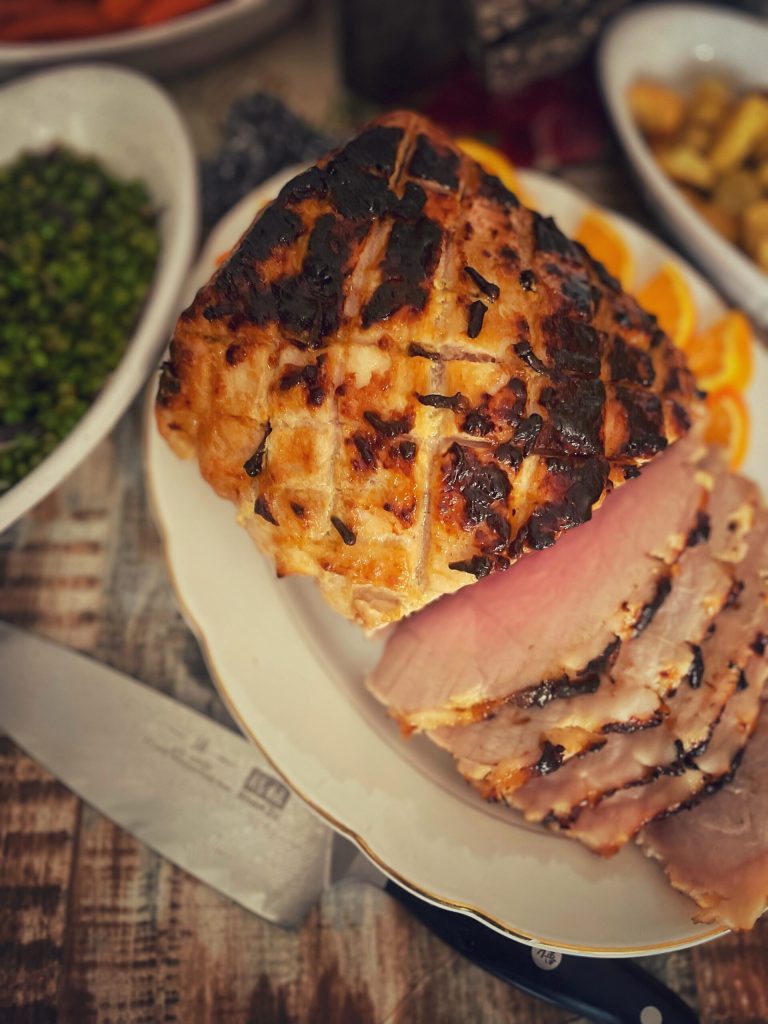
In the video, the cut with my Shanzu knife, which you can purchase with my discount code SZS25
