
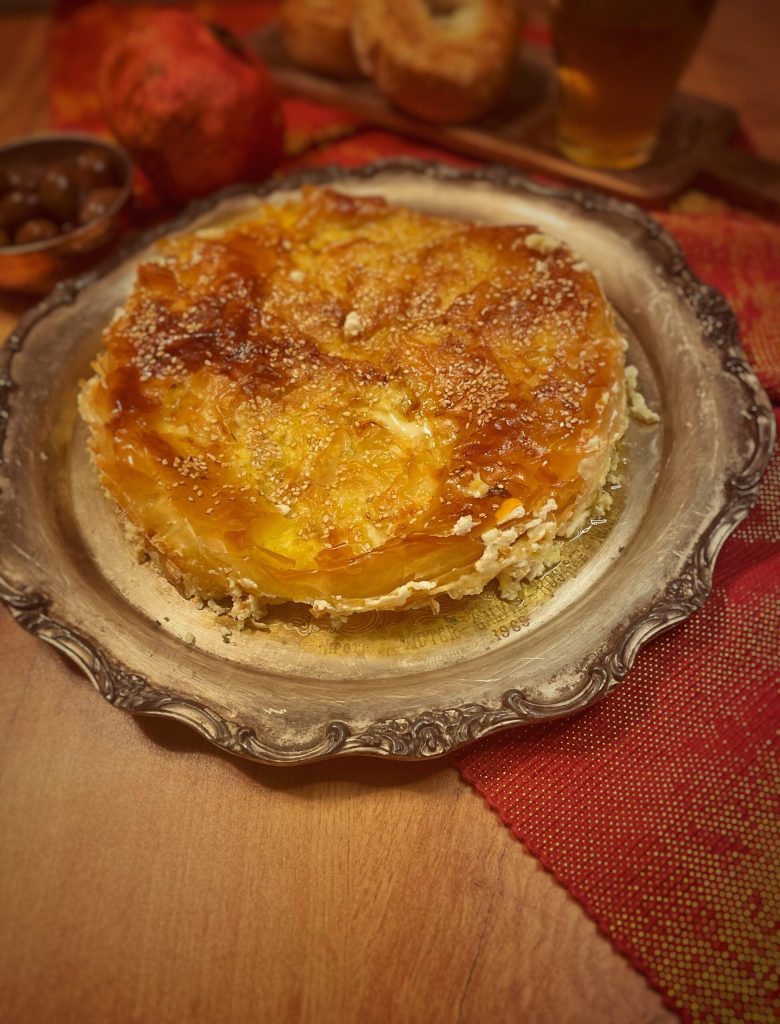
The Tepsi Böreği is the typical Turkish savory pastry tray made with layers of yufka or phyllo dough and tasty fillings — a result of comparison between Turkish and international sources, widely popular in Turkish homes and savory bakeries (börekçi).
▶It is part of the “ börek” category:
one of the most emblematic dishes of Turkish cuisine with a history rooted in the Ottoman Empire.
▶The term comes from the Turkish “burmak”, meaning “to wrap, fold”, indicating the technique used to work the yufka dough (thin as phyllo).
▶Börek originated in the Ottoman imperial kitchens as a refined dish, made with extremely thin layers of hand-stretched dough, filled with meat, cheese, vegetables, or potatoes (patatesli). The recipe that follows is with cheese and parsley from which the name peynirli (with white cheese like beyaz peynir or feta).
▶In Turkish, the liquid mixture used to soften and bind the layers of börek is called sosu (from Turkish “sos” = sauce, with the possessive suffix), based on eggs, milk, and oil.
▶From Istanbul, it spread to all regions of the empire: from the Balkans to the Middle East, to North Africa. Each area developed its own variants, maintaining the basic structure: thin dough + filling + oven or pan cooking.
Dissemination and variants
• In the Balkans, it is found as burek or pita.
• In Albania, the byrek.
• In Bosnia, it is often spiral-shaped (snail).
• In Israel, it has influenced Sephardic savory pies.
• In Armenia and Georgia, there are similar local versions.
▶In Turkey today, börek is consumed everywhere: in bakeries, markets, at breakfast, or as a snack.
It can be made in tepsi (tray), rolled (sarıyer böreği), fried (sigara böreği), or boiled (su böreği).
It can also be part of a classic Turkish breakfast.
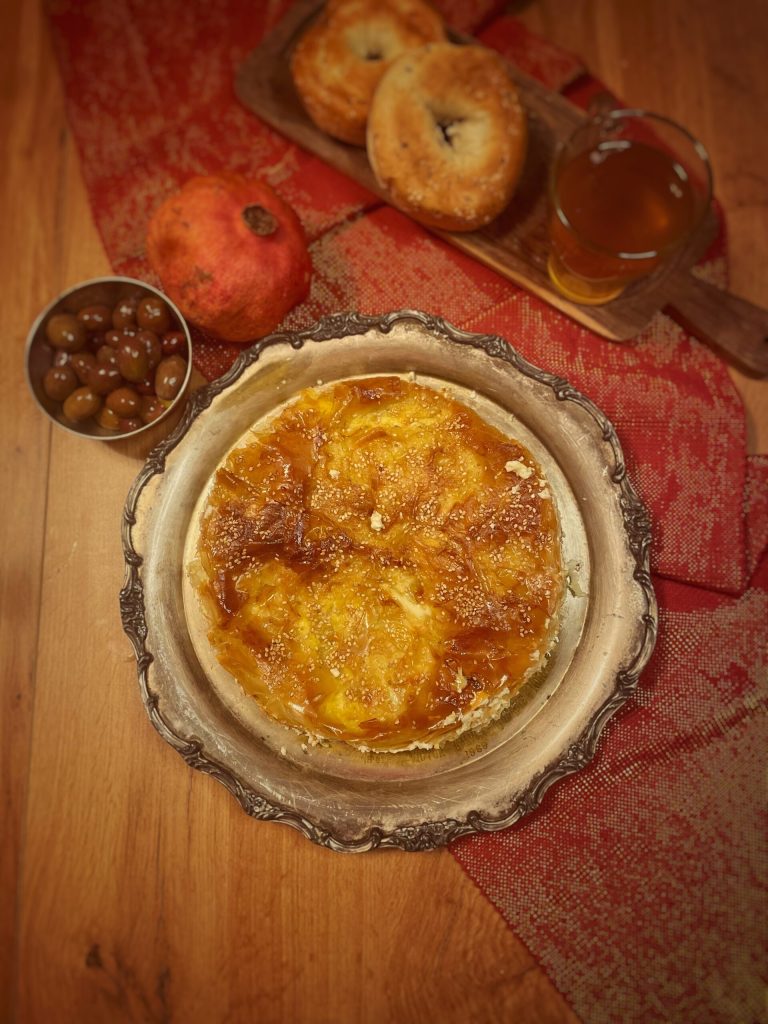
- Cuisine: Italian
Ingredients
- 6 sheets yufka (or phyllo dough)
- as needed sesame
- as needed olive oil
- 250 g beyaz peynir (or feta)
- as needed parsley
- 100 g grated kasar (or pecorino)
- as needed pepper
- 3 eggs
- 1/2 cup milk
- 1/3 cup olive oil
Steps
1. Prepare the filling:
Crumble the beyaz peynir in a bowl.
Add the grated kaşar, chopped parsley, and pepper. Mix well.
2. Prepare the sauce:
Beat the eggs with milk and oil in a bowl.
3. Assemble the börek:
Grease a round or rectangular baking dish well.
Place the first sheet of yufka (each sheet should be brushed with oil) leaving it to overhang.
Brush with the sauce (not all).
Add 4 sheets
Add all the filling and level well.
Cover with another 4 sheets of yufka, brushing each layer.
Fold the edges inward and brush the last sheet with the remaining sauce.
4. Garnish:
Sprinkle with sesame or nigella.
5. Bake:
In a static oven at 350°F for 40 minutes, until golden brown.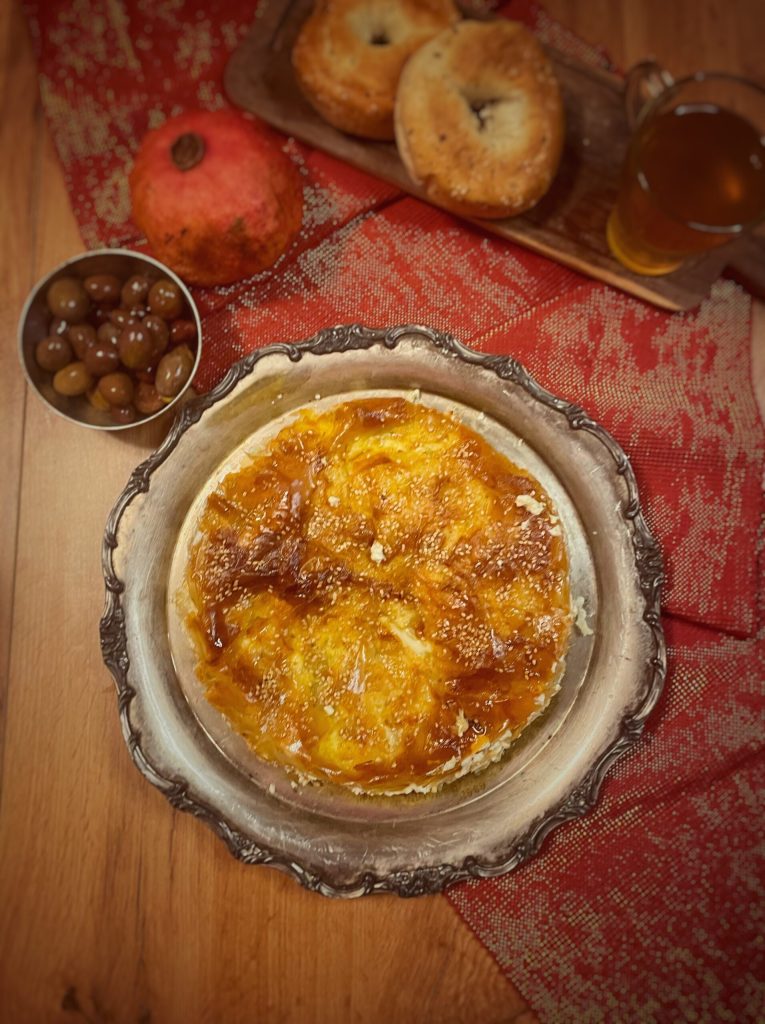
The yufka is phyllo dough, but also a type of traditional Turkish bread (yufka ekmeği, generally just called yufka).
The Beyaz peynir is a brined cheese made from raw sheep, cow, or goat milk, not pasteurized.
FAQ (Questions and Answers)
Besides the patatesli (with potatoes) and peynirli (with cheese) versions, what are the most typical and traditional varieties of börek in Turkey?
1. Kıymalı börek – with ground meat (typically beef or lamb), onion, black pepper, and parsley. One of the most widespread versions.
2. Ispanaklı börek – with spinach, often enriched with beyaz peynir cheese or lor (a type of Turkish ricotta).
3. Su böreği – a particular variant where the sheets are blanched in water (hence the name “su” = water), then layered with cheese and parsley, very soft, similar to a Turkish lasagna.
4. Kabaklı börek – with grated zucchini, often mixed with cheese or onion. Less common, but traditional in some Aegean areas.
5. Mantarlı börek – with mushrooms, usually champignons, sometimes with onion and spices. A more modern variant but increasingly appreciated.
6. Mercimekli börek – with cooked and spiced red lentils, often with onion and pepper flakes. Typical of some Anatolian regions.
7. Pırasalı börek – with stewed leeks, sometimes mixed with cheese or meat.
