
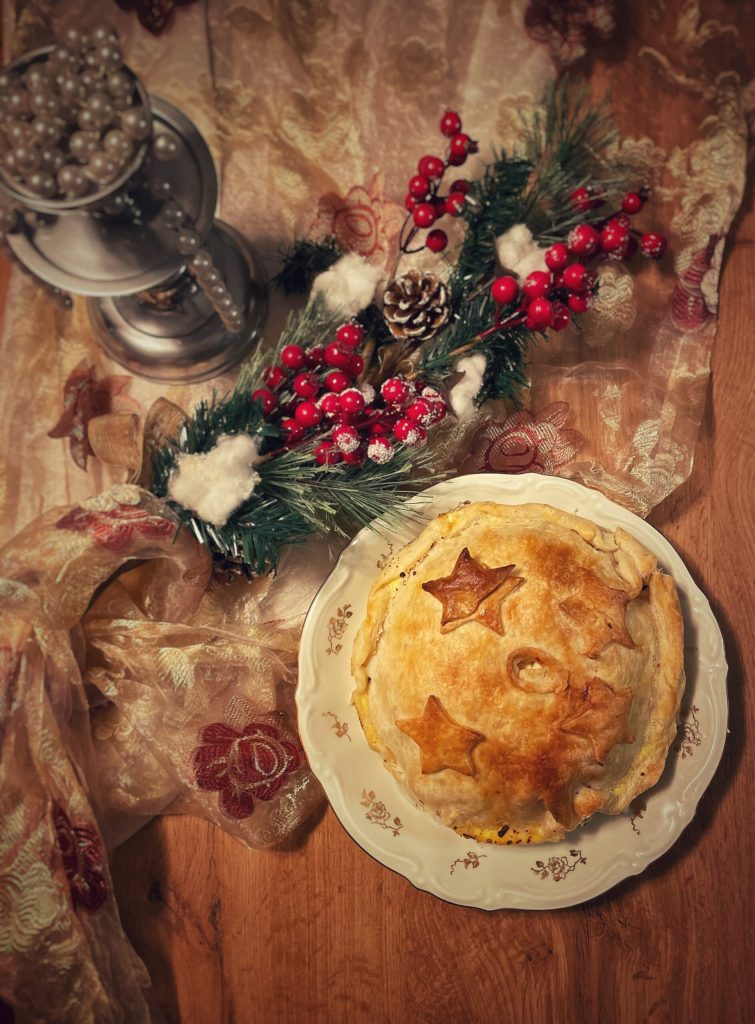
Kurnik (курник) is a pirog (a filled dough dish, sweet or savory, baked or fried) celebratory of Russian cuisine, savory, made with chicken, grains, boiled eggs, and mushrooms layered in strata, typical for grand occasions such as weddings, holidays, and banquets.
It has a dome shape and the layers of fillings are separated by bliny (similar to crepes) to keep each component distinct.
Traditionally:
• it was often prepared for newlyweds (one for the groom and one for the bride, with different decorations);
• originated in the southern regions of Russia, especially in Cossack communities.
Kurnik is served hot or warm, often brought to the table whole as the centerpiece of the celebration and cut in front of guests, and can be accompanied by hot chicken broth.
Historical curiosities:
• It was considered a status dish in Tsarist and Cossack Russia.
• Each ingredient had symbolic meanings (grains for prosperity, eggs and chicken for fertility and family continuity).
• Pastry decorations often symbolize good luck, abundance, and happiness.
- Difficulty: Difficult
- Cost: Economical
- Rest time: 1 Hour
- Preparation time: 20 Minutes
- Portions: 6 People
- Cooking methods: Oven, Electric oven
- Cuisine: Russian
- Seasonality: Christmas, All seasons
Ingredients
- 3 cups flour
- 1 pinch salt
- 4 oz butter (cold)
- 5 oz smetana (sour cream)
- 1.3 lbs chicken breast
- 7 oz mushrooms
- 1 onion
- 1 cup rice (or other grain)
- 1 tbsp smetana (sour cream)
- to taste butter
- to taste salt
- 1 egg
- to taste milk
Tools
- 1 Springform Pan 9-1/2 inch
Steps
1. Prepare the dough: mix flour, salt, incorporate butter and sour cream; knead until a soft dough is obtained. Let it rest for 30/60 minutes.
2. Cook thin bliny as per recipe here and set them aside.
3. For the filling: boil the chicken for about 10 minutes in water, then shred it; mushrooms and onions should be sautéed with butter; cook the rice (or other grain) separately until al dente.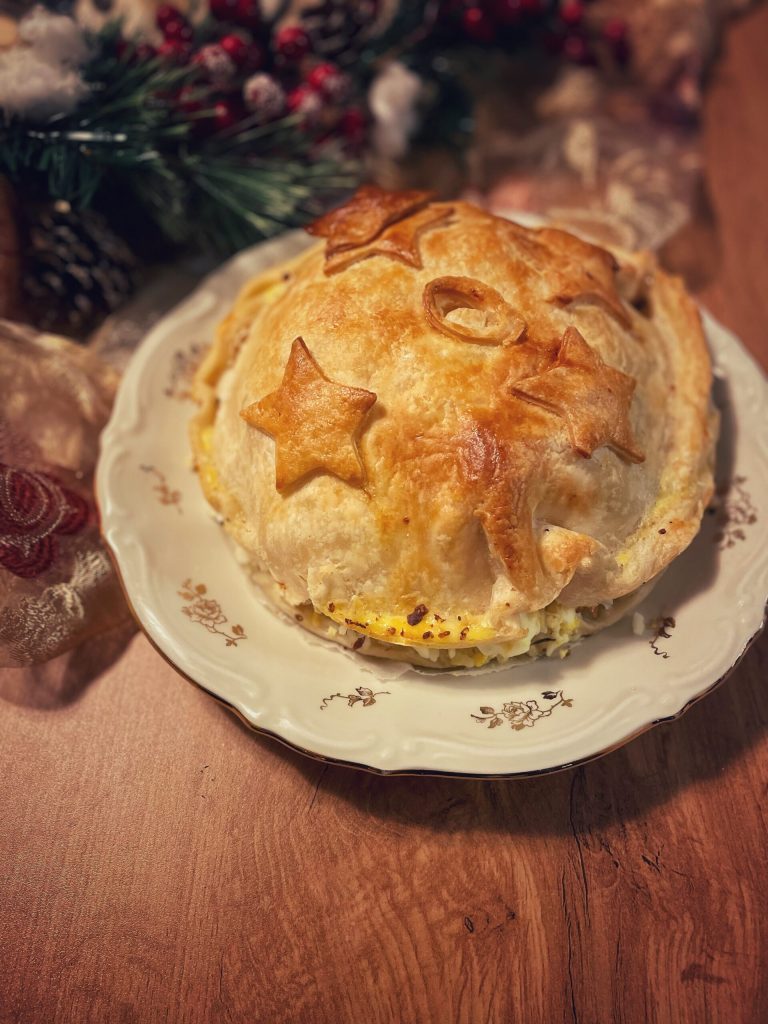
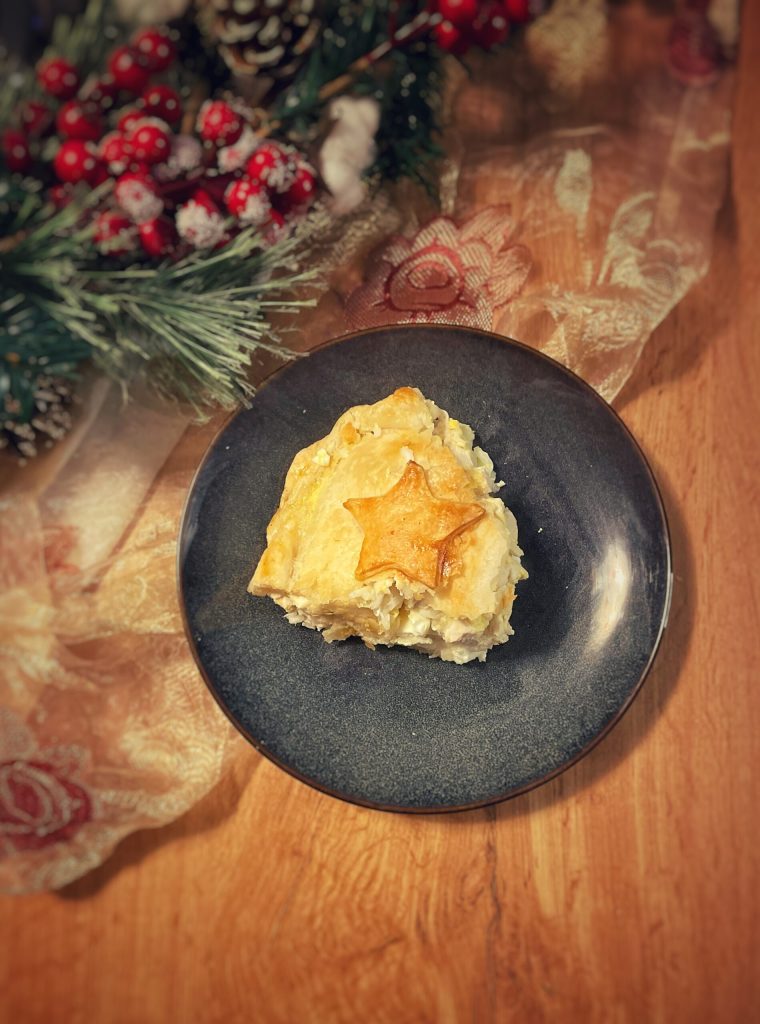
4. Assemble in layers: rolled out dough as a base about 9-1/2 to 10 inches, bliny, rice, bliny, then chicken, mushrooms and crumbled boiled eggs mixed with 1 tablespoon of smetana, finally bliny. Adjust salt.
5. Cover and decorate: cover with the second part of the dough, about 11-1/2 to 12-1/2 inches, to close giving a dome shape; seal the edges and decorate with pastry scraps. Make a small hole for steam. Brush with egg yolk and milk.
6. Bake: in a preheated oven at about 350 °F for about 50 minutes, until the pastry is golden.
7. Rest: let it rest for a few minutes before cutting.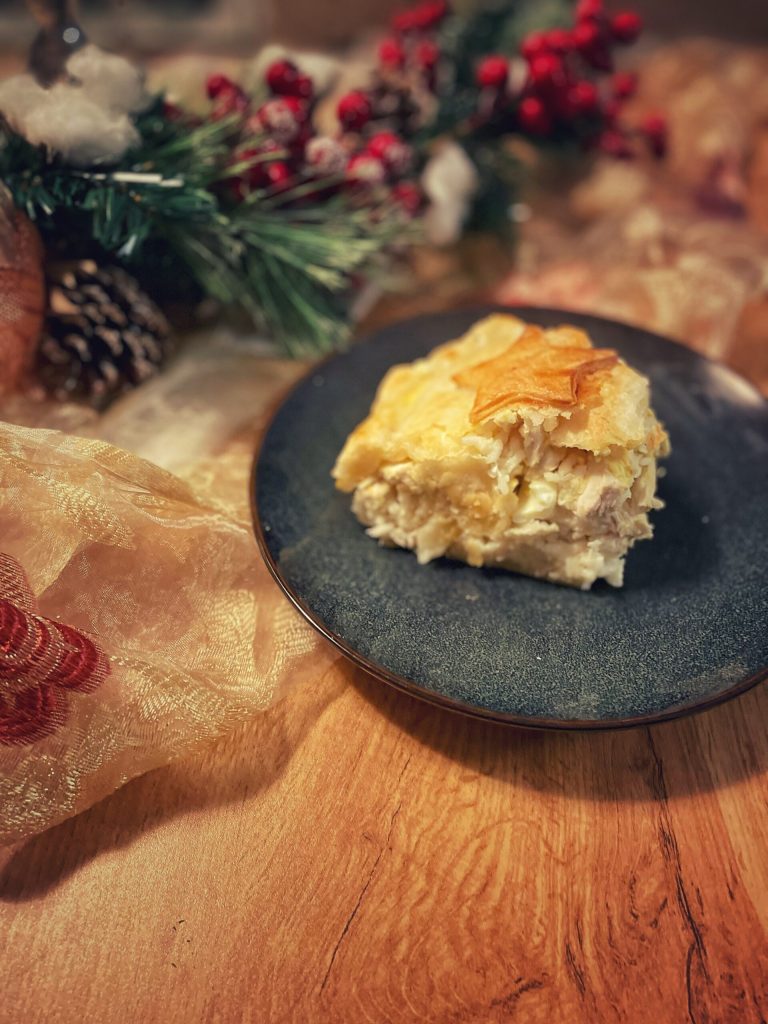
Kasha in Kurnik
In reality, the use of kasha (made mainly with buckwheat) instead of rice is considered more traditional and authentic in historical Kurnik recipes.
Historical roots: In ancient times, rice was an expensive imported ingredient in Russia. Less wealthy families used local grains like buckwheat, barley or millet to fill the pie.
Taste difference: While rice has a neutral flavor that absorbs chicken juices, buckwheat kasha imparts a more intense, toasted, and rustic flavor.
Preparation: If you decide to use kasha, and use toasted buckwheat as the base ingredient, you must cook it first (transforming it into a dry kasha, like pilaf) to create the inner layer of the pie.
Today rice has become the standard in modern and “urban” versions, but the version with buckwheat kasha is making a comeback for those seeking a more “ancestral” flavor.
FAQ (Questions and Answers)
What are the traditional decorations of Kurnik?
For a Kurnik worthy of the name, decoration is not only aesthetic but symbolizes abundance and fertility.
Traditionally, leftover pieces of leavened dough are used to create figurative elements that are “glued” onto the dome surface by brushing them with a little water or egg.
Here are the classic decorations and their meanings:
Leaves and Twigs: Small ovals of dough are cut and engraved with the tip of a knife to create veins. They represent life and nature.
Flowers (Roses): Thin strips of dough are rolled up on themselves to create buds to be placed around the central hole (the chimney).
The Braid: A thin braid of dough is often wrapped around the base of the dome, where the two pastry discs join, to hide the seam and reinforce the structure.
The Chimney Collar: A small dough ring is created around the central hole to finish it off, almost like a chimney collar.
Wheat Symbols: Small stylized ears made by making diagonal cuts on small dough rolls, symbolizing wealth.
